

Key Points and Summary – This piece traces how the B-1B Lancer, conceived as a Cold War nuclear penetrator, reinvented itself as a conventional strike workhorse.
-Entering service in 1986, the swing-wing bomber lost its nuclear mission after the Soviet collapse and START I, then debuted in combat over Iraq in 1998.
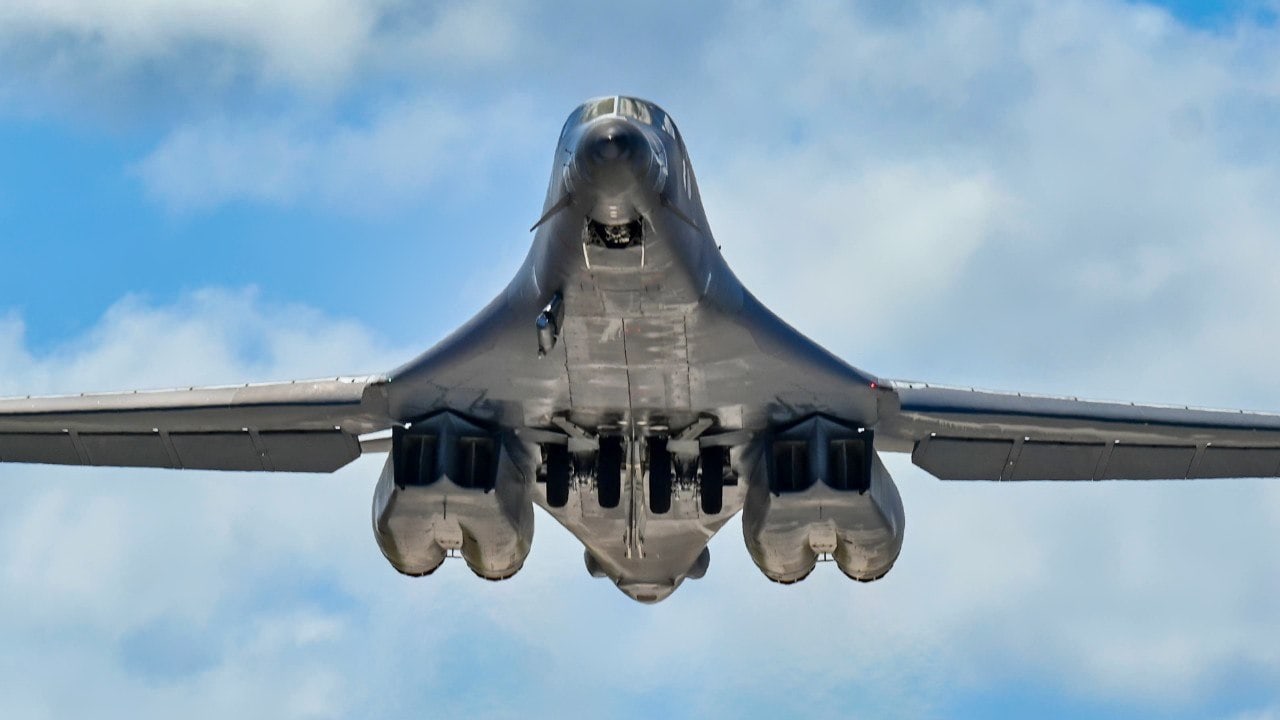
B-1B Lancer Bomber. Image Credit: Creative Commons.
-In Afghanistan, Iraq, Libya, and later against ISIS, the B-1B proved invaluable for long-endurance, precision strikes in support of U.S. and allied forces.
-As the Air Force pivots to the stealthy B-21 Raider and prepares to retire the B-1B, the Lancer’s true legacy is its conventional combat record, not the nuclear role it never flew.
-We have included our own original photos from a National Security Journal photo shoot with a B-1B Lancer bomber in July.
The B-1B Lancer Was Built for Nuclear War – But Fought a Very Different Conflict
In December 2023, the U.S. Air Force marked the 25th anniversary of the B-1B Lancer’s combat debut, reflecting on how an aircraft born of the Cold War went on to establish its legacy in an entirely new era: specifically, the wars in Iraq and Afghanistan.
The celebration noted that the bomber first entered combat during Operation Desert Fox in December 1998, striking Iraqi targets as the twentieth century drew to a close.
It’s a pretty remarkable point: the bomber’s original mission and the role it came to play were entirely different.
Designed in the 1970s and 1980s to serve as a strategic nuclear deterrent, the Lancer was configured in such a way that it could penetrate Soviet airspace with atomic weapons, forming part of America’s broader strategy to counter the then-dominant threat of nuclear war.
But global geopolitical shifts and arms control treaties in the early 1990s removed its nuclear mission, and the aircraft, rather than being left to rot, was reinvented as a conventional bomber long before the War on Terror began.
From that point onwards, the B-1B’s war record wasn’t defined by nuclear deterrence but by conventional precision strike – something the platform proved to be perfectly capable of achieving.
The Lancer also supported U.S. and allied forces in some of the most protracted and complex conflicts in American military history.
The fact that the Lancer was designed to carry heavy nuclear ordnance made it the perfect option to deliver conventional weapons, too: it could carry large payloads and loiter over the battlefield, making it particularly valuable in counterinsurgency environments where persistent strike capability was necessary.
From Nuclear Bomber to Conventional Strike
When the B-1B Lancer entered U.S. Air Force service in 1986, it filled a crucial, strategic niche: a supersonic, long-range bomber capable of delivering ordnance deep into adversary territory. No other force in the world had anything like it.
But the platform evolved from its earlier iterations, conceived in the 1970s to replace the aging B-52 fleet with greater speed and penetration capability.
Its initial assignment to Strategic Air Command reflected the primacy of nuclear deterrence in U.S. defense strategy at the end of the Cold War.
Things did not, however, go to plan – and that wasn’t necessarily a bad thing for the U.S.
The Soviet Union dissolved, and the strategic balance shifted, meaning the rationale for maintaining a nuclear bomber of this kind began to fade.
The B-1B was later reassigned to Air Combat Command in 1992, and by 199,4 its nuclear role was formally eliminated under provisions of the START I treaty.
B-1B Lancer Bomber: We Visited This Piece of Air Force History

B-1B Lancer Bomber in Museum in Dayton, Ohio. Image Credit: Harry J. Kazianis/National Security Journal.
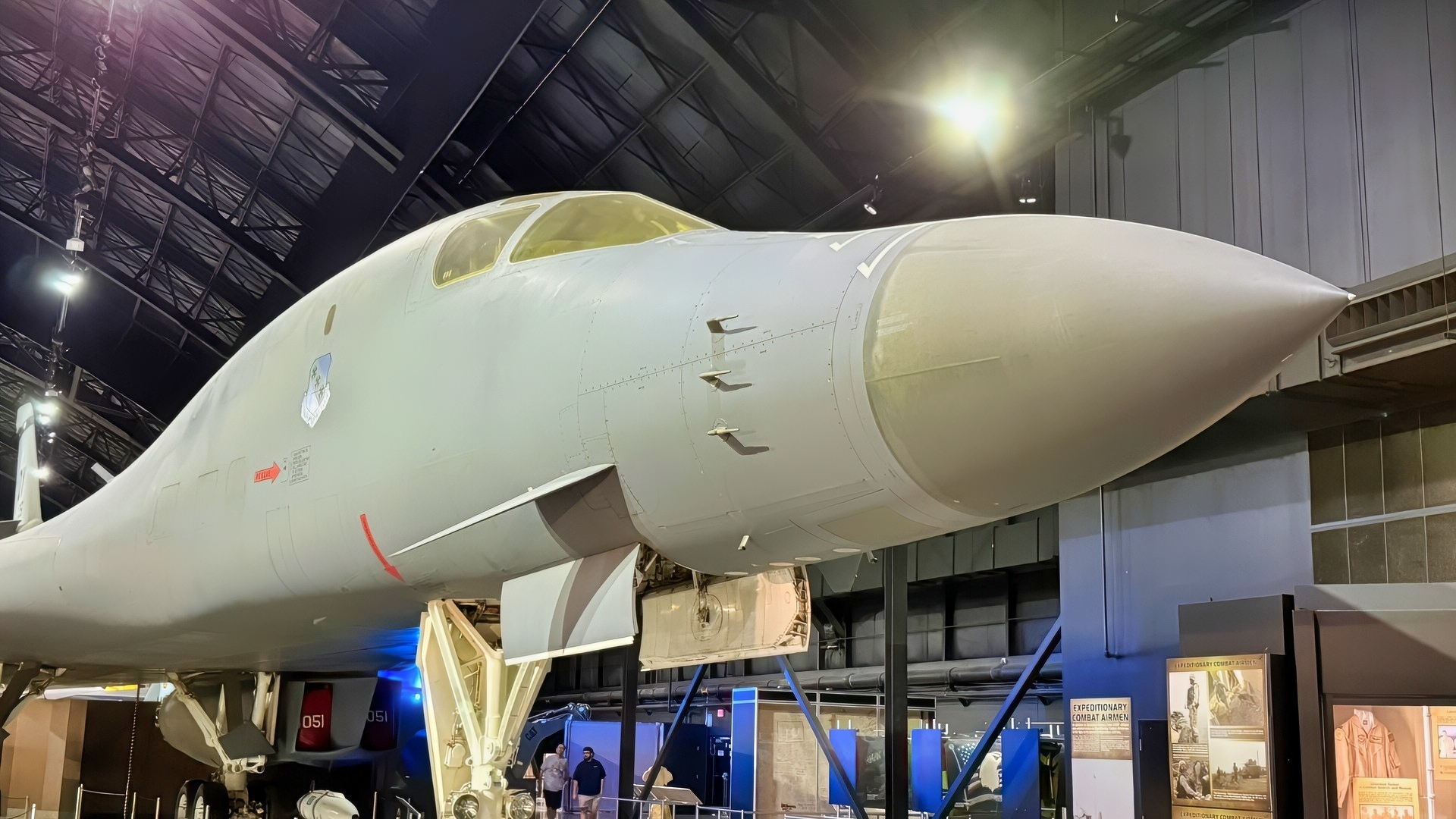
B-1B Lancer 2025 National Security Journal. Image Credit: Harry J. Kazianis/NSJ.

B-1B Lancer at USAF Museum in July 2025. Image Credit: National Security Journal.
The Lancer’s Real Legacy
The B-1B’s first combat operations occurred before the War on Terror in Operation Desert Fox, a four-day bombing campaign against Iraqi targets in December 1998, proving just how capable the aircraft was in its new role.
But it was the conflicts that followed the September 11 attacks that truly defined the aircraft’s combat history and capabilities.
In the early stages of Operation Enduring Freedom in Afghanistan, B-1Bs flew numerous sorties against Taliban and al-Qaeda positions, often loitering for extended periods and delivering precision-guided munitions in support of ground forces.
Then, during the subsequent Operation Iraqi Freedom, the bomber was once again a central element of air operations and proved its value by delivering large quantities of ordnance with accuracy. Its contributions extended beyond Afghanistan and Iraq as well.
The B-1Bs participated in operations over Libya, and later against the Islamic State in Syria and Iraq, proving once again the adaptability of this legendary platform in diverse theatres.
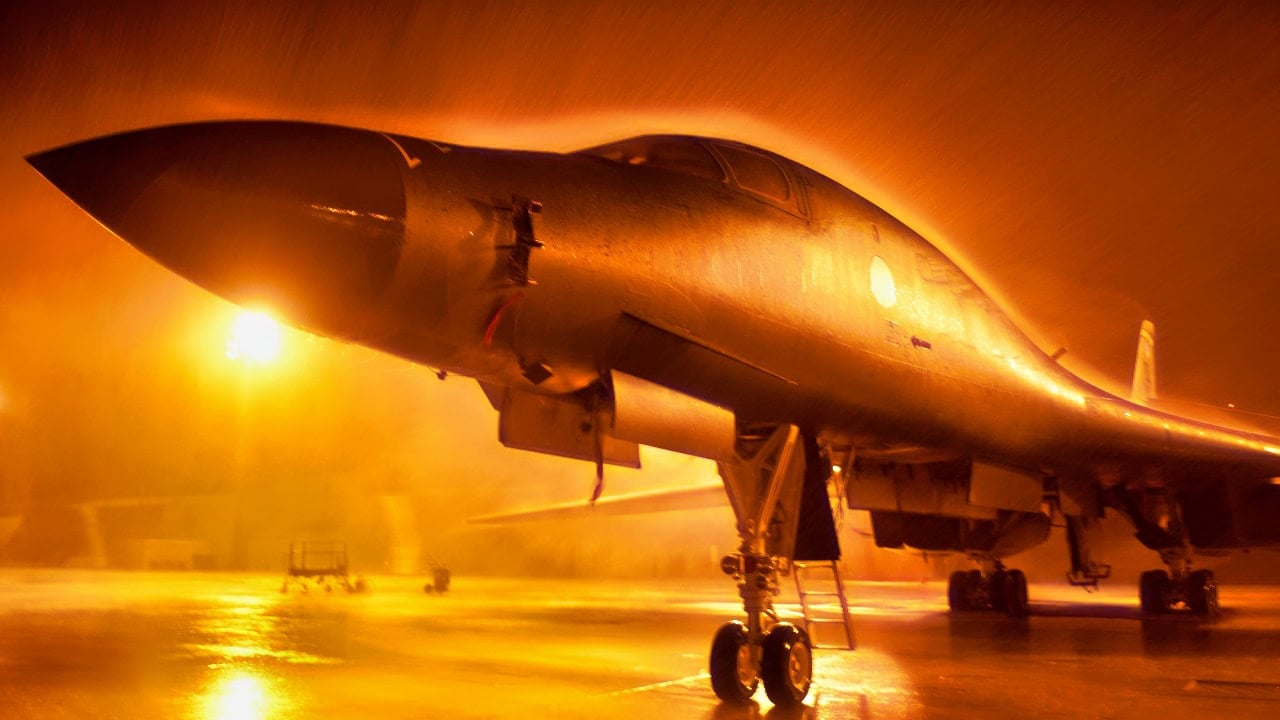
B-1B Lancer Bomber. Image Credit: Creative Commons.
But unlike high-altitude nuclear penetrations for which the Lancer was initially designed, the B-1B’s conventional missions required close coordination with ground controllers and teams, as well as dynamic targeting (the rapid process of identifying, tracking, and engaging targets that emerge during ongoing operations), and a sustained presence.
These are all qualities that made the Lancer particularly useful in asymmetric warfare: airmen who flew and supported these missions have repeatedly pointed to the bomber’s ability to deliver ordnance wherever and whenever it was needed.
And today, as the U.S. Air Force prepares to phase out the B-1B in favor of newer platforms like the infinitely more capable Northrop Grumman B-21 Raider, the bomber’s legacy is defined not by the nuclear conflict it was designed to deter, but by more conventional conflicts it ultimately helped shape.
About the Author:
Jack Buckby is a British author, counter-extremism researcher, and journalist based in New York who writes frequently for National Security Journal. Reporting on the U.K., Europe, and the U.S., he works to analyze and understand left-wing and right-wing radicalization, and reports on Western governments’ approaches to the pressing issues of today. His books and research papers explore these themes and propose pragmatic solutions to our increasingly polarized society. His latest book is The Truth Teller: RFK Jr. and the Case for a Post-Partisan Presidency.


