


Key Points and Summary – Dr. Brent M. Eastwood argues the B-1B Lancer still has a role, even as the Air Force eyes retirement and the stealthy B-21 Raider comes online in the 2030s.
-The “Bone” is aging, maintenance-heavy, and vulnerable to top-tier Russian and Chinese air defenses, but its speed, range, and 75,000-pound payload remain unmatched for striking Iran, North Korea, or other lower-tier threats.
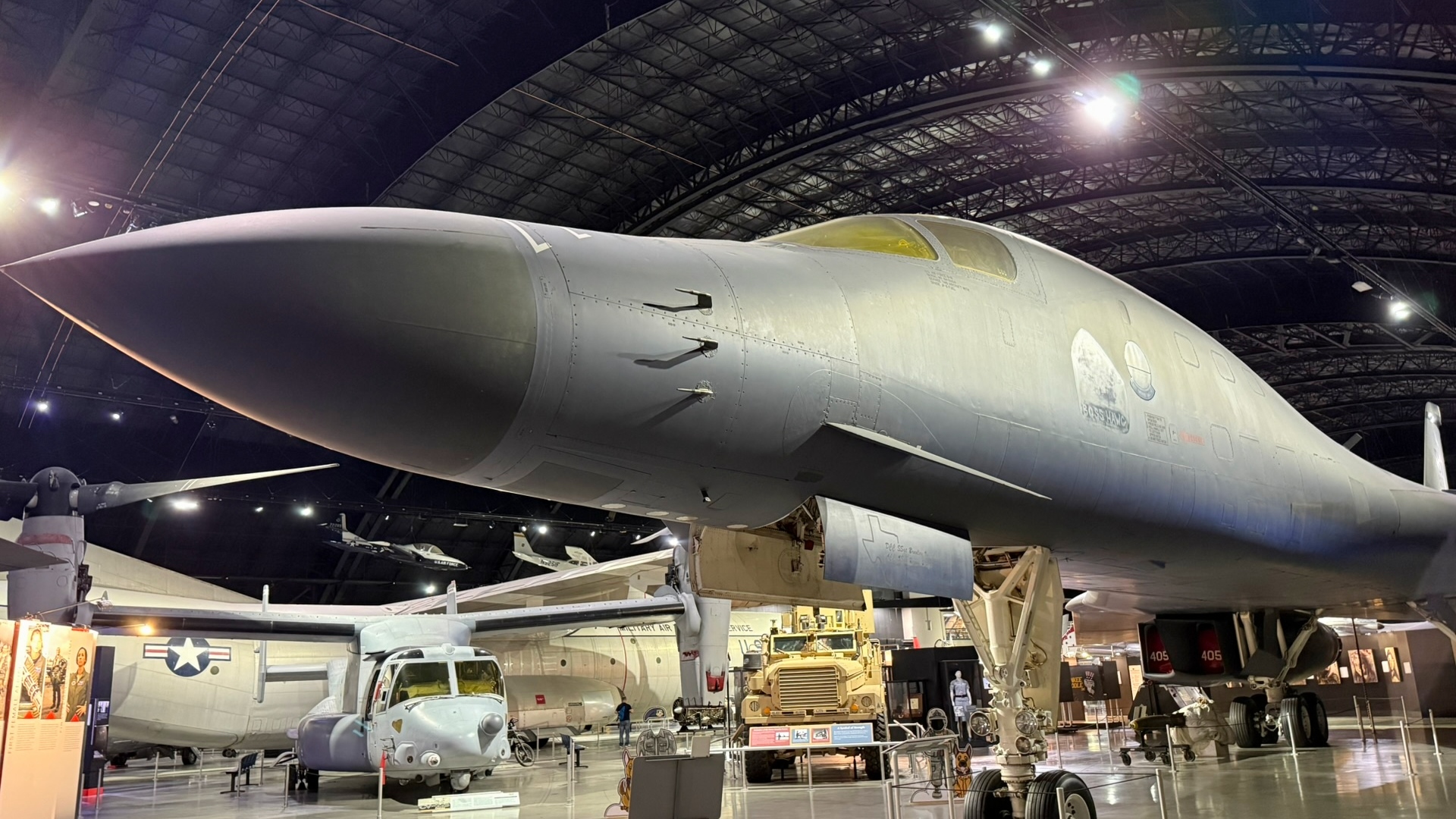
Sideview of B-1B Lancer Bomber. Image Credit: National Security Journal.
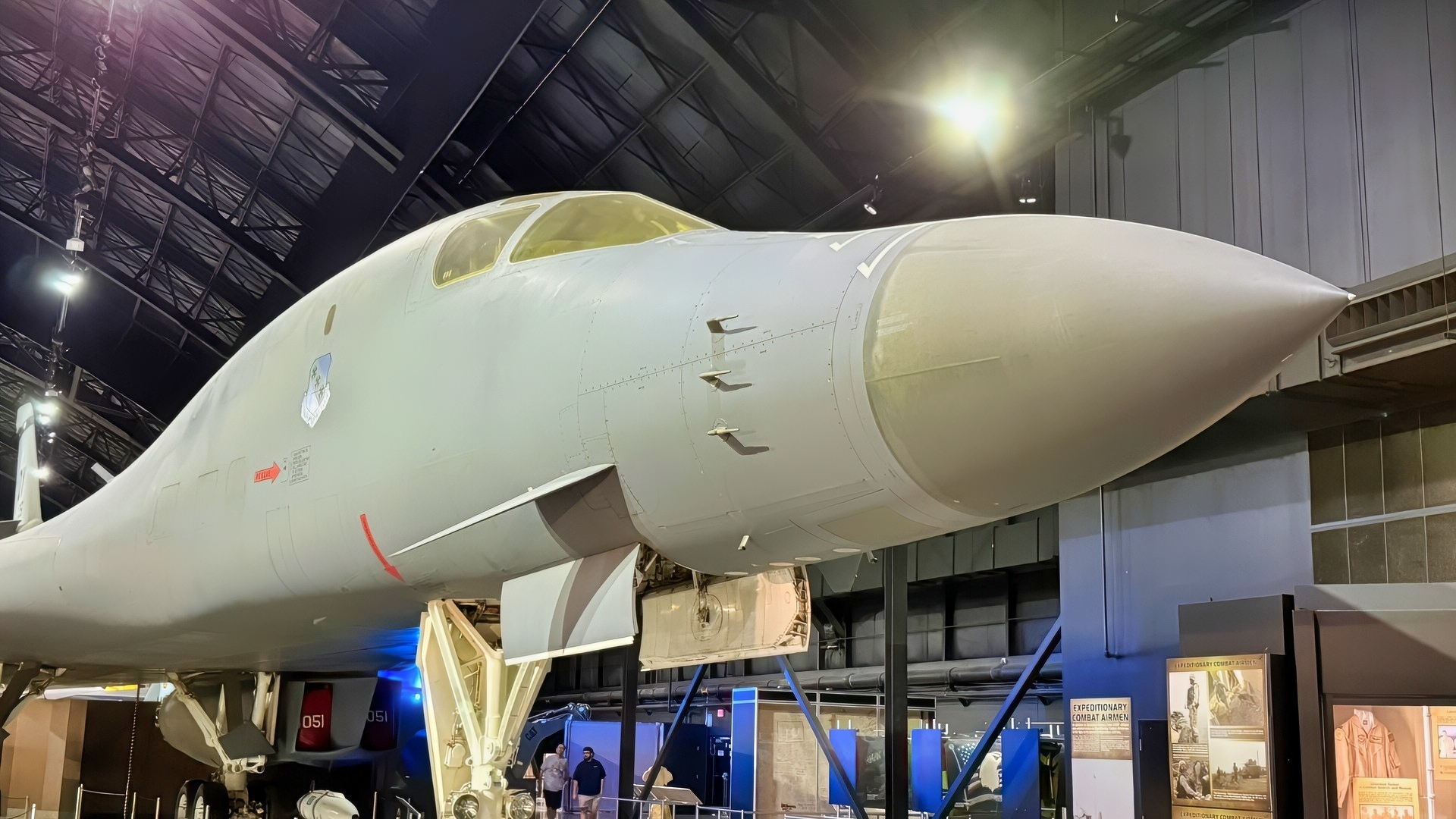
B-1B Lancer 2025 National Security Journal. Image Credit: Harry J. Kazianis/NSJ.
-With new external pylons, it could be a premier testbed and launcher for hypersonic and long-range cruise missiles.
-Eastwood’s compromise: retire most airframes, but keep about 20 B-1Bs as stand-off shooters and weapons demonstrators until the B-21 is fully ready.
The Sad Goodbye: Should the B-1B Lancer Remain In Service?
If the Air Force has its way and finally retires the B-1B Lancer bomber, it may find out that its long range and huge weapons payload will be missed.
All of the “Bone” bombers could find themselves in the “Boneyard” at Davis-Monthan Air Force Base in Arizona, and that could crimp the Air Force bomber fleet until the new B-21 Raider stealth bomber enters active duty in the 2030s.
However, the complete force of B-1B airplanes may not be decommissioned.
They could fly on as technology demonstrators for new cruise missiles and hypersonic weapons, such as the AGM-158C LRASM (Long Range Anti-Ship Missile) and the Hypersonic Attack Cruise Missile.
The B-1B would be a good platform for testing these systems and would allow the Air Force to collect valuable launch data.
U.S. Bombers Are More Important Than Ever
But the B-1B, of course, is not fully stealthy, and this lack of complete radar evasion has many questioning its survivability in modern threat environments.
The United States has learned that stealth bombers like the B-2 are increasingly valuable.

(Dec. 9, 2019) This poster is designed to communicate the aircraft specifications of the B2 Spirit Stealth Bomber. The B2 bomber was introduced on Jan. 1, 1997 by the Northrop Corporation.
The Air Force conducted Operation Midnight Hammer B-2 attacks against Iranian nuclear infrastructure this year. The Iranians were totally fooled and didn’t fire a shot back.
There were no American losses. This is why the B-2 and, later, the B-21 will be so valuable, while the B-1B will be expendable.
Quick History of the B-1 Program
Plus, the B-1B is expensive and difficult to maintain due to its advanced age. Keeping it in the air is costly per flight hour because of its long history.
It entered active duty in the 1980s. The B-1B was preceded by the B-1A, itself a super-fast model planned to give Soviet air defenses a run for their money through low-altitude bombing runs.
The Jimmy Carter national security team canceled the B-1A due to cost overruns and schedule slips, and the advent of nuclear-tipped cruise missiles. President Ronald Reagan and Secretary of Defense Caspar Weinberger saw the value in a high-velocity variable sweep wing bomber and green-lit the B-1B.
The Bone Is a Tested Warrior
The B-1B is combat-proven, especially after 9/11 during the Global War on Terror. It flew thousands of missions over Iraq and Afghanistan, paving the way for ground force actions under dangerous close conditions during furious fighting against terrorists and insurgents.

A U.S. Air Force B-1B Lancer assigned to the 345th Expeditionary Bomb Squadron, decends for landing at Ørland Air Base, Norway, during a Bomber Task Force Europe deployment, Aug. 9, 2025. The BTF mission highlights how we deliver effects rapidly across dynamic and contested environments through integrated training. (U.S. Air Force photo by Staff Sgt. Tambri Cason)
With its gargantuan 75,000-pound payload, the B-1B can drop huge amounts of 500-pound and 2,000 laser JDAMs (Joint Direct Attack Munitions) and stand-off missiles like the JASSM (Joint Air-to-Surface Standoff Missile) and its extended range variant. The Bone can drop general-purpose bombs, cluster bombs, and even Quickstrike naval mines.
The B-1B will be missed due to this firepower, and its MACH 1.2 maximum speed is excellent. Plus, the B-1B is getting new external pylons for the hypersonic weapons and new cruise missiles.
The Air Force is requesting $50 million in FY2026 funding for the External Heavy-Stores Pylon program. Forty-two B-1Bs are on active duty, and the new pylons will increase the firepower.
No Match for Advanced Air Defenses from Russia and China
One concern about the B-1B is the improvement of air defenses, such as Russia’s S-400 and S-500 systems. China’s best surface-to-air defenders, like the HQ-9 and HQ-19, are a substantial threat. The Taliban and Iraqi insurgents, of course, had no air defenses that could compare. Could a non-stealthy B-1B infiltrate this dangerous airspace if a war with near-peer adversaries were to arise? This raises questions about whether the B-1B should remain on the flight line.
The bomber may be better suited for just flying test missions for new weapons. Its large payload will be missed, but direct missions over enemy territory may make it expendable and redundant. However, the Air Force needs every bomber it can maintain until the B-21 Raider is ready.
I’m in favor of keeping 20 B-1Bs and retiring the rest. The airplane will be valuable for the stand-off missile fight, but reducing the number can save on maintenance and upkeep costs. This is a decent compromise between those who want to jettison the bomber completely and proponents who believe that its awesome firepower can still make a difference into the 2030s. However, the B-21 could be delayed. It is on track now, but the next five years will be pivotal for the program. That’s why some B-1Bs could still come in handy.
The Bones’ airframe may not be as sturdy as in the past due to wear and tear during the Global War on Terror, particularly in dry, dusty environments. Many today are not mission capable for various reasons.
However, divesting the full fleet is not the correct answer either. Bombing missions are still crucial to U.S. national security interests. The B-1B can still deliver the goods against countries with less stalwart missile defenses like Iran and North Korea. China and Russia are a different story due to better SAM systems.
We’ll keep an eye on what the Air Force decides to do. The B-1B may have to serve into the 2030s. The massive weapons payload would be missed, but they lack the radar-evading capabilities to survive against the best Russian and Chinese air defenses. The old warbird has enjoyed a stalwart combat record, but it is costly to maintain and keep flying regularly.
Many are not mission capable. It is still valuable for testing hypersonic cruise missiles with its new pylons, and the Air Force needs it to collect data on the plus-MACH five projectiles. America should not retire all B-1Bs until the B-21 comes on active duty in the early to mid-2030s.
About the Author: Brent M. Eastwood
Author of now over 3,000 articles on defense issues, Brent M. Eastwood, PhD is the author of Don’t Turn Your Back On the World: a Conservative Foreign Policy and Humans, Machines, and Data: Future Trends in Warfare plus two other books. Brent was the founder and CEO of a tech firm that predicted world events using artificial intelligence. He served as a legislative fellow for US Senator Tim Scott and advised the senator on defense and foreign policy issues. He has taught at American University, George Washington University, and George Mason University. Brent is a former US Army Infantry officer. He can be followed on X @BMEastwood.
More Military
Could America Have Lost the Revolutionary War?
The Marines Don’t Have Tanks Anymore
The Essex-Class Aircraft Carriers Have An Embarrassing Message for the U.S. Navy
‘New’ Mach 4 MiG-41 6th Generation Stealth Fighter Has Warning for U.S. Air Force
Boeing’s F-47 NGAD 6th Generation Stealth Fighter Is No ‘Mission Impossible’


