

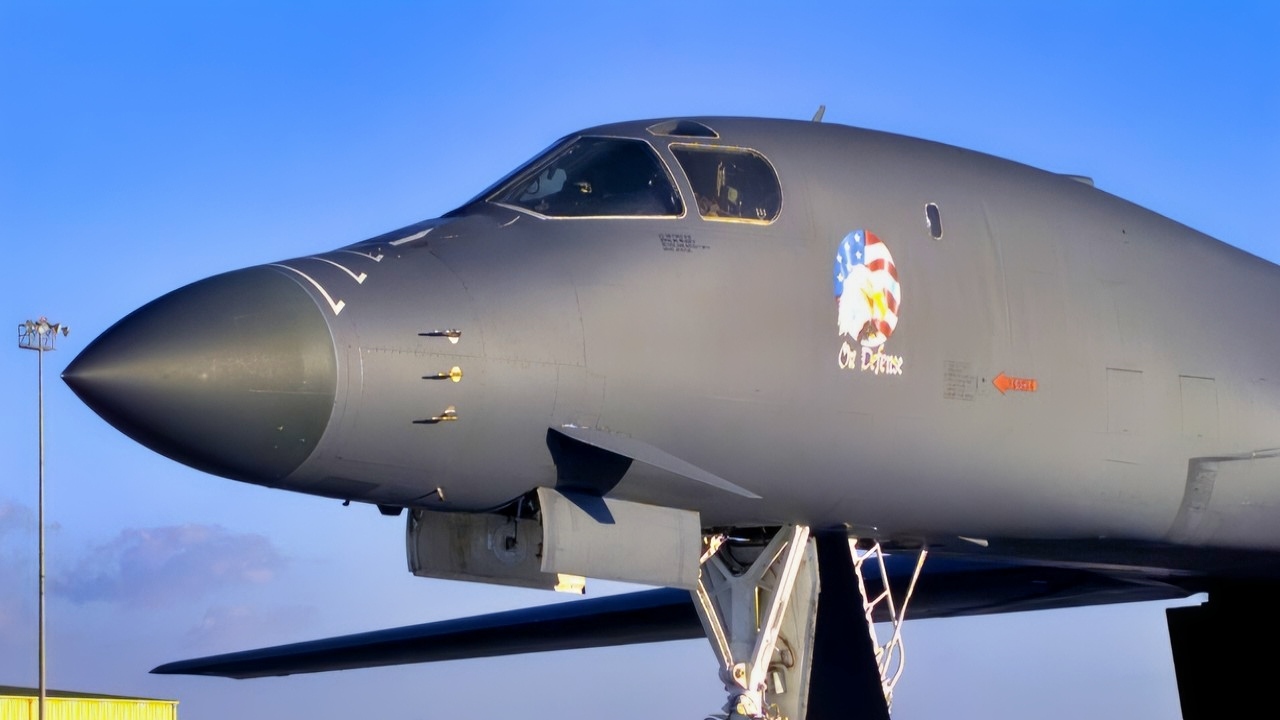
Rockwell International’s B-1A bomber, designed in the early 1970s as a low-altitude supersonic nuclear delivery platform, was cancelled by President Jimmy Carter in 1977 in favor of cruise missiles and the emerging stealth bomber program. President Ronald Reagan revived the program in 1981 as the B-1B Lancer — a stealthier, slower variant optimized for sustained low-altitude penetration — and 96 were eventually acquired by the U.S. Air Force, entering service in 1986. The B-1B was denuclearized in the mid-1990s under START treaty obligations, then found a second life after 9/11 dropping 40% of all U.S. air-launched ordnance during the Iraq War and most recently striking Iran during Operation Epic Fury — a Cold War bomber that has outlived the threat it was built to defeat.
The B-1B Lancer Bomber Is a Powerhouse
The B-1B Lancer has always been considered the black sheep of the U.S. bomber fleet. While the B-52 and the B-2 Spirit always had their defined roles and purposes, the B-1 took multiple decades to find its place in the USAF.
Originally designed as a strategic missile carrier, the B-1 evolved over time, with its nuclear capabilities completely removed.
Today, the B-1B is a conventional heavy hitter and is capable of carrying out some of the heaviest bombing runs in the Air Force.
Additionally, the bomber has proven to be a solid test platform and is currently testing air-launched hypersonic missiles, giving it a unique place among its peers.
Designing a New Supersonic Bomber
Development of the B-1 began amid the United States Air Force’s waning confidence in the survivability of high-altitude bombers during the late 1950s and early 1960s.
Aircraft such as the B-52 Stratofortress had been designed to operate at very high altitudes, relying on speed and altitude for protection. This concept was undermined by rapid advancements in Soviet air defense systems, particularly radar-guided surface-to-air missiles.
The downing of an American U-2 reconnaissance aircraft over the Soviet Union in 1960 starkly demonstrated that altitude no longer guaranteed safety.
At the same time, ballistic missiles were maturing as a concept, leading some policymakers to question whether manned bombers were still necessary.

B-1B Lancer. Image Credit: Creative Commons.
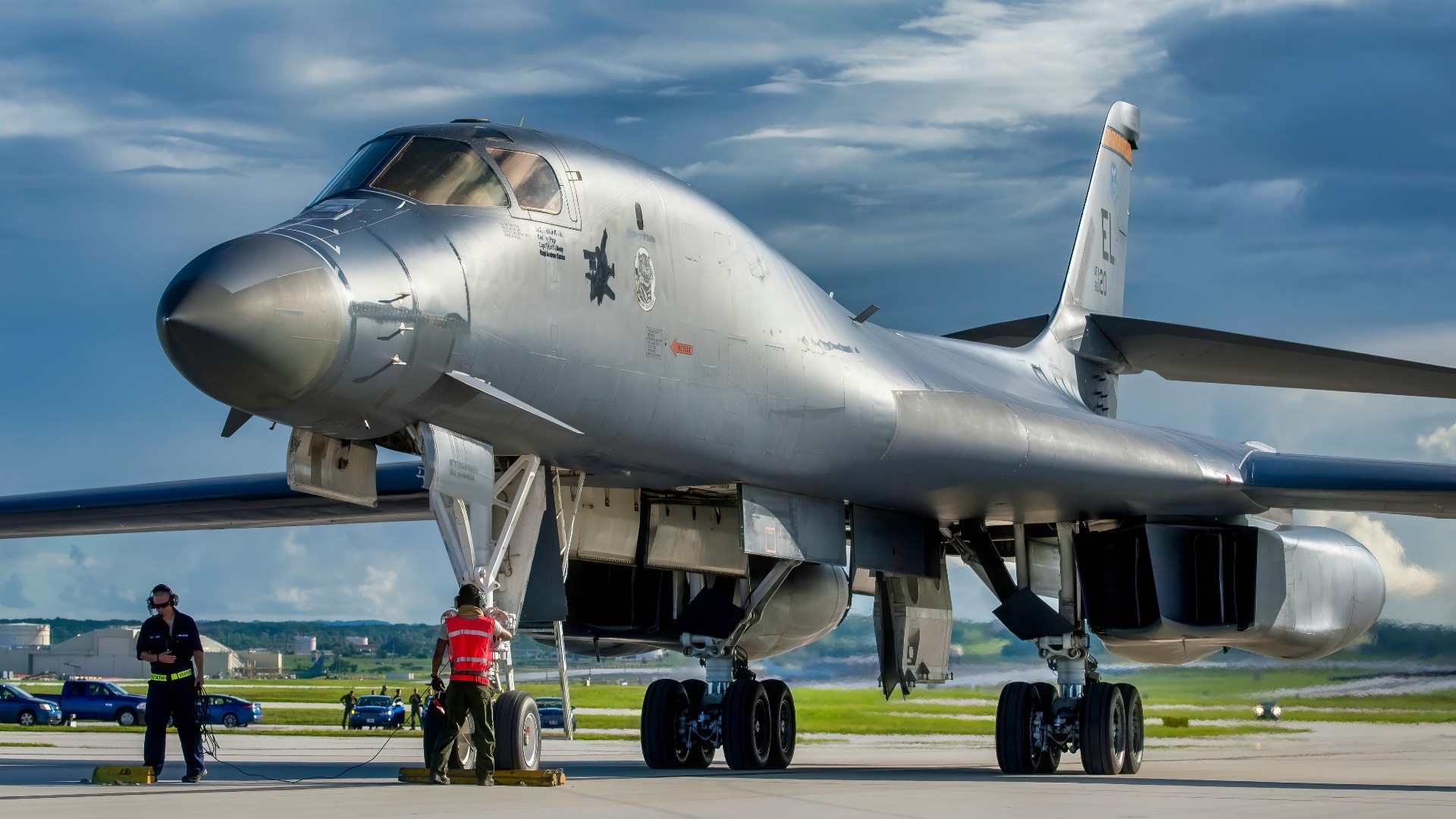
A U.S. Air Force B-1B Lancer assigned to the 37th Expeditionary Bomb Squadron, deployed from Ellsworth Air Force Base (AFB), S.D., arrives at Andersen AFB, Guam July 26, 2017. These aircraft, and the men and women who fly and support them, provide a significant capability that enables our readiness and commitment to deterrence, provides assurances to our allies, and strengthens regional security and stability in the Indo-Asia-Pacific region. (U.S. Air Force photo/Airman 1st Class Christopher Quail)
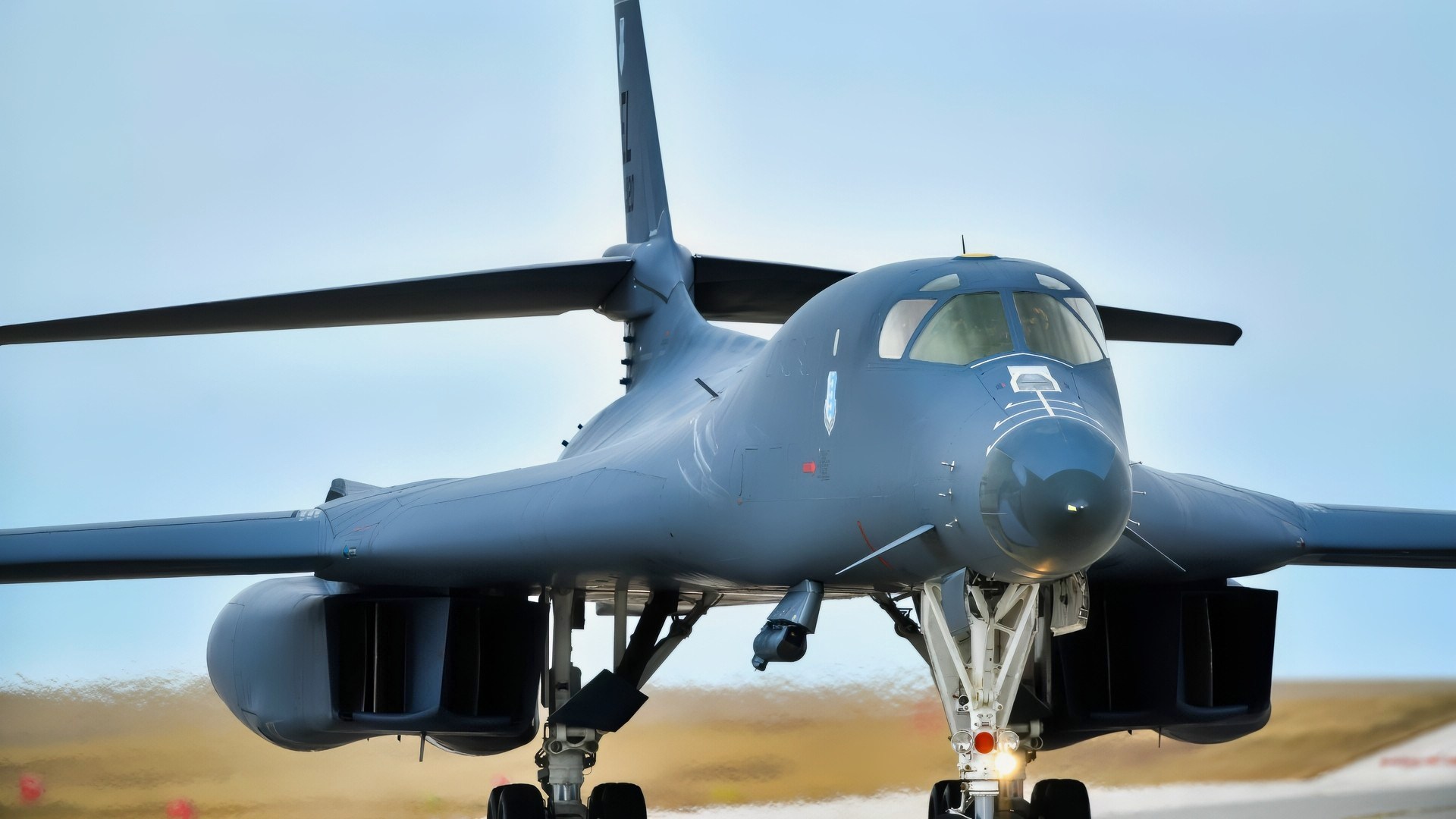
A U.S. Air Force B-1B Lancer assigned to the 37th Bomb Squadron taxis off the runway at Ellsworth Air Force Base, S.D., after completing a CONUS-to-CONUS mission, Nov. 03, 2024. All missions are closely planned with the appropriate Geographic Combatant Commands, Allies, and partners to ensure maximum training and integration opportunities as well as compliance with all national and international requirements and protocols. (U.S. Air Force photo by Airman Alec Carlberg)
Despite this, some officials maintained that bombers still offered some advantages that missiles could not. Furthermore, while the B-52 was great, it was not ideal for low-level bombing runs.
These considerations drove the Air Force to seek a new bomber designed around a radically different operational concept. Rather than flying high above enemy defenses, the next-generation bomber would fly fast and extremely low, using terrain masking and electronic countermeasures to penetrate contested airspace.
The Short-Lived B-1A
This concept matured into the B-1A program, which formally began in the early 1970s. Rockwell International’s design was bold and technologically advanced for its time.
The aircraft featured variable-sweep wings that allowed it to balance efficient long-range cruise with high-speed dash capability.
It was powered by four afterburning turbofan engines and equipped with sophisticated terrain-following radar, enabling it to fly at very low altitudes in all weather conditions. In its original concept, the B-1A was intended primarily as a nuclear delivery platform, capable of carrying gravity bombs and short-range nuclear missiles deep into Soviet territory.
Work on the B-1 program quickly ran into some hurdles. Development costs rose steadily, technical challenges mounted, and critics argued that improvements in Soviet radar and interceptor aircraft were eroding the bomber’s survivability advantage.
By the mid-1970s, cruise missiles, which could be launched from outside heavily defended airspace, were seen by many as a more efficient alternative.
When President Jimmy Carter took office in 1977, his administration conducted a review of strategic forces and concluded that the B-1A was no longer the best investment.
The program was canceled, and emphasis shifted toward air-launched cruise missiles and what would later become the stealth bomber program.
The Birth of the B-1B
Although it was technically canceled, the B-1 was not entirely abandoned. Research and test aircraft continued to fly, preserving the design as a potential option for the future.
That future arrived sooner than many expected.
The election of President Ronald Reagan in 1980 brought a renewed focus on military modernization and strategic competition with the Soviet Union.
Reagan’s administration revived the program in an altered form, giving birth to the B-1B.
The B-1B differed significantly from the earlier B-1A. Rather than maximizing speed, the team at Rockwell prioritized survivability.
The aircraft’s top speed was reduced, but its radar cross-section was significantly lowered through changes in engine intakes, structure, and materials.
Its electronic warfare systems were greatly enhanced, and its design was optimized for sustained low-altitude penetration rather than a brief high-speed dash. Although its “stealth features,” if one could even call them that, did not match those of a fifth-generation aircraft, the B-1B proved to be more survivable than its predecessor.
The End of the Cold War and the Lancer’s Uncertain Future
The first B-1B entered service in 1986, and the Air Force eventually acquired ninety-six aircraft. The bomber formally took its place alongside the B-52 and the emerging B-2 Spirit as part of America’s strategic bomber force.
Yet the early years of B-1B service were difficult. The aircraft suffered from reliability issues, low mission-capable rates, and skepticism from both Congress and parts of the Air Force. Many questioned whether the B-1 justified its cost, particularly as arms control agreements began to reduce the size of the nuclear arsenal it had been built to support.
The end of the Cold War profoundly altered the B-1’s trajectory. As the Soviet Union collapsed in the early 1990s, the United States reduced its reliance on large numbers of nuclear bombers.
The Strategic Arms Reduction Treaty agreements imposed limits on deployed nuclear systems, and as part of these adjustments, the B-1 was gradually removed from the nuclear mission.
By the mid-1990s, the aircraft had been fully denuclearized, marking a dramatic departure from its original purpose. For a time, the B-1 was widely perceived as a Cold War relic, an aircraft designed for a mission that no longer existed.
New Life in the Modern Age
However, history was not done with the B-1B. After the 9/11 attacks, the B-1B was called up for service in Iraq, where it dropped nearly 40% of all air-launched ordnances.
Throughout the wars in Afghanistan and Iraq, B-1 crews flew some of the longest combat missions in aviation history, often exceeding fifteen hours with multiple aerial refuelings.
As the War on Terror progressed, however, the B-1B began to show its age as its airframes endured increasing stress.
The Air Force began retiring its inventory to the boneyards, and plans for its replacement were being drawn up.
In the past several years, however, the B-1B has demonstrated that it still retains a lot of life in its system, despite concerns of its obsolescence.
Recent upgrades have allowed the B-1B to carry a wider range of munitions, making it more versatile as a platform.
In recent years, the aircraft has been used as a test platform for integrating hypersonic missiles. The bomber has also been used most recently in Operation Epic Fury, where it has taken part in strikes against Iran.
While the B-1B is still slated for retirement, it can retire not as a Cold War relic but as a long-serving and important component of the USAF’s fleet.
About the Author: Isaac Seitz
Isaac Seitz, a Defense Columnist, graduated from Patrick Henry College’s Strategic Intelligence and National Security program. He has also studied Russian at Middlebury Language Schools and has worked as an intelligence Analyst in the private sector.


