

B-1B Spotted Carrying ARRW Hypersonic Missile: The U.S. Air Force has publicly released imagery for the first time showing a B-1B Lancer carrying an AGM-183 ARRW hypersonic missile. It is another major step in integrating hypersonic weapons onto legacy bomber platforms, revitalizing an aging fleet as the U.S. awaits hundreds of next-generation B-21 Raiders. The footage, published on Edwards Air Force Base’s social media on April 29, 2026, shows the missile mounted externally on a hardpoint, though the test flight date remains unclear. And what’s really strange about this: we saw a B-1B Lancer bomber at the National Museum of the U.S. Air Force last year. So, a bomber that literally sits in a museum is getting hypersonic missiles.
The news comes as the ARRW program, once expected to be the Air Force’s first operational hypersonic weapon, has resurfaced in recent Pentagon budget documents after its 2023 near-cancellation.
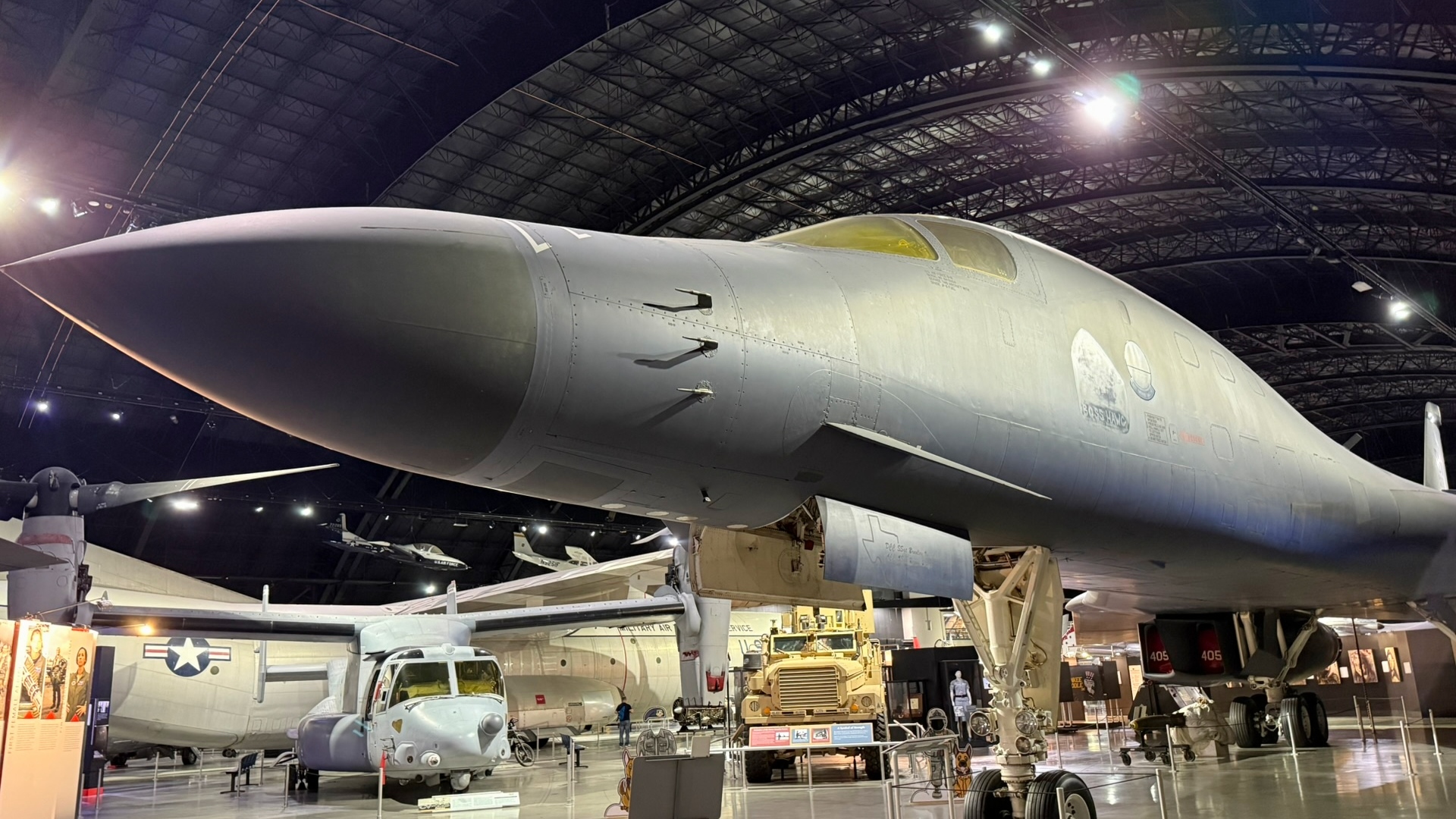
Sideview of B-1B Lancer Bomber. Image Credit: National Security Journal.
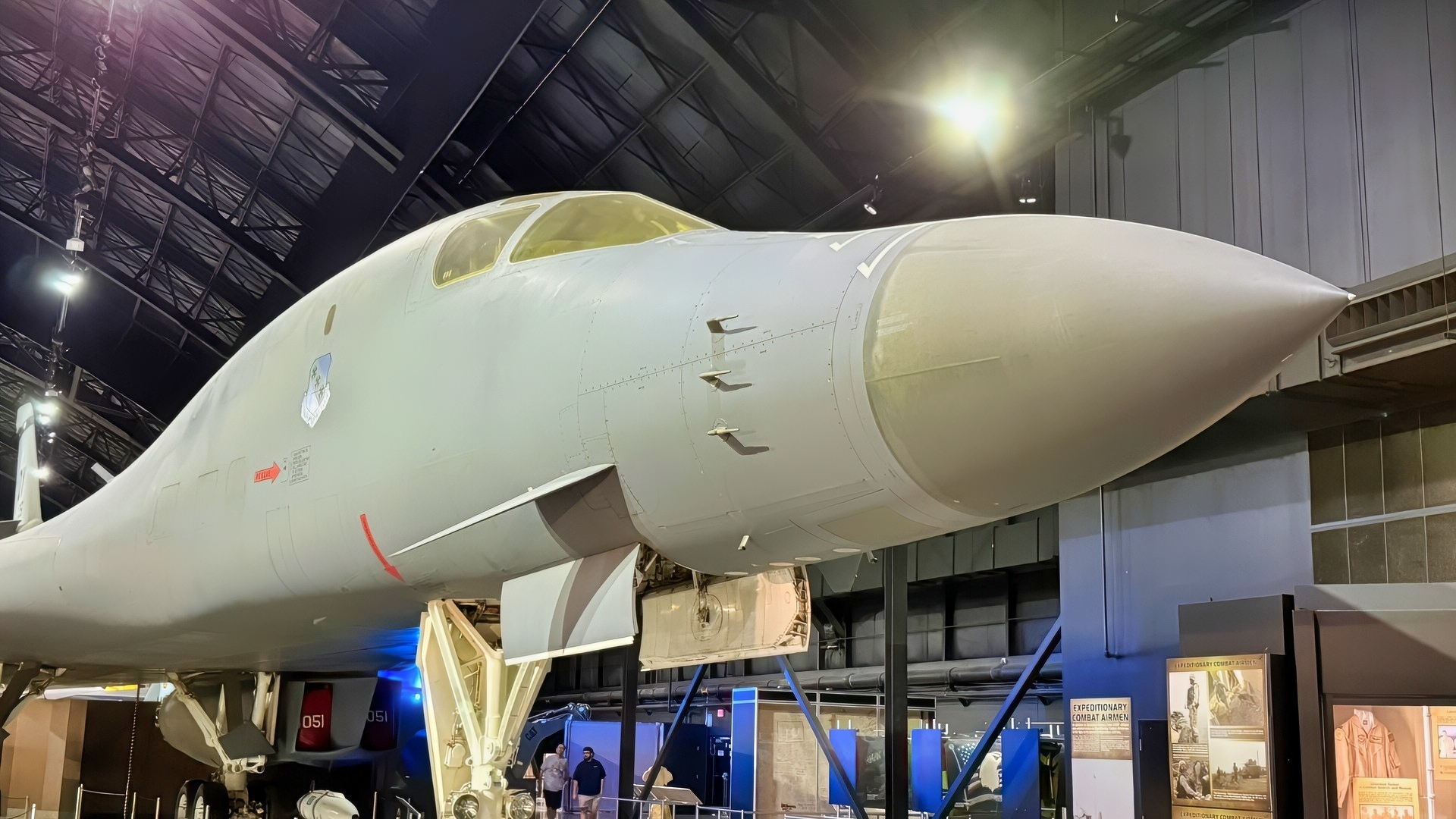
B-1B Lancer 2025 National Security Journal. Image Credit: Harry J. Kazianis/NSJ.
At the same time, the B-1B itself has been granted a service life extension to at least 2037 and is increasingly being positioned as a testbed and potential carrier for next-generation long-range strike systems. So much for the museum stuff.
What the Footage Actually Shows
The newly released clip shows a B-1B flying with an ARRW mounted on an external pylon.
The weapon appears to be attached to a hardpoint – a connecting point on the exterior of an aircraft – previously used for external stores, including JDAM test loads and targeting pods.
The imagery indicates that the Air Force is using existing mounting positions to simplify and expedite integration.
The development is part of an ongoing effort to expand the aging bomber’s external carriage capabilities using the Load Adaptable Modular (LAM) pylon system, creating a significantly more capable bomber that prioritizes pure strength over stealth.
The LAM is designed to carry large weapons, including payloads exceeding 5,000 pounds.
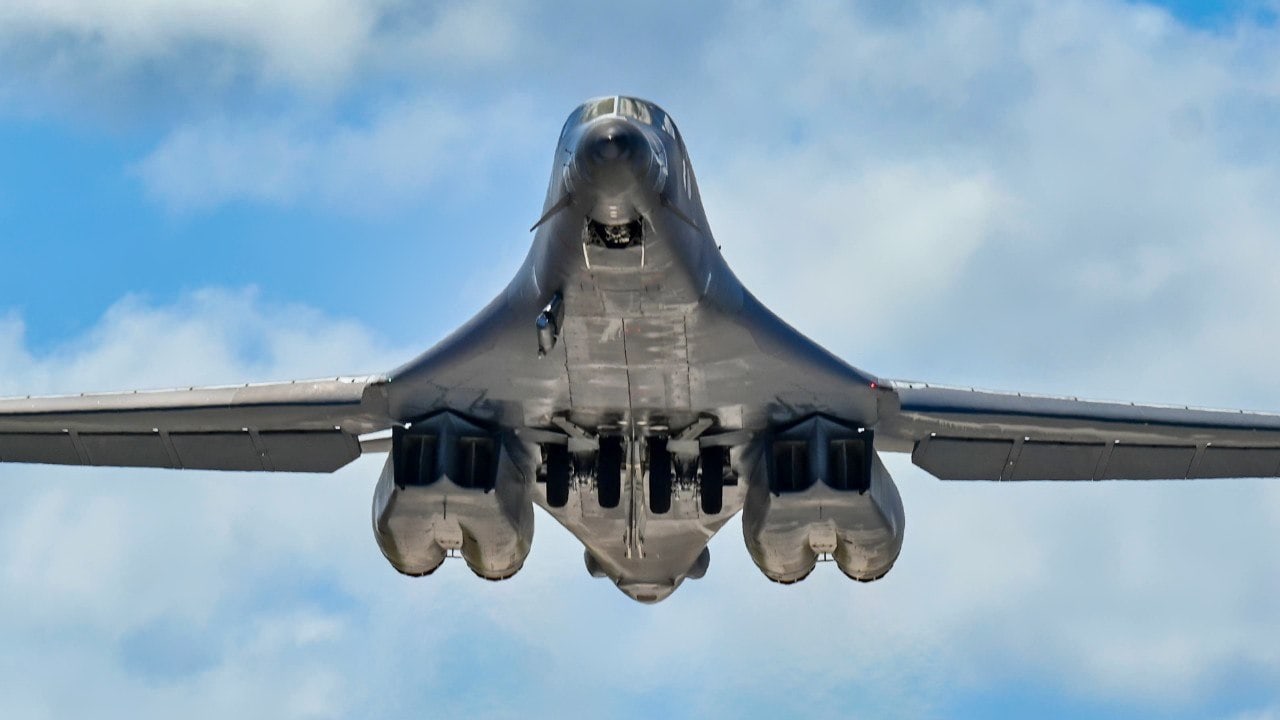
B-1B Lancer Bomber. Image Credit: Creative Commons.
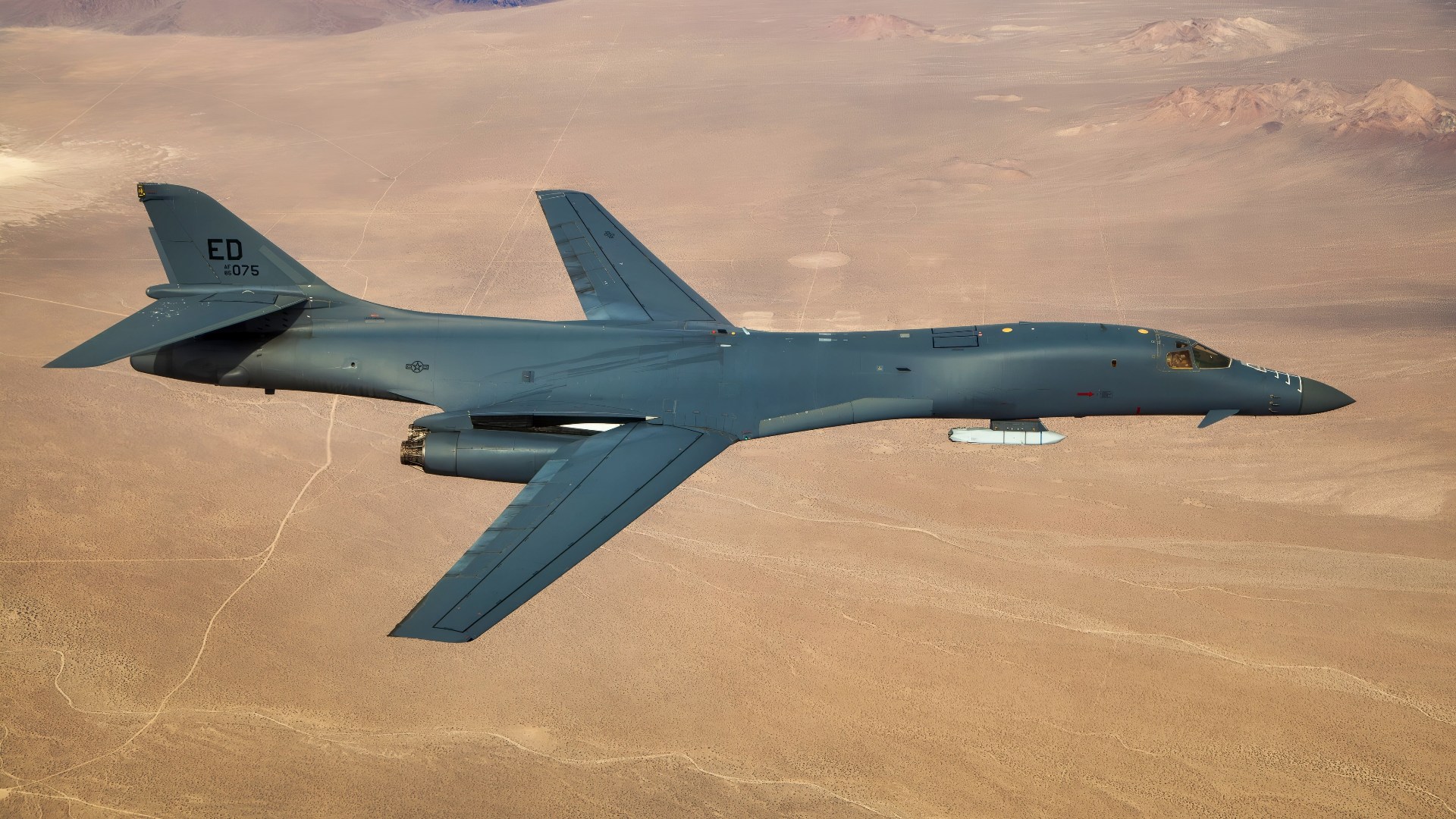
A B-1B Lancer with a Joint Air-to-Surface Standoff Missile (JASSM) flies in the skies above Edwards Air Force Base, California, Nov. 20. The flight was a demonstration of the B-1B’s external weapons carriage capabilities. (Air Force photo by Ethan Wagner)
Not only is the footage strong visual confirmation that the plan is moving forward, but it also shows that integration work has progressed beyond conceptual planning into actual flight testing.
While the ARRW has previously been seen on the B-52 Stratofortress during multiple test sorties, the B-1B’s involvement in the effort suggests that the Air Force is looking to expand the number of viable launch platforms.
Technically, ARRW is a boost-glide hypersonic weapon – meaning a rocket booster accelerates it to speeds exceeding Mach 5, before the glide vehicle separates and glides toward its target at hypersonic velocity.
The weapon is designed to complicate interception using a combination of speed and maneuverability.
ARRW’s Almost Cancelation
The fact that the ARRW program is included in current budget planning is significant, as it was almost completely scrapped only two years ago.
The Air Force previously moved to deprioritize the missile in 2023 following testing challenges, but development never technically stopped.
In the Fiscal Year 2027 budget request, the service is seeking approximately $345 million to fund ARRW Increment 2 – the evolution of the original hypersonic boost-glide weapon – alongside initial work on a new air-launched ballistic missile (ALBM) derived from much of the same technology.
That funding makes it clear that technology previously destined to be canceled is now forming the backbone of a new, enhanced capability – and the larger funding picture reinforces that idea.
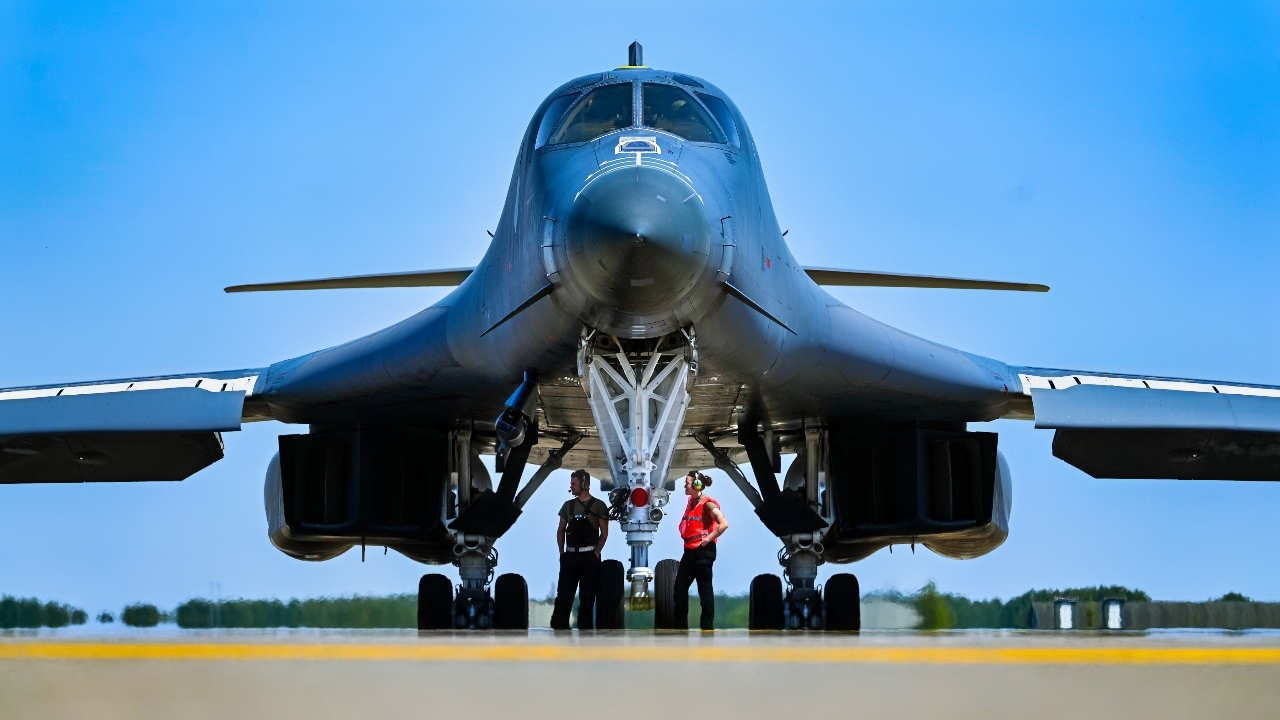
U.S. Air Force Senior Airman Colby Delia, 9th Expeditionary Bomb Squadron crew chief, and Airman 1st Class Olivia Ward, 9th Expeditionary Bomb Squadron crew chief, prepare for a B-1B Lancer to take off for a mission at Misawa Air Base, May 9, 2025. BTF missions provide opportunities to train and work with our allies and partners in joint and combined operations and exercises. (U.S. Air Force photo by Airman 1st Class Mattison Cole)
Budget documents indicate that there will be long-term investment in the technology, approaching $1 billion by the end of the decade, with the aim of sustaining ARRW development and expanding the Air Force’s hypersonic strike portfolio.
The Air Force is pursuing multiple hypersonic weapons simultaneously, too, including ARRW and the separate Hypersonic Attack Cruise Missile program.
The B-1B Still Matters
Originally scheduled for retirement around 2030, the aircraft is now expected to remain in service until at least 2037, supported by ongoing modernization funding. The decision is driven largely by the bomber’s unique payload capacity.
This monster bomber can carry up to 75,000 pounds of conventional weapons – more than any other aircraft in the Air Force inventory – making it particularly well-suited for missions involving large or multiple standoff weapons.
The addition of external pylons further expands that capability.
By enabling the aircraft to carry large weapons outside its internal bays, the Air Force can significantly increase the number and type of munitions the B-1B can deploy, including hypersonic systems.
That transforms the aircraft from a conventional strike platform into a flexible launch platform for long-range precision weapons. It also provides a near-term solution while the Air Force awaits the next-generation B-21 Raider, which won’t arrive in meaningful numbers immediately.
We Need Hypersonic Weapons Now
The U.S. is in a global race to field these weapons. China and Russia have both invested heavily in hypersonic systems, with China in particular displaying a range of new and advanced missile capabilities, including air-launched systems, during its recent military parades.
China publicly unveiled its JL-1 air-launched ballistic missile during its September 2025 military parade in Beijing, for example. The weapon appeared alongside multiple hypersonic glide vehicle systems designed to evade missile defenses and strike targets at long range.
ARRW is expected to reach initial operational capability in the early 2030s, meaning the U.S. may not field it in meaningful numbers before China, which has already deployed operational hypersonic glide systems like the DF-17 since 2019 and continues expanding its inventory.
About the Author: Jack Buckby
Jack Buckby is a British researcher and analyst specializing in defense and national security, based in New York. His work focuses on military capability, procurement, and strategic competition, producing and editing analysis for policy and defense audiences. He brings extensive editorial experience, with a career output spanning over 1,000 articles at 19FortyFive and National Security Journal, and has previously authored books and papers on extremism and deradicalization.


