

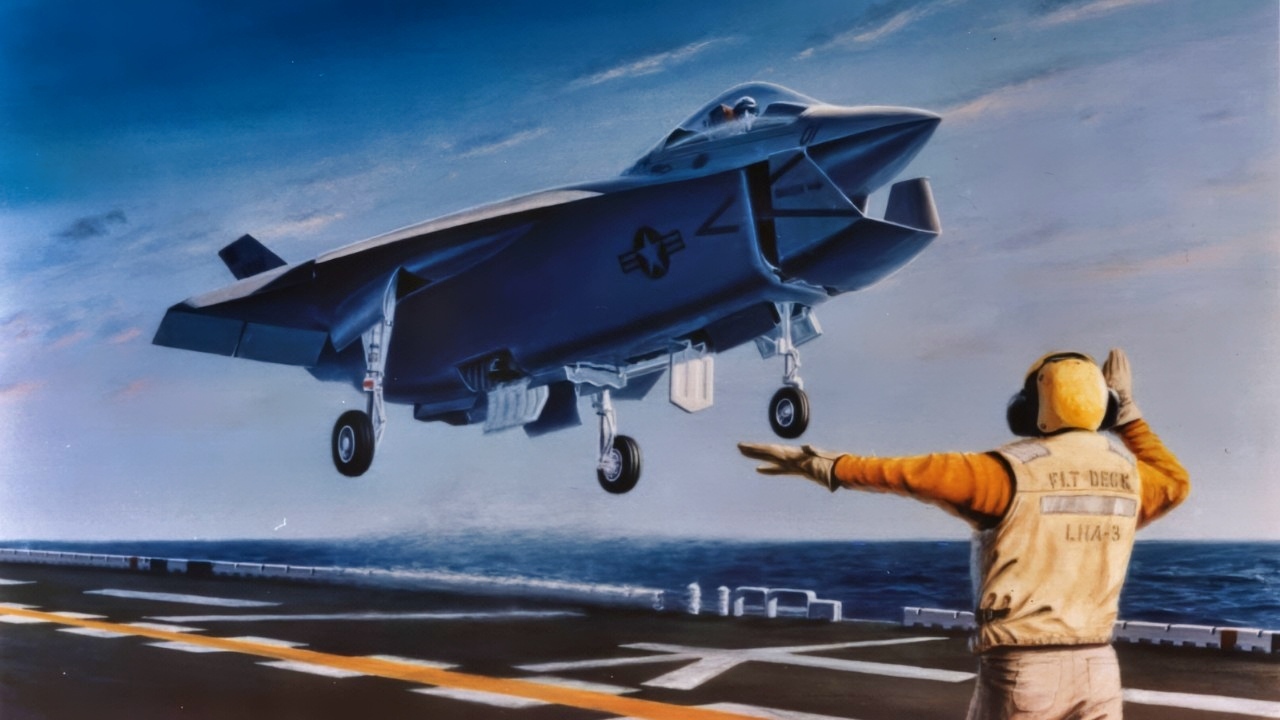
Key Points and Summary – Boeing’s X-32 (or what would have been the F-32) lost the Joint Strike Fighter competition to Lockheed’s X-35 (now F-35) for five key reasons.
-Its radical direct-lift vertical flight system was deemed far riskier than the X-35’s innovative lift-fan.
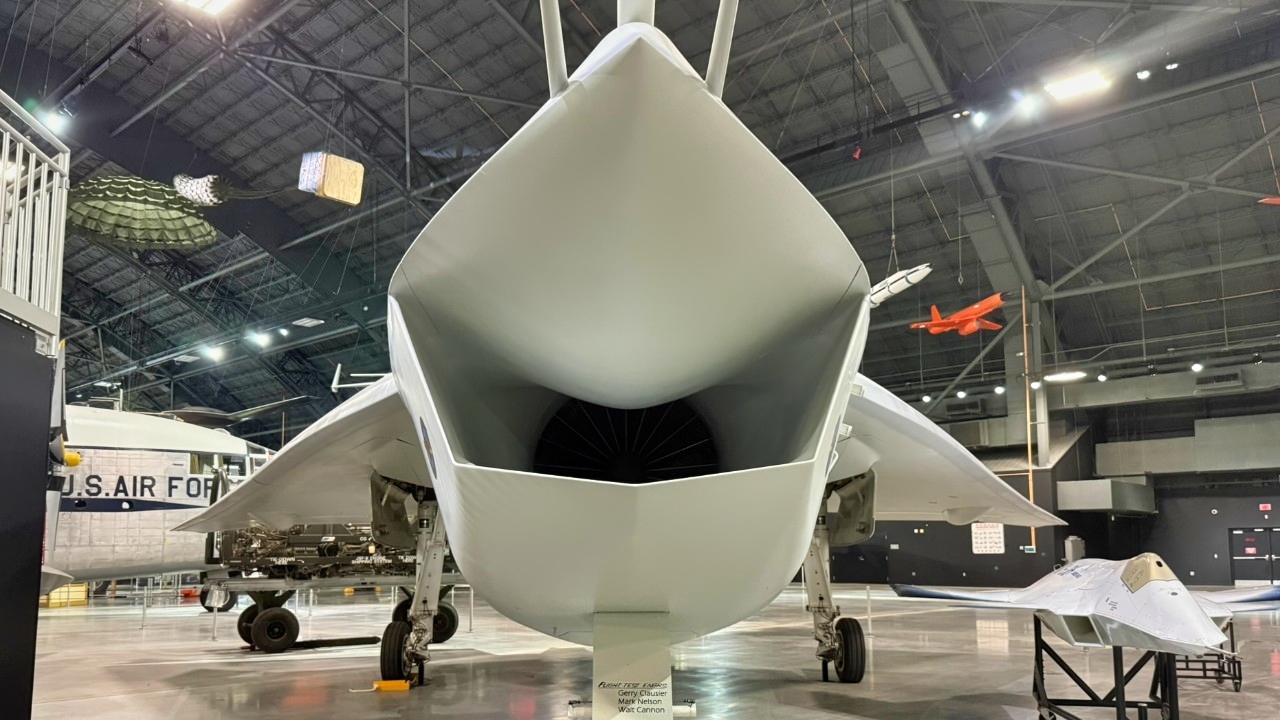
Head On Boeing X-32 Fighter. Image Credit: National Security Journal.
-This technical flaw forced Boeing to propose a major redesign during the competition, shattering confidence.
-Its unconventional, “ugly” appearance also suggested stealth and performance compromises.
-Ultimately, the Pentagon felt Lockheed’s team, fresh off the F-22 win, was a safer, more mature bet to deliver such a complex “joint” aircraft, dooming the X-32 to history.
The Boeing F-32 Fighter Fail
In the long, brutal history of military procurement, there has never been a competition like the Joint Strike Fighter (JSF) program.
This wasn’t just a contest to build a new plane; it was a high-stakes, winner-take-all gamble for what would become the largest and most expensive weapons program in all of human history, a contract valued at well over a trillion dollars.
The goal was borderline madness: to build one single, foundational aircraft that could serve the U.S. Air Force, the Navy’s aircraft carriers, and the Marine Corps’ need for a vertical-takeoff-and-landing jump jet.
Two of America’s greatest aviation titans, Lockheed Martin and Boeing, were pitted against each other.
In 2001, after years of development, their prototypes were revealed. The Lockheed Martin X-35, which would later become the F-35 Lightning II, looked the part. It was sharp, angular, and aggressive; it looked like a thoroughbred.
And then there was Boeing’s X-32.
To put it charitably, the X-32 was… unconventional. I loved the design, and you can’t really appreciate it unless you see it up close.
National Security Journal has visited both remaining X-32 or F-32 fighters that are in museums. One, sadly, is rotting away outside in Maryland, which was hard to stomach. We have images of both fighters included in this piece.
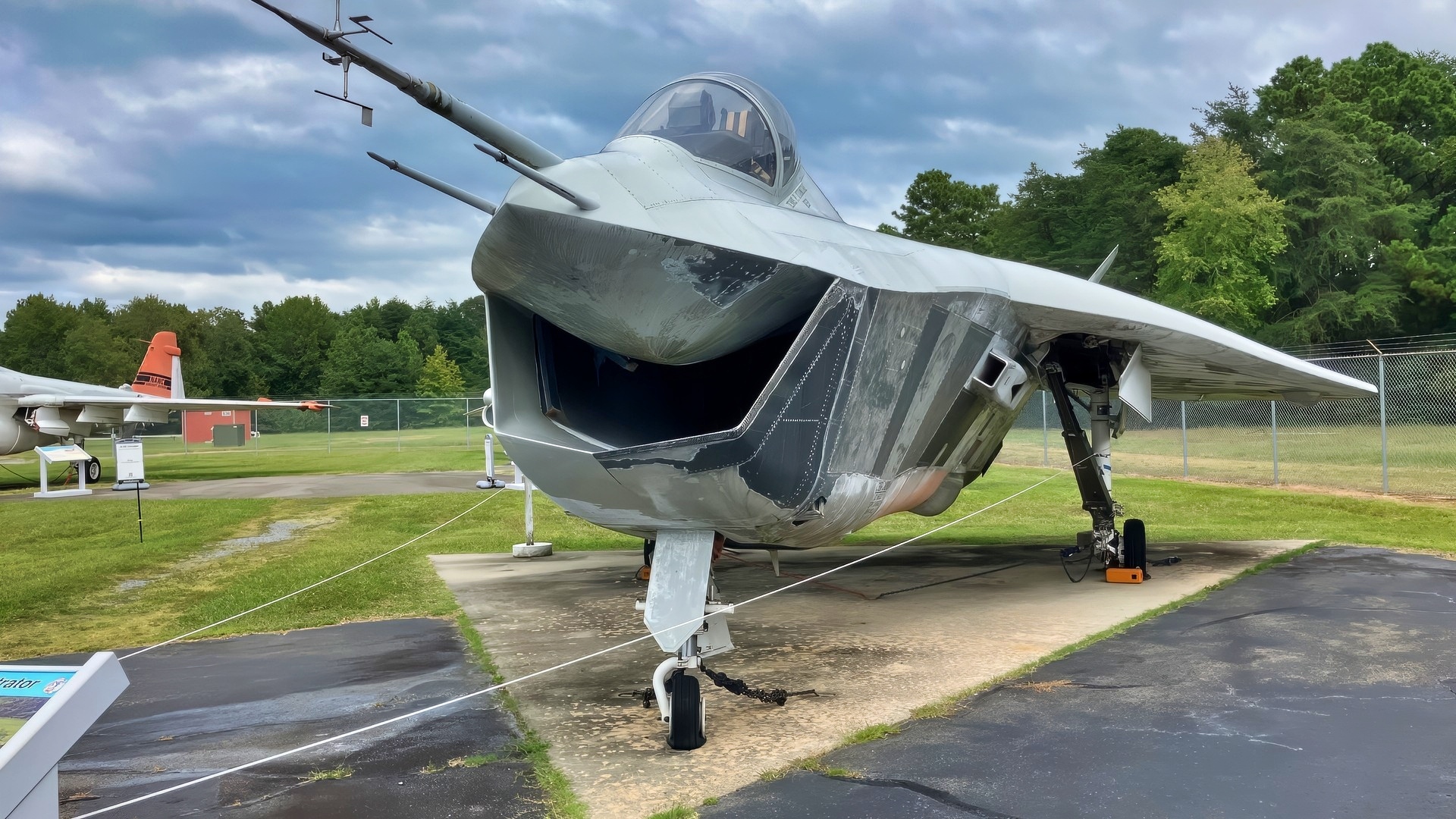
Boeing X-32 in Maryland NSJ Image September 2025. Image by Christian D. Orr.
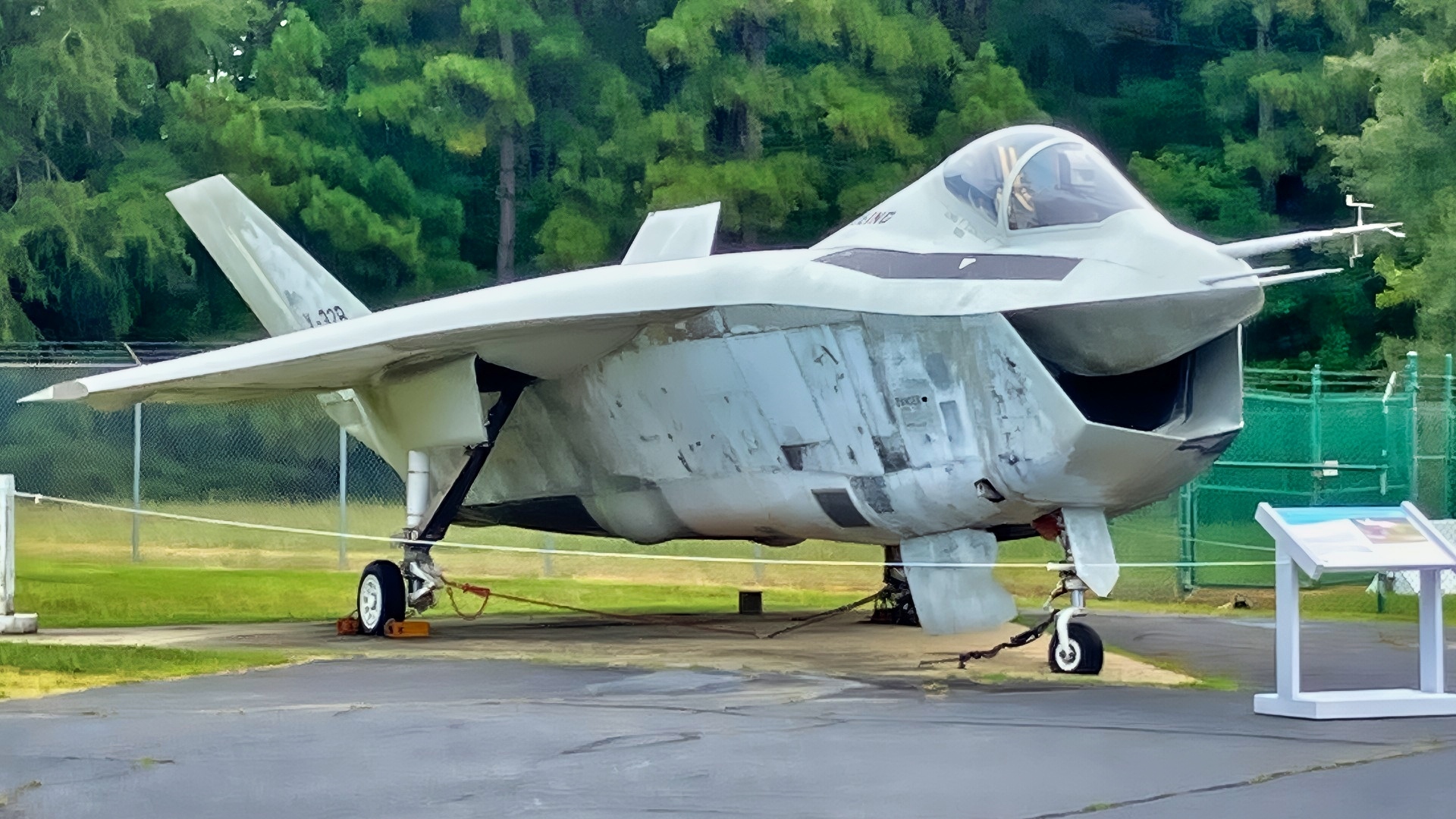
Boeing X-32 in Maryland National Security Journal Photo. Image Credit: Christian D. Orr.
It was a one-piece, almost cartoonish-looking machine with a massive, delta-shaped wing and a gaping, chin-mounted air intake that earned it a host of unflattering nicknames, from the “Flying Grin” to far less kind monikers. To many, it just looked ugly. But its appearance, while controversial, was just a symptom of a much deeper, more fundamental set of problems.
The X-32’s loss was not a simple failure. It was a complex and fascinating case study in how a company can lose a “too-big-to-fail” contract. Take it from me, the X-32 didn’t just lose because it was ugly. It lost because it was the wrong answer to an impossibly difficult question. It was a high-risk gamble that crumbled under the weight of its own perceived compromises. Here is the story of why the X-35 won, and why the X-32 was doomed from the start.
The STOVL Nightmare: A Fatal Technical Gamble
At the absolute heart of the JSF competition was the vertical-flight problem. The Marine Corps demanded a Short Take-Off and Vertical Landing (STOVL) aircraft to replace its aging Harriers. This is, without exaggeration, the most difficult challenge in aerospace engineering.
Balancing a 20-ton, jet-powered machine on a pillar of its own thrust is a dark art, and both teams proposed radically different solutions. This single choice, more than any other, may have been what sealed the X-32’s fate.
Lockheed’s X-35 featured a breathtakingly complex, but utterly brilliant, solution: the shaft-driven lift fan. It was a separate, vertically mounted fan, like a high-tech propeller, embedded in the fuselage behind the pilot.
When the pilot wanted to hover, doors would open, and the main engine would engage a drive shaft—like the 4-wheel drive on a truck—to spin this fan, which would blast cold air downward. This was combined with a main engine nozzle at the tail that could pivot to point straight down. It was an engineering marvel, but it was a known quantity. It built on a long, if troubled, history of similar concepts, and its use of “cold” fan air for the front lift post solved a multitude of physics problems.
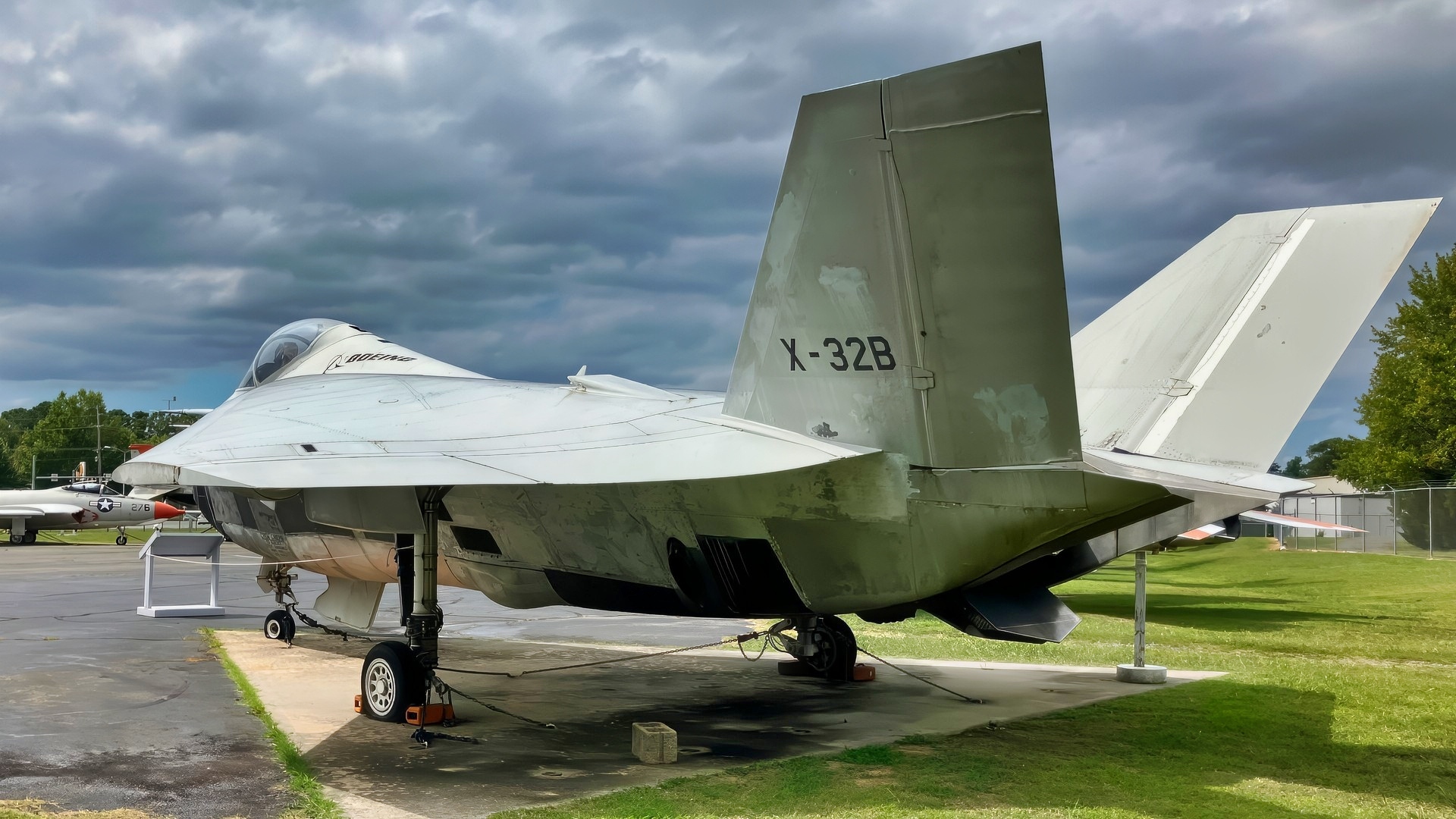
Boeing X-32 Stealth Fighter in Maryland. Image Credit: National Security Journal.
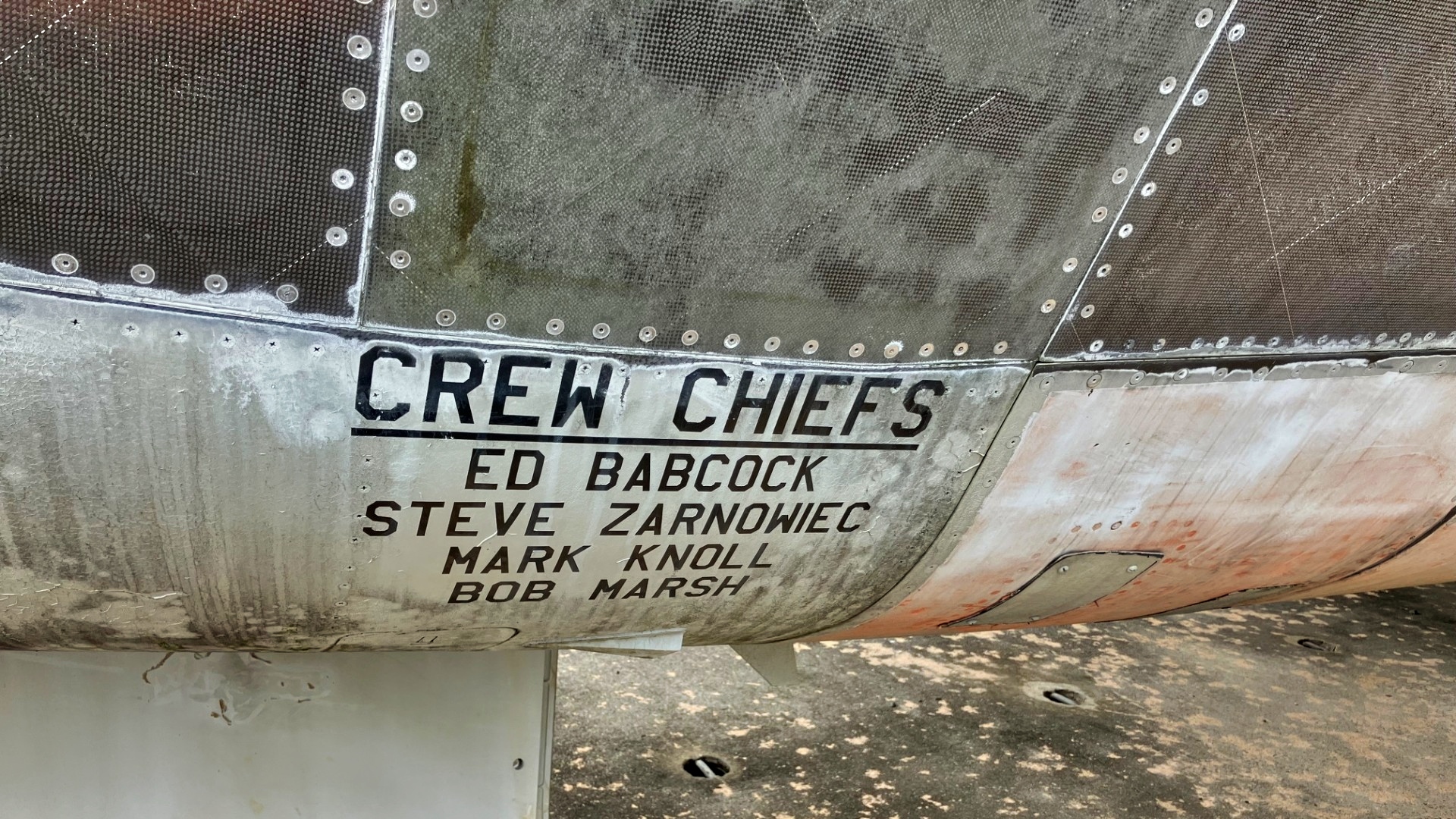
Boeing X-32 NSJ Original Image. Credit: Christian D. Orr.
Boeing’s X-32, on the other hand, went with what seemed like a simpler, more direct approach. They used a direct-lift system. When the X-32 needed to hover, the pilot would engage a series of ducts that would re-route the main engine’s blazing-hot jet exhaust to nozzles in the center of the aircraft, directly underneath its center of gravity. This, in theory, was simpler, with fewer major moving parts than Lockheed’s lift-fan-and-driveshaft contraption.
But in practice, it was a nightmare. The primary problem was “hot gas re-ingestion.” A hovering jet is constantly trying to suck its own hot, oxygen-poor exhaust back into its main engine intake. When this happens, the engine chokes, loses thrust, and the plane falls out of the sky. The X-32’s chin-mounted intake was in the worst possible position, practically begging to swallow its own toxic fumes. Furthermore, its direct-lift nozzles were so hot they threatened to melt the very runways and ship decks they were supposed to land on.
During testing, the X-32 STOVL prototype struggled. To manage the hot gas problem, it had to employ a complex system of “cool” bleed air from the engine, which added weight and robbed the engine of power. Lockheed’s X-35, by contrast, performed its vertical landing demonstrations with an elegance and confidence that was simply staggering. It was clear to the Pentagon’s engineers that one solution was a stable, well-engineered, and forward-thinking answer, while the other was a dangerous and compromised dead end.
The “I Promise It’ll Be Different” Fumble
This fundamental flaw in the STOVL design led directly to the single greatest unforced error of the competition. About halfway through the fly-off, as the X-32’s design problems became undeniable, Boeing did the unthinkable: they essentially admitted their prototype was wrong.
They announced that the production version of the F-32 would be dramatically different from the X-32 prototype everyone was looking at. The new design would ditch the distinctive delta wing and add a conventional tail with horizontal stabilizers, a massive change that would, in theory, improve its agility and carrier-landing characteristics.
Imagine you are a Pentagon official about to sign a check for a trillion dollars. One contractor, Lockheed, is flying a prototype that looks, acts, and performs almost exactly like the final product they are promising to build. The other contractor, Boeing, is flying a prototype that is clearly struggling, and is now showing you a set of drawings and computer models, saying in an imaginary scenario, “Trust us, the real plane will be completely different, and it will fix all the problems you see here.”
It was a catastrophic failure of confidence. It signaled to the Department of Defense that Boeing had miscalculated, that their initial design was flawed, and that they were still trying to figure out the basic aerodynamics of their plane, during the final exam. Lockheed was presenting a mature, low-risk solution.
Boeing was presenting a work-in-progress, a high-risk gamble that required the government to bet the future of its entire fighter fleet on a pinky-swear. In the world of high-stakes procurement, this was the equivalent of folding your hand.
Perception is Reality: The “Ugly” Factor
Now, let’s talk about the way the X-32 looked. It’s easy to dismiss the “ugly” argument as superficial. Military hardware is about function, not fashion. But in this case, the X-32’s appearance was a direct reflection of its design compromises.
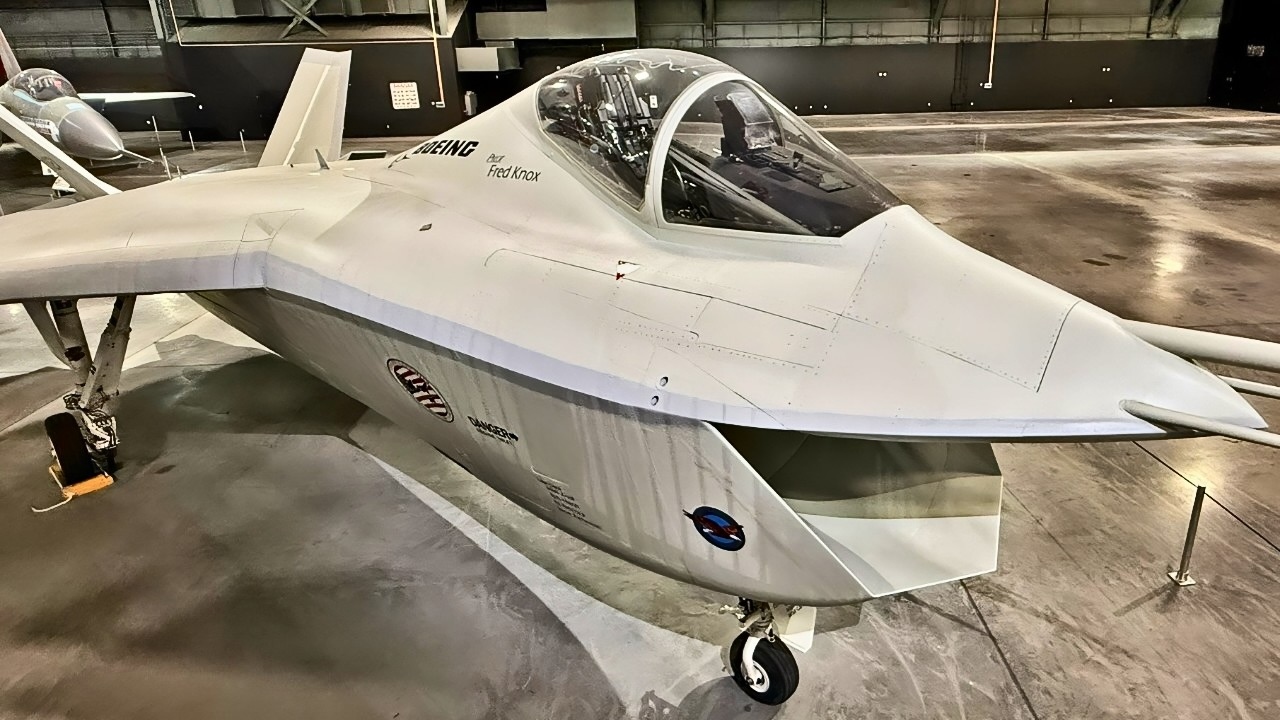
Boeing X-32 Really Up Close from National Security Journal (NSJ) 2025

Boeing X-32 JSF at USAF Museum July 2025. Image Credit: National Security Journal.
That gaping, perpetually-open maw of an inlet was not just an aesthetic sin; it was a massive radar-signature problem. In an age of stealth, where every line and every angle is meticulously designed to scatter radar waves, the X-32’s intake was a giant, gaping “hit me” sign. It was a deep, resonant cavity that, from a frontal aspect, would light up an enemy radar screen like a Christmas tree. Lockheed’s X-35, by contrast, used a far more advanced and stealthy “diverterless” inlet, a design that was clearly a generation ahead.
The rest of the X-32’s shape was a problem, too. Its deep, almost bathtub-like fuselage was a compromise to fit the vertical lift system and a large internal weapons bay. But it created a shape that was far less aerodynamic and, again, less stealthy than the X-35’s sharp, chiseled lines.
The plane didn’t just look ugly; it looked compromised. It looked like a machine that was trying to do too many things and had failed to do any of them elegantly. When the Pentagon’s top brass and congressional funders looked at the X-35, they saw the F-22’s younger, multi-role brother. When they looked at the X-32, they saw a-billion-dollar question mark.
The “A-Team”: Betting on a Proven Winner
The JSF competition wasn’t just a contest between two airplanes. It was a contest between two massive industrial teams. The Air Force wasn’t just buying a jet; they were buying a partner for a 50-year program.
On one side, you had Boeing, a titan of aviation. They were masters of building large, complex aircraft like airliners, bombers, and transports. But their recent experience with cutting-edge, high-performance stealth fighters was limited. Their partner, McDonnell Douglas, was still being digested after a recent merger and had its own history of program difficulties.
On the other side, you had Lockheed Martin. This was the house that built the F-117 Nighthawk, the world’s first operational stealth aircraft, in total secrecy. This was the team that had just, a few years prior, won the Advanced Tactical Fighter competition with the YF-22, a program that would create the most dominant fighter in history. Lockheed’s “Skunk Works” division had a mystique, a proven track record of delivering seemingly impossible technologies on time and on budget.
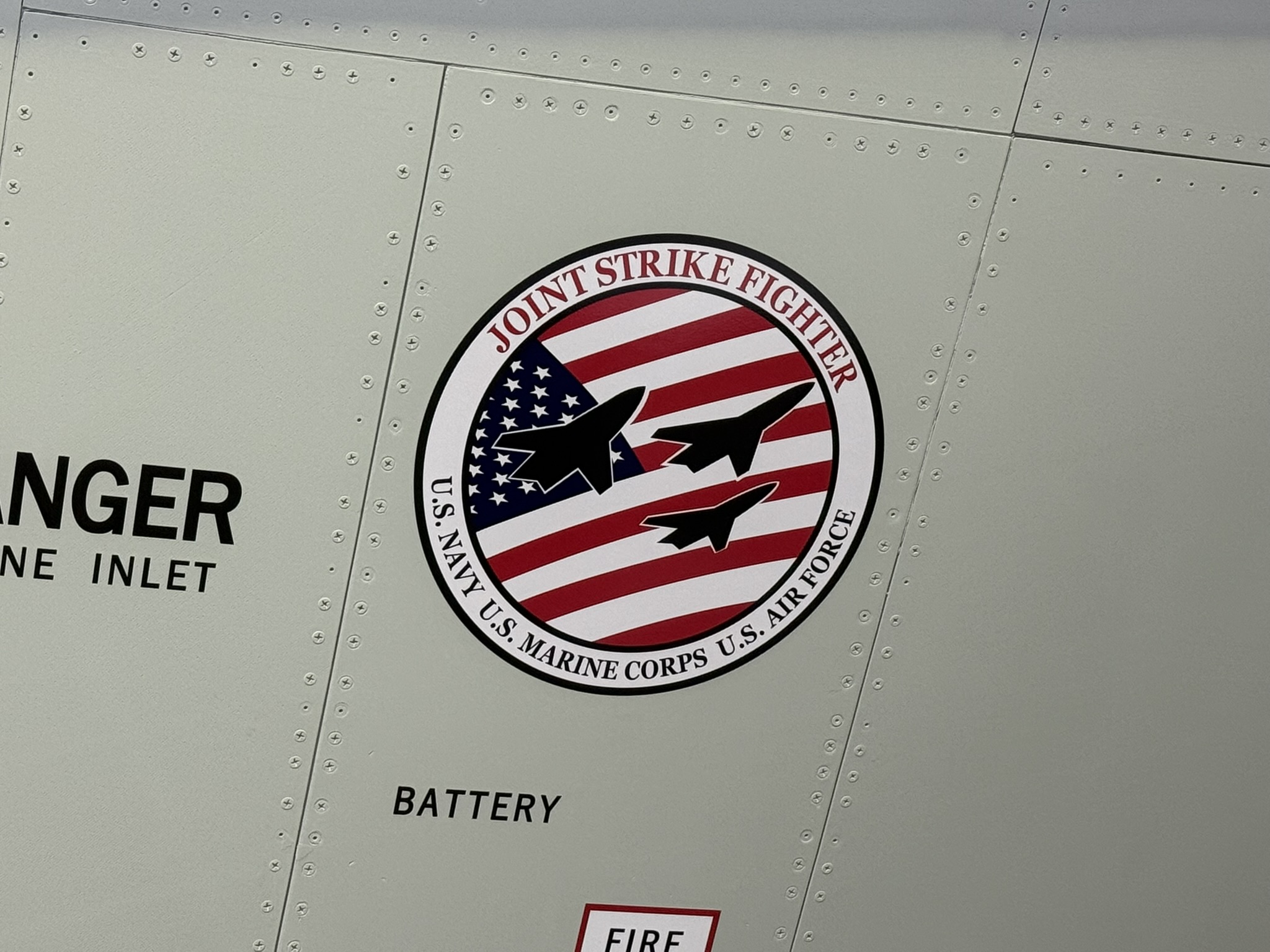
Boeing X-32 National Security Journal Photo. Taken on 7/19/2025.
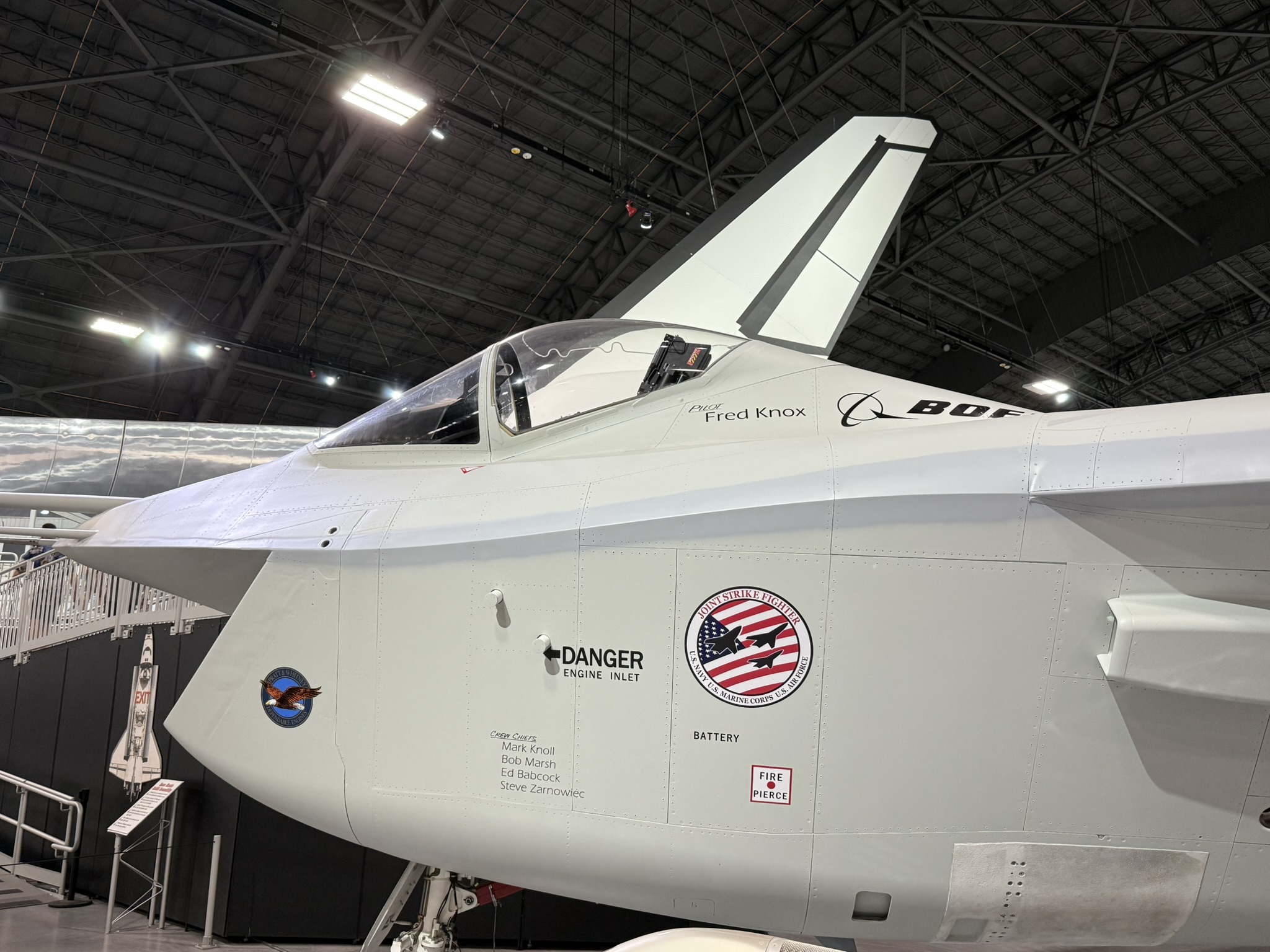
Boeing X-32 National Security Journal Photo. Taken on 7/19/2025.
When the government looked at the two proposals, they saw one team that was the undisputed king of stealth fighters (Lockheed) and another that was a king of everything else (Boeing). For a program this complex, this risky, and this reliant on the black magic of stealth, who would you bet on? The choice was obvious. The Pentagon went with the “A-Team,” the one with the proven, recent, and directly relevant track record.
The “Jack-of-All-Trades” Conundrum
Finally, the core challenge of the JSF program was its “joint” nature. Building a “one-size-fits-all” fighter for three different military services is a fool’s errand. The Air Force needs a nimble, land-based fighter. The Navy needs a robust, heavy-duty plane with a reinforced airframe and landing gear to withstand the violence of carrier landings. The Marines need a vertical-lift jump jet.
These are three wildly different, often contradictory, design requirements. The X-32’s design, with its massive, single-piece delta wing, was a “bet-it-all” approach. It was a radical airframe that Boeing tried to stretch into three roles. But it was fundamentally a compromise.
The X-35, while also a compromise, was built on a more conventional and flexible foundation. It looked like it had the bones of a classic fighter. Its airframe seemed more adaptable. Lockheed’s proposal, which essentially offered three highly common-but-still-distinct versions of one core design, was simply more believable. It looked like an Air Force fighter, it looked like a tough-as-nails Navy fighter, and with its lift-fan, it proved it could be a Marine jump jet.
Boeing’s X-32 looked like a STOVL-first design that was being awkwardly forced to pretend it could also be a carrier jet and an air-superiority fighter.
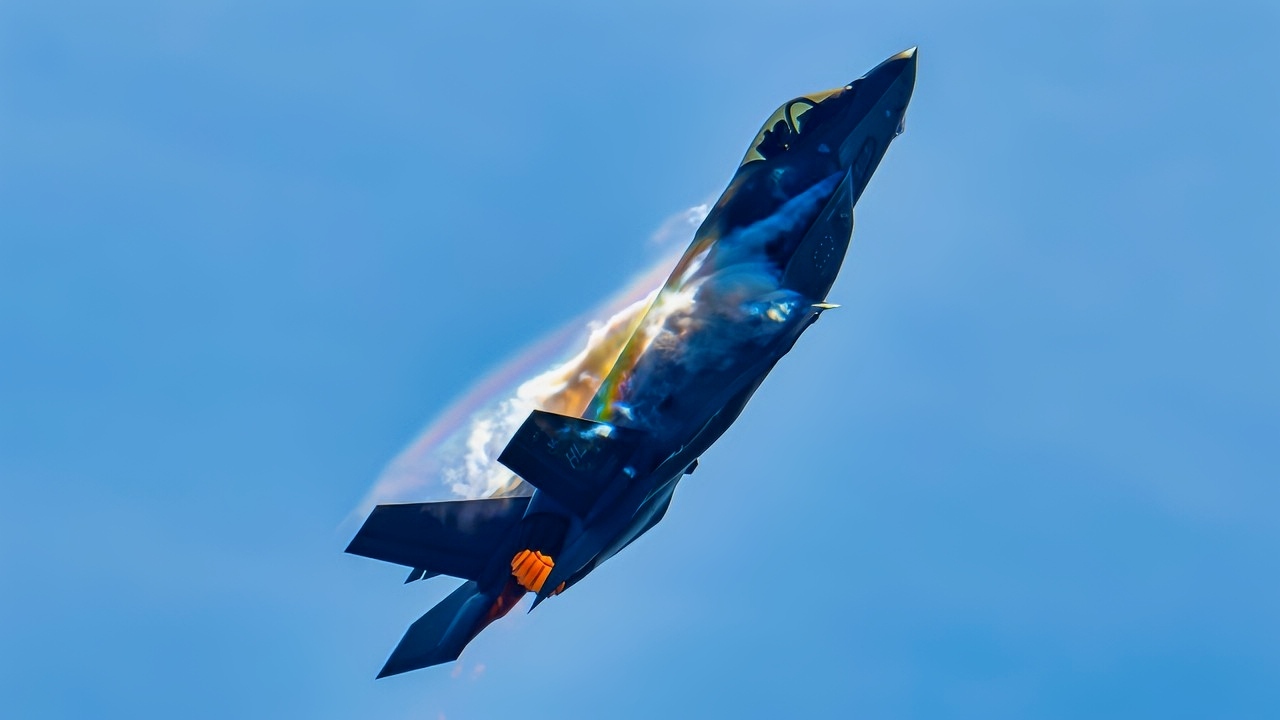
U.S. Air Force Maj. Melanie “Mach” Kluesner, F-35A Demonstration Team pilot, performs aerial maneuvers during the Abbotsford International Airshow in British Columbia, Canada, Aug. 9, 2025. The team travels worldwide to demonstrate the capabilities and precision of the U.S.’s most advanced fifth-generation fighter. (U.S. Air Force photo by Senior Airman Nicholas Rupiper)
The End of the Line for the F-32 Fighter
The X-32, or what would have been F-32, wasn’t a bad plane. It was a bold, innovative, and ultimately failed answer to an impossible question. It was a high-risk gamble that was out-maneuvered, out-engineered, and out-pitched by a competitor who offered a solution that was not only more elegant but, crucially, more believable.
The Pentagon, facing the most significant defense procurement in history, did the only logical thing: they chose the safer bet.
At least you can see it at two museums, where it will rest forever. And that makes me really sad inside.
About the Author: Harry J. Kazianis
Harry J. Kazianis (@Grecianformula) is Editor-In-Chief and President of National Security Journal. He was the former Senior Director of National Security Affairs at the Center for the National Interest (CFTNI), a foreign policy think tank founded by Richard Nixon based in Washington, DC. Harry has over a decade of experience in think tanks and national security publishing. His ideas have been published in the NY Times, The Washington Post, The Wall Street Journal, CNN, and many other outlets worldwide. He has held positions at CSIS, the Heritage Foundation, the University of Nottingham, and several other institutions related to national security research and studies. He is the former Executive Editor of the National Interest and the Diplomat. He holds a Master’s degree focusing on international affairs from Harvard University. Email Harry: [email protected].
More Military
How an F-16 Fighter Barely Dodged 6 Surface-to-Air Missiles
The Mach 2.15 F-111 Aardvark Has a Message for the U.S. Air Force
The U.S. Army’s Bradley Fighting Vehicle Has a Message for Any Military On Earth
The U.S. Navy’s Great Missile Shortage
The F-14 Tomcat U.S. Navy Fighter Has A Message for Any Military On Earth


Krystal cane
October 30, 2025 at 8:22 pm
I bet Trump would be stupid enough to reactivate this thing
John c. Johnson
November 2, 2025 at 8:27 pm
Jeeez stfu moron. Enough about Trump !