

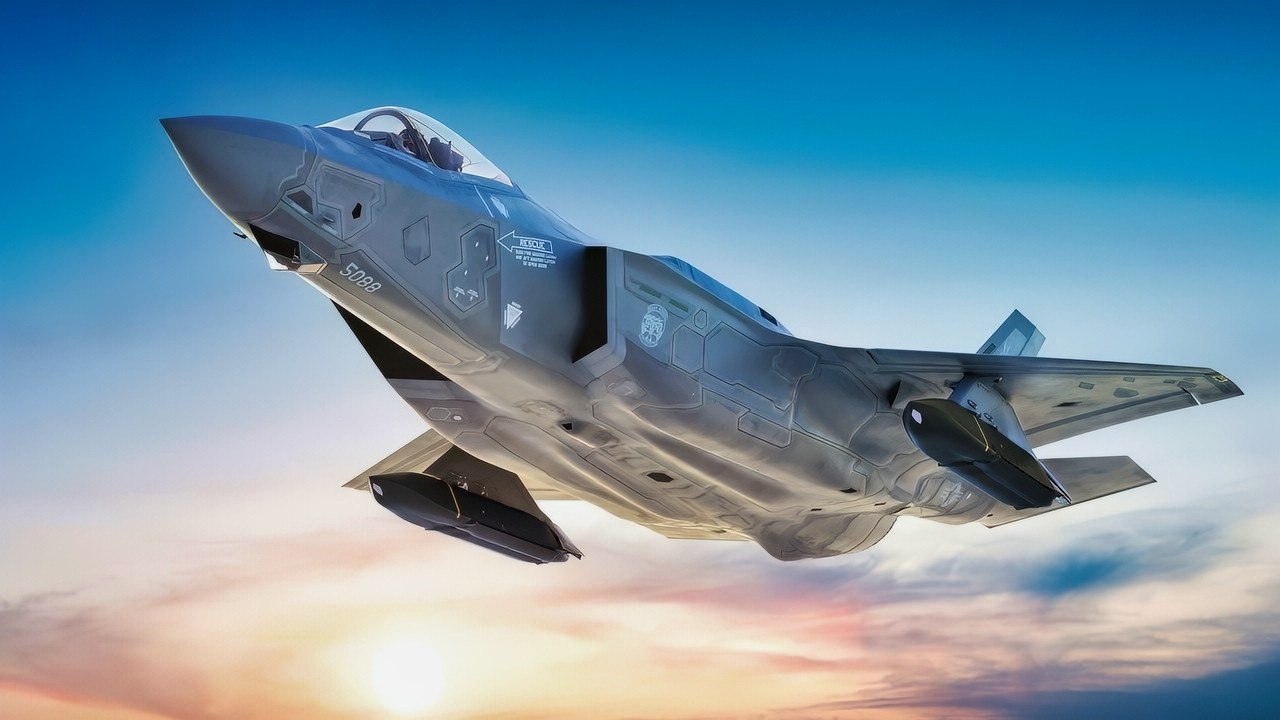
Key Points and Summary – The F-35’s current, trouble-prone F135 engine, now requiring a multi-billion-dollar fix, is a direct result of “penny-wise, pound-foolish” decisions made decades ago.
-A historical analysis traces the problem back to the 1990s “Engine War,” when the USAF chose a lower-cost but less-capable Pratt & Whitney engine for the F-22 over a superior GE design.

YF-23 National Security Journal Close Up Photo
-This was compounded in 2011 when the competing GE alternate engine for the F-35 was canceled, giving the F135 a monopoly.
-This history has left the F-35 with an engine that is being taxed beyond its original design limits.
-This compounds other F-35 problems, considering the now $2 trillion lifetime cost of the fighter program
The F-35 Engine Challenge
WARSAW, POLAND – Why is it that the US Air Force (USAF) is now going to spend almost $3 billion on fixing problems with the F135 engines that are built for the F-35 fighter aircraft?
The engine has been a problem for this program from the outset, and all indications suggest that its shortcomings will only worsen over time.
Currently, the engine is undergoing an “Engine Core Upgrade” (ECU) as described by the OEM, Pratt & Whitney.
This comprehensive program is designed to enhance the durability and performance of the engine.
The fixes for the design of the core section are supposed to be introduced in service by 2029, which means four more years of the same headaches with availability rates and other expensive shortcomings.

A U.S. Air Force F-35 Lightning II from the 48th Fighter Wing approaches a KC-135 Stratotanker from the 100th Air Refueling Wing during an aerial refueling mission as part of combat readiness inspection Skyway Chariot over the North Sea, May 8, 2025. Skyway Chariot was designed to assess how effectively the 100th ARW could operate under constrained conditions in the face of a potential threat. (U.S. Air Force photo by Airman 1st Class Aidan Martínez)
So, how did all this happen?
How did the most expensive weapon system program in US DoD history end up with a trouble-prone engine?
The F-35 Engine Problem, Explained
In an effort to provide a comprehensive answer, I spent most of my life in the defense sector of the aerospace industry.
I had the chance to witness some historical moments in the development of some of the most advanced aircraft, aeroengines, missile systems, and radars ever produced in the US.
I was also able to see some of them being designed from the rivets up and to watch later them develop, evolve, and grow from brand-new concepts into prototypes and then on into production-standard models.
People used to ask me what there was about working in the design and development divisions of a defense company that prepared someone for doing business in the commercial world.
My answer was straightforward.
Being involved in the development process of a weapon system that will be in service for decades teaches one a lesson that is invaluable.
That lesson is, quite simply, that tiny mistakes made in the initial design stages will – over the course of that weapon system’s years in service – expand geometrically and can eventually become overwhelming.
“There are no ‘small mistakes’ when it comes to a program of any kind, especially if it is going to be active for many years,” I used to say.
“There are only what seem like inconsequential errors at the time that grow to become major ones and become horrendously expensive.”
The F135 is a textbook example of just this kind of dilemma.
Engine Wars – Part 2
In the 1980s, the two major US jet engine manufacturers, GE and Pratt & Whitney (PW), were engaged in what has become known in history as the Great Engine War.
The GE F110 and PW F100 engines that power the F-15 and F-16 aircraft were the outcome of that competition, with both engines being purchased by different customers for those aircraft, by both the US military and export users.
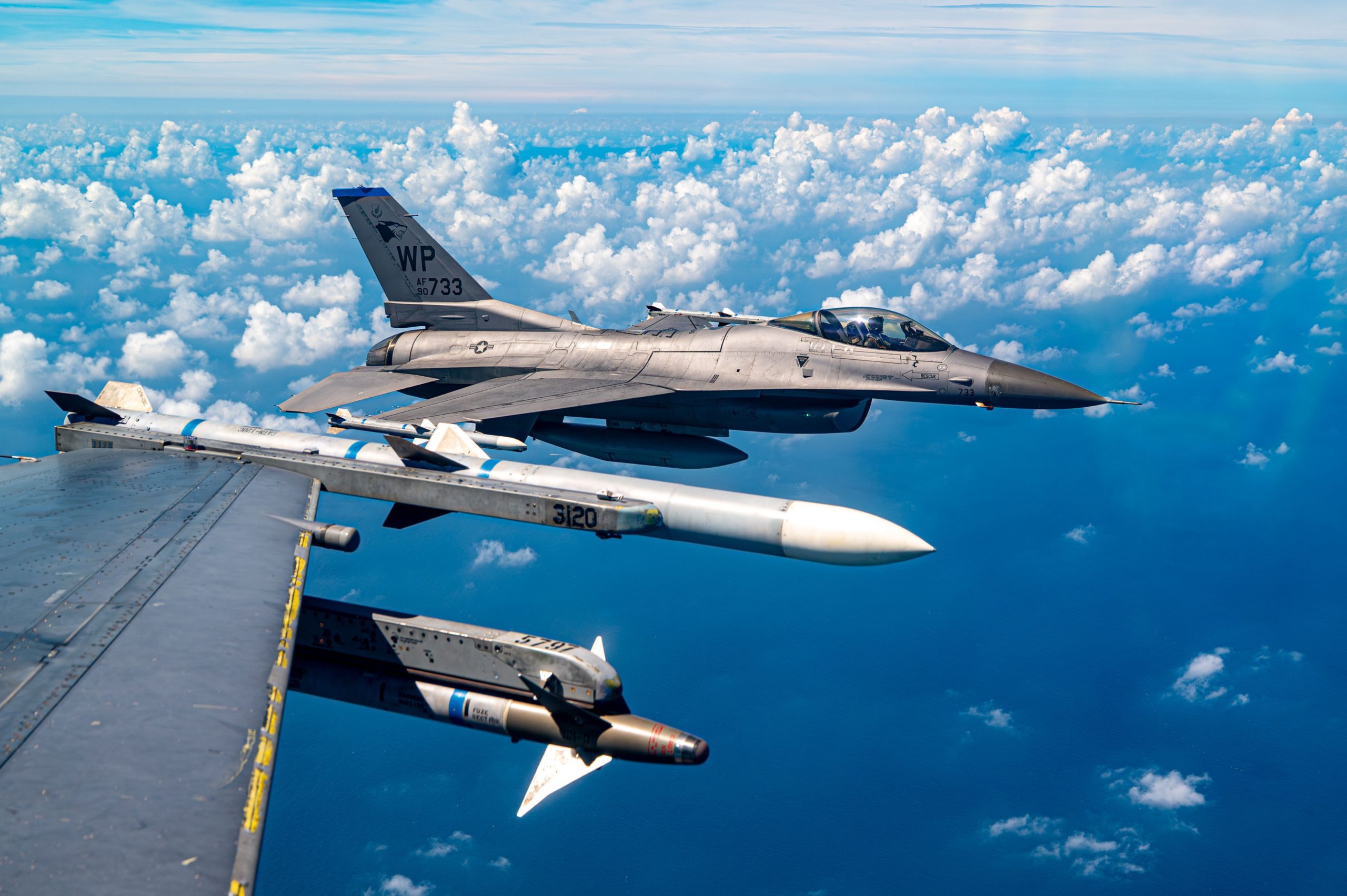
A 35th Fighter Squadron F-16 Fighting Falcon flies near the Korean peninsula during a dogfighting training scenario during exercise Ulchi Freedom Shield 25 at Kunsan Air Base, Republic of Korea, Aug. 20, 2025. UFS25 is a combined, joint, all-domain military training exercise that integrates ground, air, naval, space, cyber and information elements, enhancing readiness through realistic combat simulations. (U.S. Air Force photo by Senior Airman Landon Gunsauls)
What happened next was a second round of the same kind of engine war. Both of the companies began developing engines to power what was then called the Advanced Tactical Fighter (ATF) for the USAF.
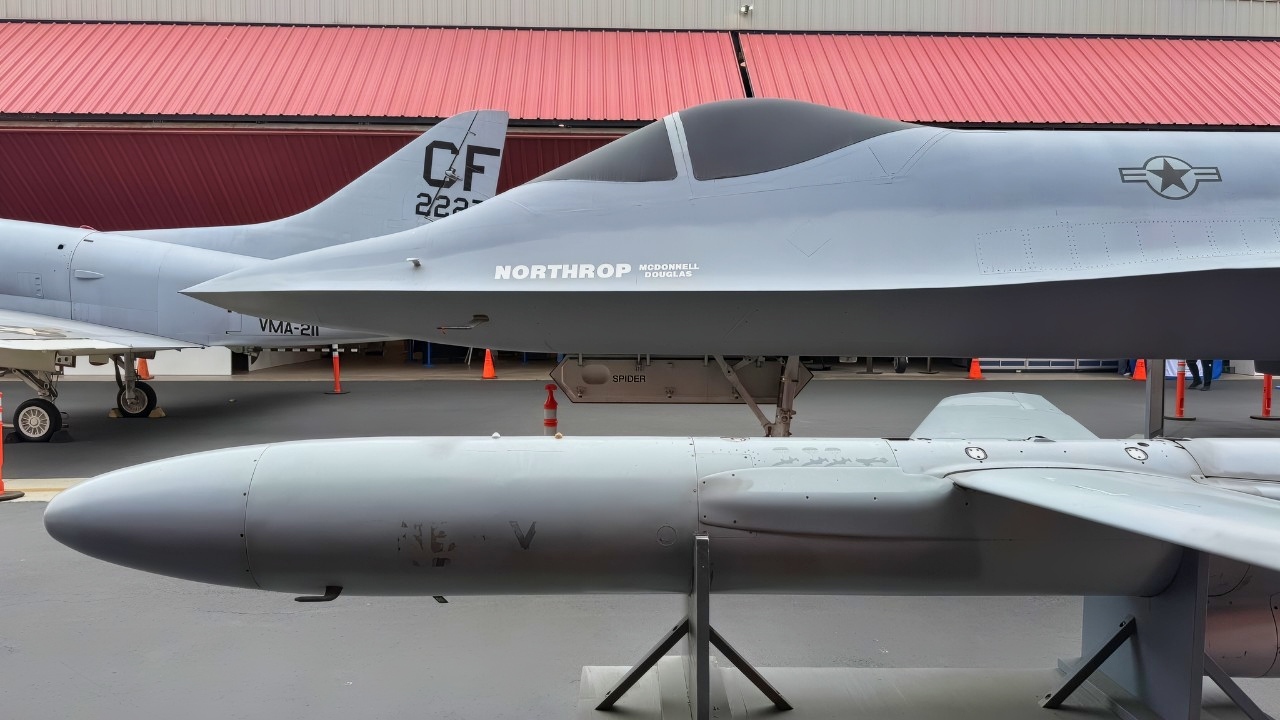
Two prototype aircraft, each produced by the design teams: the Northrop and McDonnell-Douglas YF-23 and the Lockheed-Boeing-General Dynamics YF-22.
One prototype from each team was powered by two PW YF119 engines, and one from each team had two GE YF120s installed.
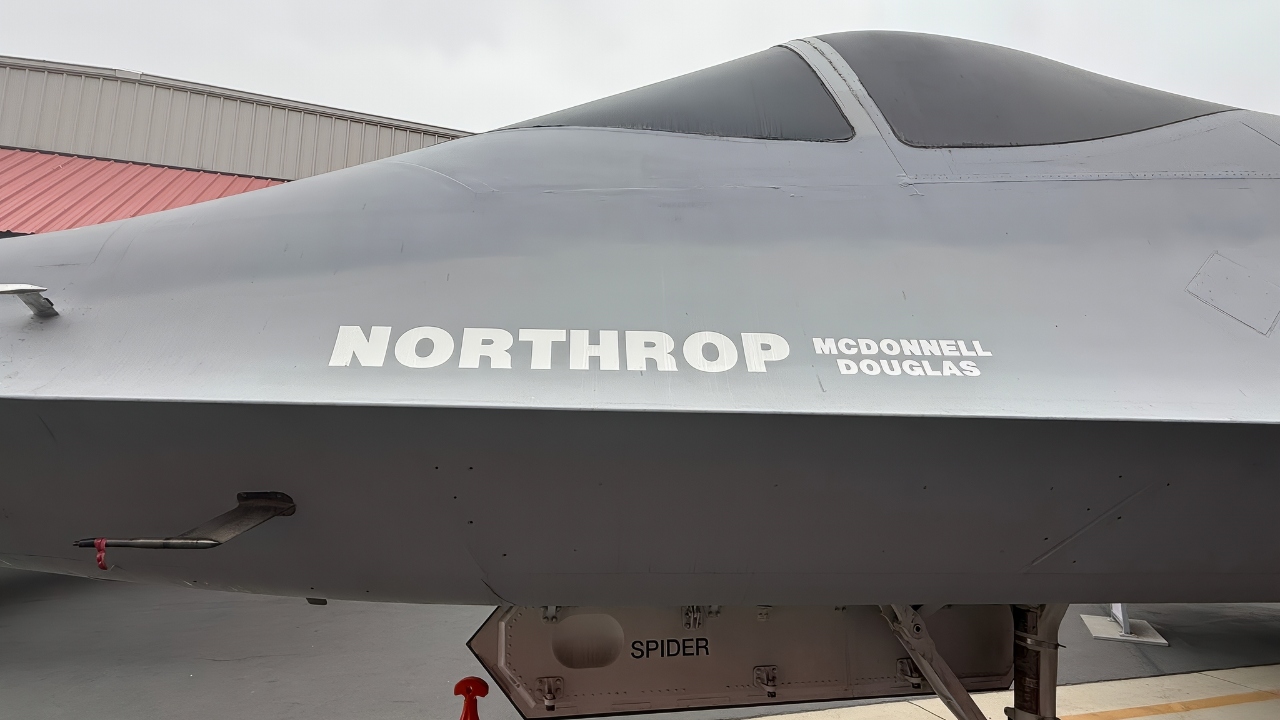
Sideview of YF-23A Black Widow II. Image Credit: Harry J. Kazianis/National Security Journal.
The two engines were, however, very different.
The YF119 was lighter in weight, rated as less technical risk, and also lower in price.
The GE YF120 was heavier but more advanced and was also superior in performance.
This was particularly true for one of the most essential requirements for the ATF program: the aircraft’s ability to supercruise.
The difference in maximum speed from the installed performance of the aircraft and engine combinations in the 1990 flyoff that was conducted is illuminating:
YF-22 (YF119 engines): Mach 1.43
YF-22 (YF120 engines): Mach 1.58
YF-23 (YF119 engines): Mach 1.43
YF-23A Black Widow II Stealth Fighter in Torrance
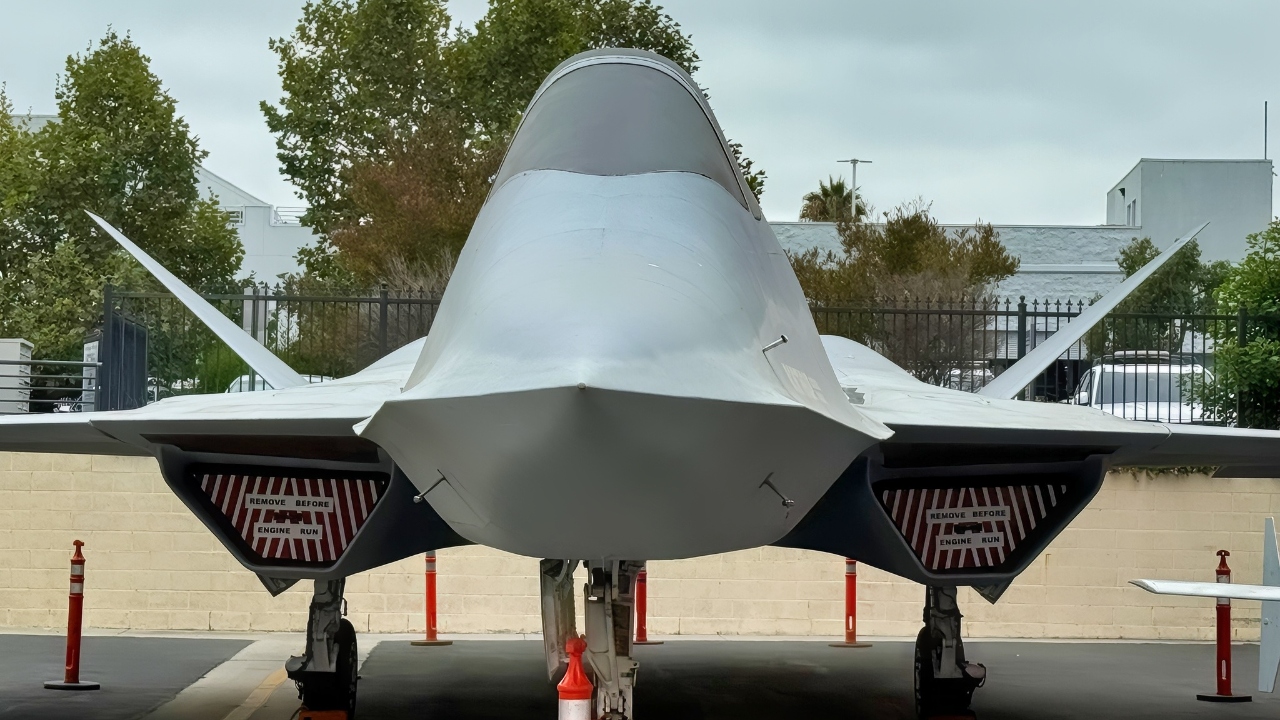
YF-23A Black Widow II Head On. Image Taken by National Security Journal at the Western Museum of Flight on August 16, 2025.
YF-23 (YF120 engines): Mach 1.6+
The short version is that the YF120 engine demonstrated superior performance in both aircraft prototypes, and the YF-23 was a more effective aircraft than the YF-22.
This may explain why today many of those familiar with the performance of the prototypes continue to say that the USAF picked the safer, less expensive – but also less capable combination of aircraft and engine.
Some of the GE engineers who participated in the YF120 program were more direct. The YF120 was a “true 5th-generation fighter engine.
However, the PW YF119 prototype engine was not significantly different from a standard F100, except for a different fan and some other hardware modifications.
So, the ‘F119’ engine that the USAF selected was an engine only on paper.
If it did not exist, it was left to PW to develop it after the selection had been made.
The USAF picked something that could convert JP4 into noise, but it was not a next-gen engine.”
The F-35 Engine Decision
Fast-forward to the 2000s, and it is now time to select an engine for the F-35.
The two companies submitted engine proposals that would be derivatives of their original F-22 engines and optimized for the F-35’s single-engine requirement.
The F119 engine was used to develop the F135, and GE converted its F120 design into the F136.
The two-engine programs were maintained for several years until the GE/Rolls-Royce F136 effort was terminated in 2011, clearing the way for the PW F135 to have a monopoly among the F-35’s customers.

U.S. Air Force Airman 1st Class Jacob Taylor, a dedicated crew chief assigned to the 48th Fighter Wing, communicates with an F-35 Lightning II pilot,during Point Blank 22-3, at Royal Air Force Lakenheath, England, June 23, 2022. Point Blank is a recurring joint training exercise designed to enhance tactical proficiency and interoperability with NATO allies and partners. (U.S. Air Force photo by Senior Airman Koby I. Saunders)
The Great Engine War was finally over.
Unfortunately, the lesser performance of the F119 design when converted into the F-135 as a single engine became more pronounced and was less than optimal.
This has required the engine to undergo numerous fixes to address the fact that it is being taxed beyond its designed-in performance capability.
Today, this accounts for the billions that must now be spent on these fixes, as well as the ECU.
What is ironic is that the rationale for canceling the F120, which would likely have been a better engine for the F-35, was that it was an unnecessary expense.
How much more?
The USAF is being forced to spend $3 billion today on fixing problems with the F135. Can you say “penny-wise and pound-foolish”?
About the Author: Reuben F. Johnson
Reuben F. Johnson has thirty-six years of experience analyzing and reporting on foreign weapons systems, defense technologies, and international arms export policy. Johnson is the Director of the Asia Research Centre at the Casimir Pulaski Foundation. He is also a survivor of the Russian invasion of Ukraine in February 2022. He worked for years in the American defense industry as a foreign technology analyst and later as a consultant for the U.S. Department of Defense, the Departments of the Navy and Air Force, and the governments of the United Kingdom and Australia. In 2022-2023, he won two awards in a row for his defense reporting. He holds a bachelor’s degree from DePauw University and a master’s degree from Miami University in Ohio, specializing in Soviet and Russian studies. He lives in Warsaw.
More Military
A Shipyard Worker Started a Fire on a U.S. Navy Nuclear Submarine to ‘Go Home Early’
The F-35 Has a Range Problem That Can’t Be Fixed
The F-14D Tomcat Still Haunts the U.S. Navy


