

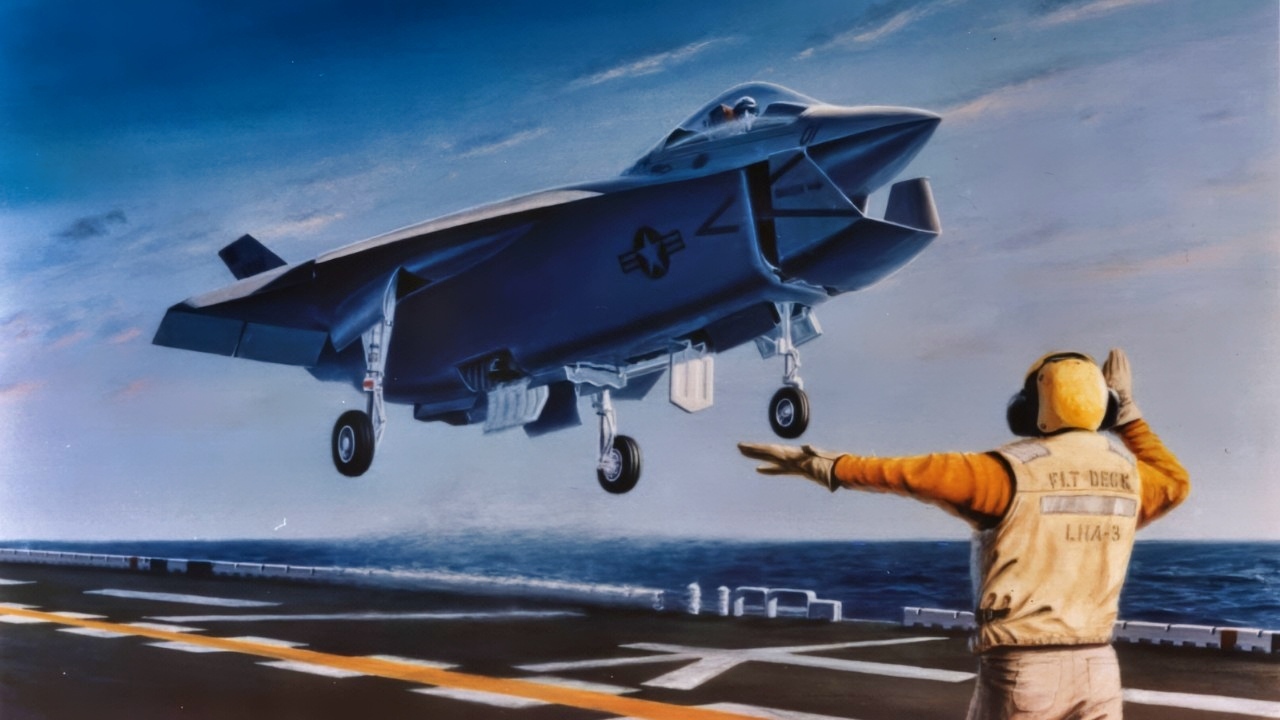
Key Points and Summary – Two nearly-forgotten prototypes—the workhorse-aimed X-32 and the shadowy, long-reach YF-23—took very different bets on air combat.
-In a real duel, the YF-23’s sneak, speed, and first-shot philosophy likely ends the fight before the X-32 knows it’s in one; up close, neither jet is a knife-fighter, so the winner is whoever cues and shoots first.
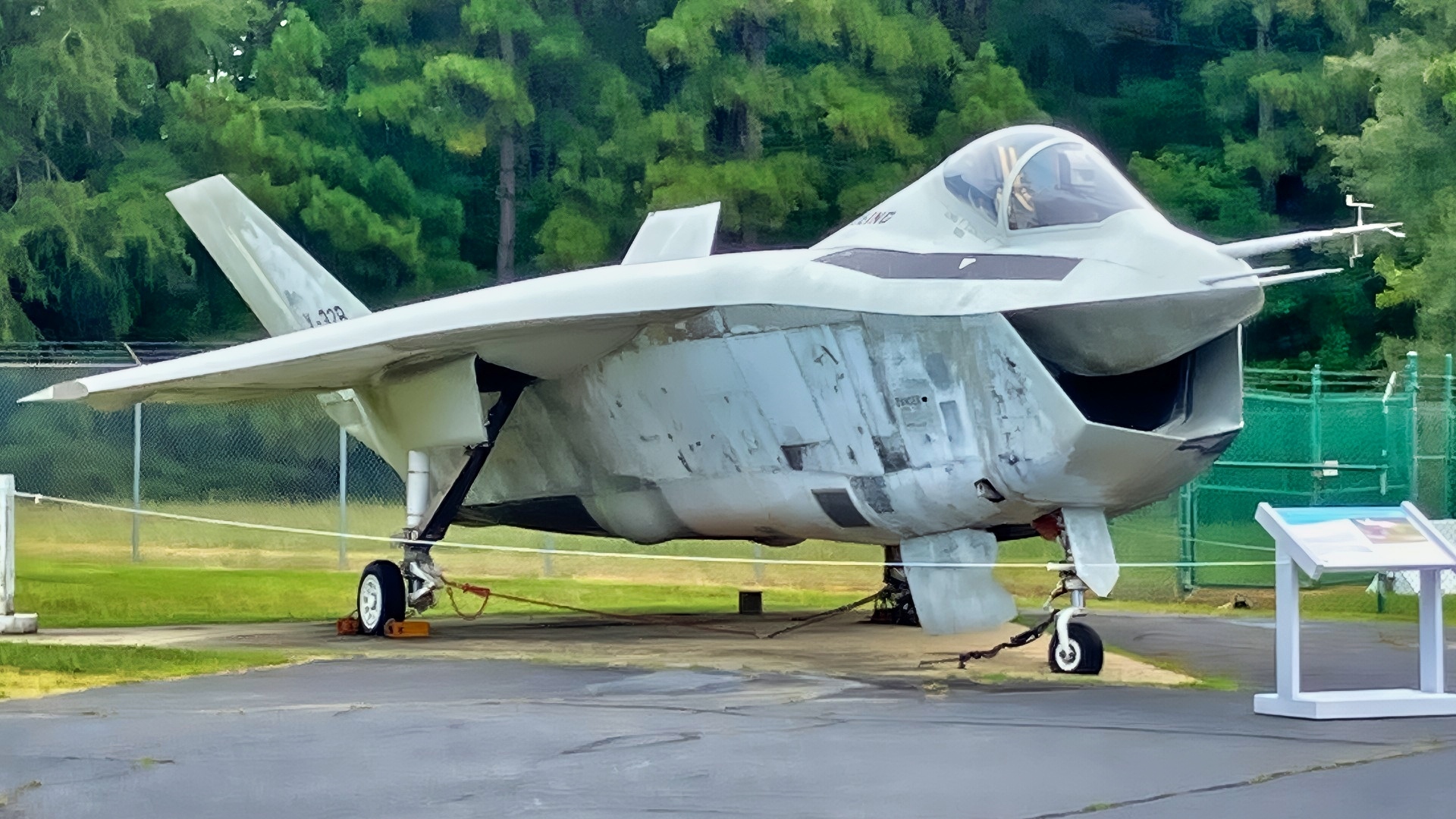
Boeing X-32 in Maryland National Security Journal Photo. Image Credit: Christian D. Orr.

YF-23A Black Widow II National Security Journal Photo. Taken at the Western Museum of Flight by Harry J. Kazianis on August 16, 2025.
-The X-32’s probable F-35-style brains are impressive, but the YF-23’s ghost-like approach stacks the deck at long range.
The Match: YF-23 Black Widow II vs. Boeing X-32 Stealth Fighter
The YF-23 and X-32 were both technology demonstrator aircraft that competed for acceptance into the U.S. Air Force.
Ultimately, they were beaten out by the F-22 and F-35, but as time has passed, both aircraft have developed a cult following, with arguments being made that they should have won their respective competitions.
Additionally, National Security Journal has visited all X-32 and YF-23 airframes still in existence.
In fact, for your viewing pleasure, we have included an original video and numerous photos in this article to give you a sense of what these stealth fighters are all about.

X-32 and YF-23 Together at U.S. Air Force Museum. Image: National Security Journal.
Today, I’d like to consider a hypothetical scenario and examine how these two aircraft would fare in a one-on-one combat situation.
Losers Bracket: The X-32 vs the YF-23
The X-32 was conceived as a multi-role stealth fighter that could serve the Air Force, Navy, and Marine Corps.
Its design emphasized affordability, modularity, and versatility. Boeing aimed to create a fighter that could perform ground attack missions, air-to-air combat, and carrier operations.
The aircraft featured a large chin-mounted air intake and a delta wing configuration, which gave it a distinctive appearance but also introduced aerodynamic compromises. The initial prototype had a single-piece wing and a bulky fuselage, which negatively affected its agility and stealth characteristics.
While the X-32 was capable, it was not optimized for air superiority or high-performance dogfighting.

YF-23A Side View Western Museum of Flight. Image by National Security Journal.
In contrast, the YF-23 was designed with a singular focus on air dominance. Northrop’s approach prioritized stealth, speed, and long-range engagement capabilities.
The aircraft featured a diamond-shaped wing, V-tail configuration, and blended fuselage, all of which contributed to its extremely low radar cross-section.
The YF-23 also incorporated serpentine air intakes and internal weapons bays to reduce its radar and infrared signatures further.
Unlike the X-32, the YF-23 was built to avoid detection, engage enemies from long distances, and exit the battlespace before being targeted. It was a true stealth interceptor, designed to win through superior situational awareness and first-strike capability.
Engine Performance
In terms of engine performance, the X-32 falls short in certain areas, at least compared to the YF-23. The X-32 had a maximum speed of around Mach 1.6 and lacked supercruise capability, meaning it could not sustain supersonic flight without using afterburners.

Boeing X-32 Up Close from National Security Journal (NSJ) 2025 Photo Shoot.
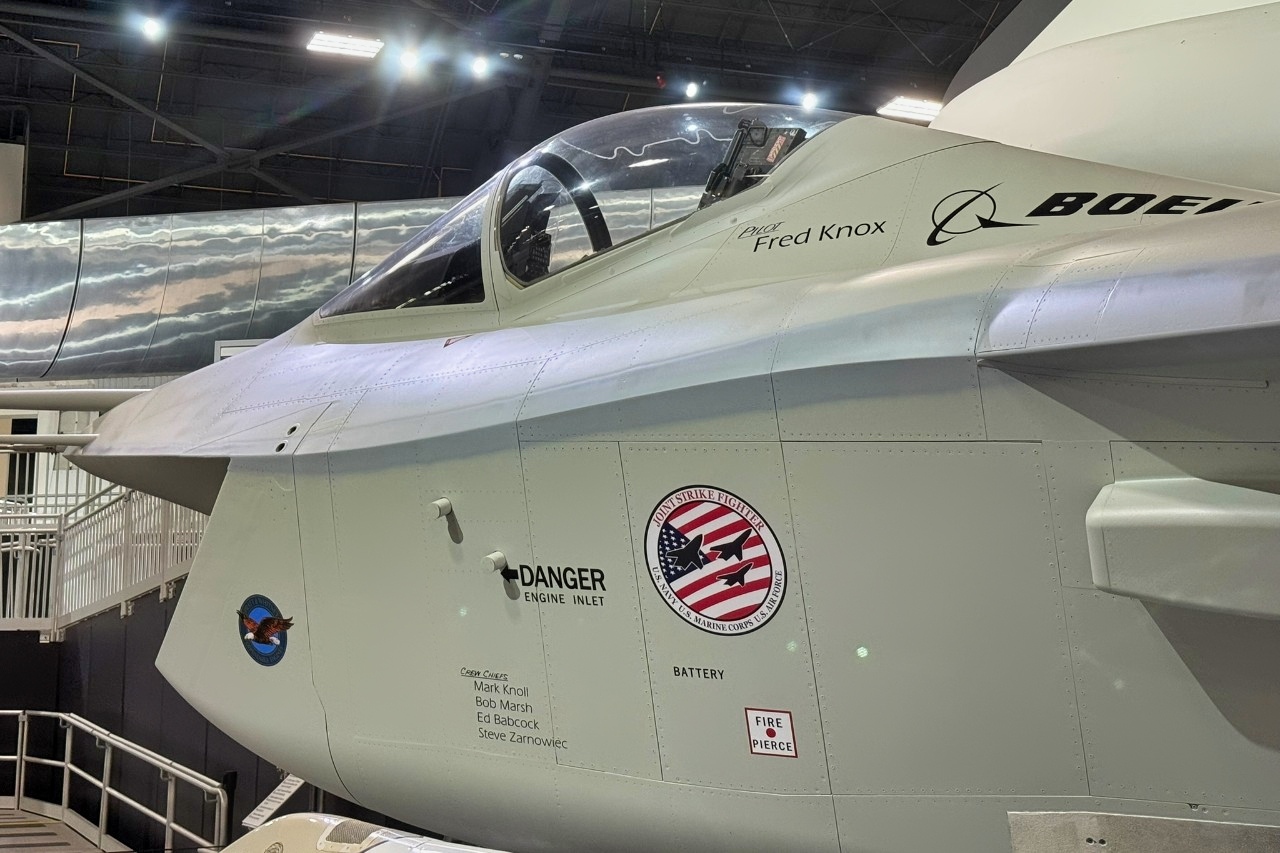
Boeing X-32 Fighter from USAF National Security Journal Original Photo. Taken July 20, 2025.
Its combat radius was approximately 600 to 800 miles, and it could carry a payload of up to 15,000 pounds. While it was designed to be stealthy, its radar cross-section was higher than that of the X-35, which ultimately won the JSF competition. The X-32’s maneuverability was moderate, and its avionics suite was intended to be modular and adaptable across different service branches.
The YF-23, on the other hand, could exceed Mach 2.0 and featured supercruise capability. This gave it a significant advantage in terms of energy efficiency and tactical flexibility. Unfortunately, its high performance comes at the cost of agility.
Its combat radius was between 800 and 1,000 miles, and it could carry a payload of up to 20,000 pounds.
The aircraft’s stealth characteristics were exceptional, rivaling or even surpassing those of the F-22 in some respects. Although it possessed advanced flight control systems, it was less maneuverable than the YF-22 due to the compromises made to maximize speed and stealth.
Stealth and Avionics
In terms of survivability, the YF-23 was clearly superior.
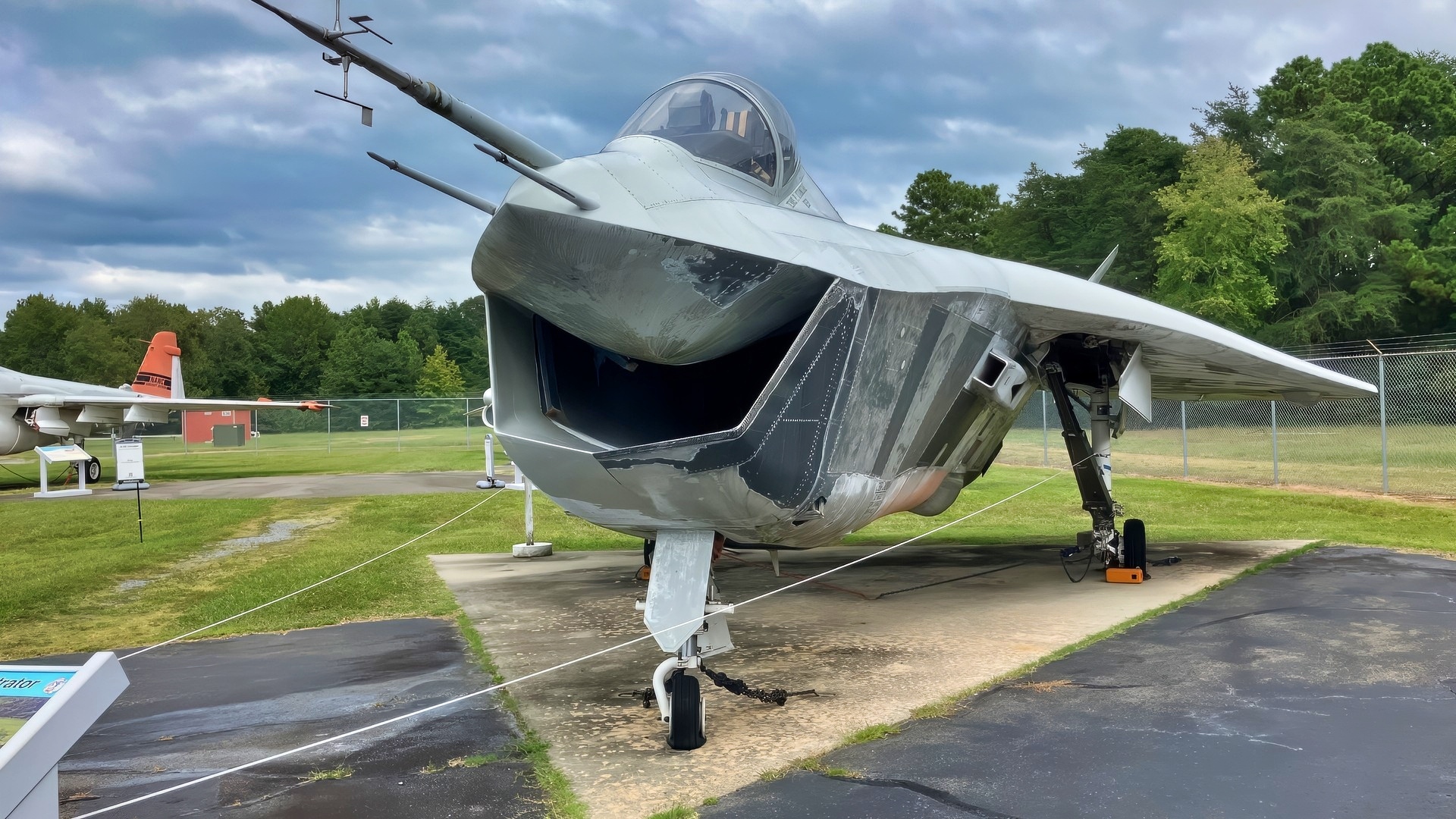
Boeing X-32 in Maryland NSJ Image September 2025. Image by Christian D. Orr.
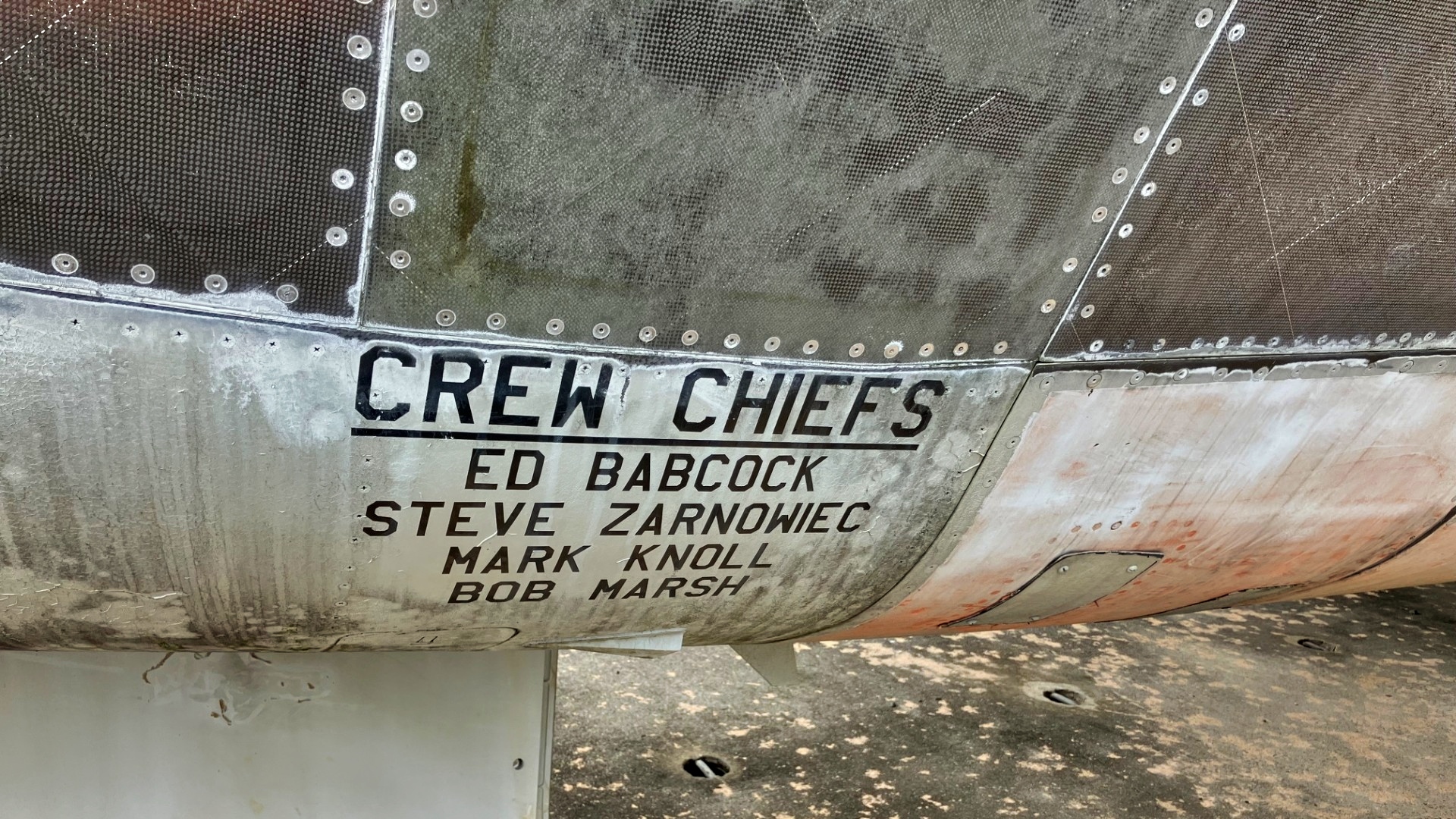
Boeing X-32 NSJ Original Image. Credit: Christian D. Orr.
Its design minimized radar and infrared signatures, making it extremely difficult to detect and track. The aircraft’s internal weapons bays and engine placement further enhanced its stealth profile.
The X-32 also employed several stealth features, such as radar-absorbent materials and stealth shaping, which make it much harder to detect than legacy models. Compared to the YF-23, however, the X-32’s stealth systems fall short.
While we don’t have official figures, we do know that the large chin-mounted air intake was largely responsible for the aircraft’s RCS (at least on the demonstrator aircraft).
Unfortunately, we cannot compare the avionics of either aircraft as neither aircraft ever progressed past the tech demonstrator. It’s fair to expect both aircraft to share similar avionics with the aircraft they lost to.
So the YF-23 had similar systems to the F-22, and the X-32 likely had identical systems to the F-35.
With this criterion in mind, it is safe to say that the X-32 would have had the upper hand in terms of avionics.
While the F-22 has some incredibly advanced systems, the F-35 is more akin to a flying supercomputer thanks to its advanced sensor fusion capabilities.
Summed Up in 4 Words: YF-23 Has Advantage But…
If we imagine a hypothetical one-on-one fight between the X-32 and the YF-23, the outcome is pretty predictable.
In a BVR scenario, the YF-23 would almost certainly win. Its stealth, supercruise, and superior sensors would allow it to detect and engage the X-32 from a distance, likely with AIM-120 AMRAAM missiles.
The YF-23 could strike and retreat before the X-32 even knew it was under attack.
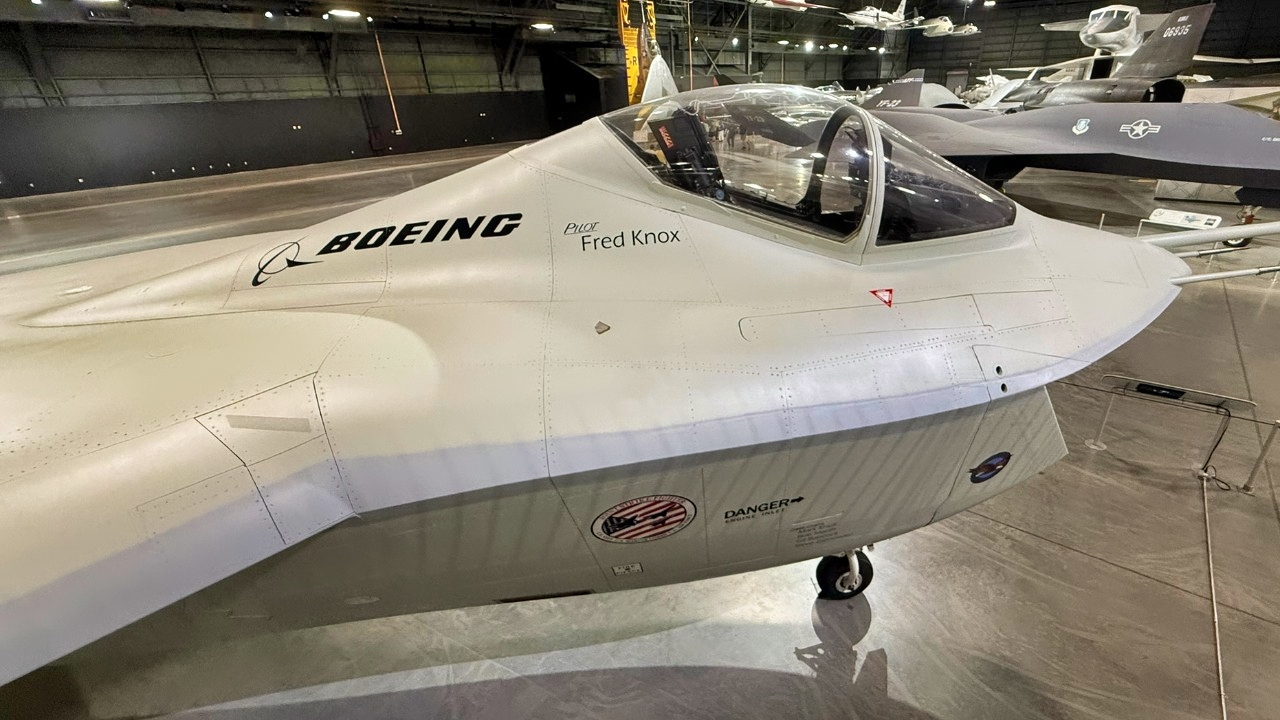
Boeing X-32 National Security Journal Photo.
In a within-visual-range (WVR) engagement, it’s much less clear who wins.
Neither aircraft is exceptionally maneuverable, so it comes down to who can get the first lock on and launch the first missiles.

YF-23 Black Widow II from National Security Journal Photo Shoot.
About the Author: Isaac Seitz
Isaac Seitz, a Defense Columnist, graduated from Patrick Henry College’s Strategic Intelligence and National Security program. He has also studied Russian at Middlebury Language Schools and has worked as an intelligence Analyst in the private sector.
More Military
B-1B Lancer: The Bomber The Air Force Needs to Keep Flying
Su-37 ‘Terminator’: The Thrust-Vectoring Super Flanker Fighter That Never Was
Russia or China Would Love to Have the Aircraft Carrier USS Harry S. Truman
NATO’s Big Fear: Putin Drops a Tactical Nuclear Weapon on Ukraine
The U.S. Military’s Big F-22 Raptor Stealth Fighter Mistake Cuts Deep


