


According to Secretary of State Marco Rubio, Russia is losing 5,000 troops a week on the battlefields of Ukraine. The remarks came after Rubio met with his Russian counterpart, Sergei Lavrov, in Manila to discuss measures to end the war. The remarks from the Secretary of State align with other claims of high Russian casualty rates from U.S. and Ukrainian officials. Despite supposedly taking “staggeringly high” losses, Putin seems to be in no hurry to end the war as Moscow continues to intensify its missile campaign against Kyiv and other regions in Ukraine. While all sides claim to be ready for a peace settlement, neither party seems to be able to agree on a reasonable compromise.
Marco Rubio on the Ukraine War

Tim Murry, a foreign threats compound contractor, drives a T-72 battle tank into position to serve as adversary targets for a joint service exercise, Emerald Flag, at Eglin Air Force Base, Fla., Nov. 30. Emerald Flag is a multi-service exercise aimed to unify information sharing across joint domain platforms. (U.S. Air Force photo/1st Lt Karissa Rodriguez)
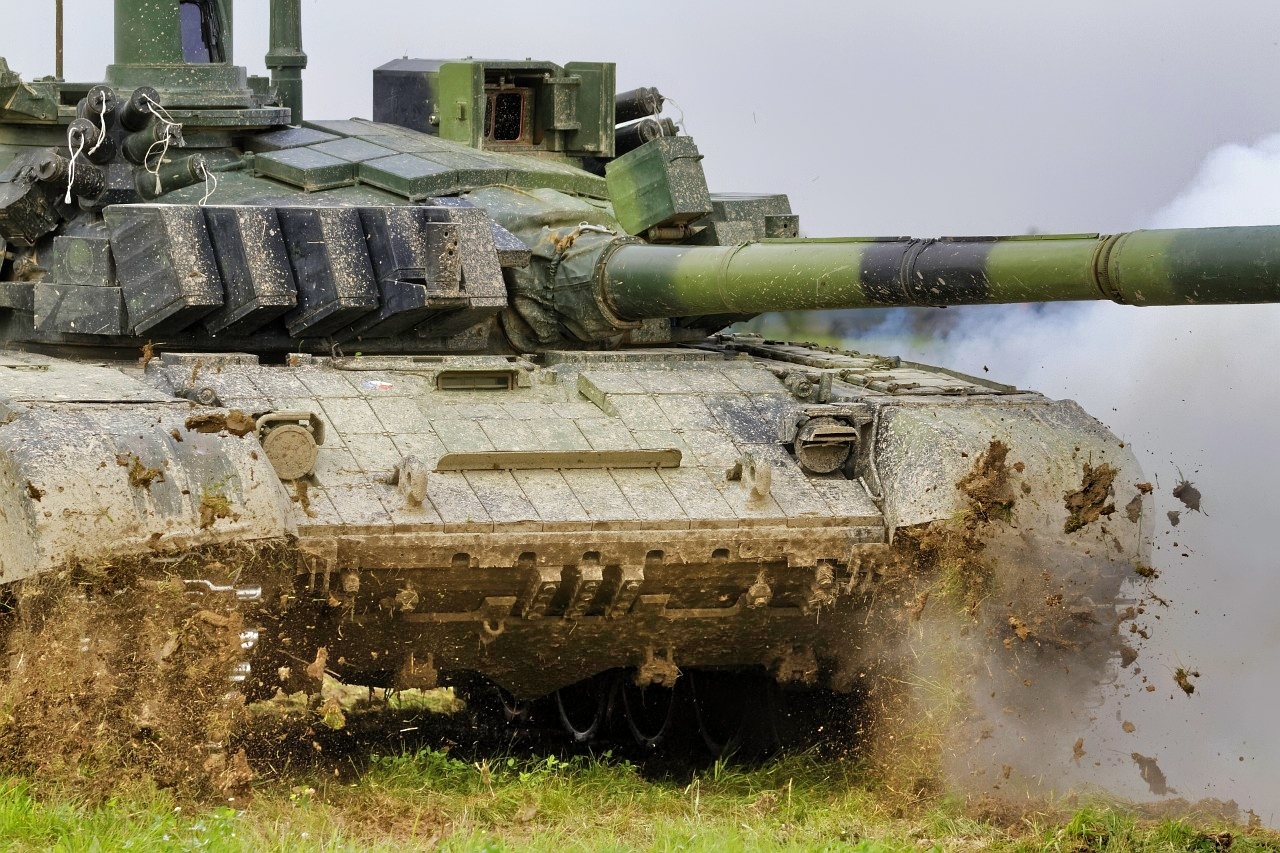
T-72 Tank. Image Credit: Creative Commons.
In a press conference, Rubio claimed that the Russian Army is currently losing upwards of 5,000 to 6,000 troops on the battlefield every day. The Secretary of State also added that the U.S. remains committed to ending the conflict.
He stated that Trump’s goal for Ukraine is for it to “go on and live in peace,” allowing its citizens to rebuild and to ensure that “young Russians aren’t being killed at the tune of 5,000 a week in the battlefield.” Referring to the meeting held with Lavrov yesterday, Rubio added that “we are prepared to play a constructive role in bringing about an end to a senseless war; we’re ready to do that, and we of course expressed that.”
Yesterday, Rubio met with Russia’s Foreign Minister, Lavrov, in Manila to discuss Ukraine and the prospects of a peace settlement. Russian pundits suspected that the meeting would be important to clarify whether Trump intended to break away from the U.S.’ Biden-era policy on Ukraine or whether Washington intended to stay its current course in opposition to Moscow.
The results, some Russians speculated, would lead to either an announcement of a new Trump-Putin meeting or a sharp escalation in rhetoric as Moscow effectively writes off Trump as a suitable partner. The meeting between the two lasted around 35 minutes, and judging by the rhetoric from both Rubio and Lavrov afterward, it seems the latter outcome has been reached.
The War in Ukraine: Bloodier Than Stalingrad?
Circling back to the topic of Russian casualties for a bit, Rubio’s estimations of Russian casualties align with other claims made by U.S. and Ukrainian officials. Last week, the director of the CIA, John Ratcliffe, claimed that the average lifespan of a Russian soldier was only about 20 to 30 minutes after reaching the front lines.
In April, Ukraine’s then-Defense Minister, Mykhailo Fedorov, reported that Russian casualties peaked in March after the Army had suffered 35,000 casualties. This roughly equates to around 8,000 casualties per week, accounting for both killed and wounded. With casualty rates this high, the Russians are losing troops at a higher rate than the Red Army was during the Battle of Stalingrad, one of the bloodiest battles of the Second World War.
Claims of staggeringly high losses like these rely on readers not looking too closely into them or, in general, being unaware of what is actually happening in Ukraine. Let us take the “20-30 minute” lifespan as an example.
Where did this claim originate? According to fact-checkers on X, the claim first appeared in a Russian Telegram channel with only 5,000 subscribers. The channel cited an unnamed article that reportedly claimed the average Russian soldier lived only about 20 to 30 minutes upon reaching the front. Who wrote the article? Unknown. What was their source? Unknown. The claim was then repeated by the exiled Russian outlet Astra, though they did not specify whether they thought the claim was true or not. The claim then appeared in Professor Peter Frankopan’s essay in the Financial Times, after which it spread like wildfire in Western news outlets and was taken as gospel.
Take With a Grain of Salt
For some reason, these what look like dubious claims made their way to the highest levels of government and were regurgitated by the Director of the CIA. There are two possible explanations for this. Either journalists (and apparently CIA analysts as well) have not been doing their due diligence when checking their sources, or they are deliberately spreading false information. The first option is a legitimate possibility.
Mistakes happen, and sometimes dubious sources slip through the cracks. The fact that these claims are regurgitated by high-level government officials, however, leads me to believe that these obviously inflated figures are being purposefully disseminated to influence public perceptions on the war in Ukraine.
Likewise, claims that Russia is suffering 5,000 casualties per week are equally shaky. According to Media Zona, an open-source database listing confirmed Russian casualties, the number of visually confirmed casualties from Dec 31 to July 10 sits only at around 5,529. Granted, the real number is likely much higher, but if the Russians were losing 5,000 killed per month—yes, Rubio said killed, not wounded or missing—then the visual evidence would support that. As things currently stand, it does not. The point of all this is to encourage readers not to take all official claims at face value.
If a claim sounds too good to be true, then it probably is. This is not to say that every statement that comes out of Washington or Kyiv is a lie, but not everything said by officials is completely true either.
About the Author: Isaac Seitz
Isaac Seitz, a Defense Columnist, graduated from Patrick Henry College’s Strategic Intelligence and National Security program. He has also studied Russian at Middlebury Language Schools and has worked as an intelligence Analyst in the private sector.


