

PUBLISHED 8/5/2025 at 8:44 PM EST – Key Points and Summary – The F-117 Nighthawk, the world’s first operational stealth aircraft, was officially retired in 2008 but continues to fly regularly.
-The U.S. Air Force still uses the iconic jet as a cost-effective platform for several key missions.

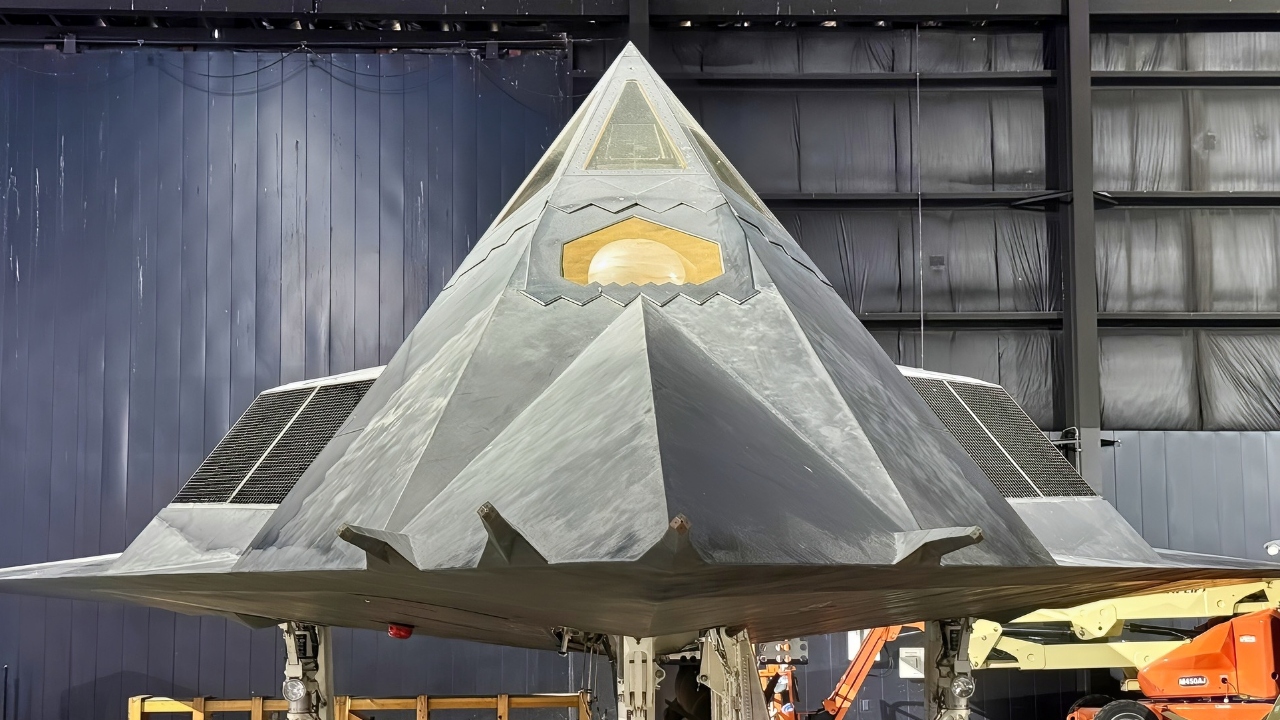
F-117 Stealth Fighter in Museum Hanger. Image Credit: National Security Journal.
-Primarily, it serves as a unique “aggressor” trainer, simulating foreign stealth aircraft like China’s J-20 to prepare U.S. pilots for modern threats.
-It also acts as a valuable testbed for developing new stealth coatings and technologies. Due to this continued utility, the Air Force plans to keep a portion of the F-117 fleet flying until at least 2034.
The F-117 Nighthawk: No Retirement Just Yet
The F-117 Nighthawk deserves a special place in history as the first stealth fighter to be accepted into active service. As a pioneer in stealth technology, the aircraft saw service in various conflicts from the Kosovo war to conflicts in the Middle East.
In 2008, the F-117 was officially retired, yet nearly two decades later, the aircraft continues to fly regularly.
Why does the Nighthawk still fly more than 20 years after its retirement?
This warplane remains essential to the U.S. as a test bed for new technologies and as a trainer for pilots fighting against enemy stealth aircraft.
Development and Retirement
The F-117 was developed by Lockheed Martin’s Skunk Works division and first took flight in 1981.
It became operational in 1983 and was publicly revealed in 1988 after years of secrecy. As the world’s first operational stealth aircraft, the F-117 was designed to evade radar detection through its angular, faceted design, which prioritized low observability over aerodynamic efficiency.
Though designated as a fighter, the F-117 functioned primarily as a light bomber, capable of delivering precision-guided munitions with remarkable accuracy. It played a crucial role in conflicts such as the Gulf War, where it demonstrated its ability to strike high-value targets with minimal risk of detection.

F-117 Fighter from 1990s National Security Journal Photo.
With the arrival of the F-22 and F-35, the F-117 became increasingly obsolete. These newer aircraft offered superior stealth capabilities, speed, agility, and multi-role functionality, making the older Nighthawk seemingly obsolete.
However, the story didn’t end there. Under the National Defense Authorization Act (NDAA) of 2007, the Air Force was required to maintain the F-117s in a condition that allowed for potential reactivation. Although this requirement was later repealed, the Air Force continued to store and maintain dozens of F-117s at the Tonopah Test Range in Nevada, a highly classified facility known for housing experimental and foreign aircraft.
Why the F-117 Still Flies
Even though the F-117 was officially retired, the Air Force still found value in the F-117 as a trainer aircraft. The fighter is used in dissimilar air combat training, where pilots engage with aircraft that have different performance and stealth profiles.
This helps prepare U.S. pilots for potential encounters with foreign stealth aircraft such as China’s J-20 or Russia’s Su-57. In some scenarios, the F-117 is used to simulate cruise missiles, providing a realistic target for air defense units. Its unique infrared and radar signatures make it ideal for testing detection and interception tactics, offering a level of realism that newer aircraft might not replicate as effectively.
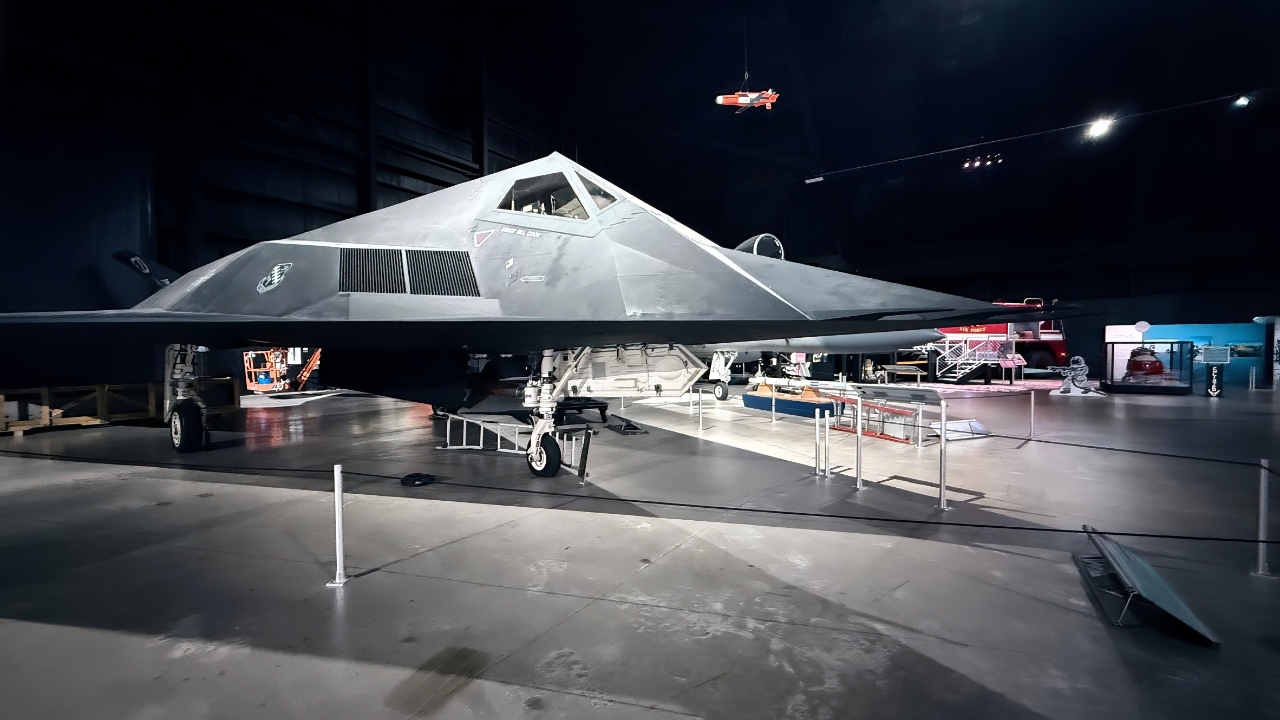
F-117 Still Looks Amazing National Security Journal Photo. All Rights Reserved.
Beyond training, the F-117 serves as a valuable platform for research and development. The Air Force uses it to test new stealth coatings, avionics, and mission systems. These experiments inform the development of next-generation aircraft and help refine existing platforms. The aircraft also undergoes temporary modifications, known as T-2 changes, which include instrumentation upgrades and structural alterations to support experimental missions. This makes the F-117 a flexible and cost-effective tool for technological advancement.
A Testbed for Future Technologies
Keeping the F-117 also helped the Air Force save some costs. Although it may be outdated compared to modern stealth fighters, operating the Nighthawk for training and testing purposes is significantly less expensive than using frontline jets like the F-22 or F-35.
These newer aircraft are more expensive to maintain and pose greater risks when exposed to experimental conditions. By using the F-117 in these roles, the Air Force can conserve resources while still achieving its objectives.
Maintaining a small fleet of F-117s also allows the Air Force to preserve institutional knowledge about early stealth technology. This is valuable for understanding the evolution of radar-evading designs and for training engineers and technicians in low-observable maintenance practices. The aircraft’s continued presence ensures that the lessons learned from its development and operation are not lost to time.
The F-117 is Staying Around for Just a Bit Longer
The F-117 holds immense value in the eyes of many because of its status as the first operational stealth fighter. It was a valuable milestone in aviation history and a testament to American innovation.
Its continued operation serves as a reminder of the U.S.’s pioneering role in stealth warfare. Displaying the aircraft at airshows or museums reinforces public and international perception of U.S. technological leadership, while also honoring the legacy of those who designed, built, and flew the Nighthawk.
As of 2023, the Air Force confirmed plans to continue flying a portion of the F-117 fleet until at least 2034. A Request for Information was issued to find contractors capable of providing maintenance and logistics support for the aircraft at the Tonopah Test Range.
This includes services such as launch and recovery operations, avionics repair, low-observable configuration management, and demilitarization of excess aircraft. Approximately 45 F-117s remain in inventory, with more than 10 approved for transfer to museums. In fact, the photo taken above is from the U.S. Air Force Museum in Dayton, Ohio, where National Security Journal was able to see the F-117 up close.
The Air Force plans to dispose of the remaining aircraft gradually, at a rate of two to three per year.
About the Author: Isaac Seitz
Isaac Seitz, a Defense Columnist, graduated from Patrick Henry College’s Strategic Intelligence and National Security program. He has also studied Russian at Middlebury Language Schools and has worked as an intelligence Analyst in the private sector.
More Military
The U.S. Navy Is Getting Drone Aircraft Carriers (Sort Of)
J-36: China’s Diamond Stealth Fighter Is a Total Mystery
China’s J-20S Is Double Trouble For a Reason


joel w. carter sr.
August 26, 2025 at 5:35 pm
this plane should be reactivated. i say that, because of the worsening conditions in he world. in fack, knowing how things are now,we should take a lot of military equipment out of moth balls,in case of war with china. then we would need every bit of equipment we could muster.