


Key Points and Summary – Despite being officially retired in 2008, the U.S. Air Force has confirmed that a fleet of approximately 45 F-117A Nighthawk stealth aircraft (or commonly known as the F-117 Stealth Fighter) will continue flying until at least 2034.
-The iconic jets are not for combat but now serve critical new roles.
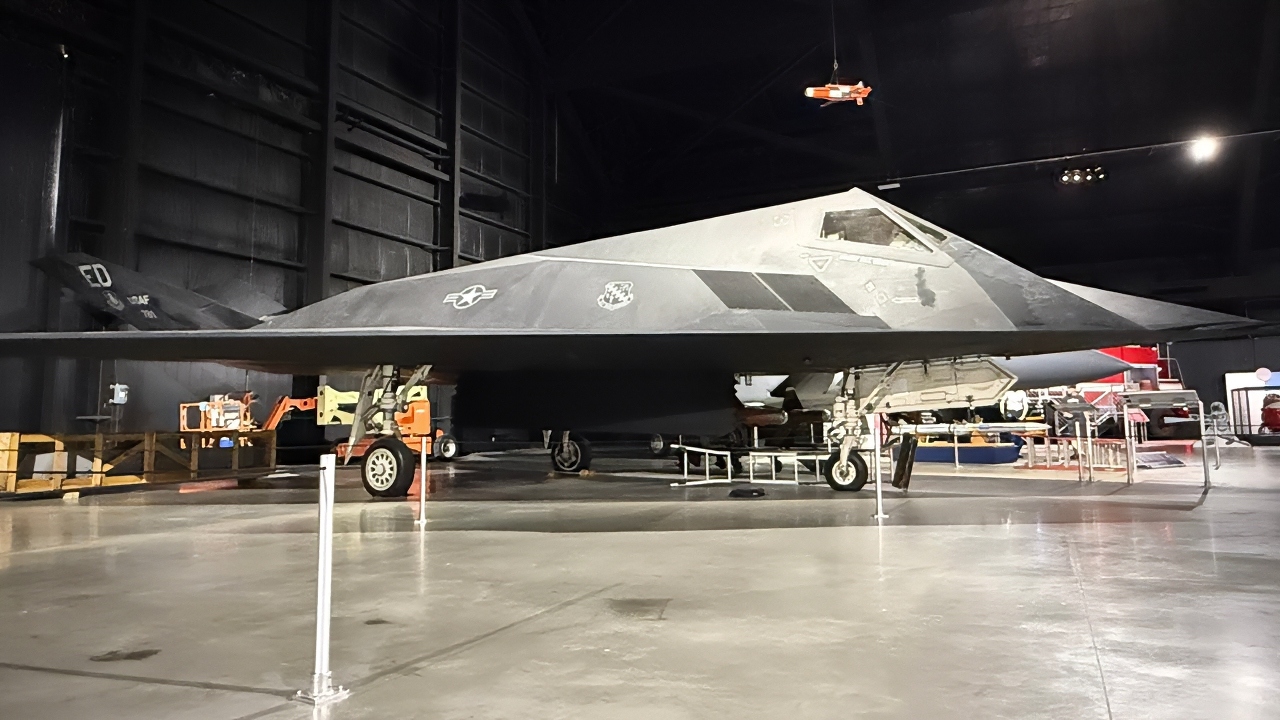
F-117 Nighthawk in the Air Force Museum. Image Credit: National Security Journal.
-They act as “red air” aggressors for realistic pilot training, test advanced technologies like new “mirror-like” coatings, and serve as proxies for other stealth platforms.
-The F-117’s unique low-observable characteristics make it an invaluable and cost-effective tool for preparing for the next generation of aerial threats.
The F-117 Stealth Fighter Lives On
Although the United States Air Force retired their fleet of F-117A Nighthawk aircraft in 2008, the service indicated several years ago that it would like to keep them in service for about a decade more.
Some of the F-117A aircraft are used as red air aggressor aircraft for pilot training in realistic combat scenarios. In contrast, others are utilized for general research and development, and some serve as proxies for other platforms, including advanced stealth cruise missiles.
The F-117 Is Back…
In September 2022, the Air Force Test Center issued a Request for Information, soliciting proposals from contractors to develop a viable logistics and maintenance plan for the Cold War-era F-117A fleet.
The document, which is still online, specified that bids for the F-117A RFI should “determine potential suppliers with experience and capabilities to support a 10-year F-117A Maintenance and Logistics Support Services contract at the Tonopah Test Range (TTR),” and specified that their desired start date would begin at the beginning of 2024.
The F-117A fleet was never enormous. In total, 59 F-117A and five YF-117A test aircraft were built for the U.S. Air Force, although it is uncertain how many of those are airworthy, as several were lost in combat and training accidents.
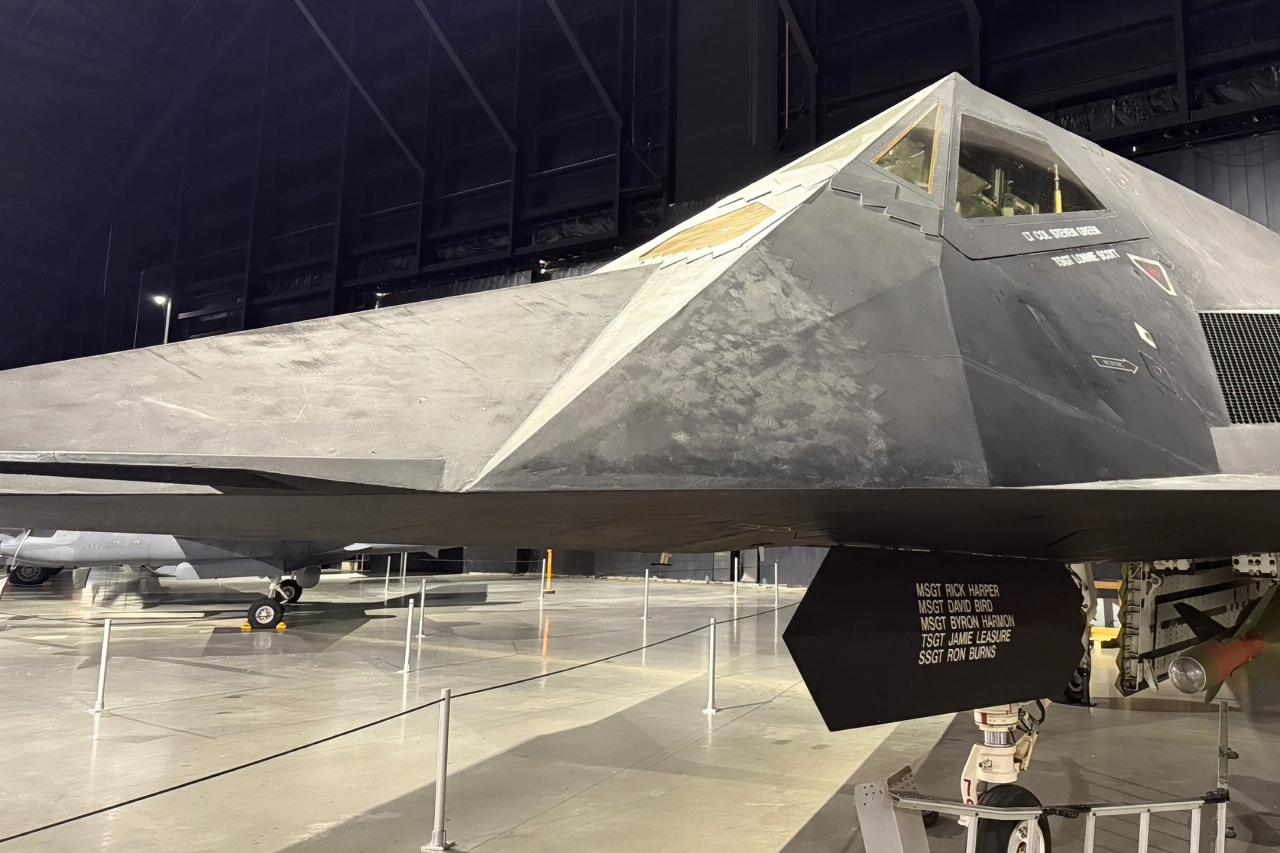
F-117 Nighthawk. National Security Journal Original Photo. Taken on July 19, 2025.
The RFI also outlined the essential requirements of the project to keep the remaining F-117As airworthiness, explaining that “potential contractors should have outlined in their bid three main technical objectives: maintenance and logistics support for F-117A limited flying operations at the Tonopah Test Range (TTR) airfield, the preservation of the F-117A aircraft fleet in an extended storage condition, and the demilitarization/declassification of F-117A aircraft determined to be excess to Department of Defense requirements,” with “anticipated demilitarization/declassification rate expected is a maximum of 2-3 aircraft per year.”
F-117 Stealth Fighter Explained
The F-117A’s origin story dates back to the 1970s, when the U.S. Air Force began to realize that increasingly sophisticated Soviet Air defense systems and radar, particularly surface-to-air missiles, were jeopardizing American air supremacy.
The Defense Research Projects Agency, more commonly known by its acronym DARPA, contracted with Lockheed’s fabled Skunk Works division to design and build the Have Blue stealth technology demonstrator, the similar-looking predecessor to the F-117A Nighthawk. The turnaround time, from contract award to initial operating capability, was incredibly short, just seven years, and the first F-117As became operational in 1983.
A Stealth Fighter That Still Surprises
In 2022, an enterprising photographer spotted at least one F-117A coated in a shiny, mirror-like finish, a coating seemingly aimed at making the aircraft harder to detect, potentially by reducing the Nighthawk’s infrared signature, which would make it harder for detection via infrared search and track (IRST) systems.
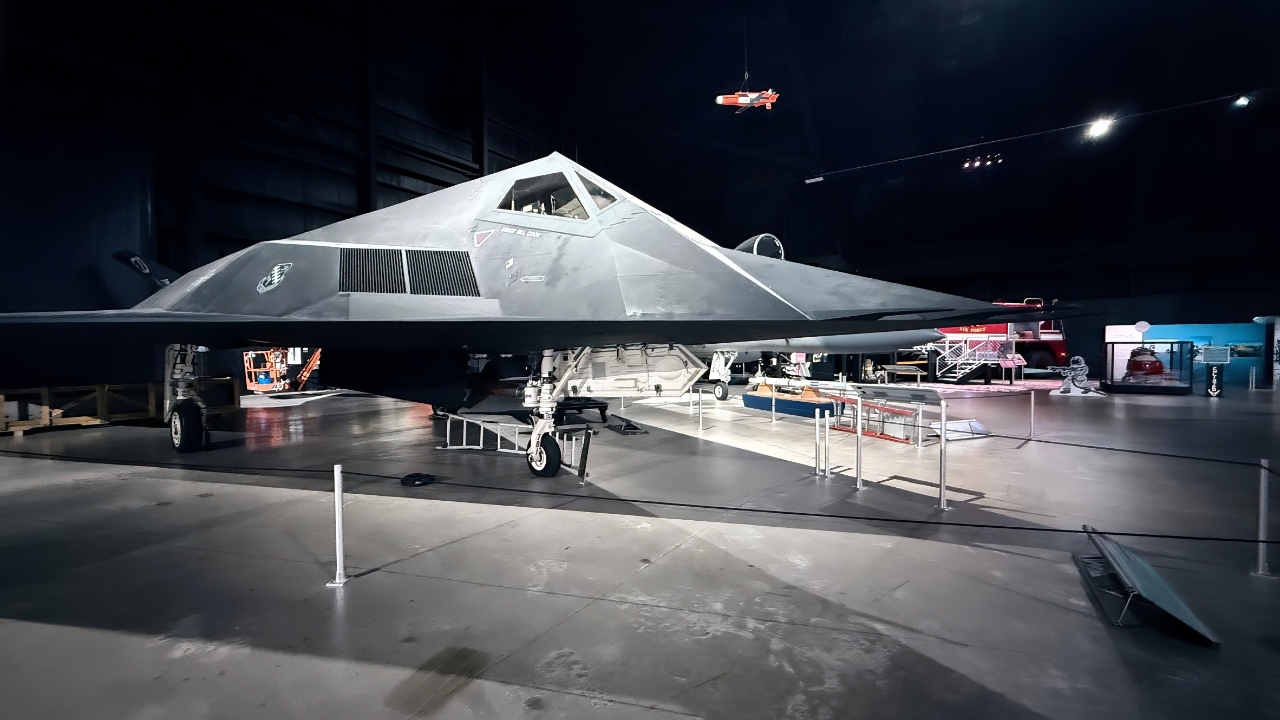
F-117 Still Looks Amazing National Security Journal Photo. All Rights Reserved.
Responding to a query from The War Zone, a website, Air Force spokesperson Ann Stefanek confirmed that the U.S. Air Force still operates some F-117A Nighthawk stealth aircraft and will continue to do so through 2034. Stefanek added that “on occasion, we fly certain [F-117A] aircraft to support limited research and training activities” with the caveat that none of those aircraft will see combat, nor are they in a state of readiness to do so.
However, Stefanek also added that the U.S. Air Force intends to eventually divest the entire F-117A Nighthawk fleet, although she declined to outline a specific timeline for retiring the stealth aircraft.
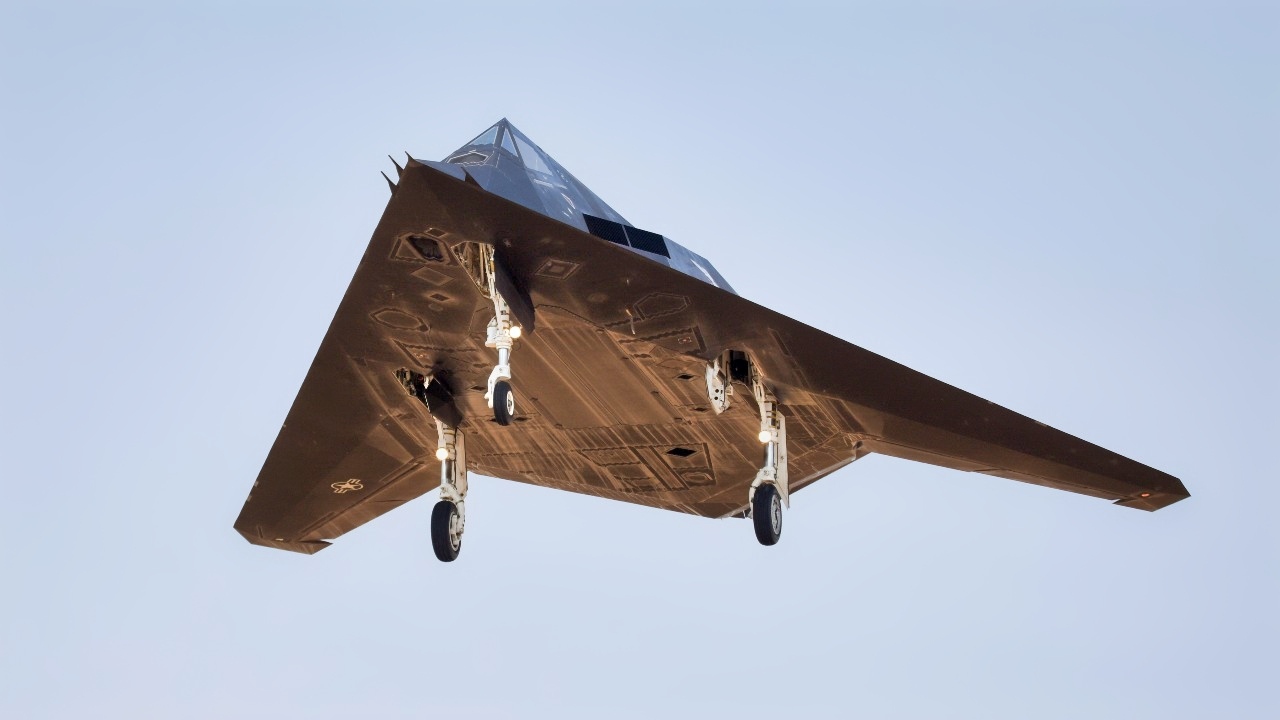
An F-117 Nighthawk lands at the Fresno Yosemite International Airport, Sept. 15, 2021, after conducting a training mission with the local Air National Guard unit. Two F-117 Nighthawks are participating in dissimilar air combat training missions this week along with F-15 pilots from the 144th Fighter Wing in Fresno, Calif. (U.S. Air National Guard photo by Capt. Jason Sanchez)
“We have approximately 45 F-117s currently. As we demilitarize the aircraft, they will be made available to museums, if requested, or be disposed of (scrapped),” she said. “Over 10 have already been approved for transfer to museums.”
The F-117 Just Won’t Go Away
Given the intense interest in increasingly stealthy aircraft — not just with the United States Air Force, but with the United States Navy and with the air forces of a handful of other nations around the world — it seems likely that, despite their age, the F-117A will continue to play a helpful role as an aggressor training aircraft.
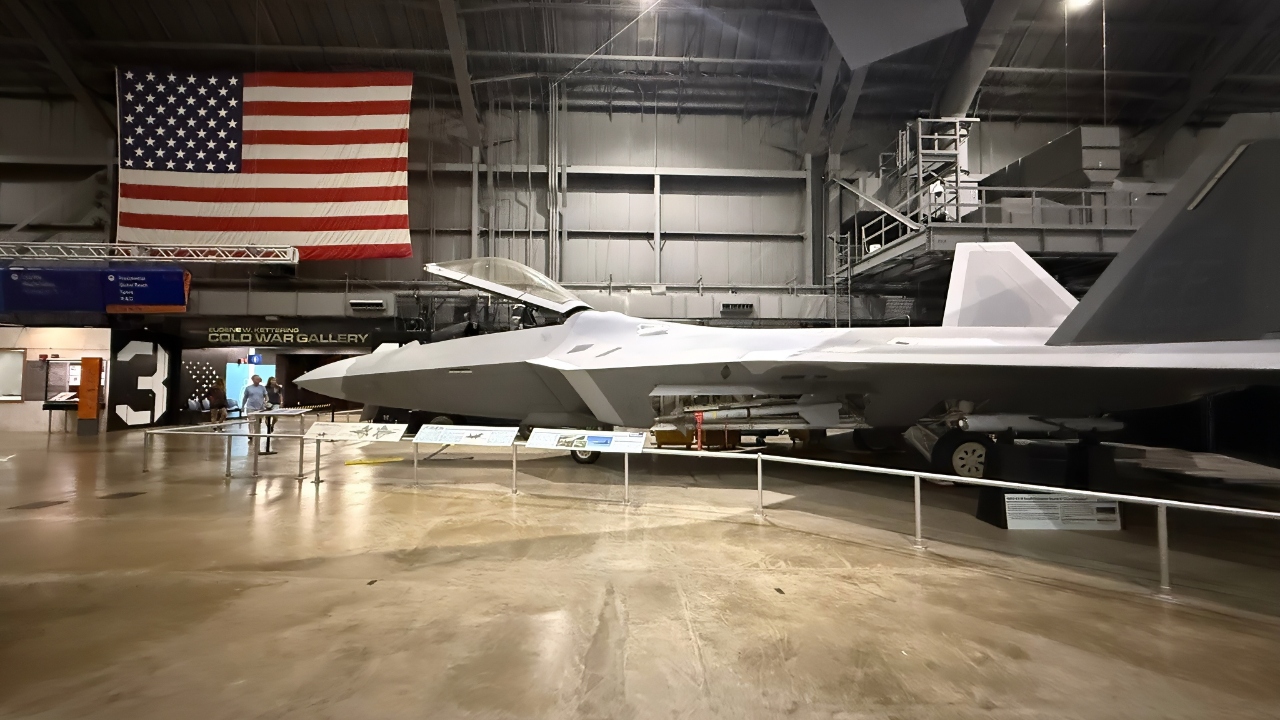
Stealth F-22 Resting at the U.S. Air Force Museum. Image Credit: National Security Journal.
Its utility for testing cutting-edge IRST systems, as well as radar and other detection methods, appears to remain useful now and potentially for many years to come.
About the Author: Caleb Larson
Caleb Larson is an American multiformat journalist based in Berlin, Germany. His work covers the intersection of conflict and society, focusing on American foreign policy and European security. He has reported from Germany, Russia, and the United States. Most recently, he covered the war in Ukraine, reporting extensively on the war’s shifting battle lines from Donbas and writing on the war’s civilian and humanitarian toll. Previously, he worked as a Defense Reporter for POLITICO Europe. You can follow his latest work on X.
More Military
We Almost Touched the F-117 Stealth Fighter


William Kobzeff
July 25, 2025 at 11:53 am
So is there a list of what’s happening with any tail numbers? I was curious about the fate of my war bird during Desert Storm. “The Lazy Ace”.