

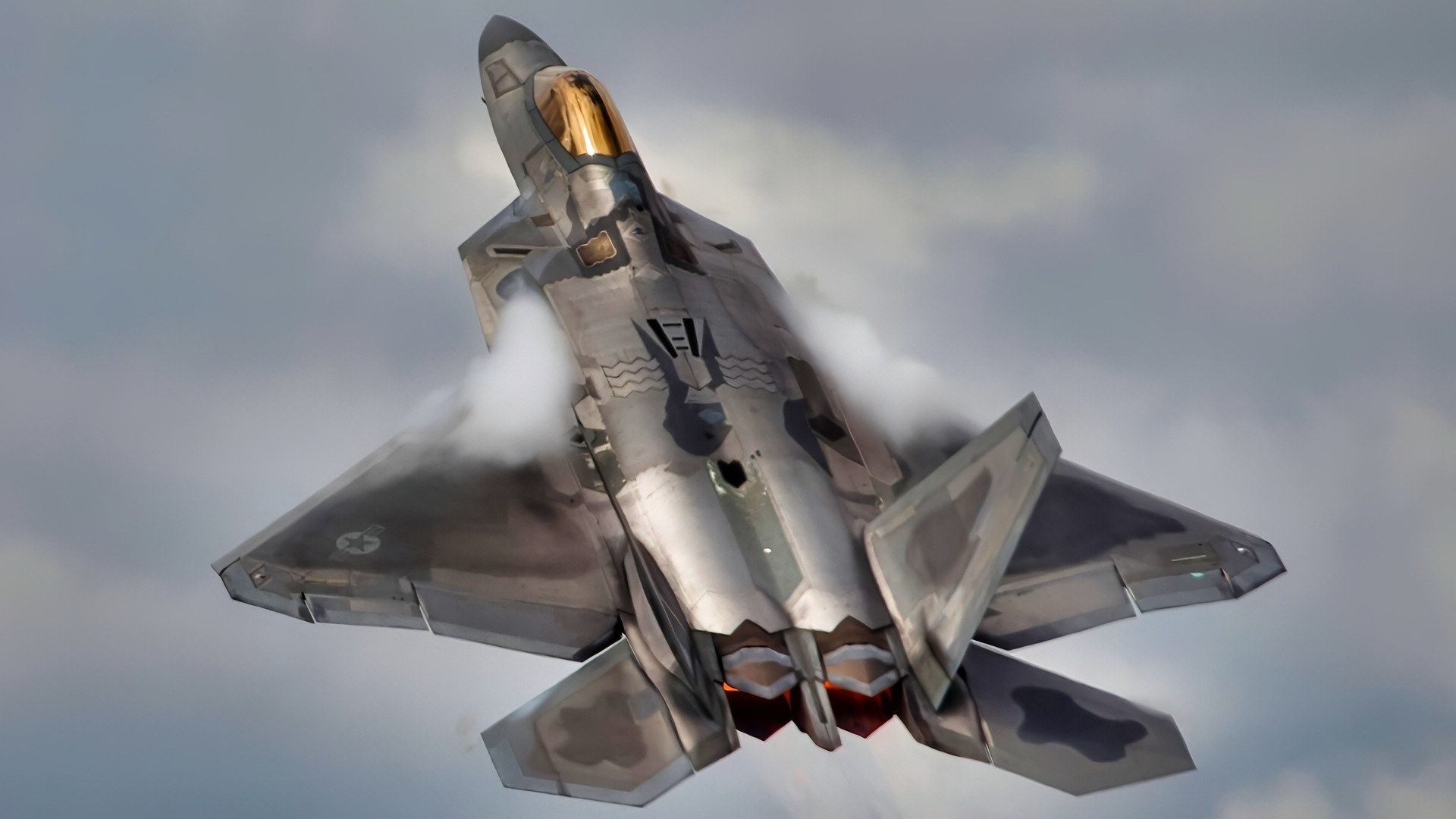
The F-22 Raptor is the only U.S. 5th-generation fighter that cannot be legally exported. U.S. Congress banned F-22 exports in 1998 via the Obey Amendment. Multiple allied nations sought to purchase the F-22. Australia expressed interest in 2008. Japan’s Air Self-Defense Force considered buying as many as 50 F-22s. Israel also considered the aircraft. All three nations were denied.
The F-22 Raptor Won’t Ever Be For Sale
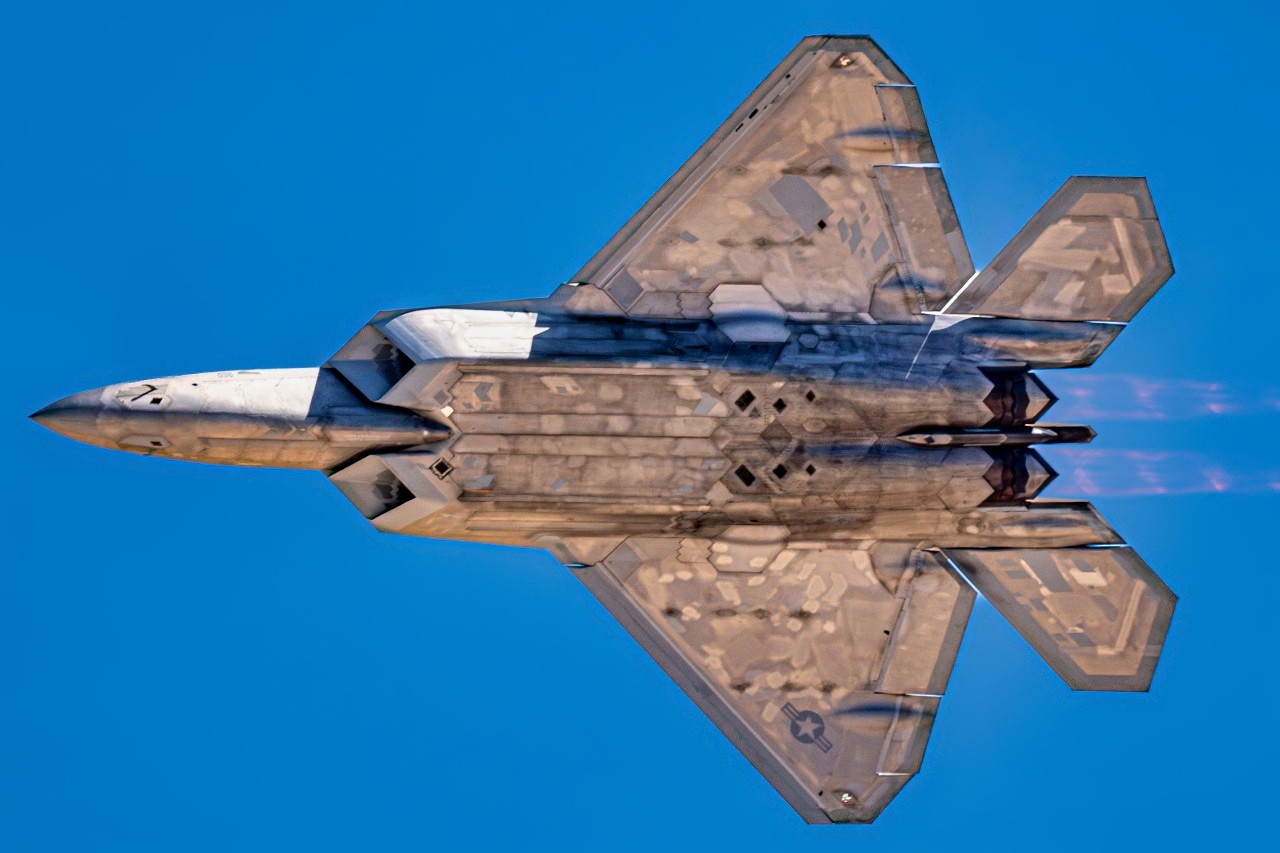
A U.S. Air Force F-22 Raptor performs an aerial demonstration during Aviation Nation 2025 at Nellis Air Force Base, Nevada, April 5, 2025. Aviation Nation is an airshow held at Nellis Air Force Base, showcasing the pride, precision and capabilities of the U.S. Air Force through aerial demonstrations and static displays. The F-22 Raptor performed there to highlight its unmatched agility and air dominance as part of the Air Force’s efforts to inspire, recruit and connect with the public. (U.S. Air Force photo by Staff Sgt. Lauren Cobin)
Although it was originally designed in the 1980s, the F-22 Raptor is one of the most advanced aircraft in the USAF and among the most expensive. The Raptor’s high cost led to the closure of production lines in the early 2000s, and the number of aircraft produced was capped at 187.
Early on, it was thought that export orders would help to alleviate some of these costs. Despite some international partners expressing interest in exporting the F-22, the idea was eventually discarded due to the aircraft’s sensitive technologies and high operating costs, which would have placed too much strain on export customers.
Exporting the F-22
In the early 2000s, several allied nations expressed interest in potentially acquiring the F-22. Australia was at the forefront of this effort. In 2008, then Australian Minister of Defense Joel Fitzgibbon expressed interest in acquiring the Raptor for the Royal Australian Air Force (RAAF).
At the time, the F-35 Joint Strike Fighter (JSF) Program was embroiled in controversy over cost overruns and delays, so, from Australia’s perspective, the F-22 was a much more mature and proven aircraft. In the end, however, the RAAF would not choose the F-22 and instead acquire more F/A-18 Super Hornets as a stopgap measure until the F-35 was ready.
Likewise, Japan, ever the reliable ally of the United States, also considered procuring the advanced fifth-generation aircraft.
As early as 2007, Japan expressed interest in the F-22 as a replacement for its aging F-4s. The Japan Air Self-Defense Force (JASDF) considered buying as many as 50 F-22s, though this number would likely have been reduced due to cost concerns.
When the F-22 was banned from export, Japan chose the F-35. In the same way, Israel also considered the aircraft. The U.S. ultimately refused to sell the F-22 because it was unlikely that Israel could afford the aircraft at the time.
Why the F-22 was Banned From the Market
Despite receiving interest from a few Allies, the U.S. ultimately decided against exporting the Raptor. One of the main reasons behind this decision was to protect the aircraft’s secrets. The F-22 incorporates some of the most advanced systems ever put into a fighter aircraft. Its stealth design allows it to evade radar detection through a combination of shaping and specialized materials.

A U.S. Air Force F-35A Lightning II assigned to the 60th Fighter Squadron, flies overhead after conducting a live weapons drop at Camp Shelby, Miss., Oct 25, 2023. During the exercise, pilots tested various munitions including the GBU-12s, GBU-31v1s, and 362 rounds of 25mm Training Munitions from the gun.
It is also capable of sustained supersonic flight without afterburners and uses sophisticated radar systems to avoid detection. Allowing foreign countries to operate the aircraft would increase the risk that these technologies could be exposed through espionage, reverse engineering, or even capture in a conflict. Even allied nations cannot guarantee complete security for such long periods, and the consequences of a leak would be extremely serious.
In addition to technological concerns, there was a clear legal barrier preventing exports. In 1998, the U.S. Congress passed the Obey Amendment, which explicitly banned the sale of the F-22 to foreign governments.
This law reflected a deliberate decision by policymakers to ensure that the aircraft’s capabilities remained under U.S. control.
While there were occasional discussions about repealing this restriction, especially as allies expressed interest in purchasing the aircraft, the law remained in force throughout the F-22 program. By the time production ended in 2011, the possibility of exports had effectively disappeared, and the legal prohibition had fulfilled its purpose.
Too Expensive to Export
The idea of creating an export version of the F-22 was also considered impractical. In many other cases, the U.S. has exported downgraded versions of advanced systems, but the F-22’s design made this approach difficult. Its various systems are deeply integrated, meaning that removing or altering one component could significantly impact overall performance.

U.S. Air Force Maj. Kristin “BEO” Wolfe, F-35A Lightning II Demonstration Team pilot and commander, flies an F-35 assigned to the 421st Fighter Generation Squadron at the Wings Over Houston Airshow, Tx., Oct. 15, 2023. Wings Over Houston showcases vintage World War II aircraft alongside the thrills of modern aviation, and has supported a variety of local and national charities during its 39-year history. (U.S. Air Force photo by Staff Sgt. Kaitlyn Ergish)
Developing a modified version suitable for export would have required extensive redesign work, costing billions of dollars and introducing delays. Even then, there would be no guarantee that sensitive information could be fully protected. The risk that adversaries might still learn critical design principles was considered too high.
Cost and production limitations further reinforced the decision. The F-22 program was extremely expensive, with each aircraft costing well over $100 million, excluding development costs. Only 187 operational aircraft were ultimately built.
Expanding production to include exports would have required extending or restarting the production line, which would have added high costs. Additionally, the aircraft is complex to maintain and operate, requiring specialized infrastructure and highly trained personnel.
Supporting foreign operators would have created additional logistical challenges for the United States, further complicating the program.
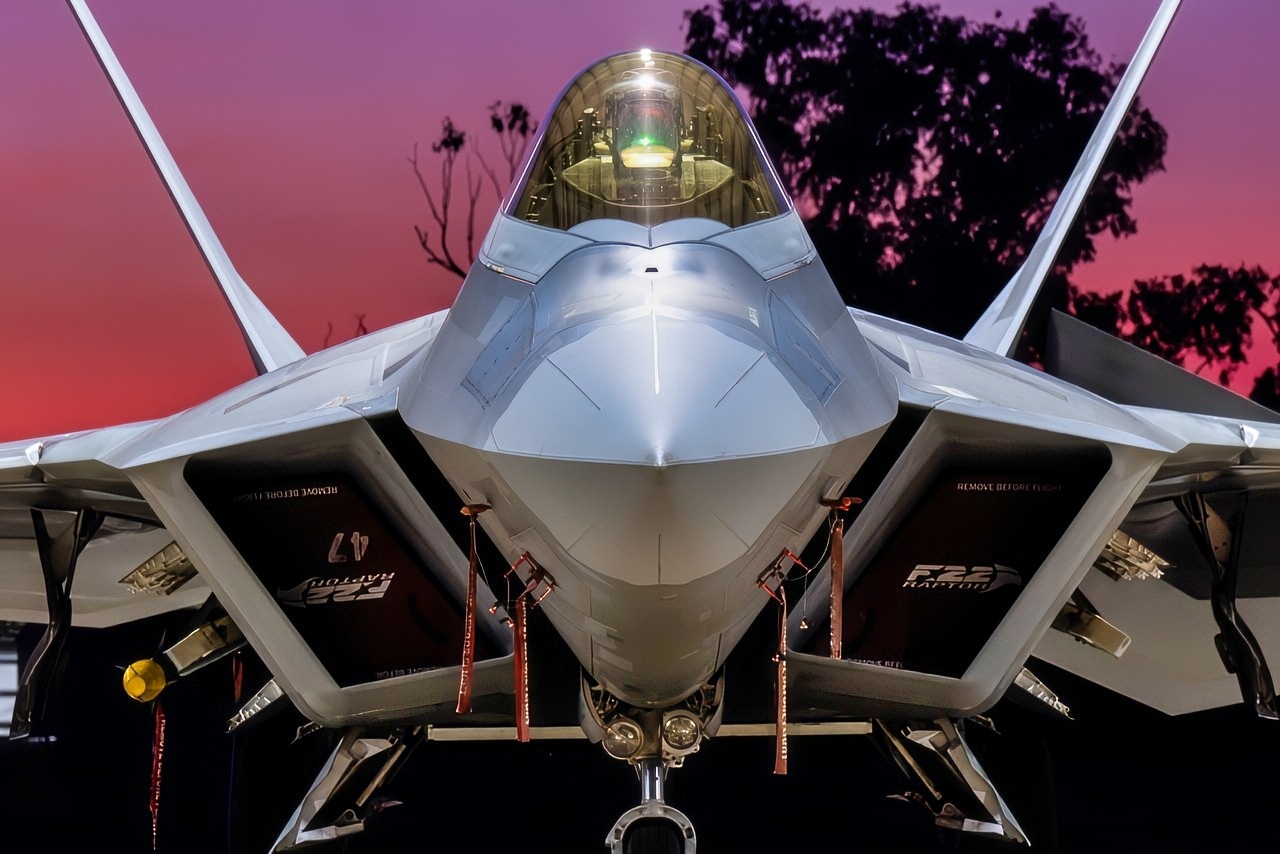
A U.S. Air Force F-22 Raptor assigned to the 199th Air Expeditionary Squadron sits beneath a hangar as the sun sets in Northern Territory, Australia, July 16, 2025, during Talisman Sabre 2025. Talisman Sabre is the largest bilateral military exercise between Australia and the United States advancing a free and open Indo-Pacific by strengthening relationships and interoperability among key allies and partners, while enhancing our collective capabilities to respond to a wide array of potential security concerns. (U.S. Air Force photo by Senior Airman Natalie Doan)
The F-35 Alternative
At the same time, the United States was developing the F-35 Lightning II, which was designed from the outset to be an exportable, multinational platform. The F-35 serves a different role as a multirole fighter rather than a pure air superiority aircraft, but it still incorporates stealth and advanced technology.
By offering the F-35 to allied nations, the U.S. created a more controlled way to share advanced capabilities while maintaining tighter oversight of sensitive systems. This approach also allowed the U.S. to strengthen interoperability with partner nations and spread development costs across multiple countries.
Exporting the F-22 would have undermined this strategy by competing with the F-35 program.
About the Author: Isaac Seitz
Isaac Seitz, a Defense Columnist, graduated from Patrick Henry College’s Strategic Intelligence and National Security program. He has also studied Russian at Middlebury Language Schools and has worked as an intelligence Analyst in the private sector.


