

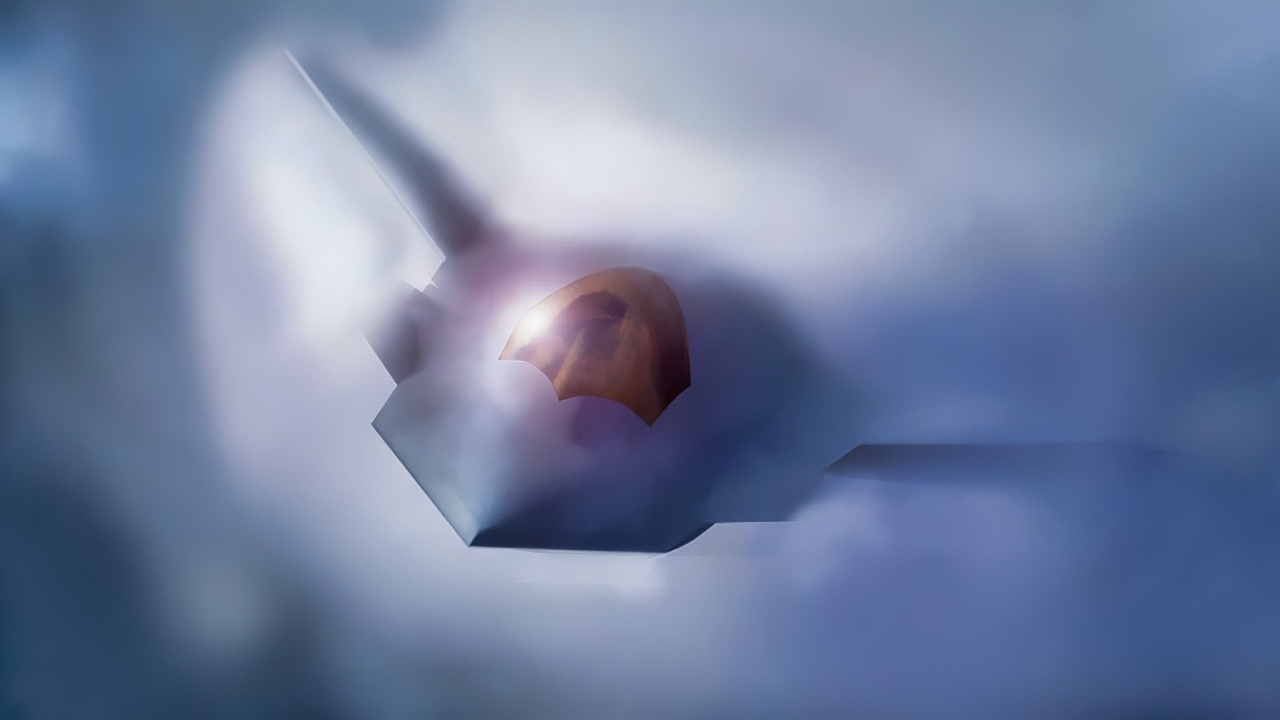
The F-47 stealth fighter will have a 1,000-mile combat radius — nearly double that of the F-22 — and is built for the Indo-Pacific. Boeing won the F-47 contract in March 2025 as the centerpiece of the U.S. Air Force’s Next-Generation Air Dominance program, integrating with YFQ-42A and YFQ-44A drones. President Trump has now signaled he might remove the ’47’ designation, while China races to field its J-36 and J-50 sixth-generation fighters.
The F-47 NGAD Could Be a True Powerhouse Fighter
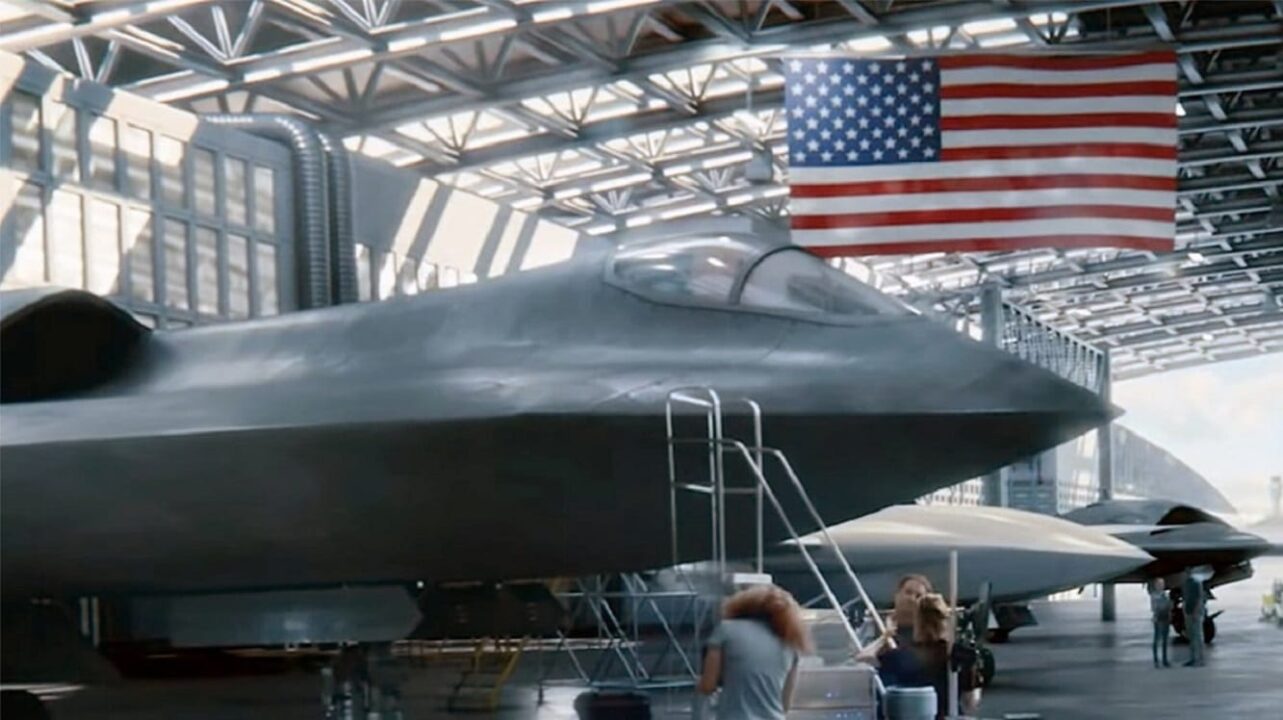
NGAD F-47. Image Credit: Creative Commons.
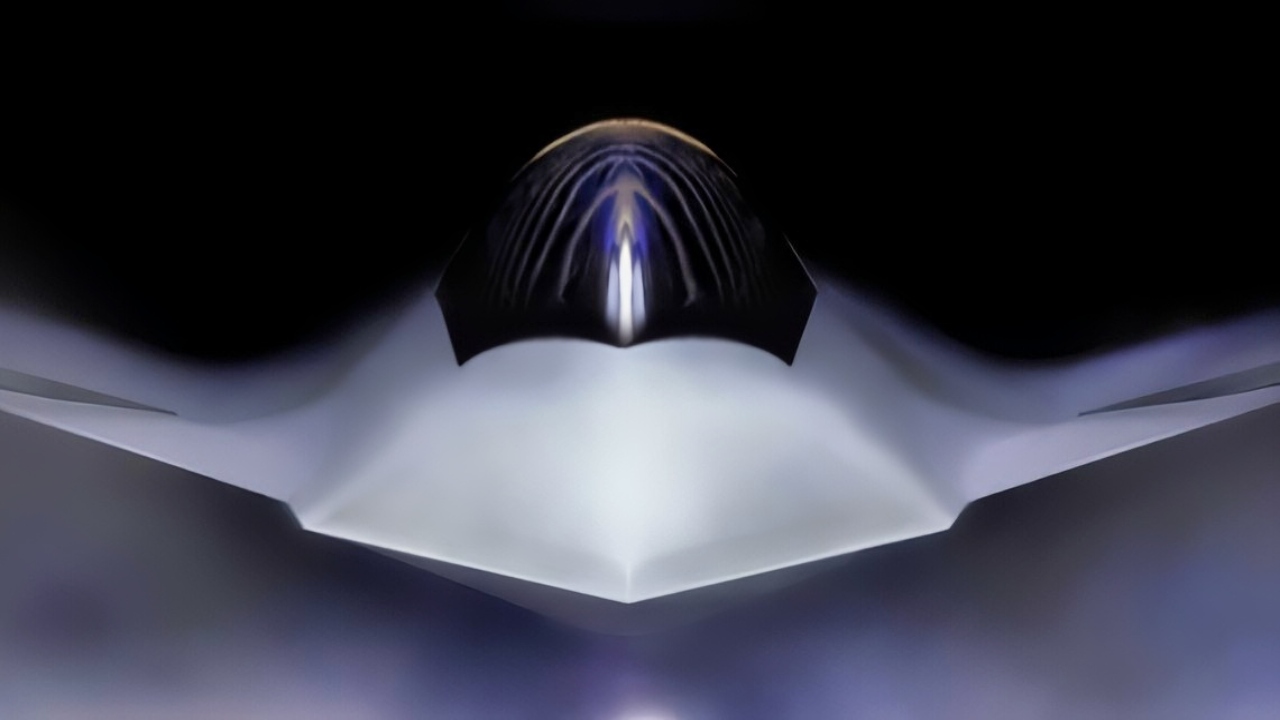
Shown is a graphical artist rendering of the Next Generation Air Dominance (NGAD) Platform. The rendering highlights the Air Force’s sixth generation fighter, the F-47. The NGAD Platform will bring lethal, next-generation technologies to ensure air superiority for the Joint Force in any conflict. (U.S. Air Force graphic)
President Trump has signaled he may remove the “47” designation from the upcoming F-47 fighter. Originally designated the F-47 as an homage to the P-47 Thunderbolt, the Air Force’s founding in 1947, and Donald Trump, the 47th President, the F-47 is set to be central to the USAF’s force structure in the coming decades.
The US and China are competing to field a sixth-generation fighter as tensions in the Indo-Pacific ratchet up. The US specifically is pushing forward with the Next-Generation Air Dominance (NGAD) program, centered around the F-47 fighter.
Boeing was awarded the F-47 contract in March 2025, demonstrating tangible progress toward a finished product. China, meanwhile, is working to field the J-36 and J-50, meaning the F-47 is not just an aircraft but a foundation of the US-China competition—likely the most important geopolitical competition of the 21st century.
Accordingly, China has criticized the F-47 relative to Chinese products, pushing a propaganda angle to suggest that China is technologically ahead.
Introducing the F-47
The F-47’s designation has not been changed—but Trump signaled he was open to changing the designation if he didn’t like the aircraft. It’s not clear what criteria Trump will use to evaluate the value of the forthcoming jet.
The F-47 is being billed as the most advanced fighter aircraft ever. With a 1,000-mile combat radius, the jet is specifically being designed for combat across the vast distances of the Indo-Pacific region, where both the F-22 (590-mile combat radius) and the F-35 (670-mile combat radius) are insufficient.
The expectation is that the F-47 will have both Mach 2-plus speed and exceptional stealth performance—again, improvements over the F-22 and F-35. The F-47 will be able to perform air superiority, ISR, and strike missions.

F-22 Raptor at US Air Force Museum. Image taken by National Security Journal.
One of the most important characteristics of the F-47 is integration with the Collaborative Combat Aircraft drones, the YFQ-42A and the YFQ-44A. As a drone “quarterback,” the F-47 serves as a force multiplier, extending range, increasing survivability, and distributing risk.
The pilot serves as a command node while the drones serve as the execution layer. The shift here is significant; the pilot and the fighter aircraft aren’t really the main event but a coordinator for drones, a manned-unmanned team, part of a gradient that almost certainly leads toward automated systems.
What’s in a Name
Fighter designations carry legacy and signal importance. The F-47 specifically is personally associated with the Trump presidency.
That’s an unusual move, with both upside and downside. If the program were to struggle, the 47 designation would become a liability for the Trump presidency. Trump’s preemptive move to distance himself from the name makes sense; it avoids long-term association with the program. Of course, if the program goes off without a hitch, expect the designation to stick.
China’s Critique
China has been critical of the F-47, naturally. The Global Times, a state-aligned outlet, CCTV’s military segments, and Chinese defense commentators have amplified state-sanctioned narratives about the F-47’s perceived shortcomings.
Specifically, China has critiqued the canards depicted in artist renderings of the F-47. Canards are forward control surfaces that China argues create radar reflections and disrupt smooth stealth shaping.
Indeed, canards would be an odd choice for a jet attempting to operate with an ultra-low radar cross-section.
The sixth-generation trend is to eliminate vertical tails and forward surfaces, reducing the number of structures capable of reflecting radar. While canards enhance an aircraft’s maneuverability, they typically compromise its RCS. And that’s what China is pointing out: the canards compromise the design, whereas Chinese jets have cleaner stealth geometry.
But the thing China is missing: canard RCS can be mitigated with alignment, coatings, and shaping. And more importantly, the F-47 does not necessarily have canards; the canards were depicted in an artist rendering, not an official photo of an actual airframe.
But specifics aren’t necessarily the point; the point is global aerospace leadership, a perch the US has long enjoyed and which China aspires to.
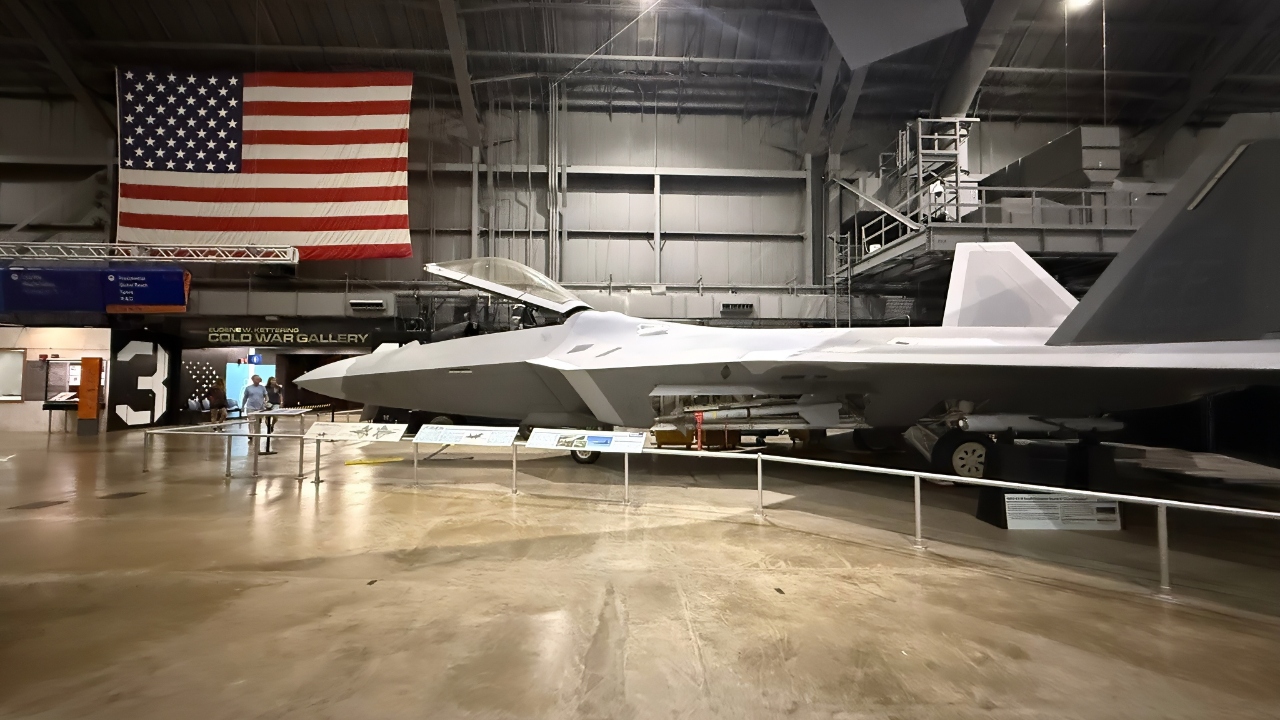
F-22 Resting at the U.S. Air Force Museum. Image Credit: National Security Journal.
China is also noting that the F-47 is roughly the same size as the F-22, whereas the J-36 is significantly larger.
The implication is that the F-47 is another tactical fighter, whereas the J-36 is a “campaign-level platform” capable of ISR, command, and long-range strike.
And, China has criticized Boeing, the F-47 contractor, for being unreliable. This is low-hanging fruit; Boeing has had problems for years, with the KC-46, the new Air Force One, and, of course, the 737 MAX.
Further, Boeing hasn’t had a recent fighter production success; the last major success was decades ago. China is suggesting that Boeing runs the risk of delays, cost overruns, and underperformance. Really, this is an attack against the US industrial base, not Boeing specifically.
About the Author: Harrison Kass
Harrison Kass is a writer and attorney focused on national security, technology, and political culture. His work has appeared in City Journal, The Hill, Quillette, The Spectator, and The Cipher Brief. He holds a JD from the University of Oregon and a master’s in Global & Joint Program Studies from NYU. More at harrisonkass.com.


