

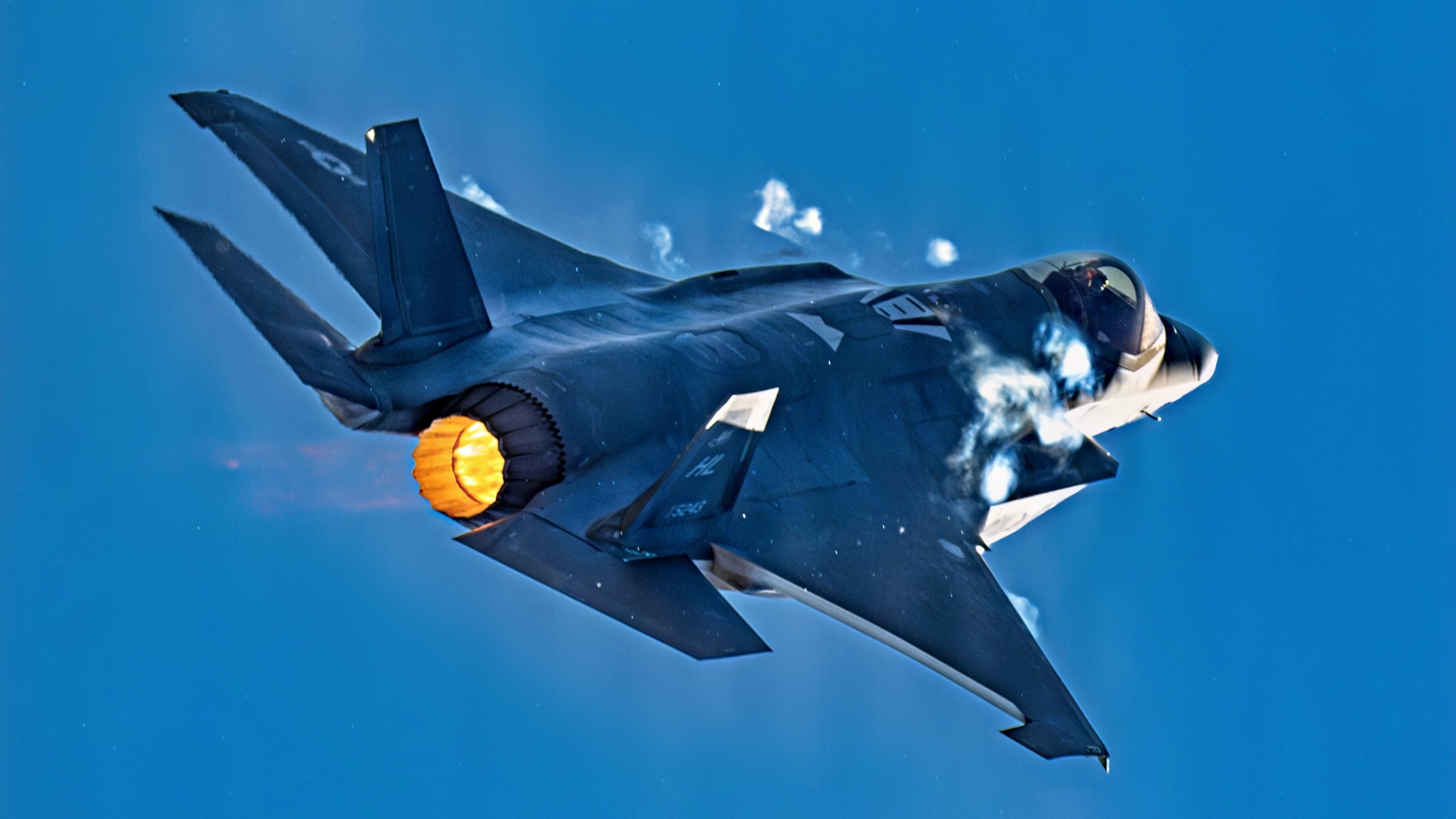
The F-35 Lightning II is sometimes derided for being a lesser version of the F-22. It is smaller, slower, and less maneuverable than the Raptor. While all of this is true, this argument misses the forest for the trees, as they say. What the F-35 lacks in speed and maneuverability, it makes up for with stealth and sophisticated sensor fusion technologies.
F-35: Designing the Joint Strike Fighter
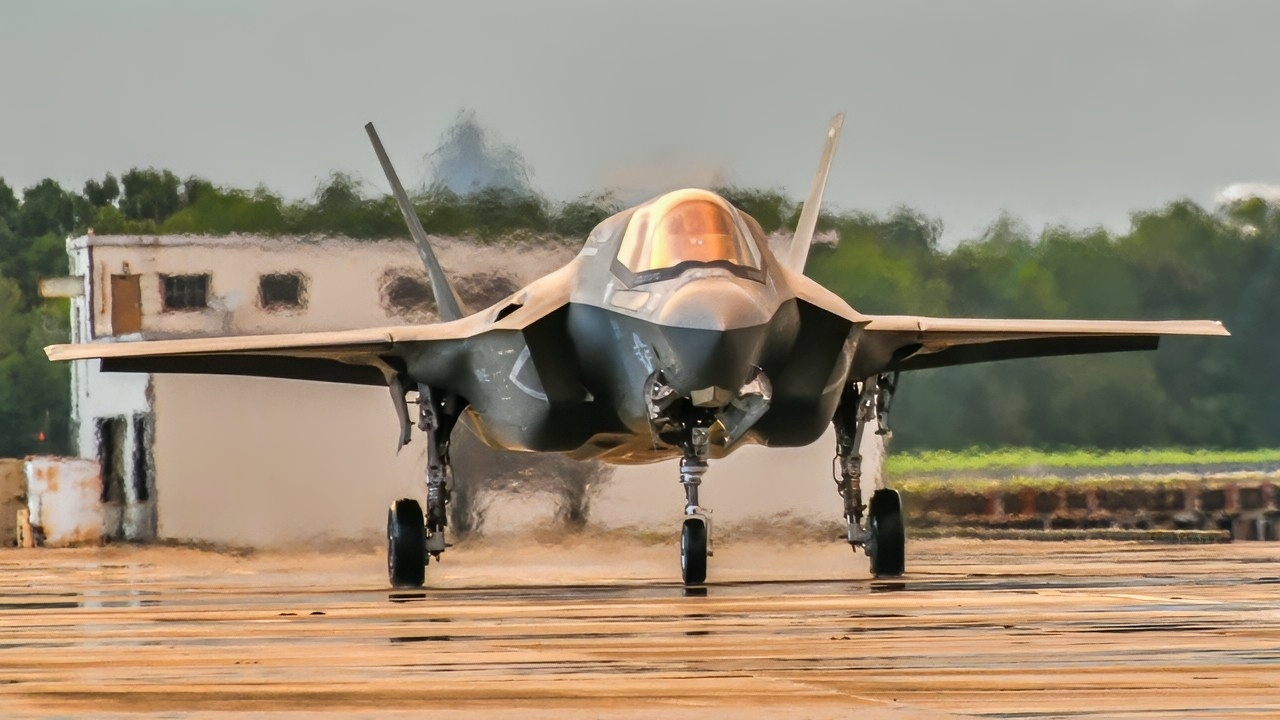
(Aug. 07, 2024) An F-35B Lightning II assigned to Marine Fighter Attack Squadron 122 at Yuma, Ariz., taxis after landing at Naval Air Station Jacksonville as part of the aircraft’s temporary transfer to Fleet Readiness Center Southeast (FRCSE). The jet is the first F-35 ever inducted into the depot and is part of a readiness improvement initiative to support corrosion mitigation efforts for the U.S. Marine Corps (USMC). (U.S. Navy photo by Toiete Jackson/Released)
Like all military aircraft, the F-35 was designed with a strict set of requirements in mind. When designing the aircraft, the engineers at Lockheed Martin had to meet these requirements to win the Joint Strike Fighter (JSF) contract.
So what exactly were these requirements?
The JSF had different requirements across the branches of the military (the Navy, for example, required the JSF to be carrier-compatible, while the USMC specifically required a STOVL variant); however, the program overall requested a fighter with a certain size and weight classification. The JSF had to be a suitable replacement for the F-16, F-15, F/A-18, A-10, and others. Additionally, the aircraft was required to utilize advanced stealth technology and have a reduced logistical footprint.
With all of these requirements in mind, Lockheed Martin set out to build the F-35, one of the most capable multi-role aircraft in the world. Speed and maneuverability were considered; however, they were deemed less important than other key requirements, like stealth and networking capabilities.
The JSF was therefore designed to match the flight performances of the F-16 Fighting Falcon and F/A-18 Super Hornet.
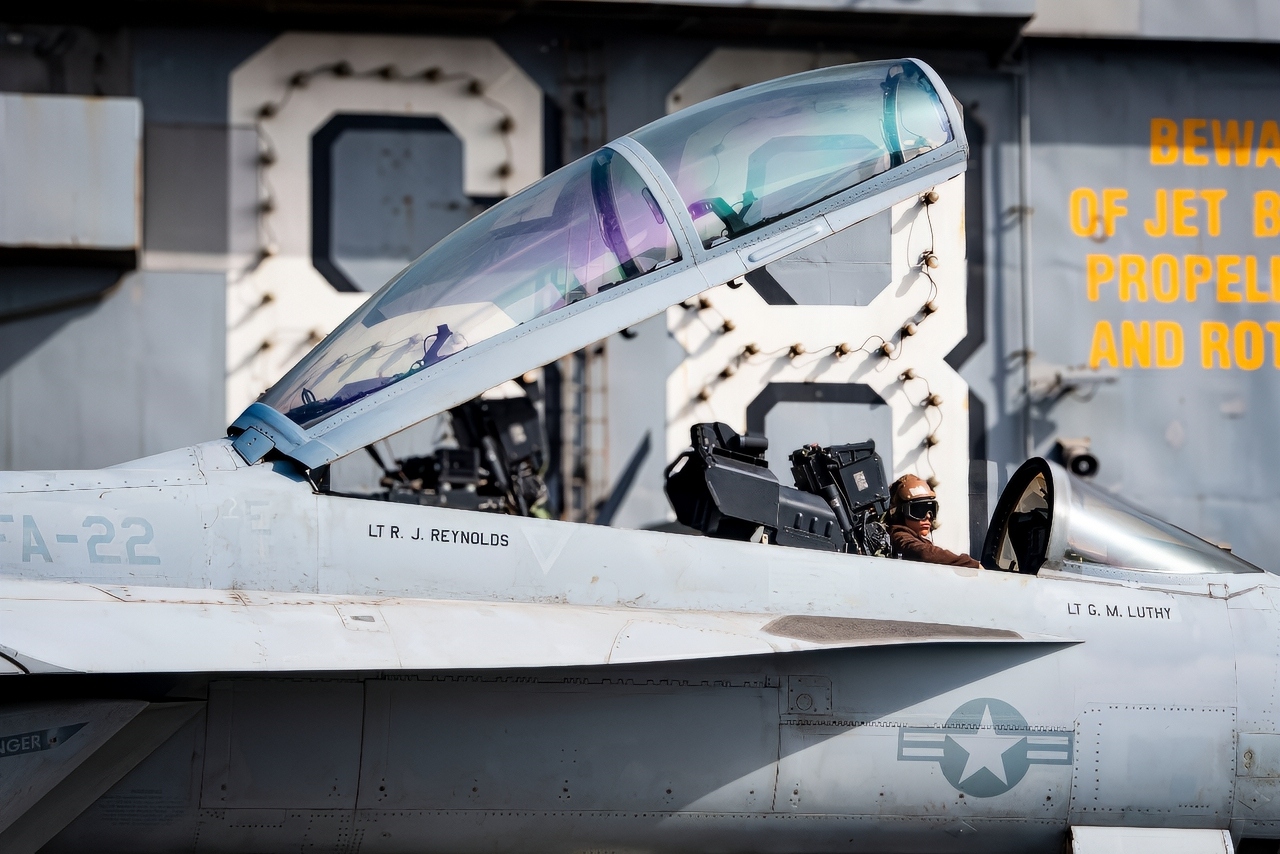
U.S. CENTRAL COMMAND AREA OF RESPONSIBILITY (July 22, 2025) An F/A-18F Super Hornet, attached to Strike Fighter Squadron (VFA) 22, taxis across the flight deck of the Nimitz-class aircraft carrier USS Nimitz (CVN 68) in the U.S. Central Command area of responsibility. (Official U.S. Navy photo)
It can perform a wide range of missions, including air superiority, SEAD/DEAD, close air support (CAS), interception, electronic warfare, and more. To be fair, in some roles, like CAS, the F-35 leaves a lot to be desired, but it is still one of the most capable multi-role aircraft out there.
The F-35’s Insane Stealth Capabilities
When it comes to stealth, the F-35 is a masterpiece. The aircraft employs comprehensive geometric shaping to reduce its radar cross-section (RCS).
The shaping and surfaces on the aircraft are so good that the fighter achieves a median RCS of around 0.06 square meters from the front at certain frequencies without applying any RAM coatings.
The aircraft also uses divertless supersonic inlets with S-duct air intakes to cover the engine’s turbine blades from radar waves. RAM application further increases the F-35’s stealth capabilities, with the aircraft achieving a median front RCS of approximately 0.001 square meters at certain frequencies.
The F-35’s stealth capabilities do not end with RCS reduction, however. The JSF was also required to have reduced radio and infrared signatures to complement the low radar signature. The aircraft is equipped with controlled radio-frequency emitters to reduce its radio and digital signatures.
Its infrared signatures are reduced thanks to its engine. The Pratt and Whitney F135 turbofan is not designed to enable supercruise. Instead, it is designed to reduce the amount of exhaust produced by its engine, thereby lowering its infrared signature. While it is still susceptible to infrared tracking, it is still significantly harder to detect than a fourth-generation aircraft.
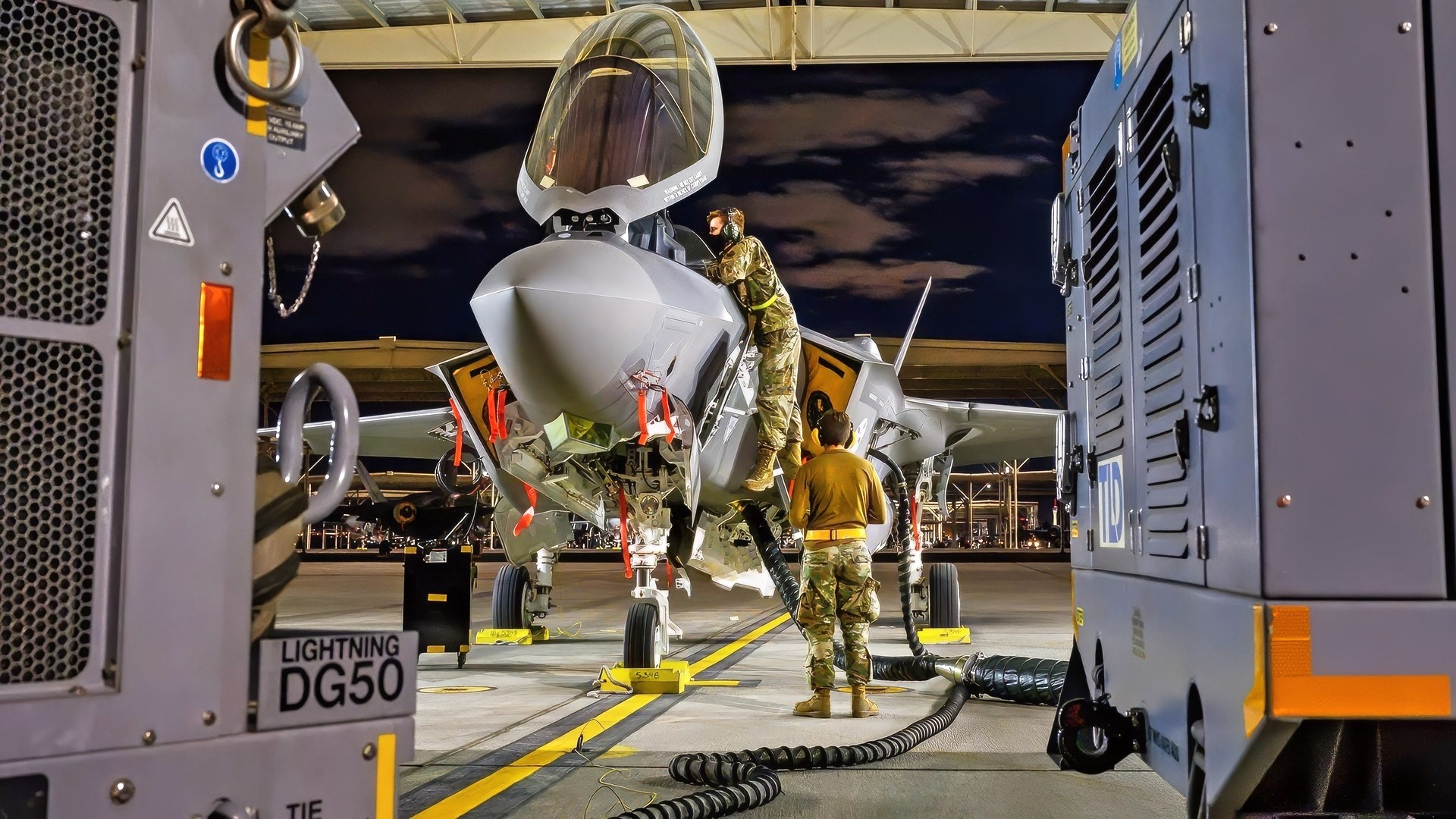
F-35 Fighters Ready. Image Credit: Creative Commons.
Overall, the F-35 is a world leader in stealth technology. It arguably possesses one of the lowest RCSs of any fifth-generation fighter and incorporates a number of other stealth features to lower its signature across all other bands. The downside, however, is that these systems are expensive.
Not only is the F-35 notoriously expensive to maintain thanks to its RAM coatings, but it also sacrifices performance for low observability. We will discuss its dogfighting capabilities later, but let’s just say the engineers at Lockheed were aware of these sacrifices and deemed them necessary.
Avionics and Sensors
Avionics is another area where the F-35 shines. The aircraft is equipped with an AN/APG-81 AESA radar, touted by some as one of the most advanced fire-control radars to date. Additionally, the aircraft is equipped with the AN/ASQ-239 electronic warfare system, the AN/AAQ-37 electro-optical distributed aperture system (DAS), and the AN/AAQ electro-optical targeting system (EOTS).
The specifications for most of these systems are heavily classified, but they provide the aircraft with unparalleled situational awareness and give the F-35 a major advantage on networked battlefields.
Networking and digital capabilities were core requirements of the JSF, and in this area, the F-35 also excels. The computers on the F-35 can fuse data from multiple sources to create a comprehensive picture of the battlefield for the pilot.
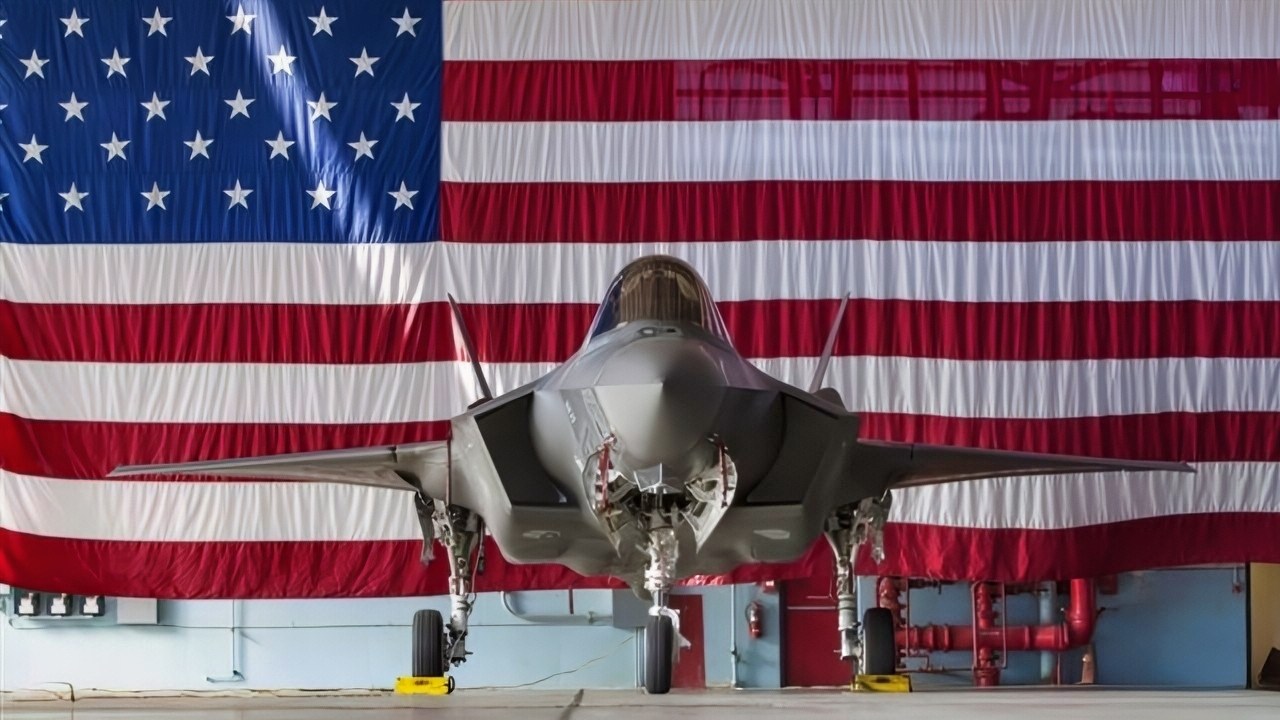
F-35 Fighter Image by Lockheed Martin
This data can be easily shared with other battlefield nodes, enabling the aircraft to act as a mobile command post. Concurrent software upgrades have only improved the F-35’s digital capabilities since the aircraft’s inception, increasing the pilot’s situational awareness and making its datalinks more resistant to jamming.
These upgrades are thanks to the aircraft’s future-proof design, which enables seamless, continuous upgrades.
Can the F-35 Dogfight?
The F-35’s dogfighting capabilities have been the topic of heated debate among aviation enthusiasts. In 2016, a leaked report from training exercises seemed to indicate that the aircraft was beaten in close-quarters combat by an F-16.
Since then, however, a number of pilots have come forward to explain that the F-35 actually can excel in close-range engagements, with that report omitting the fact that the F-35 used in the simulation was not fully combat-coded. While it is not as maneuverable as a Sukhoi Su-27, the F-35 is still nimble and responsive enough to execute quick mid-air maneuvers, and in the hands of an experienced pilot, it can dogfight almost any aircraft.
The elephant in the room, however, is that the F-35 was not made to dogfight, at least, that was not the focus.
It was designed for a wide variety of missions, but its stealth and sensors enable it to thrive in long-range engagements. In a real combat scenario, the F-35 would likely defeat its opponent long before the enemy aircraft knew it was even there.
About the Author: Isaac Seitz
Isaac Seitz, a Defense Columnist, graduated from Patrick Henry College’s Strategic Intelligence and National Security program. He has also studied Russian at Middlebury Language Schools and has worked as an intelligence Analyst in the private sector.


