


The F-35 Lightning II operates as a “flying computer.” It senses, gathers, and securely transmits critical battlefield data across multinational combat formations. All of that depends on encrypted communications between aircraft, command centers, satellites, and allied forces. Cybersecurity researchers have raised concerns that future quantum computers — leveraging the nonclassical correlation properties of qubits — could decrypt cryptographic systems protecting F-35 data links, radar systems, and mission data files. The risk is currently theoretical. Practical quantum attacks remain far beyond present technological capabilities. But the U.S. military and allied nations are already developing quantum-resistant defenses ahead of the eventual capability gap. The threat isn’t immediate — but it’s coming.
The New Threat to the F-35
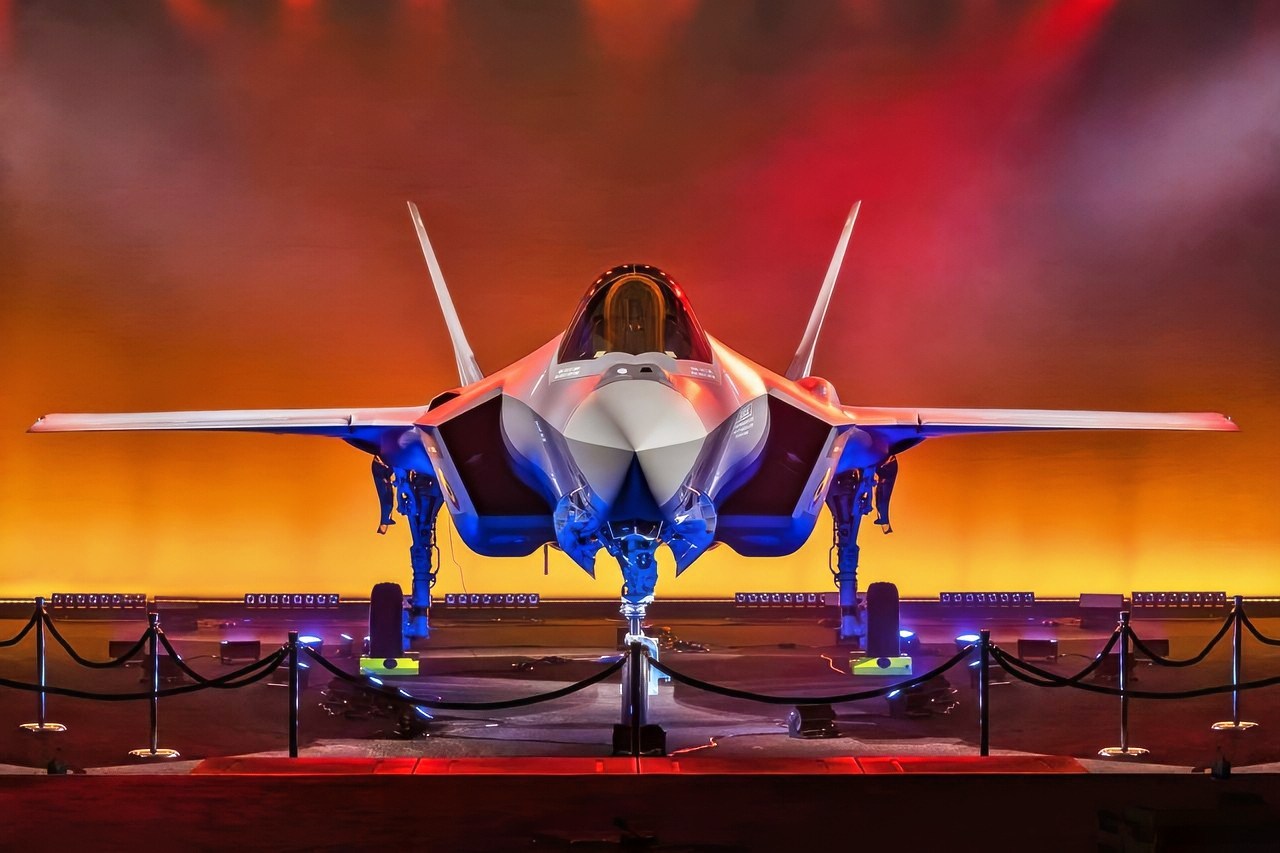
F-35 Fighter in Belgium. Image Credit: Creative Commons.
The future success and tactical value of the F-35 in the coming years rely heavily on its role as a “flying computer” able to sense, gather, and securely transmit critical data across large, multinational combat formations, yet advances in quantum computing may threaten the security of the encryption used to protect F-35-transmitted information.
Encryption plays a vital role in securing every aspect of the fighter’s operation, from data links and radar systems to maintenance diagnostics and mission planning.
As quantum computing technology advances, however, cybersecurity professionals have raised concerns that future quantum computers could potentially threaten many of the cryptographic systems currently used to secure military platforms like the F-35.
Quantum Computing vs F-35
The science and technological specifics of quantum computing are extremely complex, yet an essay on a “defense blog” claims it can potentially imperil, hack, disable, or penetrate F-35 cryptography.
One potential target would be secure communications between aircraft, command centers, satellites, and allied forces.
The F-35 uses advanced data-sharing systems to exchange battlefield information in real time, enabling pilots to coordinate operations with other aircraft and ground assets.
If an adversary obtained the ability to decrypt these communications, they could potentially intercept mission plans, monitor troop movements, or disrupt military operations.
There are various formal definitions of quantum computing, most of which refer to its use of the term “quantum mechanics” – a theoretical approach in physics that examines the smallest bits of matter and energy at the atomic and subatomic levels.
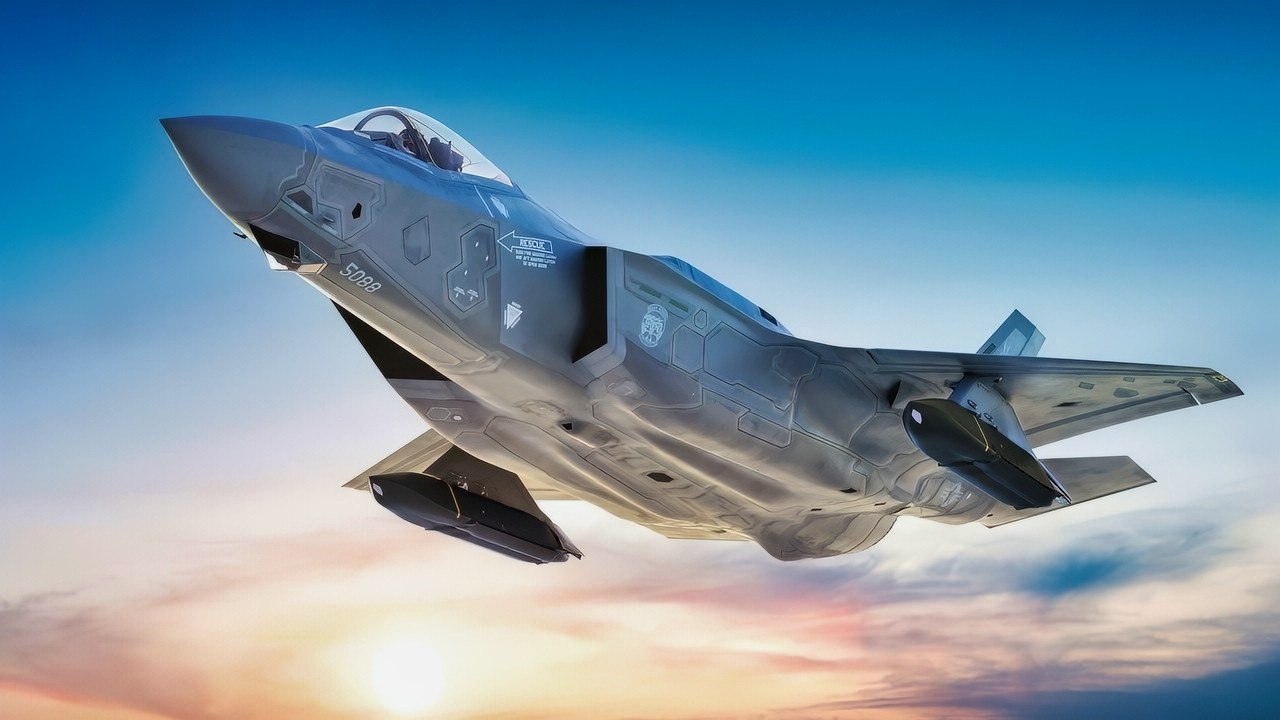
F-35 Fighter With LRASM Missiles. Image Credit: Lockheed Martin.
Therefore, in “clear terms,” according to Science Direct, quantum computing focuses on the development of machines utilizing principles of quantum mechanics, proposed by Richard Feynman in 1981 Particles at the smallest level, referred to as Qubits or “Quantum Bits,” follow different patterns and behaviors compared to larger matter, and Qubits can be linked in what CalTech’s “Science Exchange” describes as “non-classical correlation.”
This suggests that linked groups of Qubits could perform otherwise “not-possible” functions and analyses.
Most of all, by using entangled groups of Qubits instead of standard 1s and 0s, quantum computers can perform functions much “faster” than conventional systems can.
Quantum Computing Threatens Maintenance?
Another Quantum computing concern involves logistics and maintenance systems connected to the aircraft, as the F-35 relies heavily on digital infrastructure to monitor maintenance schedules, software updates, spare parts, and operational readiness.

U.S. Air Force Capt. Kristin “Beo” Wolfe, F-35A Lightning II Demonstration Team commander and pilot, takes off from Selfridge Air National Guard base for the 2020 London SkyDrive Air Show in Canada Sep. 12, 2020, Harrison Township, Mich. The F-35 Demo Team flew alongside the F-16 Viper, the F-22 Raptor, the A-10 Thunderbolt II, and the Air Force Thunderbirds aerial demonstration teams in London, Ontario, Canada. (U.S. Air Force photo by Capt. Kip Sumner)
Earlier versions of the aircraft used systems such as ALIS (Autonomic Logistics Information System), later replaced by ODIN (Operational Data Integrated Network). These networks store vast amounts of operational data. If encryption protecting such systems became vulnerable to quantum attacks, hostile actors could theoretically gain access to sensitive technical information or manipulate logistics databases.
Mission data files also represent an important area of concern, as they are described as an onboard computer “library” or catalog containing information on known threats.
The F-35 depends on continuously updated electronic warfare databases containing information about enemy radar systems, missile signatures, and air defense networks. These files are carefully encrypted and distributed among allied operators.
A successful quantum-enabled decryption capability could potentially expose classified intelligence about friendly or hostile systems.
While Quantum computing may seem to present a serious long-term challenge to many forms of modern encryption, such as those used within the F-35 Lightning II program, available research also suggests that practical quantum attacks remain far beyond current technological capabilities.

F-35A Lightning II’s from the 34th Fighter Squadron at Hill Air Force Base, Utah, land at Royal Air Force Lakenheath, England, April 15, 2017. The aircraft arrival marks the first F-35A fighter training deployment to the U.S. European Command area of responsibility. (U.S. Air Force photo/Tech. Sgt. Matthew Plew)
Furthermore, military organizations are already developing quantum-resistant defenses.
Rather than signaling the F-35’s immediate vulnerability, the rise of quantum computing highlights the ongoing evolution of cybersecurity in modern warfare and the ongoing struggle between encryption and codebreaking in the digital age.
About the Author: Kris Osborn
Kris Osborn is the Military Technology Editor of 19FortyFive. Osborn is also President of Warrior Maven – Center for Military Modernization. Osborn previously served at the Pentagon as a highly qualified expert in the Office of the Assistant Secretary of the Army—Acquisition, Logistics & Technology. Osborn has also worked as an anchor and on-air military specialist at national TV networks. He has appeared as a guest military expert on Fox News, MSNBC, The Military Channel, and The History Channel. He also has a Master’s Degree in Comparative Literature from Columbia University.


