


The ongoing war in Iran has entered another period of escalation after a span of relative calm, with fighting extending well beyond just barrages between the United States and Iran.
Washington is asking Congress for significantly more funding — a marker of potentially extended operations against Iran — and Iran has continued its missile and drone attacks against its Gulf State neighbors that host American forces, while the Houthis, the Iran-backed Shia Islamist group, backed by Iran, are expanding the war to include an embargo of Saudi oil exports via the Red Sea.

An F/A-18C Hornet, assigned to the “Stingers” of Strike Fighter Squadron 113, transits over the haze of southern Afghanistan. VFA 113, part of Carrier Air Wing 14 aboard the aircraft carrier USS Ronald Reagan is supporting Operation Enduring Freedom. The mission of CVW 14 is to protect the people of Afghanistan and to support coalition forces. Ronald Reagan is currently deployed to the U.S. 5th Fleet area of operations. Operations in the U.S. 5th Fleet area of operations are focused on reassuring regional partners of the United States’ commitment to security, which promotes stability and global prosperity.
The Costs of War
American Secretary of Defense Pete Hegseth told Congress earlier this week that the war in Iran has cost the United States billions of dollars, and pegged the figure at around $37.5 billion, a figure that some have criticized as an underrepresentation of the true costs of the war.
The secretary as well as the Chairman of the Joint Chiefs of Staff, General Dan Caine, argued that the Pentagon needs tens of billions of dollars in additional funding to sustain operations against Iran, replenish precision-guided munitions, strengthen air defenses in the region, and maintain the U.S. military presence in the Middle East.
It will be a tall order to fill, and the request comes as lawmakers from both the Republican and Democratic parties have questioned how long it will take and how much money it will cost to bring the ongoing campaign to a successful conclusion — a particularly thorny question as the conflict’s scope broadens.
Renewed Fighting
Following the collapse of the recent ceasefire hammered out of the loosely worded memorandum of understanding between the United States and Iran, American and allied strikes against military infrastructure within Iran have begun again.
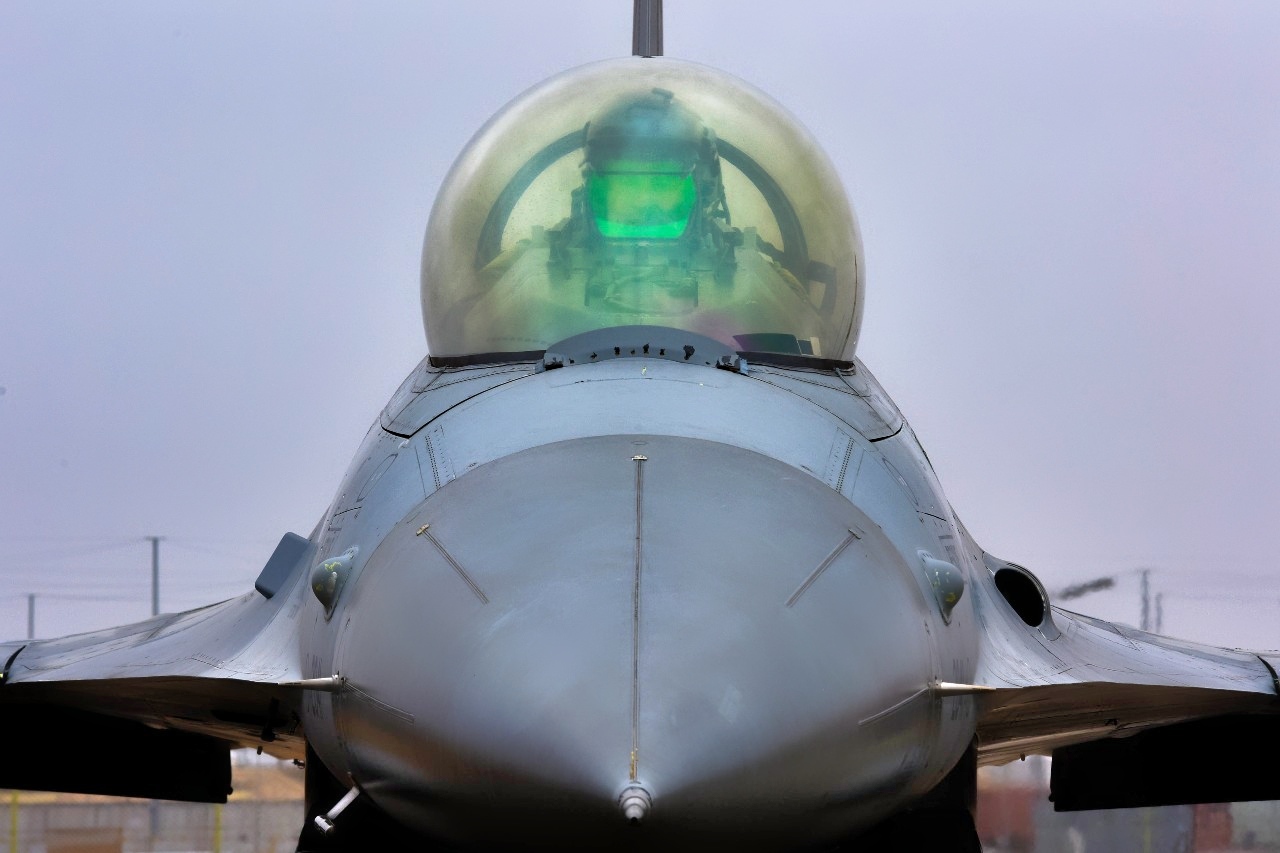
U.S. Air Force Lt. Col. John Ryan, 555th Fighter Squadron F-16 Fighting Falcon pilot, prepares to take off for a routine training flight at Aviano Air Base, Feb. 17, 2022. The flights will support NATO’s enhanced air policing mission; integrate with allies and partners in the Black Sea region in an increased defensive posture along NATO’s border and to reinforce regional security. (U.S. Air Force photo by Senior Airman Brooke Moeder)
Recent operations against Iran have, according to Central Command, targeted Islamic Revolutionary Guard Corps facilities, missile launch sites and storage depots, air defense systems, logistics hubs that support drone and missile operations, bridges, transportation infrastructure, and naval assets.
In the meantime, Iran has launched drone and missile barrages mainly against American military bases and related infrastructure in the region, and in particular at American forces hosted by Iran’s Gulf state neighbors.
In parallel, Iran has attempted to rattle maritime shipping in the region.
But despite the intense grappling between Washington and Iran, neither appears poised to achieve the kind of decisive military victory that would end the fighting.
While the United States retains overwhelming air superiority, Iran retains the ability to launch harassing drone and missile attacks and maintain pressure on American forces and the rest of the Gulf.
The Yemen Connection: Houthi Embargo
One of the biggest new developments in the war in Iran is the decision by Yemen’s Houthi rebels to declare a maritime embargo on Saudi Arabia following strikes on Yemen’s airport in Sanaa.
According to the Houthis, they will target shipping connected to Saudi Arabia transiting the Red Sea and the Bab el-Mandeb Strait. This narrow waterway allows access to the Indian Ocean from the Red Sea.
Following the closure of the Strait of Hormuz, Saudi Arabia has leaned on its Red Sea port of Yanbu to make up for lost oil exports and to increase shipments via pipeline to the port.
While Houthi efforts to hamper Riyadh’s export potential are significant, their practical effect will depend largely on how aggressively the Houthis enforce the embargo.
If attacks by the Houthis become frequent enough to deter commercial shipping, markets could react quickly because Saudi Arabia remains one of the world’s largest oil exporters.
A sustained disruption through the Red Sea would likely increase insurance costs for tankers, as tankers would take longer, more circuitous routes, tighten crude oil supplies, and increase oil prices.
The Look Ahead
Rather than winding slowly down, the war in Iran is becoming a broader conflagration than when it began.
The Pentagon is laying the groundwork by informing Congress, through its funding requests, that the war will be much longer and more costly than originally anticipated.
While there is a chance that diplomacy brings a solution, the two sides’ diametrically opposed war aims are, for all intents and purposes, irreconcilable.
Barring a negotiated settlement, this next phase of the war could well include more of the kinds of strikes we have seen against Iranian military infrastructure, more attacks on international shipping, and continued strikes against American service personnel based within the Gulf countries.
About the Author: Caleb Larson
Caleb Larson is an American multiformat journalist based in Berlin, Germany. His work covers the intersection of conflict and society, focusing on American foreign policy and European security. He has reported from Germany, Russia, and the United States. Most recently, he covered the war in Ukraine, reporting extensively on shifting battle lines in Donbas and writing about the war’s civilian and humanitarian toll. Previously, he worked as a Defense Reporter for POLITICO Europe. You can follow his latest work on X.


