
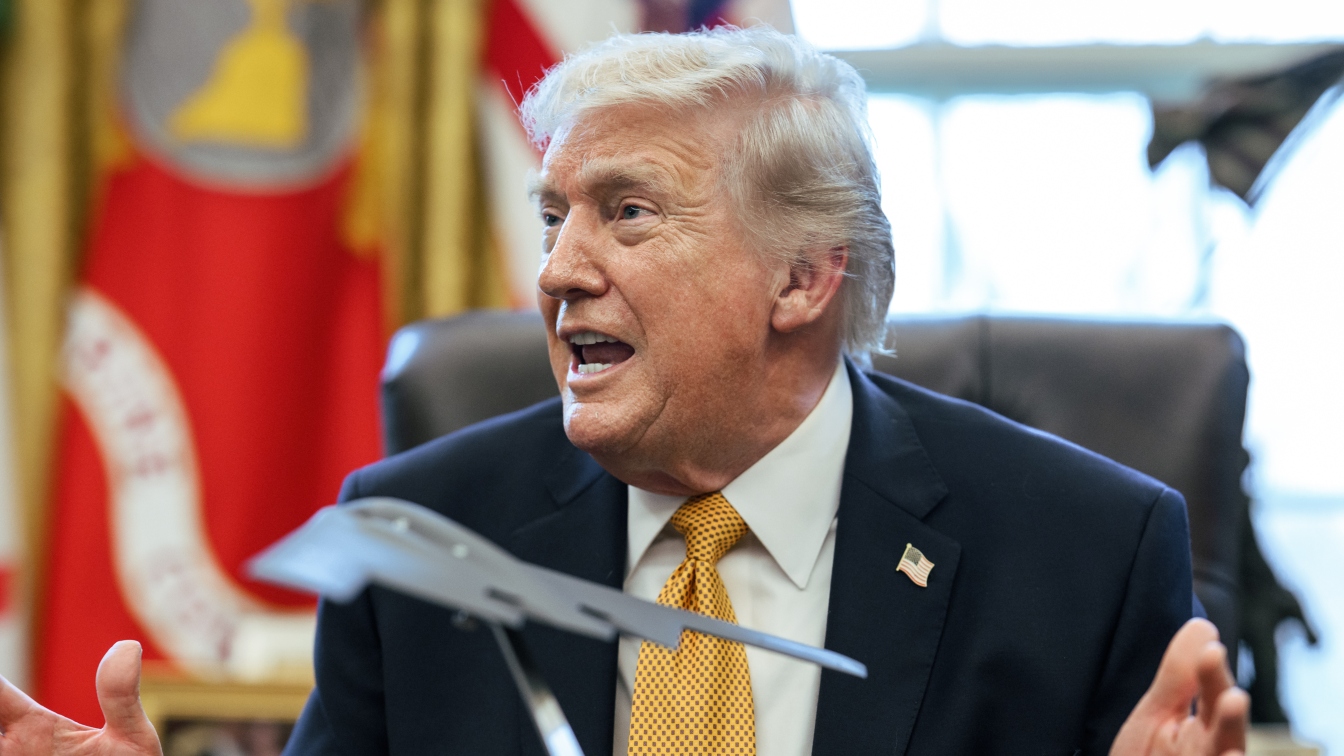
President Donald Trump has reiterated his belief that the war could finally end sometime around the November midterm elections, stating that Iran is now “ready to fold up.” The comments come even as the United States sends thousands more troops to the Middle East, and as Tehran prepares for another possible round of American strikes, per the president’s own comments to journalists in recent weeks.
Speaking during a visit to a Peterbilt Motors facility in Denton, Texas, on Thursday, October 1, Trump predicted that the United States would ultimately prevail against Iran either shortly before or after the November 3 elections.
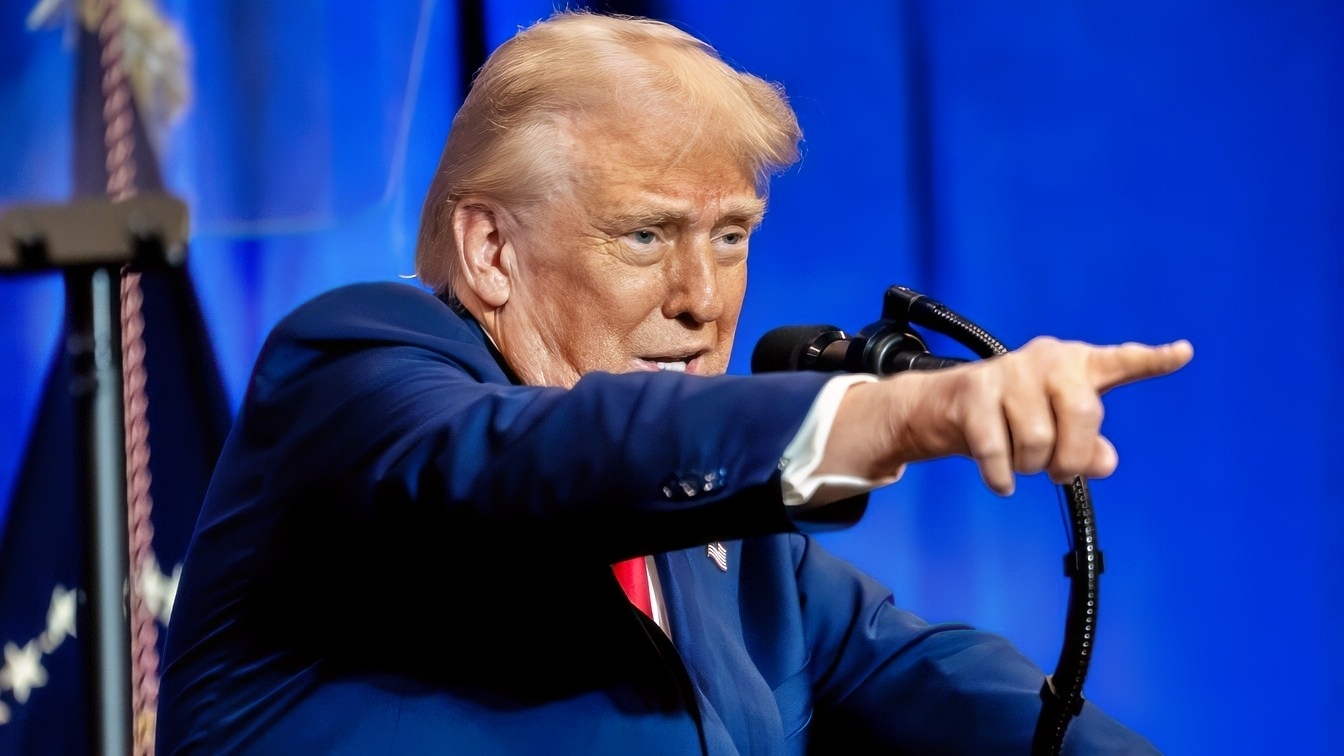
President Donald Trump delivers remarks at the Department of Justice in Washington, D.C., Friday, March 14, 2025. (Official White House Photo by Joyce N. Boghosian)
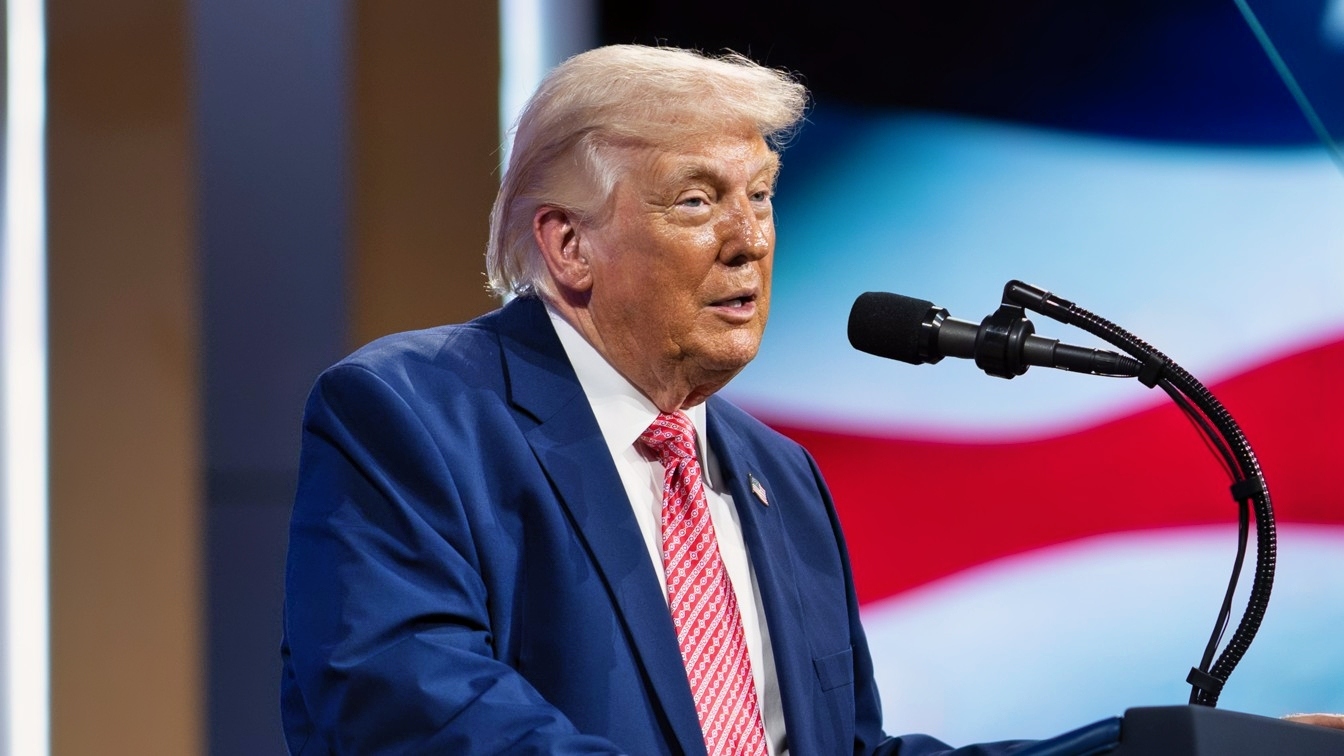
Donald Trump Flickr/White House Photo
While listing off achievements of his administration so far, Trump said that gasoline is “lower than it was with Biden despite the fact that we have a war going on with a country that will never have a nuclear weapon and is ready to fold up.”
“We’ll win very easily right now,” Trump claimed.
Trump Says Iran Weakened
Continuing in his speech, the president said that he believes the war will wrap up soon after the election, and cited economic turmoil inside Iran as the driving factor behind Iran’s eventual concessions.
“They’re just about- I, I believe right after the election we’ll win, but maybe before the election because they have 300%, almost like 312, I heard, inflation.
Think of that. 312% inflation, meaning their currency is valueless.
They have no money. They have no navy. The navy, 159 ships all lying beautifully at the bottom of the sea,” he said.
“They have no air force. Their air force has been totally extinguished. They have no anti-aircraft. They have some missiles, but we can handle it. We can handle it. They have some missiles, very few left. Their manufacturing capacity is dead. Their leaders are gone. For the most part, their leaders are gone,” he continued.
The comments also came after Trump gave an interview to TIME in which he acknowledged, not for the first time, that another major U.S. military campaign against Iran is possible if diplomatic efforts fail.
U.S. Sends More Personnel
Trump may say he believes Iran is close to giving up, but that hasn’t stopped the Pentagon from preparing for the possibility of another round of strikes.
On October 1, the Associated Press reported that roughly 9,000 more U.S. military personnel are being sent to the Middle East aboard two groups of warships. Over 7,000 sailors and 2,000 Marines are deploying aboard the USS Theodore Roosevelt Carrier Strike Group and the USS Makin Island Amphibious Ready Group.
Theodore Roosevelt is being deployed alongside the cruiser USS Chosin. The Makin Island group, meanwhile, includes the amphibious transport dock USS John P. Murtha and dock landing ship USS Anchorage.
An unnamed U.S. official said that the deployment could see three U.S. aircraft carriers operating in the region by the end of October.
The USS George H.W. Bush and USS George Washington are already in the region, along with the USS Boxer Amphibious Ready Group.
That means the U.S. naval presence in the region will exceed 20,000 sailors and Marines, supported by hundreds of military aircraft.
Iran Prepares Itself
Iran is preparing for potential new strikes, with officials suggesting that the next round of attacks and Iranian retaliation could be far broader than what has already been seen.
Reuters reported on October 1 that senior Iranian military commanders are now reviewing their options for a stronger response if the United States resumes its large-scale strikes against the country.
Three senior Iranian officials and another person familiar with the discussions told Reuters that the plans could involve expanding Iran’s list of potential targets beyond American military assets.
Countries that assist U.S. military operations could also be targeted, the sources said, while attacks outside the Middle East are reportedly under consideration.
…And Its Allies
Iran is also preparing its regional allies and proxy groups.
According to the same report, Iranian-backed armed groups in Lebanon, Yemen, and Iraq have been briefed on potential new strikes and instructed to prepare for coordinated action if large-scale American strikes resume.
On October 1, a senior Iranian delegation, including Islamic Revolutionary Guard Corps Brigadier General Hossein Yekta, visited southern Lebanon.
Iranian-backed Iraqi militias are also reportedly resisting all pressure to disarm, with the Islamic Resistance in Iraq reiterating on September 30 that it was not bound by any government timetable for surrendering its weapons – referring to Baghdad’s efforts to bring weapons held by armed factions under state control following the withdrawal of U.S.-led coalition forces from Iraq.
The Iraqi government originally sought to complete the process by September 30, the same date the coalition’s military mission formally ended.
But Prime Minister Ali al-Zaidi extended the deadline until June 30, 2027. Kataib Hezbollah spokesman Jaafar al-Husseini said that the factions had been negotiating with the government for over 40 days over the “regulation” of weapons, but insisted that no agreement has been reached.
About the Author: Jack Buckby
Jack Buckby is a British researcher and analyst specializing in defense and national security, based in New York. His work focuses on military capability, procurement, and strategic competition, and he produces and edits analysis for policy and defense audiences. He brings extensive editorial experience, with a career output spanning over 1,000 articles at National Security Journal, and has previously authored books and papers on extremism and deradicalization.


