


Key Points and Summary – For more than a decade, aviation fans have obsessed over the rumored SR-72 “Son of Blackbird,” a Mach 6 reconnaissance and strike platform said to be under quiet development at Lockheed Martin’s Skunk Works.
-Official details are scarce; what we know comes from patents, budget hints, and carefully managed comments, plus a Hollywood stand-in in Top Gun: Maverick.

SR-72 artist image. Image Credit: Creative Commons.
-A real SR-72 would face huge hurdles in propulsion, thermal management, and cost, making any operational aircraft likely unmanned and far less cinematic than Darkstar.
-Still, amid great-power competition and hypersonic races, it’s hard to believe Washington isn’t pursuing something like it.
SR-72 “Son of Blackbird”: Real Program or Just Top Gun Hype?
For over a decade, aviation watchers have been waiting for the SR-72 “Son of Blackbird”, a rumored hypersonic successor to the legendary SR-71 Blackbird.
The concept—an optionally manned, Mach 6 reconnaissance and strike platform—has been teased at by Lockheed Martin’s Skunk Works since 2013.
Yet, little is known about the program; what is known is speculative, coming from a mixture of defense reporting, company statements, patent filings, and carefully staged PR.

SR-72 from Lockheed Martin. Image Credit: Lockheed Martin.
Meanwhile, heightening the anticipation: a rendering of the SR-72 appeared in the opening scenes of 2022’s highest-grossing film, Top Gun: Maverick. Still, despite depictions of Tom Cruise piloting the thing, questions remain: is the SR-72 a real aircraft, and if yes, will it ever see the light of day?
Historical Context: SR-71 to SR-72
The SR-71, retired in 1998, flew Mach 3 at 80,000 feet, making it impossible to intercept for either enemy fighters or missiles.
During the Cold War, this unprecedented speed and survivability allowed the US to conduct strategic reconnaissance of the Soviet Union and its allies.
Its retirement left a high-altitude ISR gap that satellites and drones mostly filled—but not entirely. Now, as great power competition re-intensifies and China builds an A2/AD bubble, there is renewed interest in penetrating ISR.
SR-72 Darkstar or Son of Blackbird. Image Credit: Lockheed Martin.
Hypersonic technology may offer a penetrating solution.
Enter the SR-72.
The aircraft featured in Top Gun, capable of Mach 10, is clearly a cinematic exaggeration.
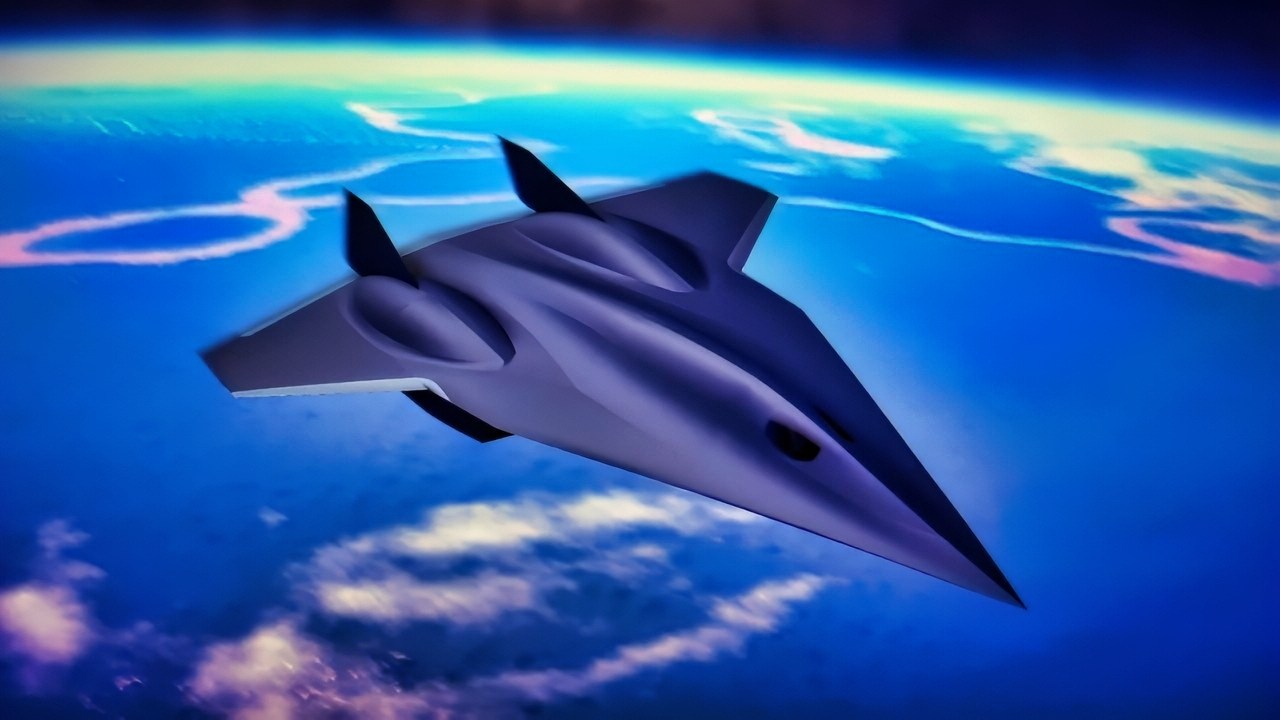
The “Darkstar,” as the aircraft was referred to, was a sleek hypersonic aircraft, clearly inspired by SR-72 mockups and rendered in collaboration with Lockheed Martin.
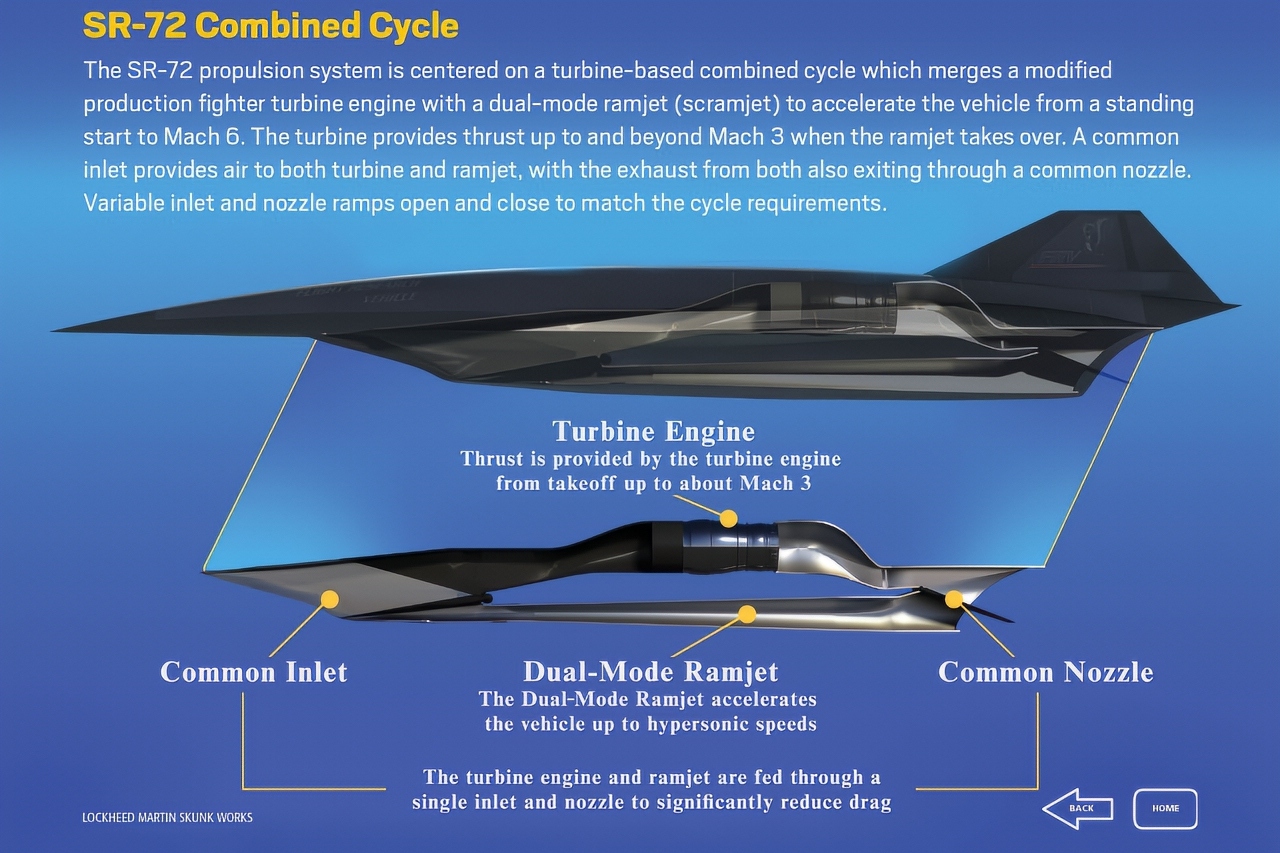
The aircraft featured a blended body, chines, long wave-sensitive shaping, and a turbine and ramjet inlet design.
But the aircraft depicted was decidedly not the real SR-72; instead, it was a Hollywood attempt to capture the essence of the program.
What is known about the program is limited.
The concept originated in 2013 as a “turbine-based combined cycle (TBCC)” aircraft, using a traditional jet engine at low speeds and a scramjet at hypersonic speeds above Mach 4 (a transition partially depicted in the film).
SR-72 Darkstar. Image Credit: Creative Commons.
The aircraft’s target speed is Mach 6 (not Mach 10).
Initial reports suggested that a sub-scale demonstrator could fly by the mid-2020s.
But to date, no sightings or confirmations have been reported, though some analysts believe flight testing may take place in restricted ranges, such as Groom Lake or Edwards.
The SR-72’s mission set would include penetrating ISR over heavily defended Chinese or Russian airspace.
The aircraft would fill the gaps between satellite coverage, launching quickly, without the predictability of satellite orbits.
The aircraft could also conduct hypersonic strike missions.
But this is all speculative; there has been no official confirmation of full-scale production. The only public cues are patents filed by Lockheed for TBCC engine architecture, hints from Skunk Works executives, and a few DoD budget lines.
If the program is real, it would face significant technical challenges—propulsion, for example. TBCC engine integration is highly complex; the transition from turbine to ramjet to scramjet in a single airframe, the management of airflow at Mach 6, all extremely difficult.
Thermal management would be an issue, too. As the SR-71 demonstrated, high speeds produce incredible surface temperatures that engineering must be tailored to accommodate.
In the case of the SR-71, Mach 6 speeds would cause surface temperatures in excess of 1,000 degrees Fahrenheit, requiring advanced materials like ceramic composites, titanium alloys, and heat-resistant coatings.
Then, of course, there’s the cost of the program.
Even getting to the point of fielding a demonstrator would cost billions.
And full operational capability would imply a massive long-term budget.
Now, none of this means the SR-72 is an impossibility, only that the program would likely be time-intensive, with real challenges to overcome.
Summed Up With One Punctuation Mark: 1 Big Question Mark
So, will the SR-72 actually happen?
Is the aircraft real?
Some form of hypersonic aircraft program is under development.
The US won’t let China or Russia pioneer hypersonic aircraft unchallenged.
It just won’t happen.
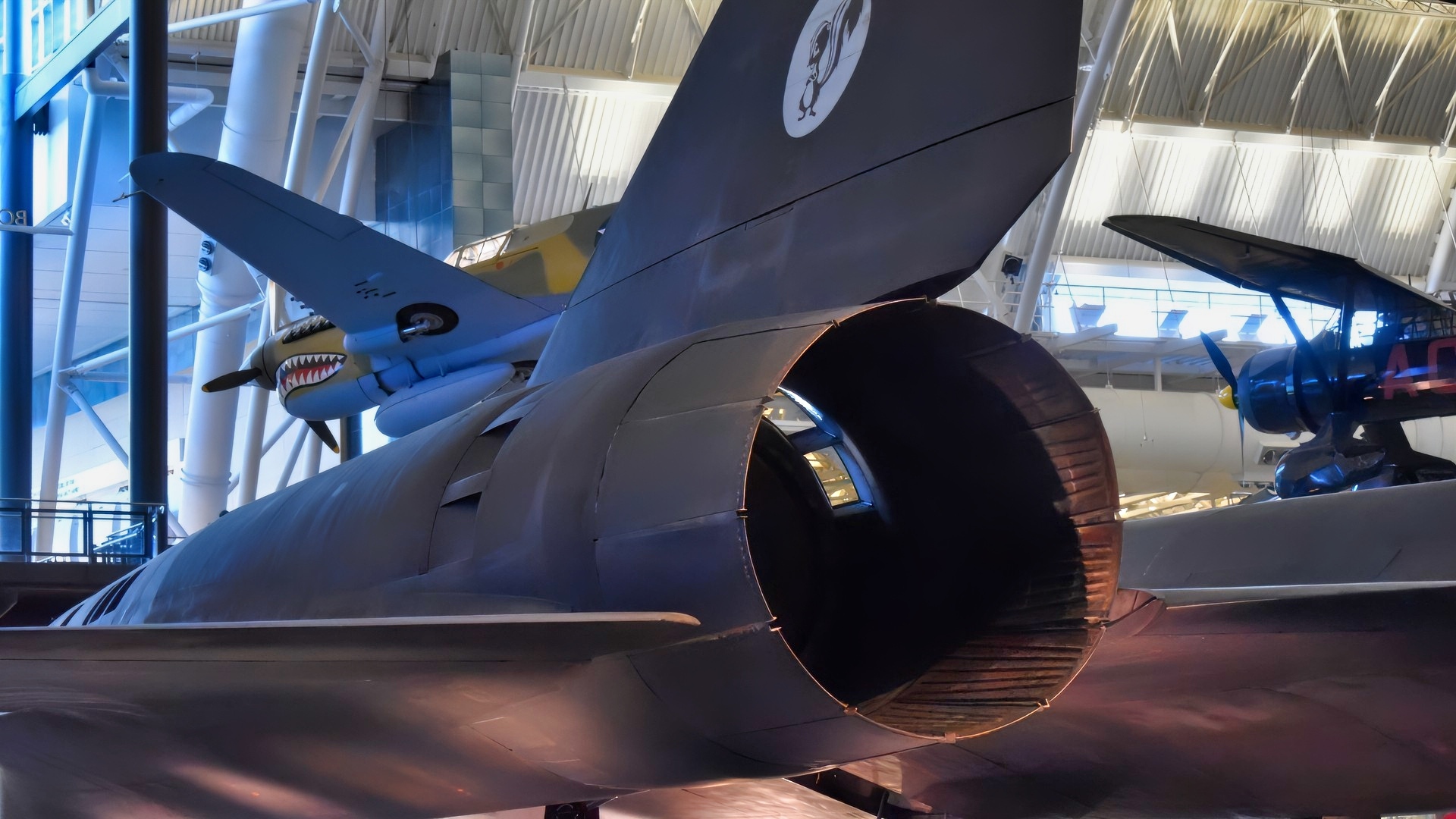
SR-71 Blackbird Rear Image. Credit: Taken on September 26, 2025 by National Security Journal.
And a variety of indicators, from patents to budgets to Lockheed statements, suggest a program is in fact underway.
But don’t expect the SR-72 from Top Gun to resemble the actual program. Something smaller and unmanned is more likely.
Something less incredible and cinematic.
Either way, don’t expect the public to be looped in anytime soon; the program may be well underway before a word of confirmation is offered, such is the secrecy at the cutting edge of aerospace development.
About the Author: Harrison Kass
Harrison Kass is an attorney and journalist covering national security, technology, and politics. Previously, he was a political staffer and candidate, and a US Air Force pilot selectee. He holds a JD from the University of Oregon and a master’s in global journalism and international relations from NYU.


Shit-ta-ya
December 12, 2025 at 10:36 pm
The x-51 flew four times at mach 5, a speed lower than that of the vaporware sr-72, and of the four flights, only one was regarded as 100% successful.
Two flights were outright failures, and the other one was a partial success.
That’s for the unmanned x-51.
The sr-72 ? Wait annuder twenty years.
LtJ
December 13, 2025 at 10:47 am
More better ways to kill more people!
Hows that working out so far???
I was drafted to Nam in 69, we had a saying that was spread throughout the military…
What if ‘they’ gave a war and NO ONE SHOWED UP?
Guess the ‘big dogs’ would have to fight out themselves!
I have always said…..let those who call for the wars get in a ring and duke it out…….Ain’t my fight!….YOU STARTED IT…YOU CAN FINISH IT!
WITHOUT ME!!….or my kids!