


Summary and Key Points: National Security Columnist Steve Balestrieri evaluates the potential combat role of the SR-72 Darkstar amid Operation Epic Fury in 2026.
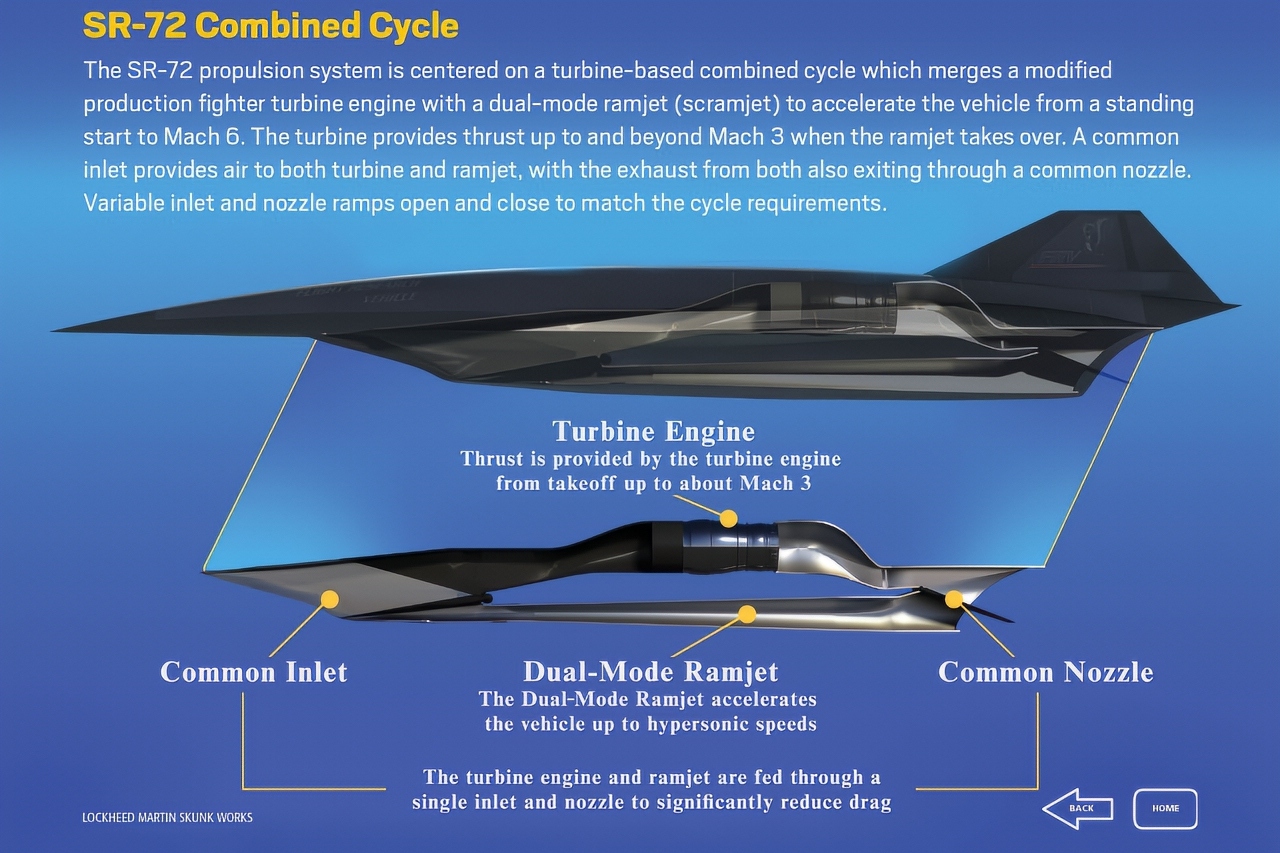
-Designed by Lockheed Martin Skunk Works, the SR-72 is a hypersonic Mach 6 successor to the SR-71 Blackbird, utilizing a Turbine-Based Combined Cycle (TBCC) propulsion system.

SR-72 by Lockheed Martin. Image Credit by Lockheed Martin.
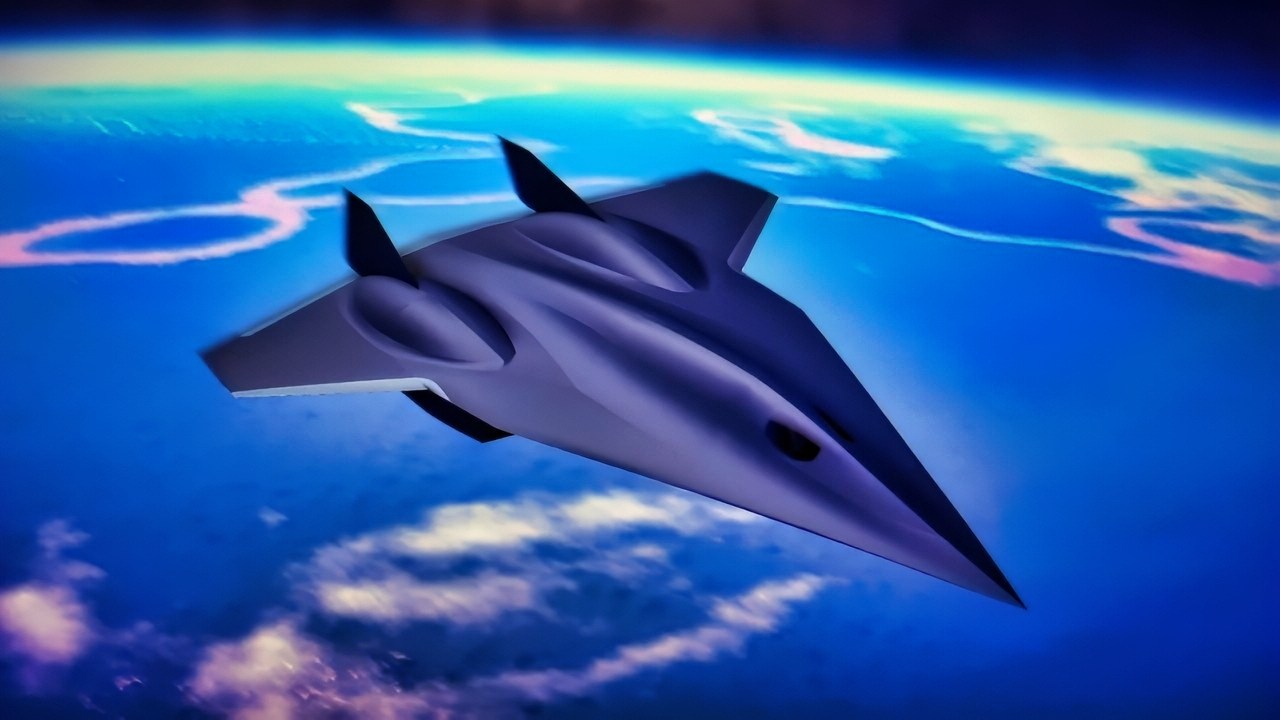
SR-72 Darkstar. Image Credit: Creative Commons.
-This report analyzes the platform’s ability to penetrate denied airspaces for ISR and precision strikes using the High-Speed Strike Weapon (HSSW).
-Balestrieri explores the technical hurdles of weapon release at Mach 6, concluding that the SR-72’s speed offers a “hypersonic ghost” capability that would make it virtually impossible for current Iranian defenses to intercept.
How Effective Would The SR-72 Darkstar Be Against Iran?
The US and Israel have again decimated Iran’s air defenses, while knocking out most of its ballistic missile launchers, and decapitating about 50 of Iran’s senior leaders. It has been a very effective air campaign.
Although the air campaign against Iran doesn’t seem to be lacking in any capability, one possible, theoretically intriguing scenario we’ll look at today is if the US were to use the SR-72 Darkstar.
How would the US use the SR-72 against Iran? And how effective would it be?
If the SR-72 “Darkstar” were operational in 2026 as a Mach 6 attack/reconnaissance craft, it would represent a significant, game-changing advantage against Iranian targets, largely by nullifying what’s left of Tehran’s traditional Anti-Access/Area Denial (A2/AD) defenses.
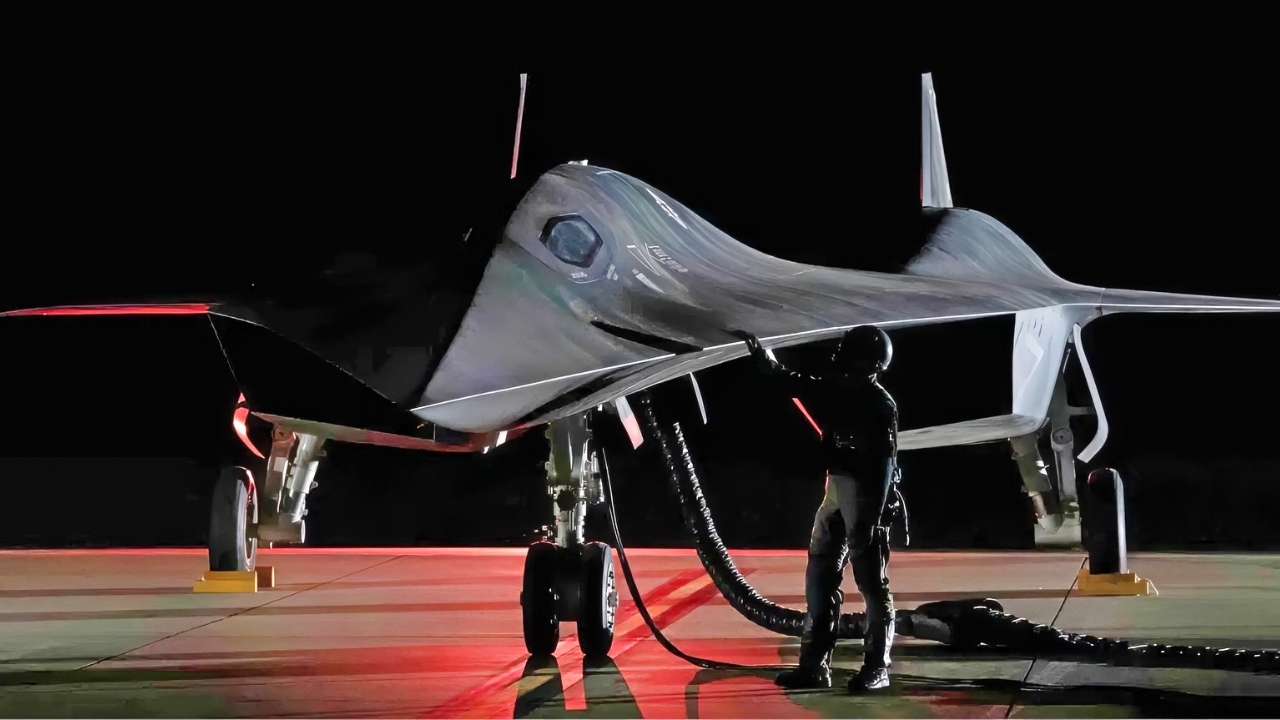
SR-72 Darkstar Lockheed Martin Image.
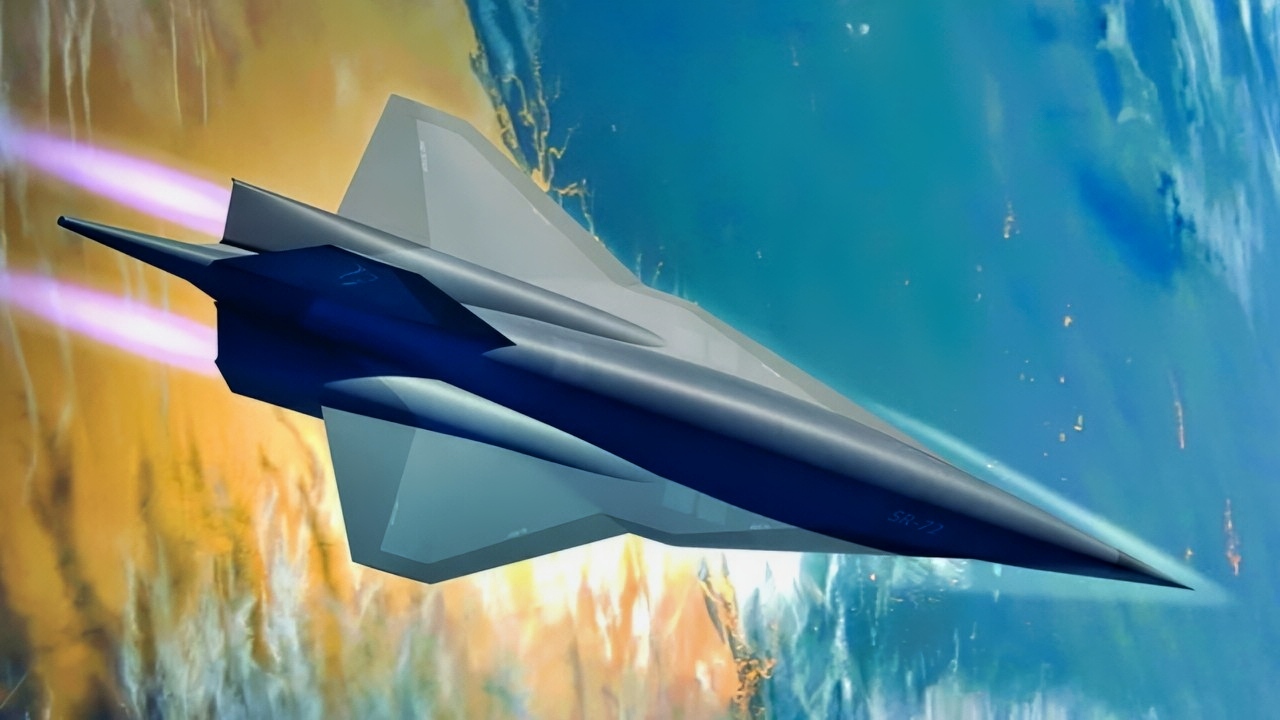
SR-72 Artist Image by Lockheed Martin.
While not currently confirmed to be in active service, the hypersonic platform is designed to penetrate heavily defended airspace, providing near-instant intelligence and precision-strike capabilities.
ISR (Intelligence, Surveillance, and Reconnaissance):
At Mach 6, the SR-72 would move too fast for current Iranian air defense systems to track and engage effectively, allowing it to enter denied airspace and collect real-time data.
It could rapidly identify and track time-sensitive, mobile targets—such as missile launchers, drones, or naval vessels in the Persian Gulf—that can often evade slower satellite surveillance.
“Hunter-Killer” capability that the enemy can’t track fast enough. Beyond just gathering intelligence, the SR-72 is envisioned as a “hunter-killer” capable of identifying and neutralizing high-value targets in a single mission.
Strategic Strike Capabilities:
The SR-72 could conduct deep-range, precision strikes on critical infrastructure or leadership targets within Iran without needing to rely solely on stealth.
Rapid response would result in even more effective air strikes. Being able to reach targets in minutes rather than hours, it could be used for immediate retaliatory strikes as soon as mobile ballistic missile launchers are located.
SR-72 Darkstar or Son of Blackbird. Image Credit: Lockheed Martin.
Hypersonic weapons delivery capability would give the Air Force increased versatility. The SR-72 could act as a launch platform for other hypersonic missiles ( such as the HACM), allowing for a strike that is nearly impossible to intercept.
Strategic Deterrence:
The SR-72 would provide the Air Force with a distinct psychological advantage. The presence of a “hypersonic ghost” that can strike anywhere at any time would provide a massive deterrence against aggressive actions.
Because it is (optionally) manned or controlled, it provides a more flexible and, in some scenarios, less escalatory response than a ballistic missile.
However, some aviation analysts believe that the SR-72 is better suited as a “Targeting Node” to guide other weapons, rather than a primary strike aircraft, due to weapon release challenges at high speeds
What Is The SR-72, And What Can It Do?
The US SR-72 Darkstar will be another feather in Lockheed Martin’s Skunk Works‘ cap. The much-anticipated aircraft, which is expected to travel at Mach 6 or higher (nearly 4,600 mph), will rewrite the book on stealth and speed.
Designed to replace the SR-71 Blackbird, the unmanned SR-72, named Son of Blackbird (SOB)and also known as Darkstar, thanks to the Top Gun: Maverick film, will focus on intelligence, surveillance, and reconnaissance missions. The jet will feature a turbine-based cycle propulsion system, combining a turbofan and scramjet for efficient hypersonic travel.
The SR-71 Blackbird was well ahead of its time. It could streak across the sky at Mach 3.2 (some claim even faster) and simply outrun enemy missiles. During its operational life, more than 4,000 missiles were fired at it, but none ever hit it. Now, its namesake will be flying even faster.

SR-72 from Lockheed Martin. Image Credit: Lockheed Martin.

SR-72 artist image. Image Credit: Creative Commons.
However, the Son of a Blackbird is envisioned (possibly) as a reconnaissance and strike aircraft. The aircraft is envisioned to have both reconnaissance and strike capabilities, making it a versatile platform for intelligence gathering and potentially offensive operations.
But how would a hypersonic bomber work?
How Would The SR-72 Darkstar Conduct Air Strikes At Mach 6?
Launching missiles at Mach 6 is no easy feat, as the weapon bay doors will be under tremendous air pressure and heat, not to mention the possibility of the aircraft flying into its own weapon.
This was why the Air Force canceled any weapons placement on the SR-71 during the Cold War.
A possible solution for an added hypersonic missile could come from the Defense Advanced Research Projects Agency (DARPA) program, specifically the Hypersonic Air-breathing Weapon Concept (HAWC) project.
“The Hypersonic Air-breathing Weapon Concept (HAWC) program is a joint DARPA/U.S. Air Force (USAF) effort that seeks to develop and demonstrate critical technologies to enable an effective and affordable air-launched hypersonic cruise missile.
“The program intends to emphasize efficient, rapid, and affordable flight tests to validate key technologies,” the webpage reads.

SR-72 Darkstar. Image Credit: Creative Commons.
The HAWC program plans to pursue flight demonstrations to address three critical technology challenge areas or program pillars—air vehicle feasibility, effectiveness, and affordability.
Lockheed Martin is developing its own High-Speed Strike Weapon (HSSW), which can fire hypersonic weapons faster than any other system and instantly achieve hypersonic speeds.
According to Lockheed Martin, “The HSSW will enable a responsive strike capability on time-critical, heavily defended targets and achieve high survivability through altitude, speed, and stealth.”
Rob Weiss, Lockheed Martin’s executive vice president and general manager for Advanced Development Programs, said in 2017, “We’ve been saying hypersonics is two years away for the last 20 years, but all I can say is the technology is mature and we, along with DARPA and the services, are working hard to get that capability into the hands of our warfighters as soon as possible.”
The Super-Secretive SR-72 Darkstar Program:
The SR-72 has reportedly already been flying. Back in February 2018, Lockheed Martin Vice President of Strategy and Customer Requirements in Advanced Development Programs Jack O’Banion, told the American Institute of Aeronautics and Astronautics SciTech Forum that the SR-72 Flight Research Vehicle was already flying.
O’Banion said to the Wall Street Journal, “The aircraft is also agile at hypersonic speeds, with reliable engine starts.”
Shortly after that forum, all mentions of the SR-72 disappeared from Lockheed Martin’s website. But the project wasn’t shut down. Lockheed in 2021 finished building a huge new factory called Building 648.
The company touted it as an “intelligent, flexible factory” and immediately went on a hiring spree, adding more than 2,300 workers. Hopefully, we’ll soon get a real look at it.
The SR-72 could serve as a launch platform for hypersonic strike weapons, integrating the High-Speed Strike Weapon (HSSW), which is currently under development. This groundbreaking project draws upon the operational legacy of the SR-71, enhancing speed and survivability with a fundamentally different propulsion system.
The program’s potential in-service date is supposed to be by 2030, when the Air Force plans to have its hypersonics online. However, this timeline hinges on overcoming the propulsion, thermal management, and materials challenges inherent to sustained hypersonic flight.
The SR-72’s high speed is designed to counter modern air defense systems by reducing time-on-target and exposure windows, marking a transformative milestone in aerial reconnaissance and strike capability.
New Propulsion Technology To Drive The SR-72:
Of course, the SR-72’s revolutionary propulsion system is at the core of its capabilities. The aircraft will feature a turbine-based combined cycle (TBCC) propulsion system, merging a traditional turbofan engine with a supersonic combustion ramjet (scramjet).
This dual-mode propulsion is essential as no single engine can efficiently operate across the full subsonic-to-hypersonic flight envelope. The turbofan engine is used during subsonic operations, such as takeoff and landing, while the scramjet sustains Mach 5 speeds above Mach 1.
This cutting-edge propulsion system is crucial to the SR-72 meeting its operational requirements. The SR-72 aims to redefine how the United States projects power in denied-access environments by leveraging next-generation propulsion technologies and uncrewed systems architecture.

SR-71 Blackbird National Security Journal Photo by Dr. Brent M. Eastwood.
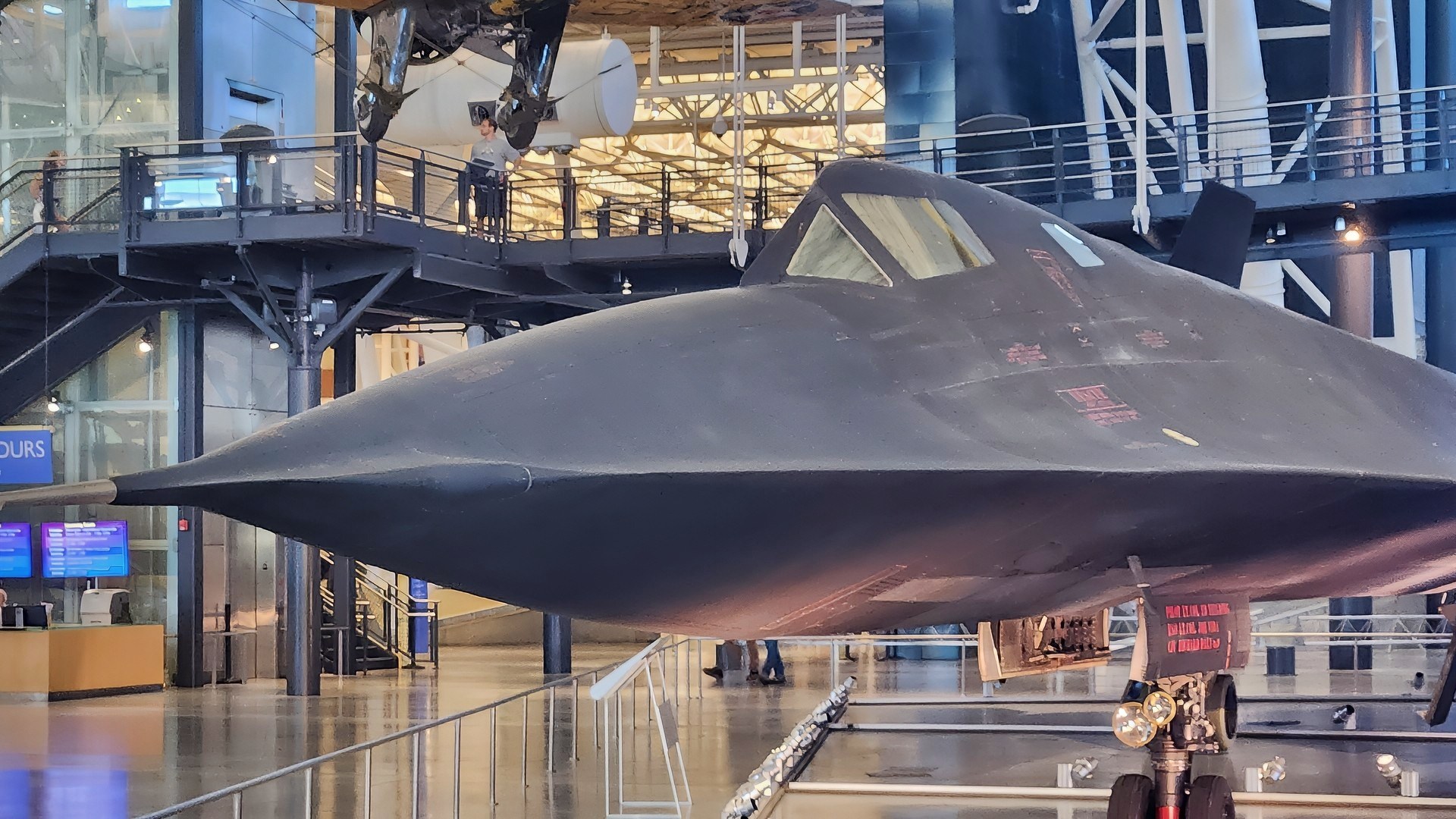
SR-71 Blackbird National Security Journal Photo Collection.
The TBCC configuration is not merely a performance enhancement but an operational necessity, enabling the SR-72 to execute missions with unmatched speed.
Hollywood Even Hired The Skunk Works For Top Gun:
One of the coolest hints that the SR-72 Darkstar aircraft is coming came in the 2022 film Top Gun: Maverick. In the opening scenes, Tom Cruise’s character pilots a hypersonic aircraft called “Darkstar”, which may broadly resemble what the real SR-72-like aircraft might look like.
We know filmmakers can create some awesome stuff with AI and CGI. However, Lockheed Martin and Skunk Works collaborated with the filmmakers to develop the aircraft’s outward appearance, concluding that the airframe is at least nominally grounded in actual aerospace design concepts.
The Darkstar featured in Top Gun might represent either a pre-production prototype, an early mock-up or nothing at all. However, if the SR-72 actually resembles the film model, it would be a major curveball thrown by Lockheed Martin to throw everyone off, though it is doubtful.
The Chinese had their interest piqued; they reoriented a spy satellite to get pics of it, thinking it was a real experimental aircraft.
The SR-72 would be a game-changing aircraft regardless of where and how it would be deployed. Would it be nice to have that capability at your fingertips? Absolutely, however, it really wouldn’t be a necessary addition to the already dominant air campaign that is ongoing.
About the Author: Steve Balestrieri
Steve Balestrieri is a National Security Columnist. He served as a US Army Special Forces NCO and Warrant Officer. In addition to writing on defense, he covers the NFL for PatsFans.com and is a member of the Pro Football Writers of America (PFWA). His work was regularly featured in many military publications.


John Mark McDonald
April 20, 2026 at 1:18 pm
It’s already operational, but still classified. The only real problem with the designs is getting it up to scramjet speeds and suborbital altitudes. This ca be easily bypassed with a vertical rocket launch. Every single satellite ever launched exceeds those speeds and altitudes. On 4/6/2026, such a launch was observed from the Midwest at 8PM CDT, heading east. the only scheduled launch that day was later, from the West Coast heading west, so there is no possibility that the two launches could be confused. Given the timing, it is likely that it was on a reconnaissance mission over the Middle East, but that is conjecture as such a mission would be classified.
A vertical launch column was observed, and after rollover, a diamond shaped, black, twin engined craft was seen heading east at hypersonic speeds. This matches the profile of the SR72, but there is no way of verifying that it wasn’t another hypersonic vehicle. I could not have been a rocket or satellite because we have no twin engined launch vehicles.
Like all such classified programs, it will be declassified in time, but evidence points to the SR72, or something very like it, being operational.