


Key Points and Summary – F-15 vs. No Pilot MiG-23? – In July 1989, a Soviet MiG-23 took off from Poland, lost power on climb-out, and its pilot ejected—only for the engine to recover and the jet to continue west on autopilot.
-The USAF’s 32nd TFS at Soesterberg scrambled two F-15s, which intercepted the radio-silent MiG at high altitude and discovered the cockpit empty.
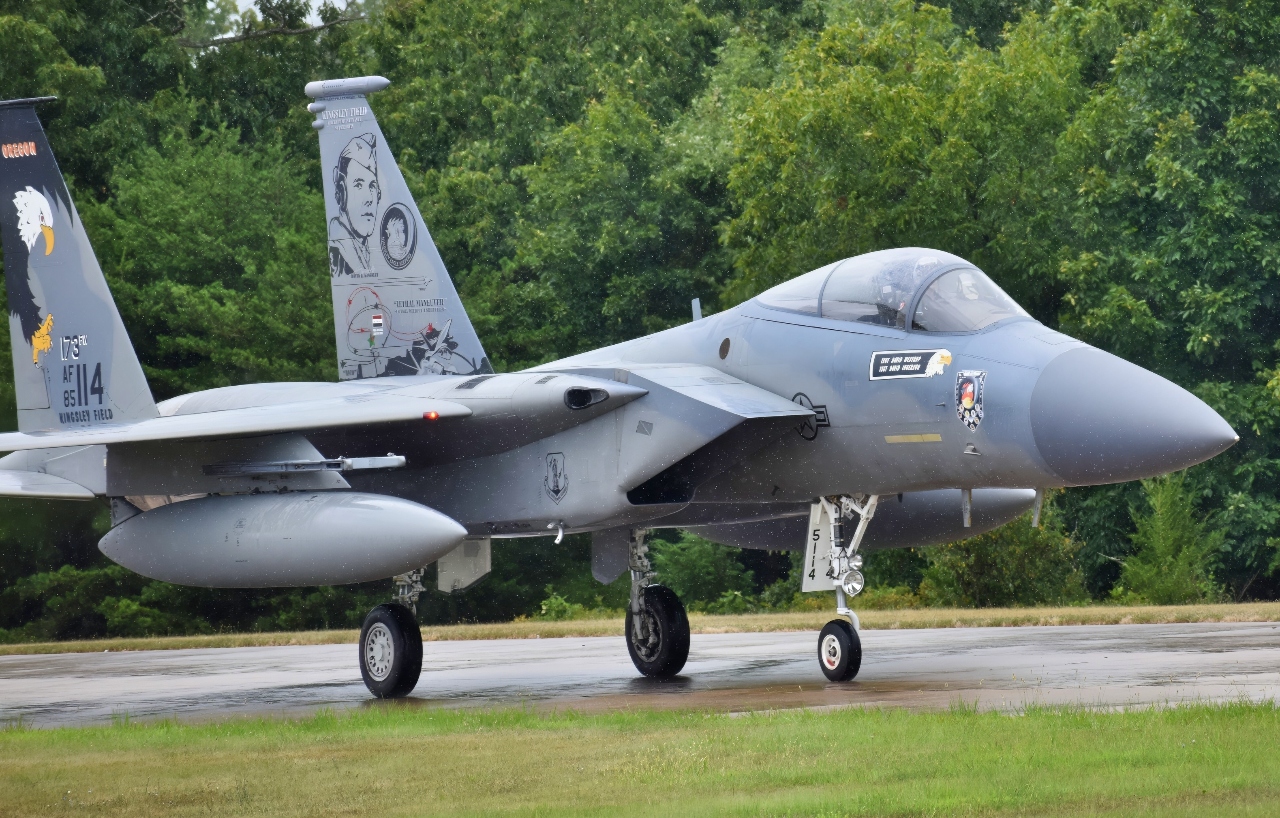
F-15C Fighter on the Tarmac. Image Credit: National Security Journal. Taken on August 13, 2025.
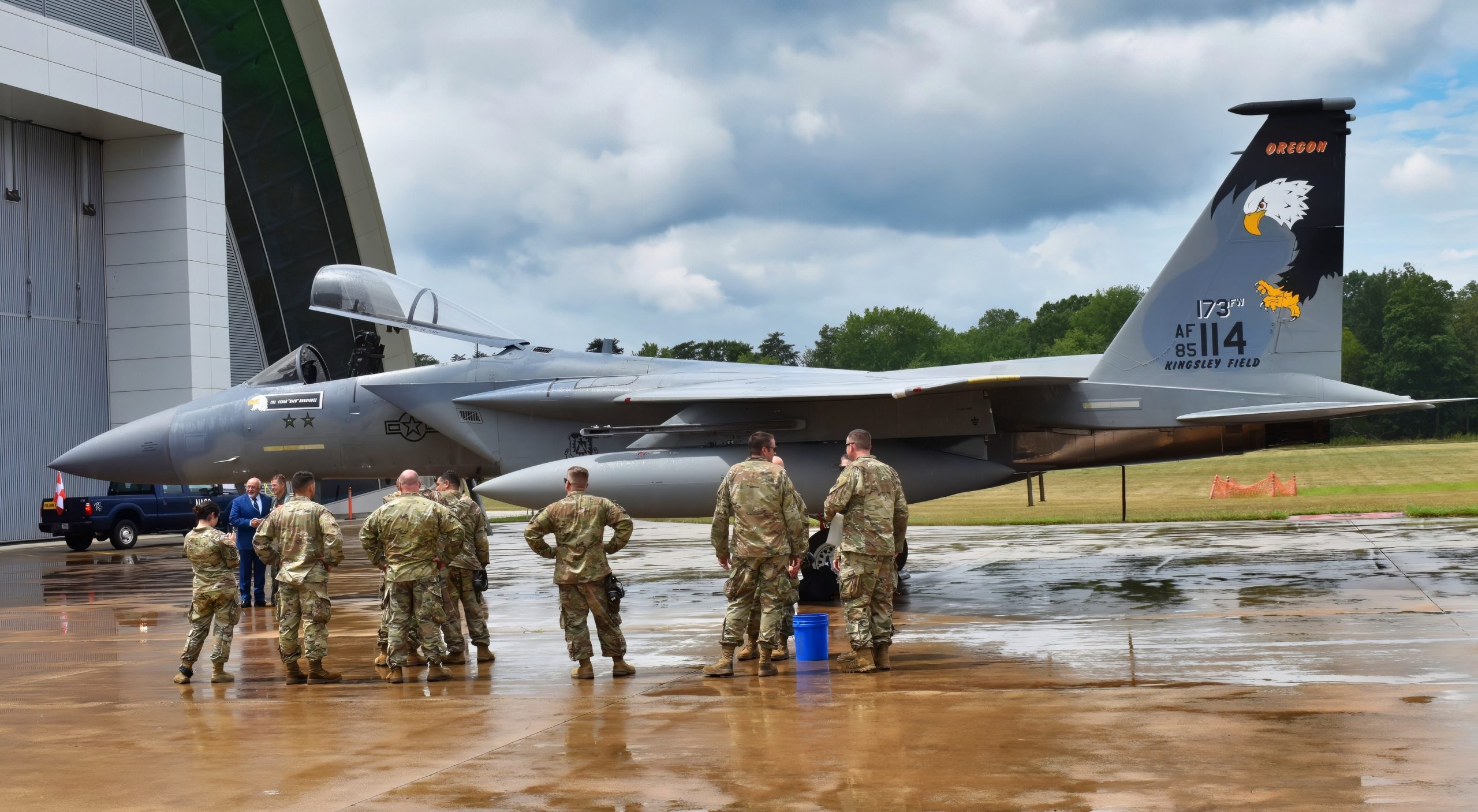
F-15C Fighter with Flight Crew. Image Credit: National Security Journal.
-With debris and population-risk concerns complicating a shoot-down, NATO tracked the aircraft as it drifted toward the North Sea, then turned toward Belgium.
-The fighter ran out of fuel and crashed, killing a teenager on the ground. The incident remains a cautionary tale: even “routine” intercepts can turn tragic fast.
-BONUS – Many of the photos in this essay are from various visits to see F-15 fighters up close.
F-15 Challenge:The Time the U.S. Air Force Intercepted a Ghost Jet
Fighter jets and drones from Vladimir Putin’s air force have violated the airspace of NATO countries recently – actions that have placed the alliance on full alert, wondering if each incursion could lead to a shooting battle. The Russian fighter and drone flights have been intercepted by NATO airplanes in Estonia, Poland, Romania, and Norway, and these actions have put fear into the minds of member countries.
These intimidation flights by the Russians have gone on for decades and were a regular occurrence during the Cold War, especially when Soviet fighters often encroached on American airspace over Alaska.
You Won’t Believe This Story
One harrowing experience that involved a single Soviet airplane took the U.S. Air Force by surprise in 1989. This was during the latter days of the Cold War, but with the crumbling of the Berlin Wall in Germany, there was a question of whether the Warsaw Pact could hold up. This, coupled with the precariousness of the Soviet Union’s future existence, meant the Russians were capable of anything.
It Happened in Europe, Where the Americans Were Always Ready to Scramble
Our friends at WeAreTheMighty.com recounted a surprising and baffling tale. On July 4, 1989, there was an alert placed on the U.S. Air Force’s 32nd Tactical Fighter Squadron at Soesterberg Air Base in the Netherlands. There was just one Soviet fighter flying toward Western Europe, but this was enough of an alarm to prod the Americans into action. Two F-15 Eagles jumped into the air. They were flown by Captains J.D. Martin and Bill “Turf” Murphy.
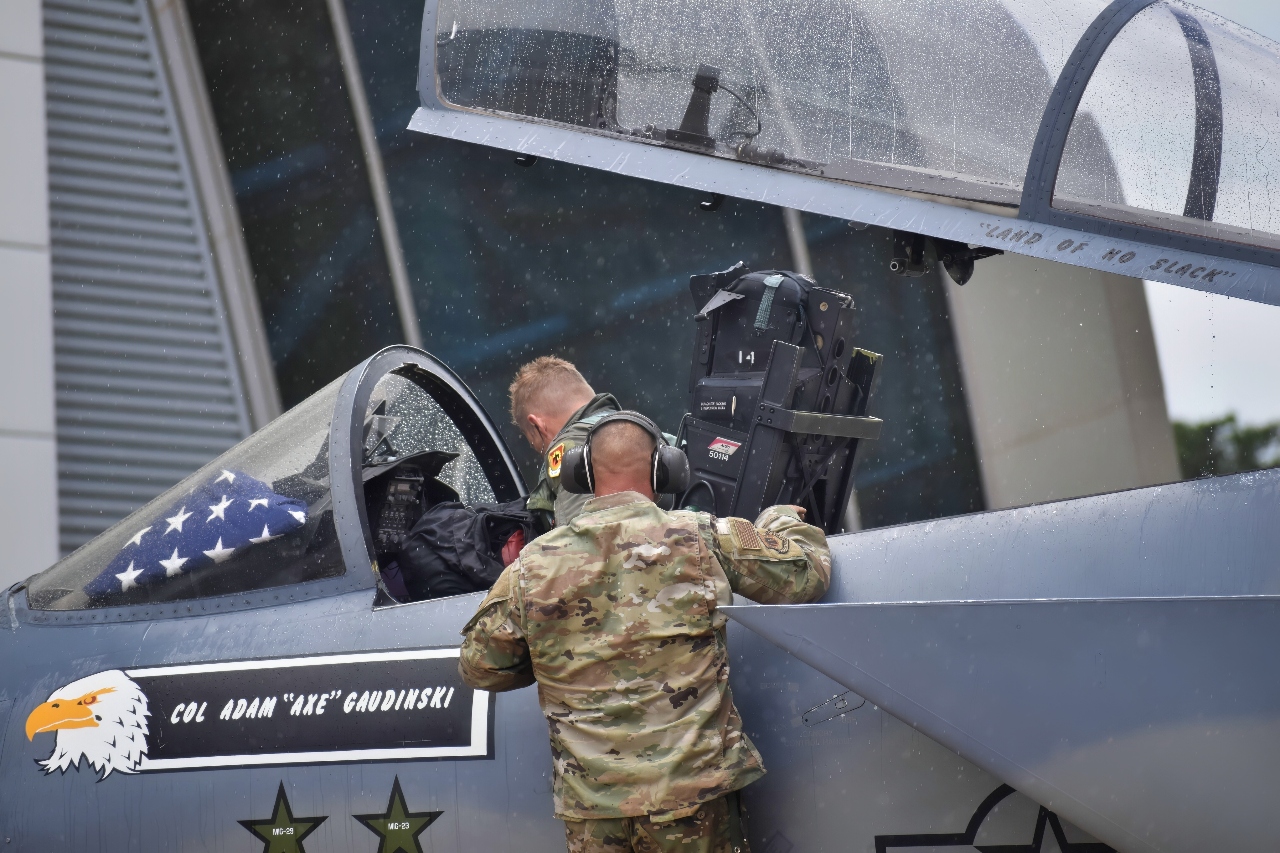
F-15C in the Rain at Smithsonian Outside DC. Image Credit: Brent Eastwood/National Security Journal.
The single bogey was identified as a Soviet MiG-23 Flogger – a third-generation fighter developed in the late 1960s and early 1970s. It was not the most modern jet, but it still could pack a punch and was certainly up to no good that day.
The MiG-23 was not responding to U.S. radio contacts.
What was this guy doing? A single jet patrolling without a wingman was a head scratcher. Typically, the Russians flew at least two fighters when conducting mischief flights.
It’s a Ghost Flying This Airplane
Martin and Murphy flew up close to the MiG-23 and noticed something strange. No weapons were onboard the pylons. The MiG was flying at 400 miles per hour at around 39,000 feet – not exactly a speed and altitude where it was spoiling for an attack. It was mainly just cruising along with no care in the world.
Then the American pilots were shocked as they proceeded with the interception flight. The canopy on the MiG-23 was gone, and there was no pilot on board. What the heck? How was this thing in the air? The autopilot must have been engaged, but where was the Soviet aviator?

F-15 Fighter at US Air Force Museum National Security Journal Photo. Taken on 7/19/2025 in Dayton, Ohio.
Shooting It Down Was Risky
Martin and Murphy contacted the home base and reported the weird conditions. Ground control permitted them to shoot it down. What if the MiG ran out of fuel and crashed in a Dutch city? That would be disastrous. There was no more time to think about what happened to the pilot; it was time to react skillfully.
However, there was a problem. The American pilots realized that if they blew it out of the sky with missiles, debris would still float down into a population center. They did the next best thing. They just accompanied it to the English Channel. They figured it would eventually run out of fuel and tumble into the ocean.
Tragedy Struck
The ghost airplane had other ideas. It made a beeline for Belgium. It indeed ran out of fuel, but not into the sea. It crashed-landed into a house on a farm and killed a teenager. What a tragedy. Could the Americans have shot it down before it ran out of fuel? This was a question for the debriefers after the F-15 pilots got back to base.
Other NATO countries were alerted to the problem before the MiG fell from the sky. France had a couple of Mirage fighter jets ready to go in case the MiG was flying over French airspace.
Ian D’Costa from WeAreTheMighty.com shared how the MiG found itself in such a strange predicament.
“As it turns out, the Soviet fighter had originated from Bagicz Airbase — a short distance away from Kolobrzeg, Poland — on what was supposed to be a regular training mission. The pilot, Colonel Nikolai Skuridin, ejected less than a minute into his flight during takeoff when instruments in the cockpit notified him that he had drastically lost engine power. At an altitude of around 500 feet, it would be dangerous and almost certainly fatal if Skuridin stayed with his stricken fighter, trying to recover it with its only engine dead. The colonel bailed out with a sense of urgency, assuming the end was near,” D’Costa wrote.
But what happened next was unpredictable. The engine started working again, and the MiG had a new lease on life. Instead of crashing, it took off higher. Then it flew another 625 miles. The poor family who lost a loved one was compensated for the death. The Soviet Union had another embarrassment on its hands and was deeply sorry for the doomed flight.
The Americans had an unforgettable mission. Imagine seeing a drone before drones were even invented. However, this was the danger of playing cat and mouse games with the Soviets: tragedy could occur under unusual circumstances.
Sometimes, near-conflict situations have an explanation – no matter how unusual they appear at first. This could actually happen again if the Russians don’t stop sending airplanes and unmanned craft into NATO airspace. Miscalculations and accidents in such actions can result in dead civilians – or dead pilots. Let’s hope cooler heads prevail before something like this happens again.
About the Author: Brent M. Eastwood
Brent M. Eastwood, PhD is the author of Don’t Turn Your Back On the World: a Conservative Foreign Policy and Humans, Machines, and Data: Future Trends in Warfare plus two other books. Brent was the founder and CEO of a tech firm that predicted world events using artificial intelligence. He served as a legislative fellow for US Senator Tim Scott and advised the senator on defense and foreign policy issues. He has taught at American University, George Washington University, and George Mason University. Brent is a former US Army Infantry officer. He can be followed on X @BMEastwood.
More Military
USS America: The U.S. Navy Failed To Sink Its Own Aircraft Carrier
The Mach 3 SR-71 Blackbird Summed Up in 4 Words
The Russian Military: A Spent Force?
How China Would Decide to Invade Taiwan
Russia’s ‘New’ Su-75 Checkmate Stealth Fighter Looks Like a ‘Fake Out’


George
October 10, 2025 at 7:54 am
C’mon, man. We know you’re itching to get into a fight with the Russians, be honest. Why else would you support the most corrupt country in the world?