


Key Points and Summary – China and Russia are developing advanced underwater drones (UUVs) that pose a “critical threat” to U.S. naval dominance.
-China’s diverse program includes “near-silent,” bio-inspired drones (“ghost jellyfish” and manta rays) for surveillance and extra-large UUVs (AJX002) for laying mines in strategic chokepoints.

Puget Sound Naval Shipyard, Wash. (Aug. 14, 2003) — Illustration of USS Ohio (SSGN 726) which is undergoing a conversion from a Ballistic Missile Submarine (SSBN) to a Guided Missile Submarine (SSGN) designation. Ohio has been out of service since Oct. 29, 2002 for conversion to SSGN at Puget Sound Naval Shipyard. Four Ohio-class strategic missile submarines, USS Ohio (SSBN 726), USS Michigan (SSBN 727) USS Florida (SSBN 728), and USS Georgia (SSBN 729) have been selected for transformation into a new platform, designated SSGN. The SSGNs will have the capability to support and launch up to 154 Tomahawk missiles, a significant increase in capacity compared to other platforms. The 22 missile tubes also will provide the capability to carry other payloads, such as unmanned underwater vehicles (UUVs), unmanned aerial vehicles (UAVs) and Special Forces equipment. This new platform will also have the capability to carry and support more than 66 Navy SEALs (Sea, Air and Land) and insert them clandestinely into potential conflict areas. U.S. Navy illustration. (RELEASED)
-Russia is focusing on the “doomsday” Poseidon, a nuclear-powered, nuclear-armed autonomous torpedo with “unlimited range” designed to create a “radioactive tsunami.”
-These systems threaten to sabotage U.S. seabed sensors (SOSUS) and overwhelm carrier strike groups.
-While the U.S. is developing its own Orca and Manta Ray UUVs, it “has a way to go” to counter this new undersea threat.
China’s Underwater Drones
China’s underwater drone development spans a broad spectrum, from biomimetic designs inspired by marine life to extra-large uncrewed underwater vehicles (XLUUVs) capable of strategic missions.
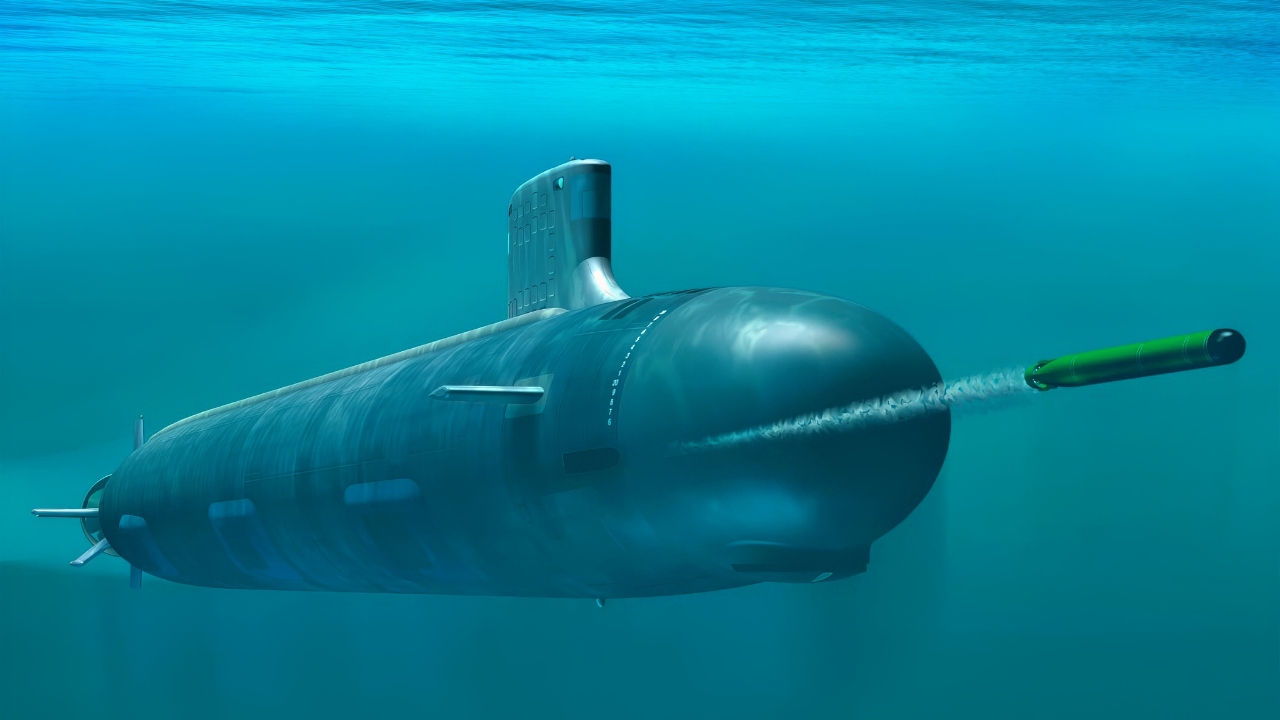
SSN 774 Virginia Class Submarine Artist Rendering from U.S. Navy.
Chinese researchers have pioneered bio-inspired drones that mimic the movements of jellyfish and manta rays, enabling near-silent propulsion and minimal acoustic signatures.
One notable example is the “ghost jellyfish” drone developed by Northwestern Polytechnical University. Constructed from soft hydrogel materials and powered by electrostatic hydraulic actuators, this drone replicates jellyfish locomotion, allowing it to glide through the water almost undetected by sonar systems. Equipped with artificial intelligence chips and cameras, it can conduct covert surveillance and reconnaissance missions without alerting adversaries.
Similarly, manta ray-inspired drones use undulating wing-like fins instead of propellers, enabling them to move silently and efficiently. These designs enable extended underwater operations, with some prototypes capable of diving to depths beyond 1,000 meters and remaining submerged for more than 24 hours on a single charge.
Complementing these surveillance drones, China has also invested significantly in underwater strike UUVs.
The country has unveiled extra-large underwater vehicles such as the AJX002, which measures up to 20 meters in length and is optimized for mine-laying operations in strategic chokepoints like the Taiwan Strait.
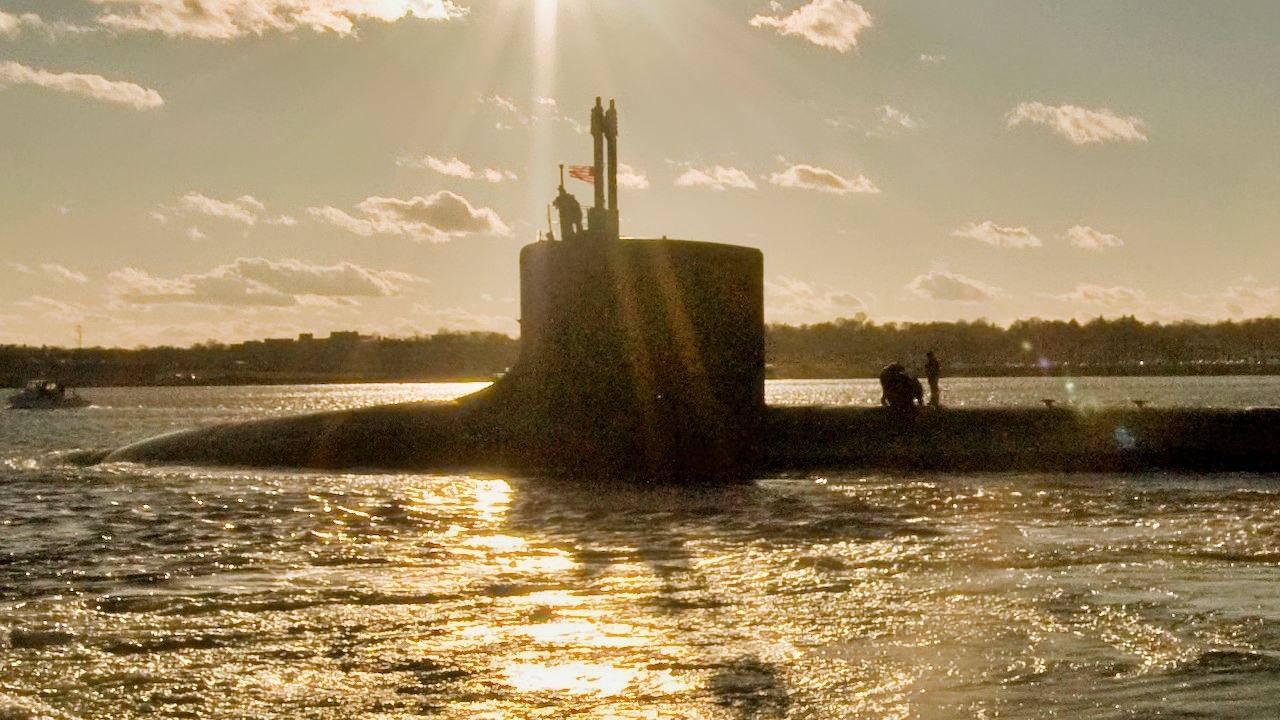
The Virginia-class attack submarine USS Virginia departs for a six-week underway. During this deployment, Virginia will undergo an Operational Reactor Safeguard Examination and a Tactical Readiness Evaluation to assess the submarine’s reactor along with its capacity to combat casualties through damage control.
Its pump-jet propulsion system reduces noise, and its modular payload bays can potentially carry torpedoes or cruise missiles, though this has yet to be demonstrated.
Analysts estimate its operational range at approximately 1,000 nautical miles, enabling covert deployment of naval mines to enforce blockades or deny access to U.S. forces during a crisis.
Another system, the UUV-300CB, showcased at international defense exhibitions, appears to be armed with torpedoes and possibly missiles, signaling China’s intent to develop autonomous strike platforms.
Russia’s Doomsday UUV
Russia’s underwater drone program, while less diverse than China’s, is dominated by one system that has captured global attention: Poseidon, also known as Status-6 or 2M39. Poseidon is a nuclear-powered, nuclear-armed autonomous torpedo designed for strategic deterrence.
Officially acknowledged by President Vladimir Putin in 2018, Poseidon can reportedly travel at speeds up to 100 knots and operate at depths exceeding 1,000 meters. Its nuclear propulsion grants it virtually unlimited range, enabling intercontinental missions. According to speculation, the weapon’s primary mission is to deliver a multi-megaton nuclear warhead near coastal targets, generating a radioactive tsunami capable of devastating port cities and naval bases. This capability bypasses traditional missile defense systems, as Poseidon operates deep underwater and is extremely difficult to intercept.
Recently, Russia launched the Project 09851 Khabarovsk-class nuclear submarine, specifically designed to carry Poseidon drones.
These submarines will serve as motherships, deploying multiple Poseidons during strategic missions.
Reports suggest Russia plans to field at least 30 Poseidon drones across its Northern and Pacific fleets, cementing its role as a cornerstone of Russia’s nuclear triad.
Why UUVs are a Huge Threat to the Navy
The development of these systems by China and Russia introduces several critical threats to U.S. naval operations and strategic stability. One of the most pressing concerns is the potential undermining of America’s undersea surveillance networks, such as the Sound Surveillance System (SOSUS) and other seabed sensor arrays.
These networks are vital for tracking submarines in the Western Pacific. Chinese XLUUVs could sabotage or destroy these sensors, blinding U.S. anti-submarine warfare capabilities and granting Chinese submarines greater freedom of maneuver.
Another significant threat lies in mine warfare and area denial. China’s AJX002 drone, optimized for mine-laying, could deploy naval mines covertly in chokepoints like the Taiwan Strait.
Mines are cost-effective and notoriously difficult to clear, and autonomous minelayers allow China to deploy them en masse without risking manned submarines.
This could delay or prevent U.S. carrier strike groups from entering contested waters during a crisis.
Russia’s Poseidon introduces an entirely different threat. Unlike ballistic missiles, Poseidon is slow but stealthy, making it ideal for second-strike scenarios.
Its ability to bypass missile defenses and deliver catastrophic damage could pressure the United States to invest heavily in undersea detection and interception technologies.
Both nations’ underwater drones could also be used for intelligence gathering, tracking U.S. carriers, and even delivering torpedo or missile strikes.
The U.S. Navy’s reliance on large, concentrated formations like carrier strike groups makes them vulnerable to swarming attacks by autonomous systems, especially in the constrained waters of the South China Sea or near Taiwan.
Furthermore, underwater drones could target critical infrastructure such as undersea cables, pipelines, and port facilities.
America’s Response
In the face of these threats, the U.S. has two options: either try to match these capabilities or build defenses against them (both can be implemented).
One system that the U.S. has invested in is the Orca XLUUV. Designed and developed by Boeing, the Orca features a modular design that can be configured for its mission.
It is expected to be fitted with either torpedoes or undersea mines, making it viable for both offensive and defensive missions. The Manta Ray (which predates China’s Manta Ray UUV) is another system under development by Northrop Grumman and DARPA. This system is designed for both undersea surveillance and strike missions, making it highly versatile.
The U.S. has also been investing in defenses against UUVs. One strategy is to shift operations to favor more dispersed, distributed maritime operations.
This limits large build-ups of vessels, which are easier to spot and could be easy pickings for UUVs.
The Navy is also actively investing in counter-drone warfare, with the use of undersea kamikaze UUVs that are designed to hunt and destroy other drones.
Other drones that can be launched from torpedo tubes are also in development, but these systems are still in their infancy. While the U.S. has been making progress, it still has a way to go before it is safe from the threats posed by China and Russia.
About the Author: Isaac Seitz
Isaac Seitz, a Defense Columnist, graduated from Patrick Henry College’s Strategic Intelligence and National Security program. He has also studied Russian at Middlebury Language Schools and has worked as an intelligence Analyst in the private sector.
More Military
Northrop Grumman Is Likely Winner of F/A-XX, But Big Questions Remain
USS United States: The Aircraft Carrier Designed to Launch Bombers
The U.S. Air Force’s B-21 Raider Bomber Nightmare Has Just Begun
How Long Can a Nuclear U.S. Navy Aircraft Carrier Stay in Service?
The Air Force’s B-52 Stratofortress Bomber ‘Nightmare’ Is Real


Kevin
November 6, 2025 at 7:23 pm
Drones can be hacked then what when your own drones turn on you
Krystal cane
November 9, 2025 at 2:54 pm
No one’s prepared for anything coming because you have a guy who’s literally at the home asleep. And a drunken fox news host who’s so anti-woke he destroys his own military in the process. This is why you don’t hire ass clowns and felons to run your nation