

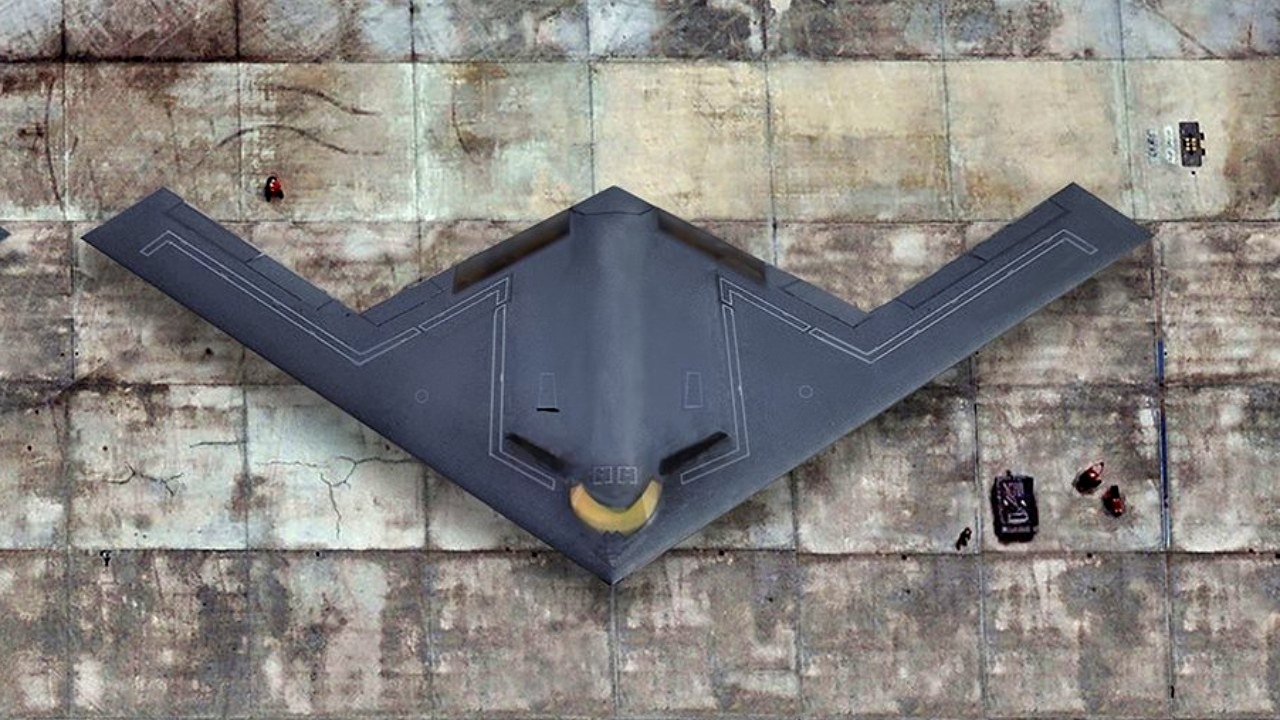
Key Points and Summary – The U.S. Air Force’s B-21 Raider stealth bomber program is facing rising costs, even as calls to increase production grow louder.
-Manufacturer Northrop Grumman reported a $477 million loss in the first quarter of 2025, attributed to changes in the production process and higher material costs, though the company insists this will allow for a faster production ramp-up later.
-The B-21 is seen as a critical asset to deter threats from China and Russia.
-While the Air Force’s official goal is 100 aircraft, top military leaders like STRATCOM Commander Gen. Anthony Cotton are now calling for at least 145.
The B-21 Raider Bomber Cost Challenge Is Real
The B-2 bomber may have been used in its most prominent military mission in decades, last week’s attack on Iran’s nuclear sites.
But the U.S. is planning to phase out that warplane, likely within the decade, in favor of the new, sixth-generation B-21 Raider stealth bomber.
And according to a new report, it’s getting more expensive.
The plane’s manufacturer, Northrop Grumman, released its quarterly earnings report back in April, stating that it lost $477 million in the first quarter of 2025. The company stated that the loss came as a result of a change in the production process, aimed at allowing the company to build the plane more quickly.
In addition, materials are becoming more expensive.
“While I’m disappointed with this financial impact, we continue to make solid progress on the [B-21] program, demonstrating performance objectives through tests, and we are progressing through the first two lots of production,” CEO Kathy Warden said on the earnings call, as reported by Defense News. “With significant learning behind us, we are ready to deliver [to] the Air Force this highly capable strategic deterrent.”
While the company was profitable in the quarter, its profits were down by $498 million from the first quarter of the previous year.
The company has long maintained that profits would have to wait until later. Northrop, per The War Zone, expects to see profits related to the jet down the line.
“We’ve built a good bit of experience now in building the aircraft,” Warden said on the call, per The War Zone.
“As we have progressed through the build process, we made the determination working with the Air Force, to reduce risk as we scaled to the program of record, which will happen at the end of LRIP, and even to position us now to ramp above the program of record, and those manufacturing changes and associated costs that we talked about being reflective this quarter are a result of that learning in the process of scaling.”
B-21 Raider: A Bomber’s Progress
According to the Defense News report, the B-21 was unveiled in 2022, with its first flight taking place in 2023.
Back in March, according to Air and Space Forces Magazine, Gen. Anthony J. Cotton, head of U.S. Strategic Command, recommended that the Air Force buy 145 B-21 bombers. The original plan was for around 100, according to numerous reports.
“I, as a customer, want to see increased rates” of production of the new jets, Gen. Cotton said at the annual Defense Programs Conference. He added the original order was set “when the geopolitical environment was a little bit different than what we face today.”
Also this week, Robert Peters and Shawn Barnes authored an op-ed for RealClearDefense, where they called to “double” the production rate of the B-21 bomber, to 200.
“The Air Force has stated it needs at least 100 aircraft and that it expects to procure 10 aircraft per year once in full-rate production,” the authors said. “At best, the nation is unlikely to have even 100 aircraft until the late 2030s. This is both too little and too late.”
They call for doubling the production of the jets, including by putting a second production facility online. This is necessary, the authors say, to deter China and other potential enemy nations.
“China has ambitions of global hegemony; Russia is increasingly fixated on recreating their once-dominant Soviet power; Iran and North Korea show few signs of comity,” the authors say. “The foundation to address 21st century challenges is sufficient force structure. A second production plant will allow the US to build, field, and operate the inventory that it needs and on a timeline that respects these threats.”
About the Author: Stephen Silver
Stephen Silver is an award-winning journalist, essayist and film critic, and contributor to the Philadelphia Inquirer, the Jewish Telegraphic Agency, Broad Street Review and Splice Today. The co-founder of the Philadelphia Film Critics Circle, Stephen lives in suburban Philadelphia with his wife and two sons. For over a decade, Stephen has authored thousands of articles that focus on politics, technology, and the economy. Follow him on X (formerly Twitter) at @StephenSilver, and subscribe to his Substack newsletter.
Fighter Jet Fails
Russia’s Su-57 Felon Stealth Fighter Is a Waste of Rubles


Pingback: The Air Force's B-52 Bomber Has Hit That 'Ride or Die' Moment - National Security Journal
Pingback: The B-21 Raider Bomber Question China or Russia Can't Answer - National Security Journal