
Ukraine launched one of its biggest-ever attacks against Russia overnight into October 14, reportedly sending hundreds of uncrewed aircraft toward Moscow and successfully striking critical industrial infrastructure in other locations across the country.
Russian authorities claim to have intercepted over 900 Ukrainian drones during the strikes, which disrupted operations at major airports around the Moscow region and even damaged a data center operated by Sberbank, the largest bank in Russia.

HIMARS Rocket. Image Credit: Creative Commons.
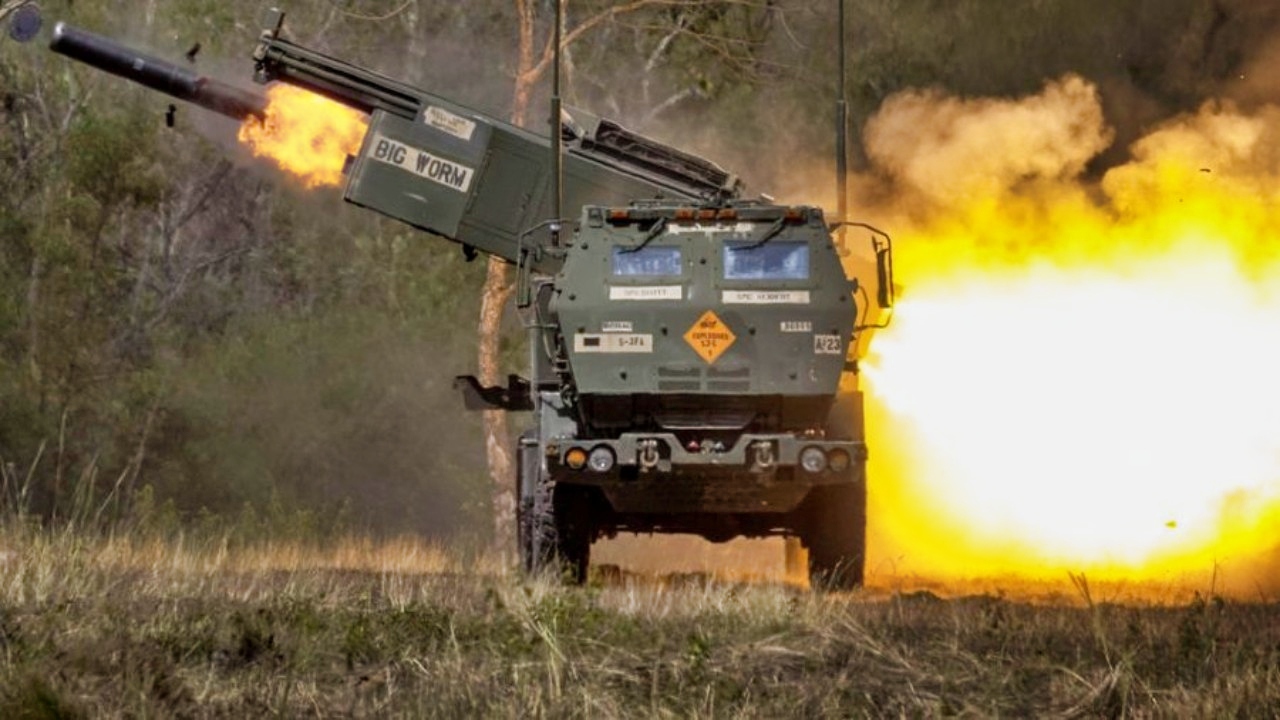
HIMARS. Image Credit: U.S. Government.

Tennessee Army National Guard Soldiers with Alpha Battery, 1-181st Field Artillery Regiment conduct a training exercise using the M142 High Mobility Artillery Rocket System (HIMARS) at Camp Shelby, Mississippi, June 9. The unit’s annual training enhances battalion readiness, focuses on mission-essential tasks and ensures Soldiers are proficient in critical skills. (U.S. Army National Guard photo by Sgt. Grayson Cavaliere)
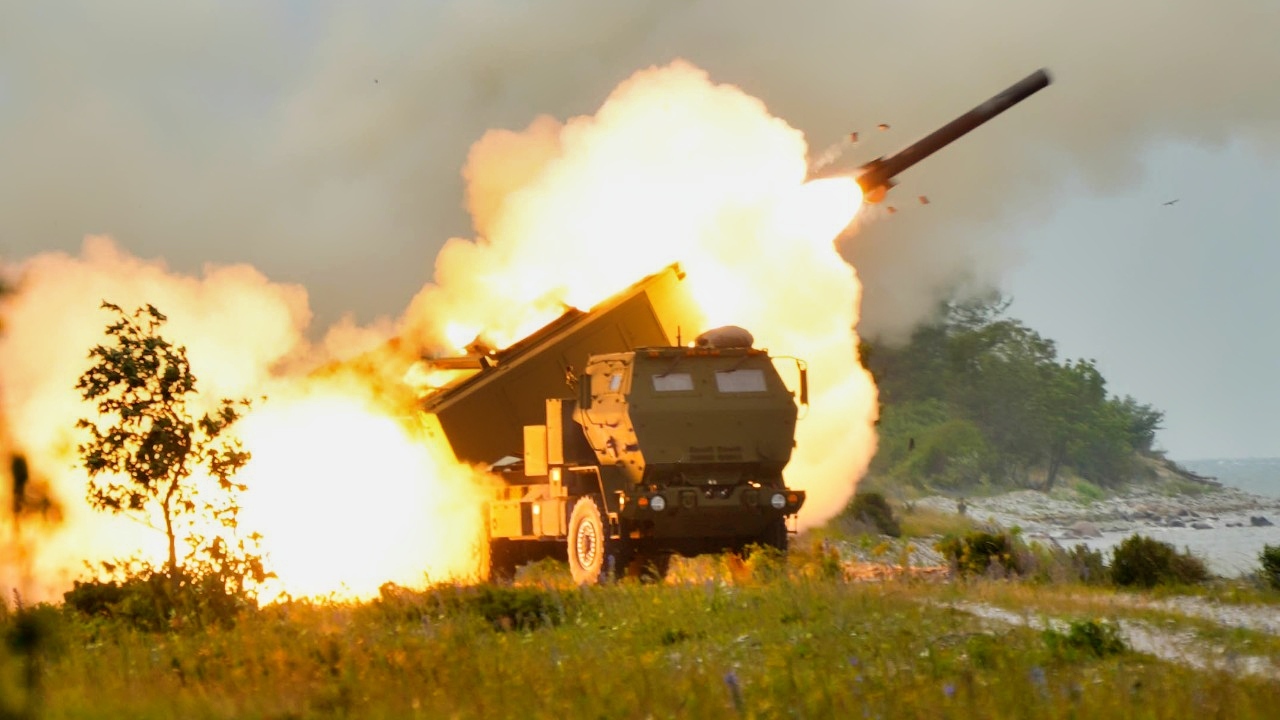
An Estonian Defense Forces M142 High Mobility Artillery Rocket System (HIMARS) fires a training rocket during a live-fire exercise in Undva, Estonia, July 11, 2025. U.S. Army elements from Bravo Battery, 1st Battalion, 14th Field Artillery Regiment, 75th Field Artillery Brigade, supporting Task Force Voit, assisted in the training process. The task force was originally formed in 2023 to support the Estonian Defense Forces in the creation of a HIMARS unit. Task Force Voit works closely with the Estonian Armed Forces, sharing critical defense strategies, training, and military readiness support. The presence of U.S. troops in the region serves as a cornerstone of NATO’s commitment to security in the Baltic region. The task force provides combat-credible forces to V Corps, America’s only forward-deployed corps in Europe. (U.S. Army photo by Staff Sgt. Rose Di Trolio)
The latest strikes also come as fires continue to burn at a Russian oil terminal following a prior Ukrainian strike – one that President Donald Trump instructed Kyiv not to launch.
Reports confirm that the overnight Ukrainian attack had struck a major Russian data center.
It is just the latest success in a long string of Ukrainian strikes that are now targeting Russian technology infrastructure.
Those long-range strikes initially targeted energy infrastructure and military facilities, but have since extended to logistics networks and now technology-related sites.
The strikes also follow a series of attacks on facilities operated by Yandex, Russia’s leading internet company, that have significantly disrupted online services.
The latest strikes suggest that Kyiv remains intent on targeting Russian infrastructure and systems that support the Russian economy.
Russia Claims to Have Intercepted Over 900 Drones
According to a Kyiv Post report from October 14, Russian authorities claimed that 493 Ukrainian drones were headed toward Moscow on the previous evening.
Moscow Mayor Sergei Sobyanin also said that 180 drones were destroyed as they approached the capital.
At the same time, the Russian Ministry of Defense reported that its forces had intercepted 902 Ukrainian drones across Russian territory and in occupied Crimea overnight.
Those figures, however, have not been independently verified.
The attacks caused significant disruption to civilian air travel.
All four of Moscow’s main airports, Sheremetyevo, Domodedovo, Vnukovo, and Zhukovsky, temporarily suspended operations as authorities tried to respond to the incoming projectiles.
The Moscow Times reports that the strikes delayed 410 flights, and Vnukovo and Sheremetyevo alone canceled 137 more. Some aircraft were also diverted to other destinations entirely.
Ukraine Strikes Russian Data Center
Among the most significant developments in recent days, however, is the strike in Balakovo – a city in Russia’s Saratov region.
Ukrainian drones struck a large data processing facility operated by Sberbank.
The bank’s First Deputy CEO, Alexander Vedyakhin, confirmed the strikes on Wednesday but said that the bank’s operations have not been disrupted.
The facility is particularly important because it is intended to become one of Russia’s largest computing complexes, with about 3,000 server racks and capacity for up to 120,000 servers.
It is expected to have a power capacity of 82 megawatts and accommodate Russia’s largest supercomputer when the system enters service next year.
Sberbank is also one of Russia’s largest artificial intelligence developers, competing with Yandex with its GigaChat AI platform.
The extent of the damage to the facility remains unclear, and no one has confirmed that any supercomputing hardware was destroyed.
Civilian casualties were also reported in Balakovo, with Saratov Governor Roman Busargin reporting that one person had been killed and several residential buildings were damaged during the overnight attack.
Russia’s Tech Industry Under Assault
The recent Balakovo strike follows several other Ukrainian attacks against Yandex data centers in just the last few days. On October 8, Ukrainian drones reportedly struck a Yandex facility in Sasovo, in the Ryazan region. A data center in Kaluga was then attacked on October 9, with another strike reported in Vladimir on October 11.
Yandex reportedly shut down its Vladimir facility following the strike.
The consequences of those strikes are already being felt. According to a Financial Times report on October 14, three of Yandex’s six data centers sustained severe damage, disrupting services used by businesses and individuals nationwide.
Those disruptions have affected email systems, transportation services, and various financial platforms, and they are also being felt outside Russia, in countries that depend on Russian internet infrastructure.
Russian Oil Terminal Still On Fire
Ukraine’s campaign against Russian energy infrastructure continues, too, even as President Donald Trump warns Kyiv to stop striking refinery infrastructure.
On Wednesday, The Moscow Times reported that a major fire at an oil terminal in Rostov-on-Don had spread to eight of the facility’s 12 storage tanks following an October 10 strike.
The facility is connected to the Novoshakhtinsk Petroleum Products Plant and handles petroleum products destined for both export and domestic consumption.
Astra, an independent Russian media outlet, reported that newly published footage appears to show the fire continuing into its fourth day, and monitoring channels also reported that another storage tank exploded late on Tuesday, October 13.
About the Author: Jack Buckby
Jack Buckby is a British researcher and analyst specializing in defense and national security, based in New York. His work focuses on military capability, procurement, and strategic competition, and he produces and edits analysis for policy and defense audiences. He brings extensive editorial experience, with a career output spanning over 1,000 articles at National Security Journal, and has previously authored books and papers on extremism and deradicalization.


