

Key Points and Summary – Despite its iconic status as the world’s first operational stealth bomber, the B-2 Spirit faces five major problems that limit its readiness and threaten its future.
-Its staggering cost ($2 billion+ per aircraft) resulted in a tiny, inflexible fleet.
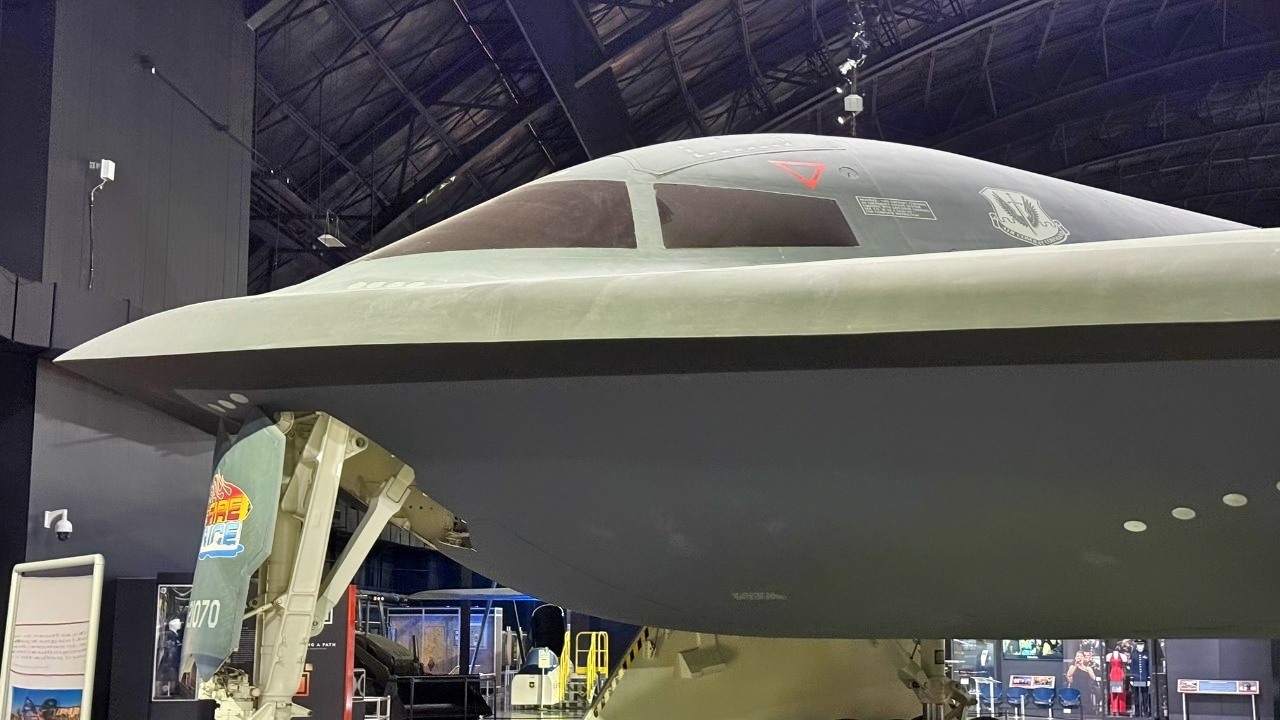
B-2 Bomber Really Close Up National Security Journal Photo
-It requires an extreme maintenance burden (120+ hours per flight hour) due to its delicate stealth coatings.
-Design flaws, particularly in its landing gear, led to the catastrophic loss of one bomber in 2022.
-Sustainment is increasingly difficult due to aging parts and shifting budgets. Finally, its Cold War-era design faces growing vulnerability against modern air defenses.
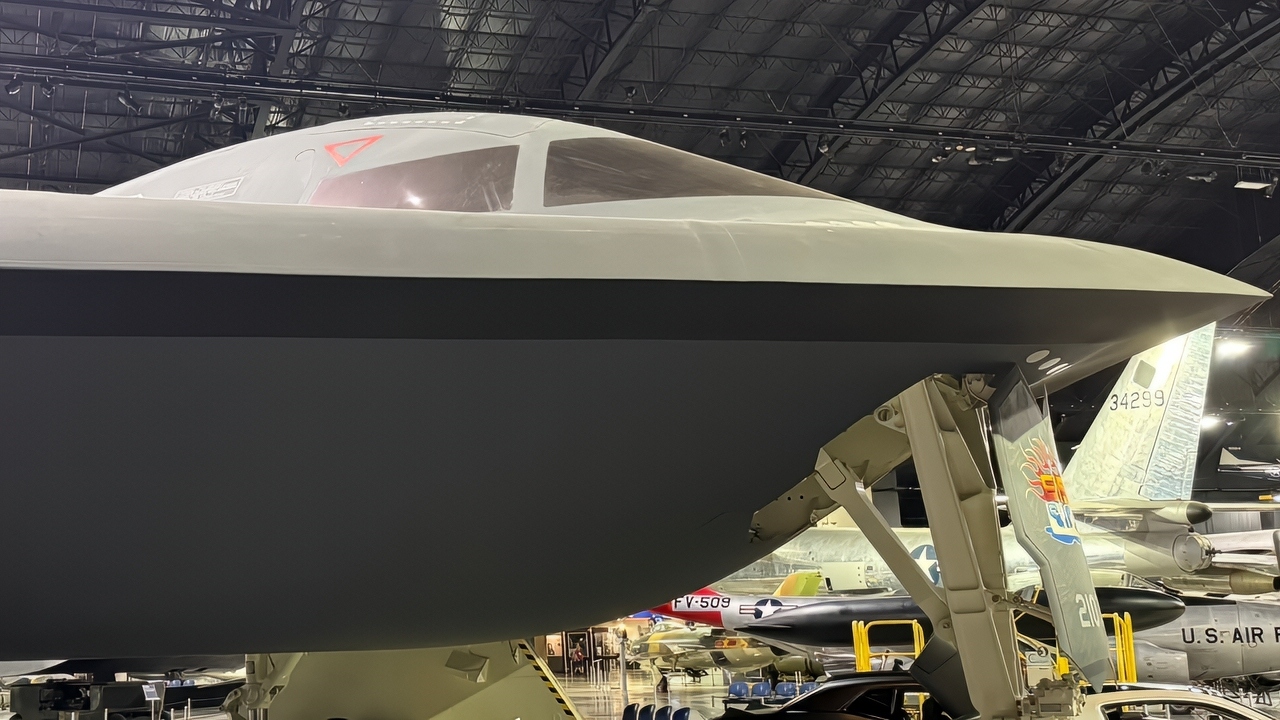
–National Security Journal recently visited the B-2 Spirit at the U.S. Air Force Museum. We present many original photos we took back in July.
The B-2 Spirit Stealth Bomber Isn’t Perfect
The B-2 Spirit was the first actual stealth bomber to enter operational service.
Built for the U.S. Air Force, this advanced aircraft boasts some of the most sophisticated stealth technology and avionics of any aircraft in service.
Currently, the B-2 is slated to be replaced by the B-21 Raider sometime in the 2030s, when its successor is expected to enter service.

B-2 Bomber from U.S. Air Force Display. Image Credit: Harry J. Kazianis/National Security Journal.
Despite its long service and advanced technology, the B-2 has encountered several issues and setbacks throughout its lifecycle.
From high costs to maintenance issues, the B-2 suffers from several problems that limit its operational readiness, resulting in millions of taxpayer dollars being spent.
Breathtakingly High Costs
The first and most apparent problem is cost. The B-2 Spirit is the most expensive aircraft in history, with a unit price exceeding two billion dollars when factoring in development, procurement, and sustainment expenses.
Initially, the U.S. Air Force intended to acquire 132 bombers, but post-Cold War budget cuts and cost overruns reduced the fleet to just 21 aircraft, of which only 19 remain operational today. This limited fleet size creates strategic inflexibility.
With a limited number of bombers available, the Air Force struggles to meet global demands for long-range strike capabilities, especially during simultaneous crises in multiple theaters.
The opportunity cost is enormous; each B-2 consumes resources that could fund entire squadrons of other aircraft or missile systems.

Right Up Front B-2 Bomber USAF Museum. Image by Harry J. Kazianis/National Security Journal.
Furthermore, sustaining such a small, costly fleet is economically unsustainable beyond the early 2030s, which is why the B-21 Raider program is being accelerated.
The cost problem is compounded by sustainment contracts worth $7 billion through 2029, translating to roughly $ 350 million per aircraft for maintenance and upgrades over five years.
Maintenance Issues
The second major issue is the extreme maintenance burden. The B-2 sports some of the most advanced stealth technology to date. This is one of the bomber’s greatest strengths and also its most significant weaknesses.
For every hour of flight, the bomber demands approximately 119 to 120 hours of maintenance, nearly double that of legacy bombers like the B-1 or B-52. Several factors drive this maintenance load.
The radar-absorbing materials that give the B-2 its stealth capability are susceptible to moisture, temperature fluctuations, and even minor abrasions. Rain or humidity can degrade stealth coatings, requiring labor-intensive restoration. Each bomber must be stored in specialized, climate-controlled hangars to protect its low-observable surfaces, adding millions in infrastructure costs.

(Dec. 9, 2019) This poster is designed to communicate the aircraft specifications of the B2 Spirit Stealth Bomber. The B2 bomber was introduced on Jan. 1, 1997 by the Northrop Corporation.
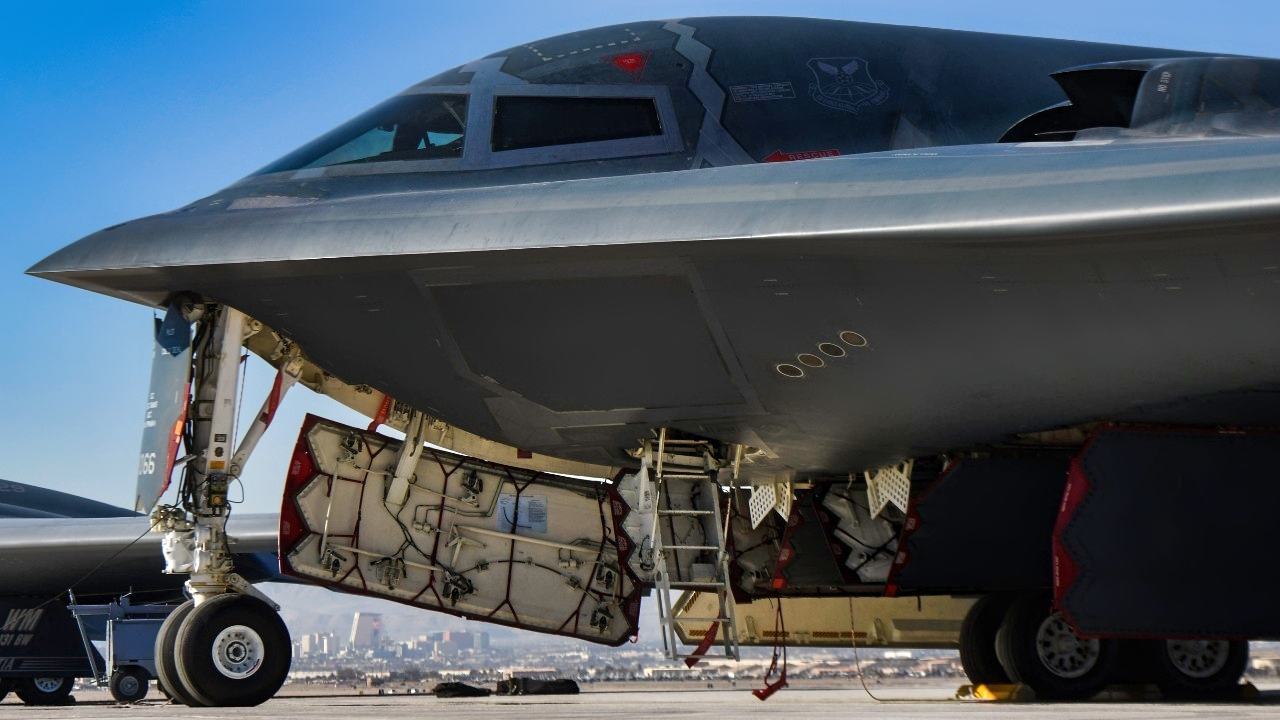
Three Whiteman Air Force Base 393rd Expeditionary Bomb Squadron B-2 Spirit stealth bombers sit on the runway during Red Flag-Nellis 22-1 on Jan. 26, 2022, at Nellis Air Force Base, Nevada. Red Flag-Nellis 22-1 provides realistic combat training that saves lives by increasing combat effectiveness. (U.S. Air Force photo by Senior Airman Michael A. Richmond)
Additionally, every nine years, a B-2 undergoes a complete teardown and stealth restoration during programmed depot maintenance, which can take up to 470 days.
Recent process improvements have reduced this to 379 days, but the cycle remains lengthy and resource-intensive.
This maintenance burden limits sortie rates and operational flexibility, making the B-2 a “high-value, low-density” asset that cannot surge easily in wartime.
Design Flaws?
The third problem involves design vulnerabilities, particularly in the landing gear and hydraulic systems.
A catastrophic incident in December 2022 exposed these weaknesses. A CryoFit hydraulic coupling failed during gear deployment, resulting in rapid fluid loss and disabling both the primary and backup hydraulic systems.
Emergency gear extension procedures gave false “locked” indications, masking the fact that the left main landing gear was unstable.
Upon touchdown, the gear collapsed, dragging the wingtip along the runway and rupturing a fuel tank, which ignited a fire that destroyed the aircraft.
The accident investigation revealed systemic issues, including single-point failures in critical components and recurring malfunctions.
At least 25 CryoFit coupling failures have been documented across the fleet, including 10 in primary landing gear circuits. Human factors also played a role, as delays in applying fire suppressant foam worsened damage. This design fragility is alarming, given the bomber’s strategic role and irreplaceability.
Difficult to Sustain
Furthermore, sustainment and modernization challenges threaten the bomber’s long-term viability.
Keeping the B-2 relevant requires continuous upgrades to avionics, defensive systems, and stealth coatings. However, the supply chain for proprietary materials and components is complex, and many parts are no longer in mass production, resulting in slow and costly repairs.
With an average age of 28 years, structural fatigue and obsolescence are growing concerns.
Budget prioritization compounds the problem, as the Air Force is shifting resources to the B-21 Raider, leaving limited funding for B-2 modernization beyond 2029.
This creates a paradox: the B-2 remains indispensable for nuclear deterrence and long-range precision strike, yet its upkeep is economically and logistically unsustainable.
Vulnerable to Modern Threats?
The B-2 was designed and developed during the final years of the Cold War. It was designed to penetrate the increasingly sophisticated air defenses of the Soviet Union.
After the collapse of the USSR, the focus shifted away from near-peer conflicts and towards counterinsurgency, which left the B-2 on the back burner.
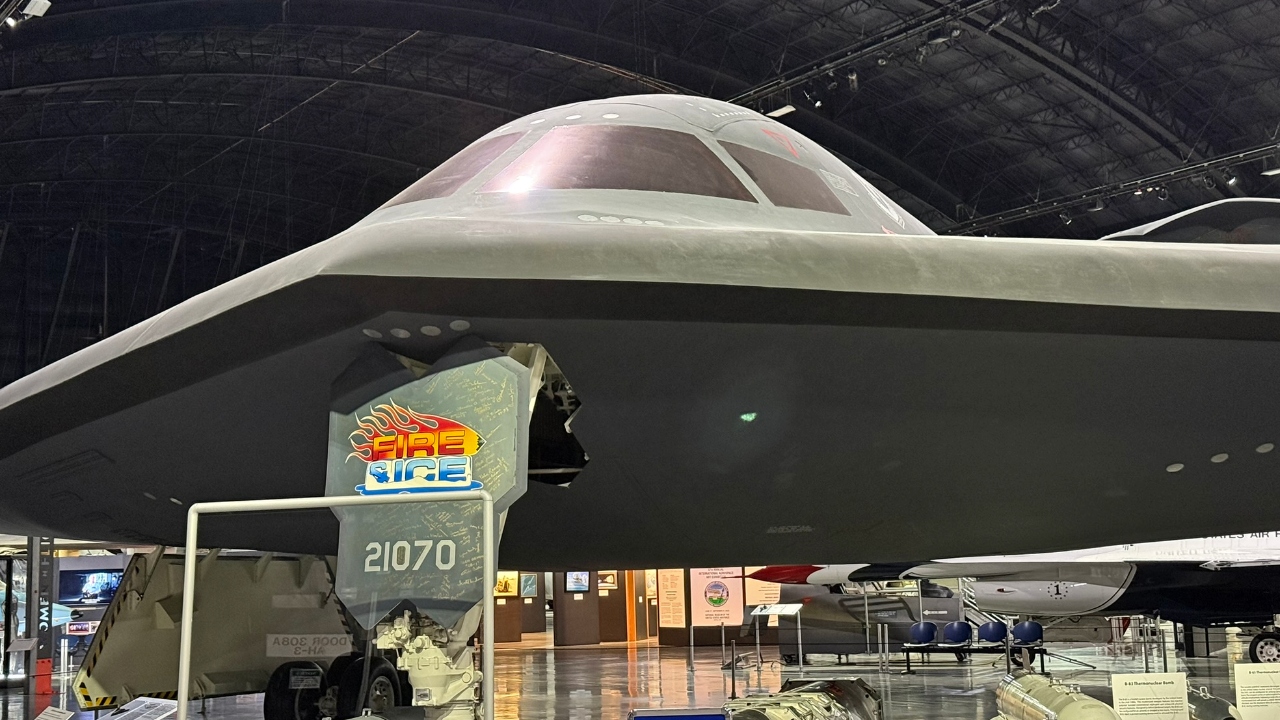
B-2 Bomber @ U.S. Air Force Museum. Image Credit: National Security Journal.
The bomber has participated in several raids against terrorist locations and, quite famously, against Iran, but it was never used against any adversaries with any significant air defense capabilities.
Air defense systems have become more sophisticated since the bomber was built. Both China and Russia have made significant advances in both their radar and missile technology; meanwhile, the B-2 has remained relatively unchanged.
Not to say that the B-2 is now obsolete, it isn’t, but America’s adversaries are no longer as far behind the U.S. as many want to think.
The B-2 is still more advanced than anything our adversaries can field, but will that still be true in another decade?
About the Author: Isaac Seitz
Isaac Seitz, a Defense Columnist, graduated from Patrick Henry College’s Strategic Intelligence and National Security program. He has also studied Russian at Middlebury Language Schools and has worked as an intelligence Analyst in the private sector.
More Military
Mach 6 SR-72 Darkstar Could Soon Be the ‘Fastest Plane on Earth’
America’s E-4B Doomsday Plane Has a Message for Russia and China
AIP: The Cheap Stealth Submarines the U.S. Navy Will Never Build
Russia’s Su-57 Felon Stealth Fighter Finally Opens Its ‘Secret’ Weapons Bay Doors
Canada’s Big F-35 Fighter Choice Is Stuck in ‘Stealth Limbo’


