

In 2026, many mainstream news reports have focused on the staggeringly high casualties that the Russian Armed Forces have suffered in Ukraine.
What many reports seem to miss, however, is the large casualty rate that Ukraine has suffered after four years of war and the looming demographic crisis that the country is bound to face after the war.
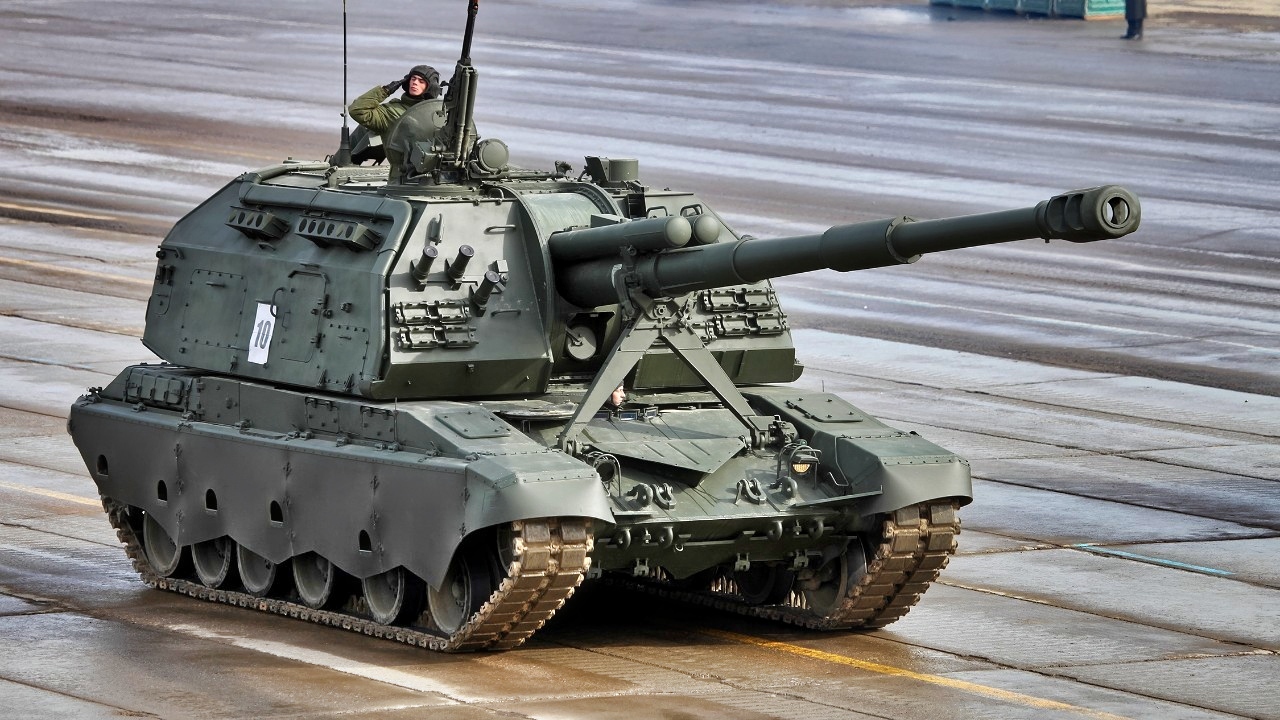
Msta-S Russian Army. Image Credit: Creative Commons.
Ukraine has a much smaller population than Russia, with a pre-war population of 36 million (excluding occupied territories), and it has a much smaller pool of fighting-age men and women to draw upon.
Between war casualties, displacement, and immigration, Ukraine’s population will be forever changed by the conflict, even if the war ends favorably for Ukraine.
How Many Soldiers has Ukraine Lost?
Figures for Ukrainian casualties vary wildly depending on the source.
In February, President Zelensky reported that Ukraine has suffered 55,000 killed in action as a result of the war, though he acknowledged that this figure did not account for the “missing” in action.
In 2025, the Ukrainian Ministry of the Interior recorded around 70,000 missing, both civilians and soldiers, although a proper breakdown is never given.
As always, readers are advised not to take official claims at face value.
Case in point, the Russian Ministry of Defense reported that Ukrainian casualties reached upward of 900,000 killed throughout the war. The real answer undoubtedly lies in the middle.

MSTA-S Russian Army. Image Credit: Creative Commons.
According to various open-source estimates, Ukraine has suffered around 86,000 to 140,000 killed from 2022 to 2026, according to most estimates. Some figures are even higher, using open-source information such as video evidence, publicly released obituaries, and grave sites; the site Ukrainian Losses managed to discover 191,178 killed in action, foreign mercenaries included, since Russia’s invasion of Ukraine.
When factoring in the wounded, the total number of casualties rises somewhere between 500,000 and 1.5 million.
These figures do not paint a positive long-term picture for Ukraine, whose pool of recruits is rapidly shrinking.
Tracking Equipment Losses
Material losses on Ukraine’s side are likewise hard to track, as most OSINT analysts focus primarily on Russian losses.
Pro-Ukrainian sources reported that between 2022 and January 2026, Ukraine lost around 1,419 tanks, 2,102 armored fighting vehicles (AFVs), and around 3,000 APCs, wheeled vehicles, and infantry support vehicles of various types.
According to visual evidence, Ukraine has lost an additional 1,022 pieces of equipment, including tanks, AFVs, APCs, self-propelled guns, and other armored vehicles.
When it comes to casualty estimates in Ukraine, several variables come into play. First, most OSINT estimates are operating with limited information. Not every kill on the battlefield is recorded, so the actual number of casualties on both sides is bound to be higher than estimated. Second, official sources almost always downplay their own casualty counts for propaganda purposes.

Putin with a Rifle. Image Credit: Russian State Media.
Most analysts agree that the numbers released by the Russian government are inflated or manipulated for propaganda purposes.
Yet, for some reason, this same scrutiny is seemingly never applied to figures released by the Ukrainian government, which has actively spread misinformation in the past for propaganda purposes. All this is to say that the exact range of casualties is difficult to guess, but it is most certainly higher than official numbers suggest.
Manpower Shortages and Forced Recruitment
Other factors in Ukraine suggest the picture on the ground is not nearly as bright as the government or mainstream news sources would like to admit. One such indicator is the forced mobilization of Ukrainians by government forces.
For years, videos circulated on the web of Ukrainian recruiters forcefully dragging people into vans to be shipped off to military training sites, which were initially dismissed as Russian propaganda.
As time has gone on, these “forced mobilizations” have become harder to ignore. In April, three stabbings were recorded during recruitment efforts, one of which was perpetrated by a customs officer whose brother had reportedly been forcibly conscripted.
Recruitment efforts have been further exacerbated by Ukraine’s ongoing manpower shortage, which has constrained Ukraine’s efforts to push back the Russians. Despite statements from government officials that Ukraine is united in its fight against the Russians, Ukraine has admitted that the country has a large number of draft dodgers and thousands more who are absent without leave (AWOL).
This is further compounded by the casualties taken during the war and the millions of Ukrainians who have fled the country in the past four years.
Ukraine’s Coming Demographic Crisis
This is not to say that the Ukrainian Army is on the verge of collapse or that Ukraine will definitely lose the war. The Ukrainian Armed Forces are highly capable fighters, especially since the advent of drones.
The point, however, is that the situation is not nearly as positive as many seem to think. The war has hurt Ukraine demographically far more than it has hurt Russia. Russia has a much larger population and can continue the war for much longer than Ukraine can.
As the war drags on, Ukraine’s manpower shortages will grow worse, and forced conscription will continue to spark tensions among the average citizen.
Even if the war does end in Kyiv’s favor, 5.3 million Ukrainian refugees remain abroad, and less than half of them plan on returning. No matter the outcome, Ukraine faces a potential demographic crisis that will take decades to fully recover from.
About the Author: Isaac Seitz
Isaac Seitz, a Defense Columnist, graduated from Patrick Henry College’s Strategic Intelligence and National Security program. He has also studied Russian at Middlebury Language Schools and has worked as an intelligence Analyst in the private sector.


