
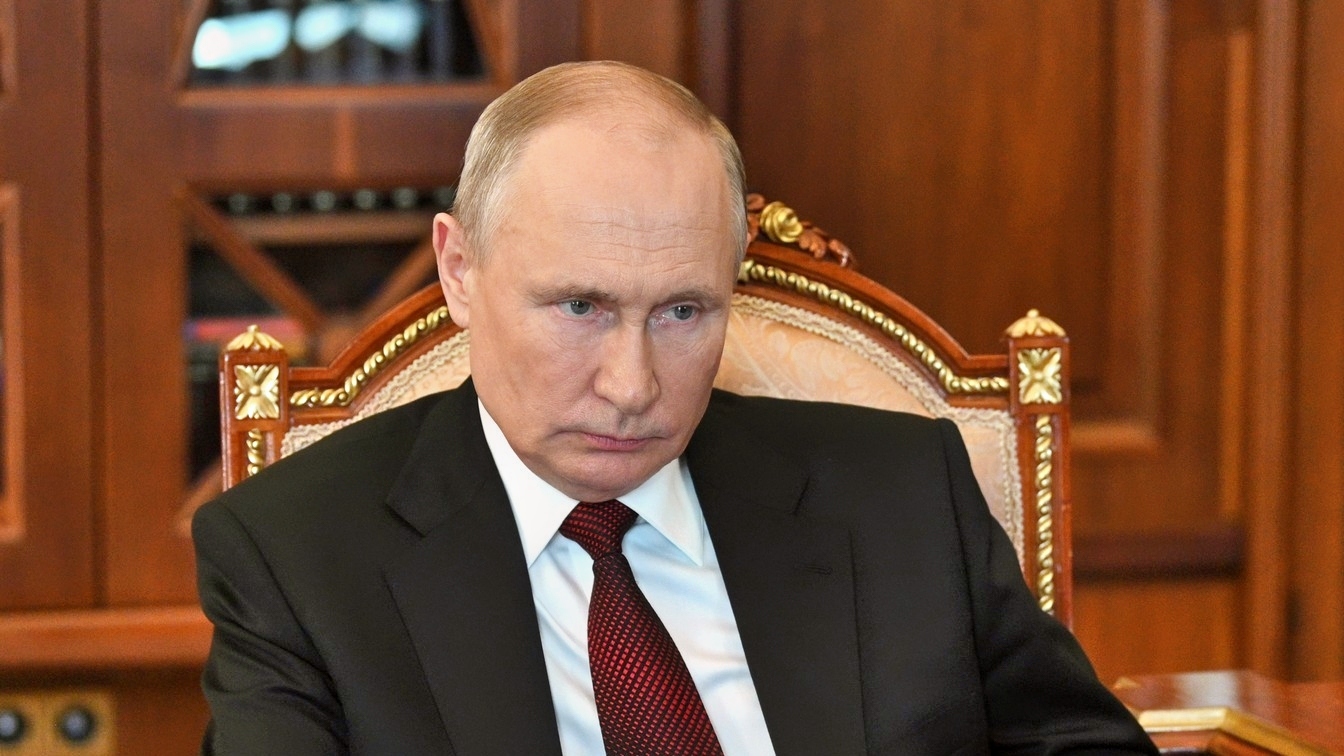
Russian President Vladimir Putin has signed three classified decrees this week, just as CIA Director John Ratcliffe made a highly unusual trip to Moscow. Even after the U.S. official returned from Russia, the purpose of the trip remains a mystery.
Ratcliffe remained in Moscow for roughly eight hours, and the Kremlin confirmed that he met with Russian intelligence officials. U.S. President Donald Trump also acknowledged the visit but rejected some of the most dramatic theories about why he was there.
Putin Back in 2009. Image Credit: Creative Commons.

Russian President Putin. Image Credit: Creative Commons.
The timing of the decrees and the surprise visit from Ratcliffe have generated speculation that the two were connected — but a day later, we know considerably more about the CIA director’s trip than we did before.
What Did Putin Sign?
According to reports, Putin signed publicly available Decree No. 604 on August 24 – a sweeping measure that gives the Russian government powers to place privately controlled critical infrastructure under temporary state control when its owners fail to adequately protect or restore it.
The measure appears to be part of an effort to protect critical commercial and logistics infrastructure in Russia that is currently under regular threat from Ukrainian drone and missile strikes, and the decree is understood to cover everything, including energy, industrial, communications, transportation, and logistics infrastructure.
The other presidential decrees were numbered 608, 609, and 610 – and all three were signed and dated August 25, 2026.
Two of those decrees related to Russia’s diplomatic representation in Iraq, while another changed the membership of presidential commissions that deal with veterans and people with disabilities. Curiously, though, numbers 605, 606, and 607 were missing from the public record.
Russian presidents can issue classified decrees that are assigned numbers, but whose details are withheld from public release if they relate to sensitive matters such as national security or defense.
At present, the purpose of the decrees cannot be determined – and as of Wednesday afternoon, no source has disclosed their contents.
Could It Be A Pardon?
Russian media is already speculating about what might be happening, and one possibility that has been raised among commentators is that at least one of the classified documents could relate to Charles Wayne Zimmerman, an American citizen imprisoned in Russia after authorities discovered a rifle and ammunition on his yacht when he sailed into Sochi.
Zimmerman was sentenced earlier this year to five years in prison.
Meduza, an independent Russian outlet, reported that Zimmerman may have been the focus of the visit by Ratcliffe to Moscow.
But that would be a relatively mundane explanation for at least one secret decree signed this week. And it doesn’t explain the other two.
There has been no confirmation that Putin has pardoned Zimmerman, as some Russian reporting has suggested, or indeed that he returned with Ratcliffe, or that Decrees 605 and 607 concern an American prisoner. So while the speculation is not entirely implausible, it does seem unlikely.
What Else Could the Decrees Be?
There are several other possibilities – and one potentially big clue is the decree Putin signed immediately before the three classified documents.
Decree No. 604 dramatically expanded Moscow’s ability to take control of critical infrastructure after Ukrainian attacks.
It was signed as Ukraine continues its large-scale drone and missile campaign against Russian logistics facilities and refineries, and extends its assaults on commercial logistics hubs from Wildberries to competitors like Ozon.
Some Russian reports indicate that, as these strikes continue and threaten an industry that accounts for roughly 8.5% of the Russian economy, the decrees may relate to new efforts to defend strategically important facilities.
And those efforts may be so fragile that Moscow doesn’t want the public to know what measures are being taken to protect them – or what extreme measures may come next.
Is This Mobilization?
Another possibility is that the decrees are related to another mobilization.
Other reports surrounding Ratcliffe’s surprise visit have revived speculation that Moscow is preparing for another major recruitment effort as Russian forces struggle to gain ground in eastern Ukraine amid the ongoing long-range strikes.
Classified presidential decrees have previously been used for military personnel matters, and orders relating to troop numbers, mobilization preparations, or other changes to Russia’s armed forces would not necessarily be made public.
Does the Timing Matter?
This is all speculation, and the order in which the decrees were signed may not matter.
No evidence currently connects Nos. 605, 606, and 607 to Ratcliffe’s meetings, and even Russian pro-war commentators who discussed the missing documents have suggested that protecting infrastructure is the most plausible explanation for the decrees – and not the surprise visit from an American official.
But all possibilities are on the table, with Russia facing an economic crisis that cannot be fully mitigated without first preventing Ukraine from continuing its long-range strike campaign.
About the Author: Jack Buckby
Jack Buckby is a British researcher and analyst specializing in defense and national security, based in New York. His work focuses on military capability, procurement, and strategic competition, producing and editing analysis for policy and defense audiences. He brings extensive editorial experience, with a career output spanning over 1,000 articles at 19FortyFive and National Security Journal, and has previously authored books and papers on extremism and deradicalization.


