

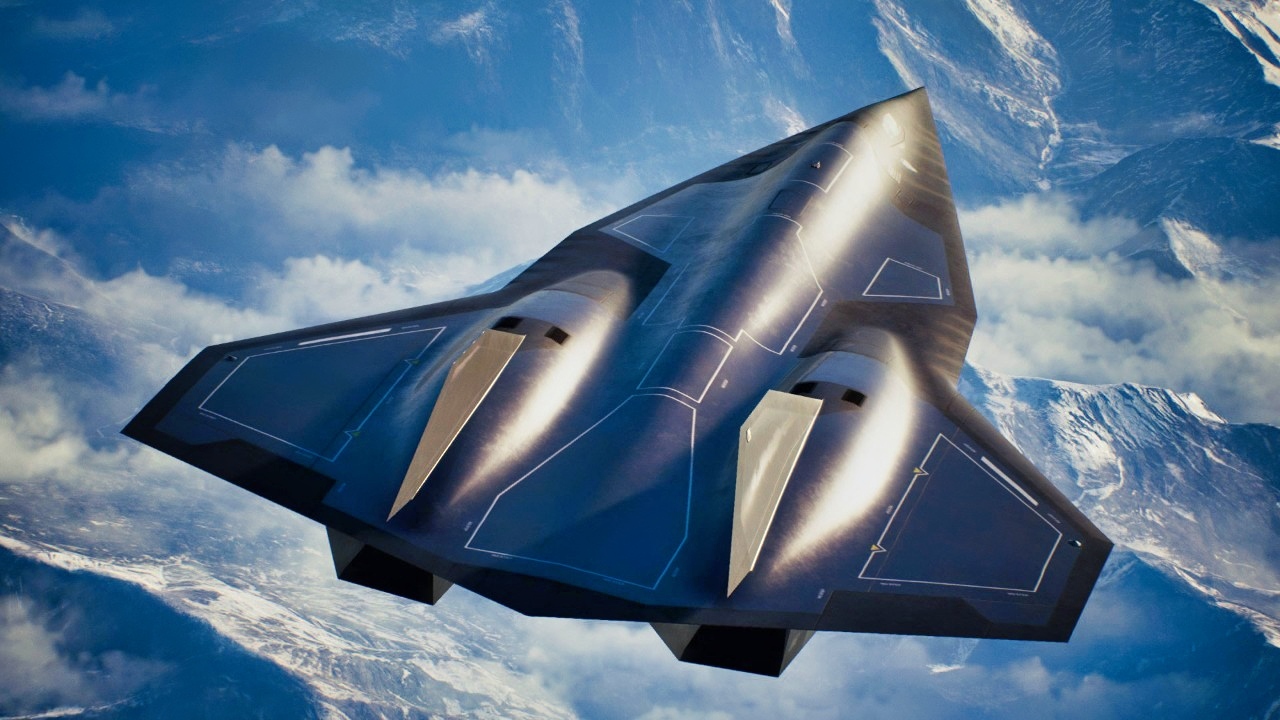
A term called “Darkstar” is stretching the U.S. Air Force’s imagination. No, it is not something from the latest Star Wars movie. This is the nickname for the new SR-72 spy plane. Also known as the “Son of Blackbird,” the new kid on the block has many of the same attributes as the SR-71 Blackbird, and that has aerospace enthusiasts salivating at the new possibilities.
The proposed SR-72 could hit a top speed of MACH 6, or 4,600 miles per hour. This is almost twice as fast as the SR-71 Blackbird. The Air Force is looking at this seriously for ultra-rapid strategic intelligence, surveillance, and reconnaissance data collection. It would be difficult to shoot down this high-flying and mega-fast spy bird.
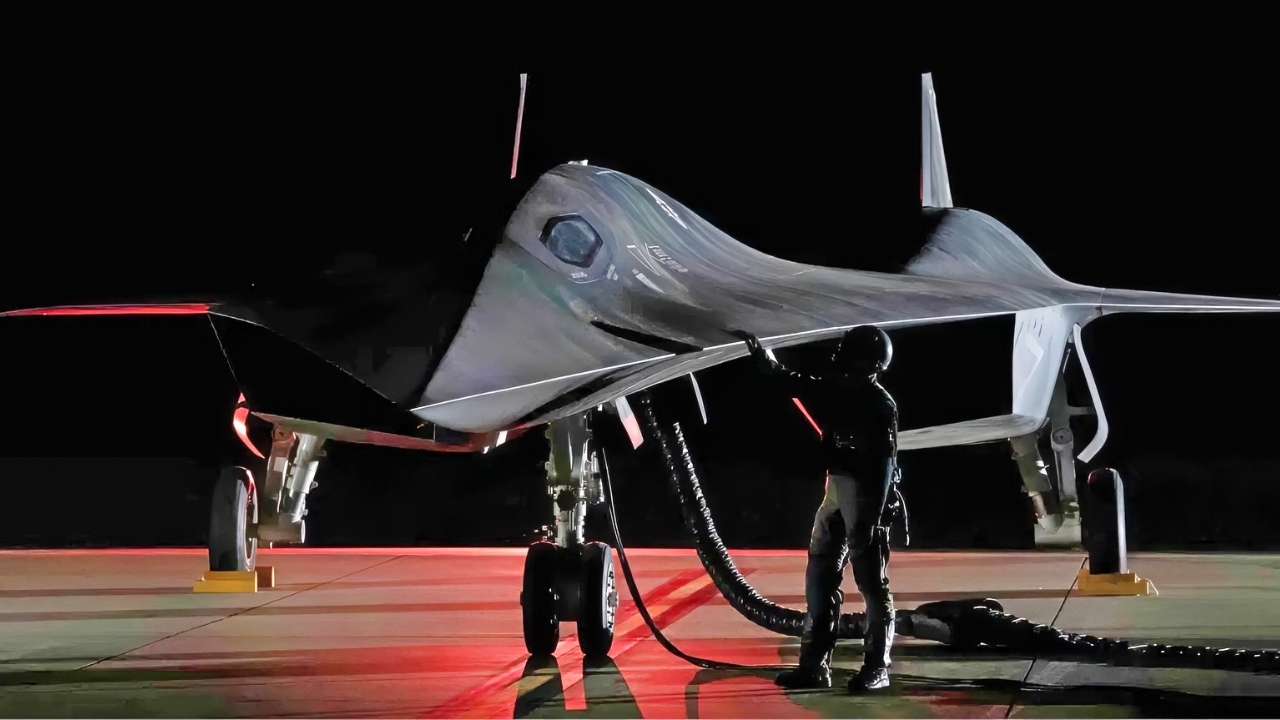
SR-72 Darkstar Lockheed Martin Image.
SR-72: Better Than a Simple Satellite
The spycraft could cross a continent in just a few hours and respond to intelligence needs anywhere and anytime. The SR-72 could be more than a spy plane. It could also perform ground-strike duties, making it more lethal than simple satellites. The SR-72 will be the fastest airplane to ever enter active duty should the program be successful.
In Development for 13 Years
The Son of Blackbird is not a new concept. Engineers, designers, and technicians have been working on the proposal since 2013 at the uber-secretive Lockheed Martin Skunk Works. The SR-71 was finally retired by the Air Force in 1989 and NASA in 1999 after a distinguished record of valiant spying.
You Mean This Thing Would be Unmanned?
One interesting aspect of the SR-72 is that it could be an unmanned aerial system capable of conducting spy missions, allowing a human pilot to avoid being shot down.
Building on a Whiz Bang Platform
The SR-71 has been a popular spy plane. The airplane burned a trail at MACH 3.2 and could hit 80,000 feet in altitude. The missions were successful, and the airplane gathered some extremely valuable overhead imagery and intelligence during its heyday. It outran all enemy missiles and airplanes and was never shot down.
SR-72 Darkstar or Son of Blackbird. Image Credit: Lockheed Martin.
Going Back to Spy Plane Basics
The airborne intelligence game has changed since the Blackbird retired. Strategic drones and satellites are widely depended on to collect imagery and video. The United States needs this type of unmanned teamwork to prepare battlefields and enemy locations for personnel and equipment.
The Advantage Darkstar Has Over Satellites
However, satellites can be obscured by clouds and sometimes go blind.
Drones, such as the strategic Global Hawk, cannot fly at such high speeds and require ample time to reach the target zone. The Air Force wants something that can’t be shot down and endanger a human pilot. Plus, the high speed is irresistible in its ability to traverse the globe.
Knifing Through Enemy Air Defenses
Engineers are interested in whether sheer speed and high altitude can make a comeback in the design of spy planes.
There may be a use for hypersonic unmanned craft that can sizzle through the sky, keeping adversaries from reacting with conventional air defenses and surface-to-air missiles.
The SR-72 could definitely outrun enemy airplanes, and the older interceptor missiles would not be able to take out such a fast-moving jet.
What Kind of Engines Are We Talking About?
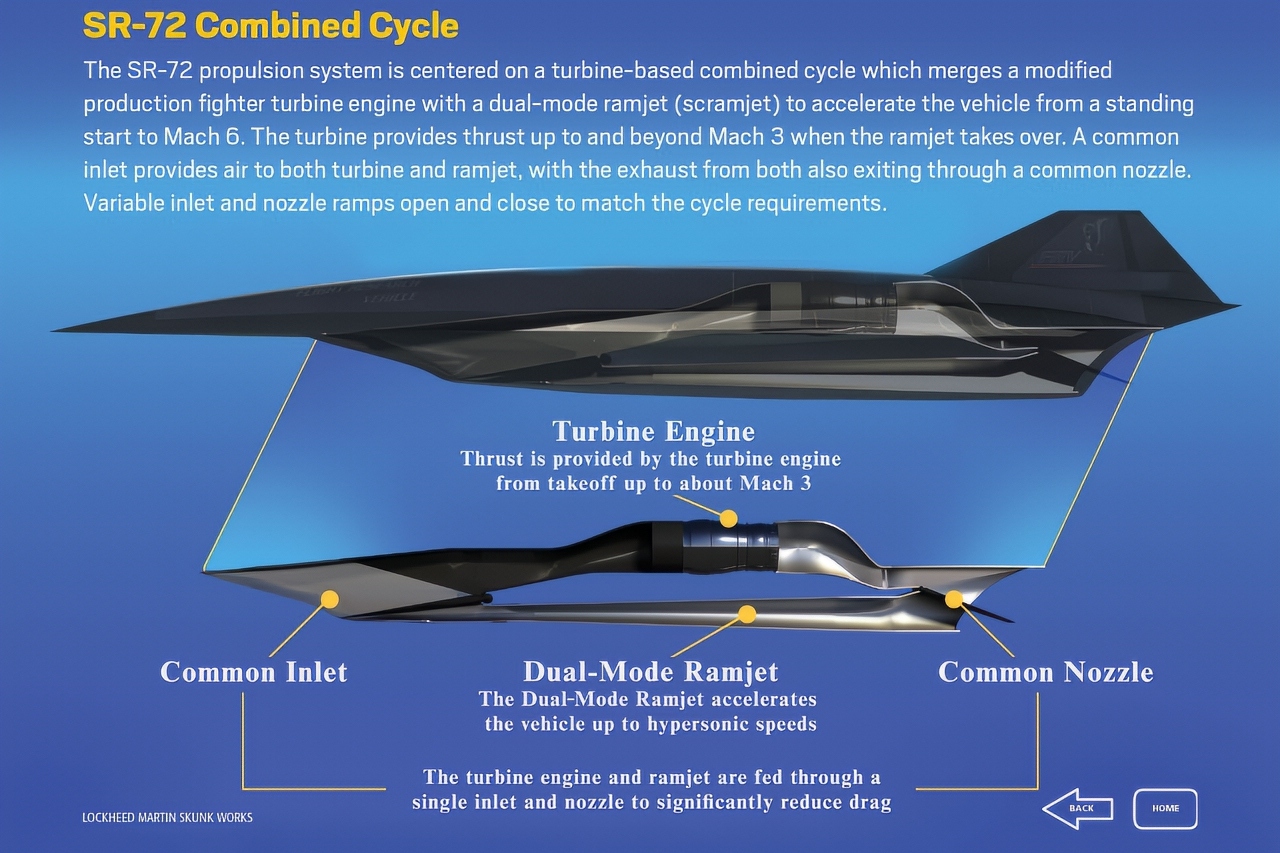
However, the dream of hypersonic speed on an airplane is not easy to attain. The SR-72 would need a vastly superior powerplant than its papa, the SR-71.
As Simple Flying has noted, “Traditional turbojet or turbofan engines perform well at subsonic and low supersonic speeds, typically up to about Mach 2.2. Ramjets perform best at higher speeds around Mach 3, but they cannot operate efficiently during takeoff. Scramjets [supersonic combustion ramjets] are designed specifically for hypersonic flight, but they require extremely high speeds to operate and typically do not sustain long flights.”
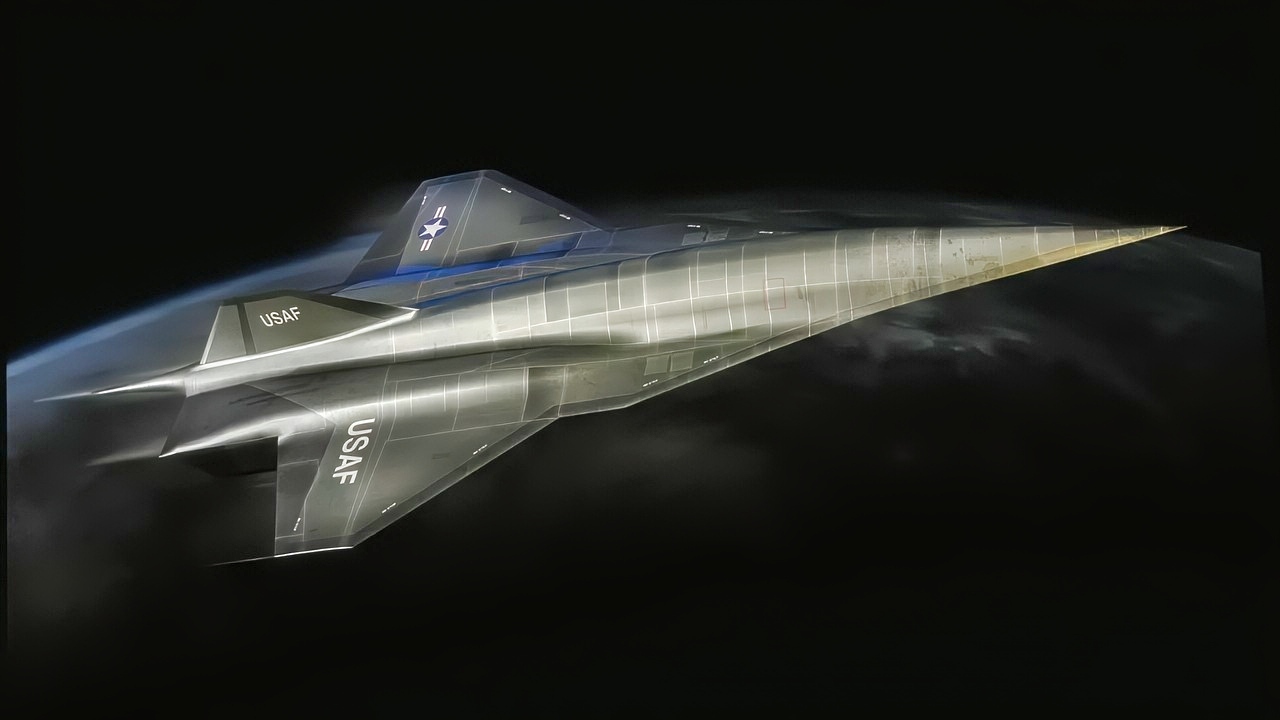
SR-72 from Lockheed Martin Image
To overcome these limitations, engineers at Skunk Works are considering a turbine-based combined-cycle (TBCC) engine. “A TBCC design is one that combines ramjets or scramjets with regular jet turbines to create a similar situation in which the complete system is capable of functioning at lower speeds,” according to the War Zone.
The excitement is palpable
Rocket boosters are thus not needed, and the high speed can be sustained as long as the jet remains hypersonic.
The SR-72’s TBCC engine and the overall design of the aircraft are shrouded in secrecy, even though a model of the Darkstar appeared in the movie Top Gun: Maverick, which caused some tongue wagging that the Air Force had decided on a design for the SR-72.
Doing a Trick on Iran
Potential use cases are intriguing. Let’s say that the SR-72 was serving during Operation Epic Fury. It could fly from the continental United States to Iran in around 90 minutes. This would provide almost instantaneous intelligence to prep the battlefield.
Intelligence collection could be improved by assessing battle damage to determine whether strikes from other bombers and fighters completely neutralized targets.
SR-72 from Lockheed Martin Image
“The aircraft’s payload may include advanced sensors, communications equipment, and electronic intelligence systems.
High-resolution imaging sensors, radar mapping technology, and signals-intelligence receivers could all feed real-time information back to command centers thousands of miles away,” Simple Flying noted.
Intelligence Preparation of the Battlefield
This would mean the United States could gain a significant advantage in intelligence collection and in maintaining a firm grip on evolving battlefield conditions in contested airspace. The complete suppression of enemy air defenses need not be achieved.
The SR-72 could be a Day One asset in the war, freeing up stealth aircraft to bomb adversaries and take out enemy surface-to-air missiles. The Darkstar would have ample time over the target to analyze the situation and feed information back to ground control.
Time to Play Offense
That’s not all. Designers may be adding an offensive feature to the SR-72. The platform could launch its own hypersonic weapons.
These could conceivably be nuclear-tipped, making the Darkstar an ultra-rapid member of the U.S. nuclear triad. These hypersonic bombing runs would be difficult for the enemy to counteract.
The hypersonic attacks could also be conventional. One of the difficulties in Iran has been to fully eliminate mobile missile launchers.
The Darkstar would be able to locate these quickly, fire hypersonic missiles at the launchers, and eliminate command-and-control centers before the adversary could react.
This gives the SR-72 a leg up in combat and helps it attrit enemy missile and rocket forces better than other slower-moving bombers.
Watch Out for This Incredible Platform
Thus, the SR-72 has many observers excited by its high speed, incredible altitude, and the ability to serve as a reconnaissance and strike bird all in one package. We will keep an eye out for the development of this aircraft.
It is intriguing in its multi-mission capabilities and could be a difference-maker in future warfare. This could be a sterling strategic offensive and defensive asset one day, and the Air Force is looking to make it grace the skies as soon as possible.
About the Author: Brent M. Eastwood, PhD
Author of now over 3,500 articles on defense issues, Brent M. Eastwood, PhD, is the author of Don’t Turn Your Back On the World: A Conservative Foreign Policy and Humans, Machines, and Data: Future Trends in Warfare, plus two other books. Brent was the founder and CEO of a tech firm that predicted world events using artificial intelligence. He served as a legislative fellow for US Senator Tim Scott and advised the senator on defense and foreign policy issues. He has taught at American University, George Washington University, and George Mason University. Brent is a former US Army Infantry officer. He can be followed on X @BMEastwood.


