


Many defense experts and military leaders widely believe that the U.S. Air Force is currently both too small and too old to confidently deter aggressors.
Decades of high operational tempos, repeated budget cuts, and procurement delays have severely constrained the branch’s overall capacity and fleet readiness.
One former F-22 pilot and a current congressman, Rep. August Pfluger (R-TX), believes that the American Congress can’t avoid the current challenge that the United States faces from China.
Pfluger correctly points out that the total active inventory is at its lowest level in the branch’s history. The demands placed on the service routinely outpace its available assets.
The Air Force’s Inventory Is Older Than The Pilots Flying Them
And the Air Force is shrinking. The service currently operates about 5,500 aircraft of all types, of which 2,100 are fighters and bombers. The Chinese currently operate between 1,500 and 2,000 fighters and about 120 to 150 bombers.
“We have the most incredible airmen, the most incredible and competent leaders up and down the chain of command, incredible weapon systems, Pfluger said. “But we are in fact the smallest and also the oldest Air Force that we’ve ever been.”
Approximately 80 percent of the Air Force’s fighter inventory consists of airframes procured in the 1970s and 1980s.
Shrinking fleet numbers mean pilots fly less, reducing combat proficiency. Additionally, independent assessments from the Center for Strategic and International Studies (CSIS) highlight a critical shortage of long-range precision munitions, which would likely be depleted within the opening days of a conflict with China.
At its peak, the Air Force had more than 26,000 aircraft in 1956.

F-22 Raptor at the USAF Museum. Image Credit: National Security Journal.
The Air Force Is Facing Numerous Challenges
A significant portion of the USAF fighter fleet consists of aircraft designed in the 1960s and 1970s, averaging decades old. This leads to increased maintenance downtime and impacts readiness levels.
Ten current aircraft in the inventory first flew more than 50 years ago. Those aircraft comprise more than 2,600 airframes, or more than 60 percent of the Air Force’s fleet.
The Air Force’s aircraft inventory is far too small to handle all the missions it is tasked with, with fewer than half the bombers and fighters it had in 1991 during Operation Desert Storm.
Proper Funding Has Not Kept Up With Replacing Aging Aircraft
The USAF has not received sufficient funding in the past to procure a replacement volume of fighters to adequately replace the aging fleet.
For decades, the service has employed a “divest-to-invest” strategy, retiring older aircraft to free up funds for new acquisitions; however, this approach hasn’t yielded sufficient savings to keep pace with modernization needs.
Congress invested over $1.3 trillion more in the Army than the Air Force in the 20+ years after 9/11. Likewise, it invested over $900 billion more in the Navy than in the Air Force in the same period. This imbalance is a recipe for losing future wars.
“Our service lacks the required funding and resources, even as the potential for near-term conflict grows,” said retired Air Force Chief of Staff General David Allvin in 2025. “In short, America needs more Air Force, and it needs it now.”
“We’ve got to recapitalize right now,” Pfluger said.

A U.S. Pennsylvania Air National Guard KC-135 Statotanker aircraft from the 171st Air Refueling Wing out of Pittsburgh provides fuel for a U.S. Air Force F-22 Raptor from Joint Base Langley–Eustis, April 2, 2025. The air refueling mission was part of routine proficiency training. (U.S. Air National Guard photo by Master Sgt. George Perkins)
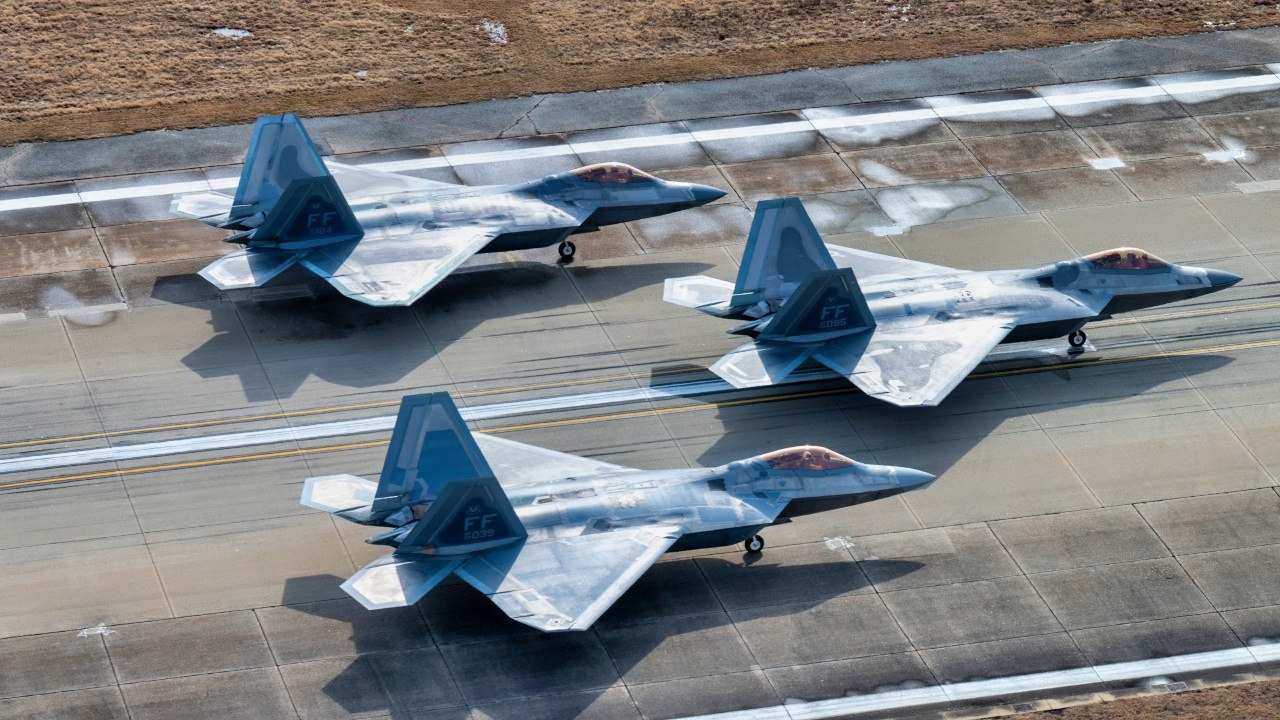
LANGLEY AIR FORCE BASE, Va. – F-22 Raptors from the 1st Fighter Wing sit in position on the runway fduring the Elephant Walk at Langley Air Force Base, Virginia, Jan. 31, 2025. The surge was designed to showcase the wing’s operational readiness and its ability to rapidly mobilize airpower. The 1st FW operates F-22 Raptors and T-38 Talons, maintaining combat capabilities that enable the U.S. Air Force to execute missions across the globe. With a focus on air superiority, the 1st FW plays a critical role in defending the nation’s interests. (U.S. Air Force photo by Tech Sgt. Matthew Coleman-Foster)
China Is A Major Concern Today
“The pacing threat is China,” Pfluger said. “They are developing technology and weapon systems in massive amounts that we need to know, and our public needs to be educated on.”
“The Indo-Pacific region is largely going to be fought by air power and sea power,” Pfluger said. “Air power is the one that’s going to be called upon.”
China, meanwhile, is churning out 5th-generation stealth fighters, such as the J-20 Mighty Dragon, at roughly 120 per year, while the U.S. has struggled with delays and cost overruns in next-generation procurement.
The “Tyranny of Distance” is a major issue. The Indo-Pacific theater requires aircraft to cover vast distances. The U.S. Air Force currently lacks the optimal balance of range and payload capacity to strike Chinese targets while keeping its own bases out of range of Beijing’s formidable hypersonic and ballistic missile arsenals.
Modernizing The Air Force’s Fighters And Bombers
Pfluger believes that Congress must be the catalyst for modernizing the Air Force to meet its needs today and in the future.
“The Department of the Air Force has been underfunded for decades,” he said.
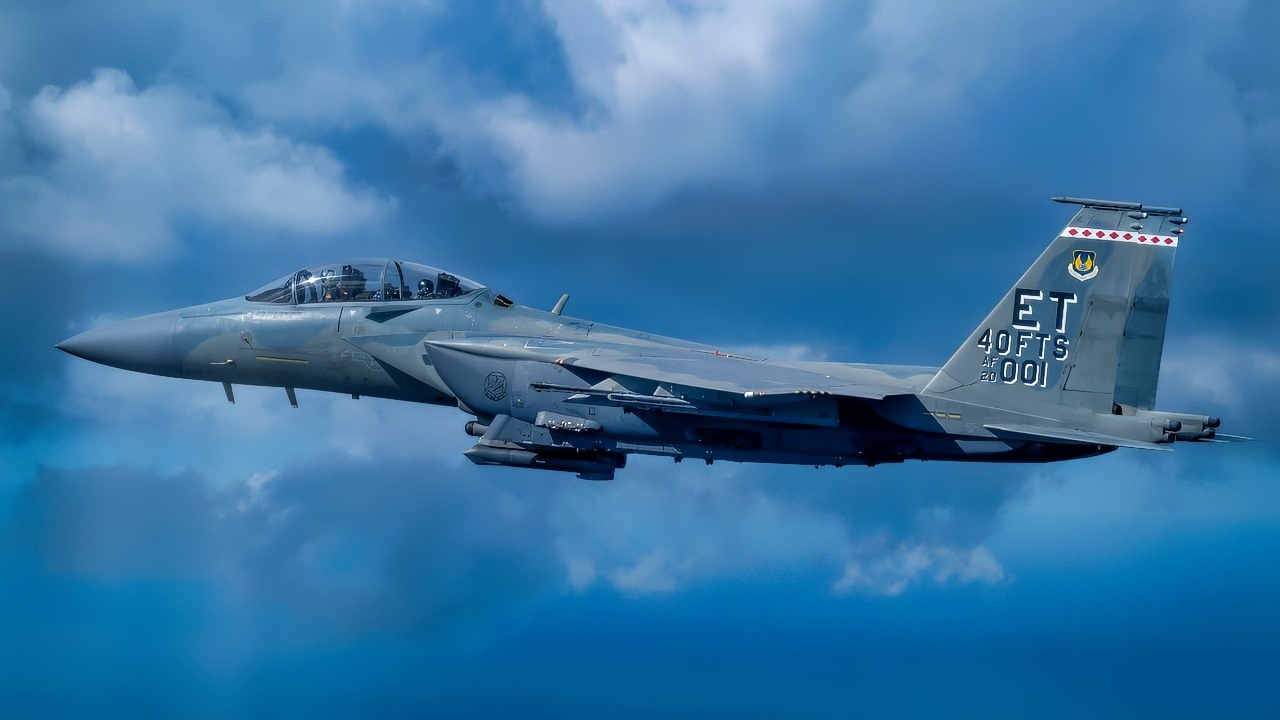
A U.S. Air Force F-15EX Eagle II fighter jet assigned to Eglin Air Force Base, Florida, flies near Jacksonville, Florida, Nov. 2, 2024. Airmen from the 40th Flight Test Squadron and 96th Aircraft Maintenance Unit supported a flyover for the annual Florida-Georgia college football game. (U.S. Air Force photo by Staff Sgt. Blake Wiles)
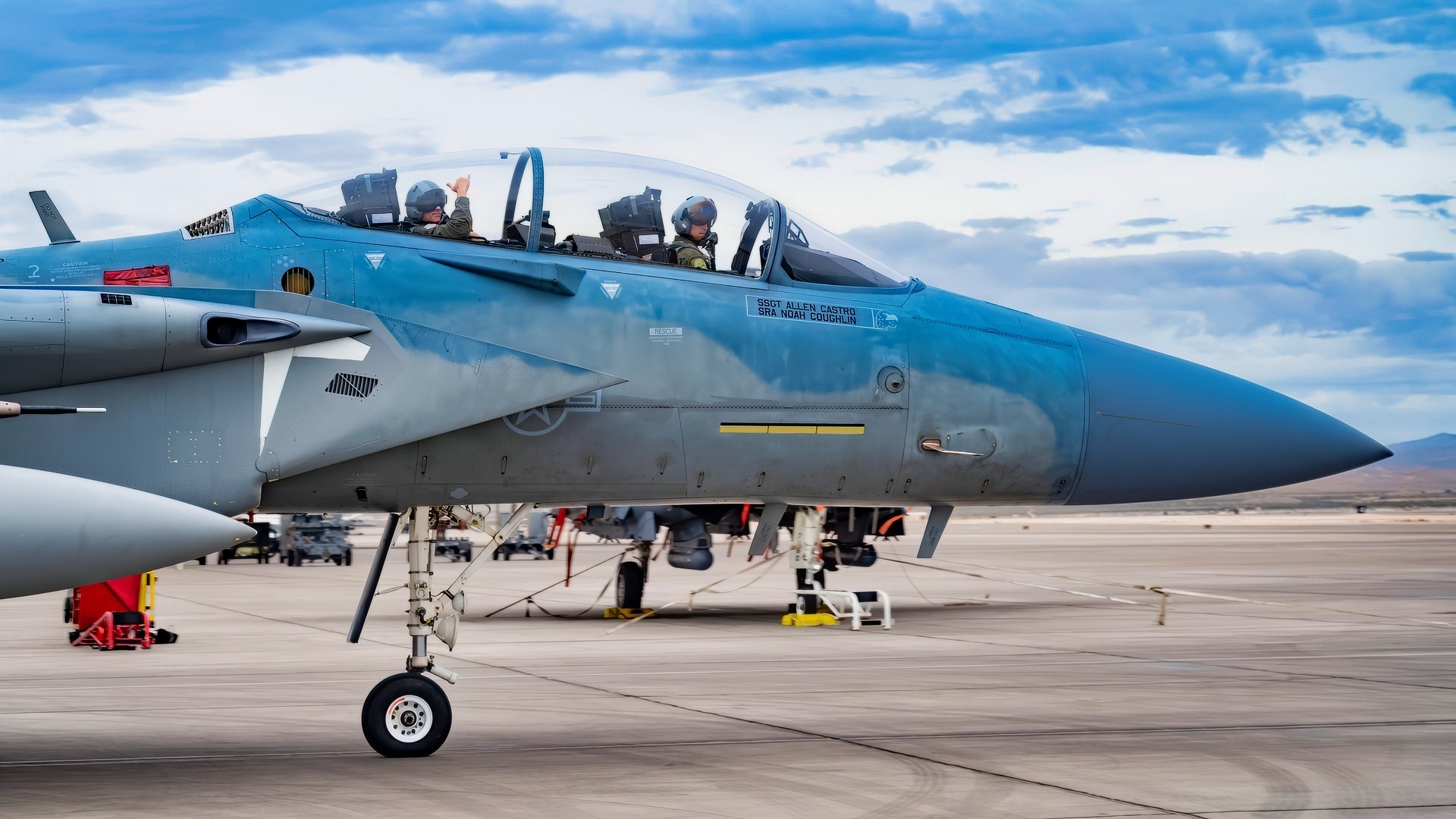
U.S. Air Force Maj. Michael Tope, right, and Brig. Gen. Michael Rawls, taxis to the runway in a F-15EX Eagle II for a training operation at Nellis Air Force Base, Nevada, Nov. 15, 2023. The EX is the most advanced variant of the F-15 aircraft family, with the capability to carry a great number of missiles in support of the F-35A Lightning II. (U.S. Air Force photo by Airman 1st Class Elizabeth Tan)
The Air Force faces a significant challenge in balancing investments in next-generation programs, such as the F-35 and the F-47 Next-Generation Air Dominance (NGAD), with the need to sustain a combat-ready force with proven platforms like the F-15EX.
This balancing act has also involved the new B-21 Raider stealth bomber, which is in limited production.
The Answers Will Not Be Easy, Or Cheap
The Air Force is investing in newer platforms, such as the F-35, the F-47, and the F-15EX, a modernized version of the F-15. The F-15EX is being considered for air defense and homeland security missions, potentially complementing stealth aircraft like the F-35.
The Air Force is already building the F-47 NGAD, which will be the first sixth-generation fighter, but concerns exist about its potential cost.
The USAF is also focused on upgrading fourth-generation fighters such as the F-15EX and F-16XL to keep them combat-relevant and capable in the short- to medium-term.
Collaborative Combat Aircraft (CCA), or the “Loyal Wingman” program, is needed. The USAF is exploring the use of unmanned CCAs to accompany manned fighter jets, potentially altering the future composition of the fighter fleet.
The Department of the Air Force emphasizes the importance of reviving the defense industrial base to support modernization efforts, according to its Posture Statement for Fiscal Year 2026.
While the USAF is working to modernize its fighter fleet by retiring older, Cold War-era airframes and procuring modern fighters, it must be cautious not to strip the fleet of too many capable aircraft.
But can it move quickly enough? “Now is the time,” Pfluger said. “There’s a sense of urgency.”
About the Author: Steve Balestrieri
Steve Balestrieri is a National Security Columnist. He served as a US Army Special Forces NCO and Warrant Officer. In addition to writing on defense, he covers the NFL for PatsFans.com and is a member of the Pro Football Writers of America (PFWA). His work was regularly featured in many military publications.


