
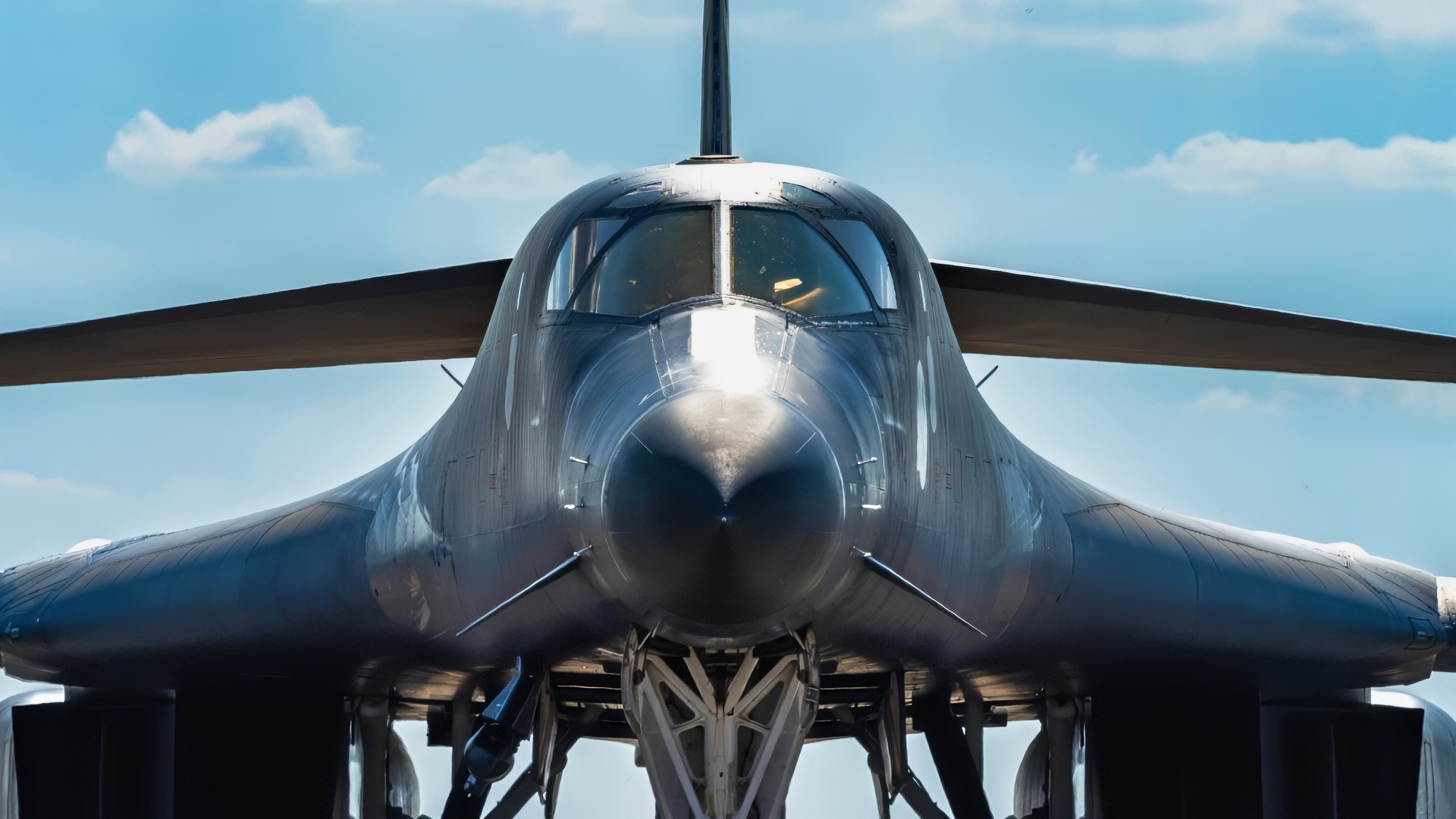
The U.S. Air Force just resurrected a B-1B Lancer bomber from the legendary “Boneyard” desert storage facility at Davis-Monthan Air Force Base in Arizona—a stunning return to service that signals just how desperate the Pentagon has become for long-range strike capability. The regenerated aircraft, serial number 86-0115 and formerly nicknamed “Rage,” now flies operationally as “Apocalypse II” out of Dyess Air Force Base in Texas after departing Tinker AFB on April 22, 2026.
Air Force Brings B-1B Lancer “Apocalypse II” Out of the Boneyard

B-1B Lancer Getting Closer. Image Credit: Creative Commons.
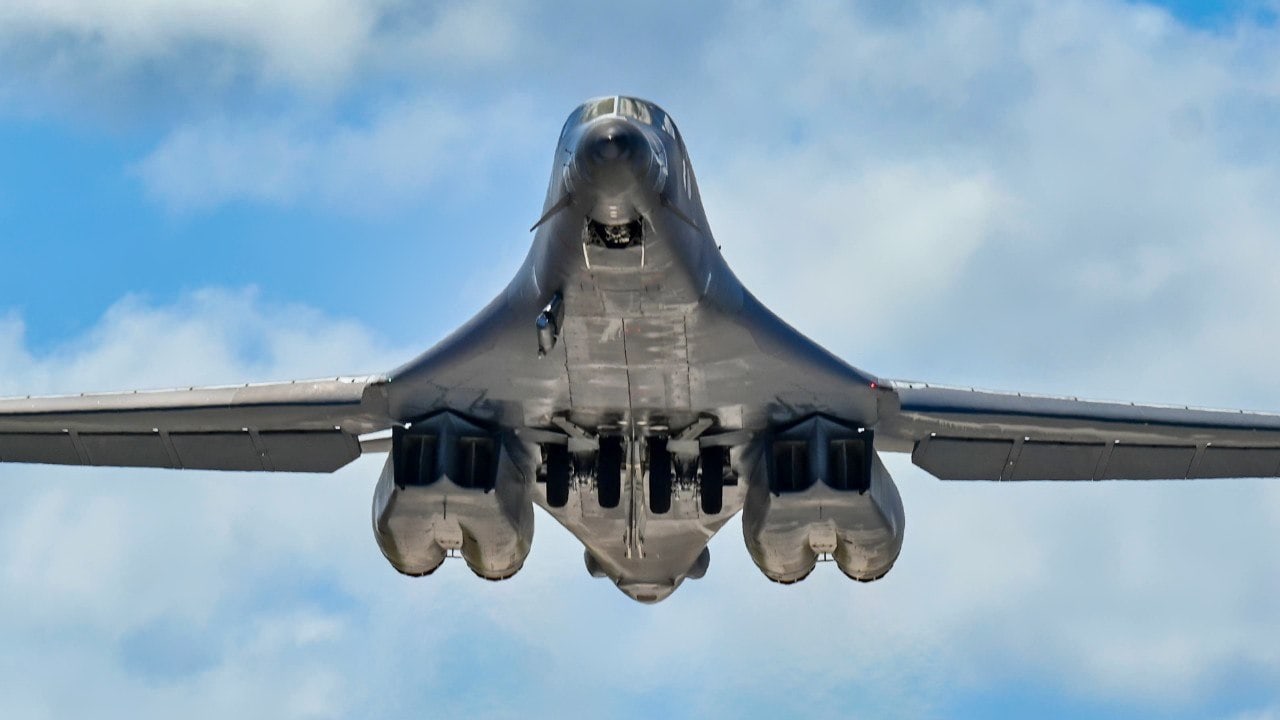
B-1B Lancer Bomber. Image Credit: Creative Commons.
The U.S. Air Force has officially returned a previously retired B-1B Lancer bomber to operational service after nearly two years of regeneration and depot-level maintenance. The aircraft, serial number 86-0115 and formerly nicknamed “Rage,” departed Tinker Air Force Base in Oklahoma on April 22 following an extensive restoration effort led by the Oklahoma City Air Logistics Complex. The bomber has now rejoined the operational fleet at Dyess Air Force Base in Texas under a new name – “Apocalypse II.”
The aircraft had originally been retired in 2021 and placed into long-term storage at Davis-Monthan Air Force Base’s Aircraft Maintenance and Regeneration Group (AMARG), commonly known as the “boneyard.”
The decision to regenerate the aircraft is significant because the Air Force had once planned to retire the B-1B fleet entirely by around 2030 as the newer B-21 Raider entered service.
Instead, the bomber is now expected to remain operational through at least 2037, with the Pentagon requesting hundreds of millions of dollars in upgrades to keep the aircraft relevant for future long-range strike missions.

A second B-21 Raider test aircraft takes off, Sept. 11, from Palmdale, Calif., to join the Air Force’s flight test campaign at Edwards Air Force Base, Calif. The addition of the second test aircraft expands mission systems and weapons integration testing, advancing the program toward operational readiness. (Courtesy photo)
How the Bomber Was Brought Back
The aircraft was one of 17 B-1Bs retired in 2021, when the Air Force reduced the bomber fleet from 62 to 45 to improve readiness rates and redirect resources toward the B-21 Raider program. However, 86-0115 was not fully scrapped.
Instead, it was placed into “Type 2000” storage at AMARG, meaning it was preserved in a condition that would allow it to be returned to service if operational requirements demanded it.
Only four retired B-1Bs were reportedly placed into this reclaimable storage category. According to the Air Force, more than 200 airmen and civilian personnel from the 567th Aircraft Maintenance Squadron participated in the regeneration effort, replacing more than 500 components while conducting extensive structural repairs and systems overhauls.
Prior to returning to service, the bomber also underwent functional check flights over Oklahoma in a stripped bare-metal configuration flown by pilots from the 10th Flight Test Squadron at Tinker Air Force Base. After validation flights confirmed the aircraft’s systems were fully operational, the bomber was repainted and transferred to Dyess Air Force Base.
The Air Force said the regenerated bomber replaced another B-1B, serial 86-0126, which had been undergoing major structural repair work with Boeing in Palmdale, California. The decision to restore a retired bomber was made because it was cheaper and faster than continuing the previous repair efforts.
Why the B-1B Is Staying In Service This Long
The B-1B first entered service in the mid-1980s, meaning the newest aircraft in the fleet are now around 40 years old. For years, the Air Force expected the bomber to begin disappearing from frontline service as the B-21 Raider entered the fleet. Instead, the aircraft is being upgraded and kept operational well into the next decade as demand for long-range strike aircraft continues to rise.
Fiscal Year 2027 budget documents show the Air Force plans to spend roughly $342 million upgrading the remaining B-1B fleet between 2027 and 2031. The request states the funding is intended to maintain the bomber’s relevance through 2037.
The B-1B remains one of the Air Force’s most useful conventional bombers because of its payload capacity and speed.

B-1B Lancer. Image Credit: Creative Commons.
The aircraft can carry large numbers of cruise missiles and other standoff weapons over long distances, making it particularly useful in potential Pacific operations where targets may be separated by thousands of miles.
Although the bomber lost its nuclear role after the Cold War, it became a heavily used conventional strike platform during operations in Iraq, Afghanistan, and Syria.
The aircraft also continues to play a major role in Bomber Task Force deployments across the Indo-Pacific.
Earlier this year, B-1Bs conducted an unprecedented deployment to Japan as the U.S. military increased its regional deterrence posture amid continued Chinese military activity near Taiwan and the East China Sea.
About the Author: Jack Buckby
Jack Buckby is a British researcher and analyst specializing in defense and national security, based in New York. His work focuses on military capability, procurement, and strategic competition, producing and editing analysis for policy and defense audiences. He brings extensive editorial experience, with a career output spanning over 1,000 articles at 19FortyFive and National Security Journal, and has previously authored books and papers on extremism and deradicalization.


