

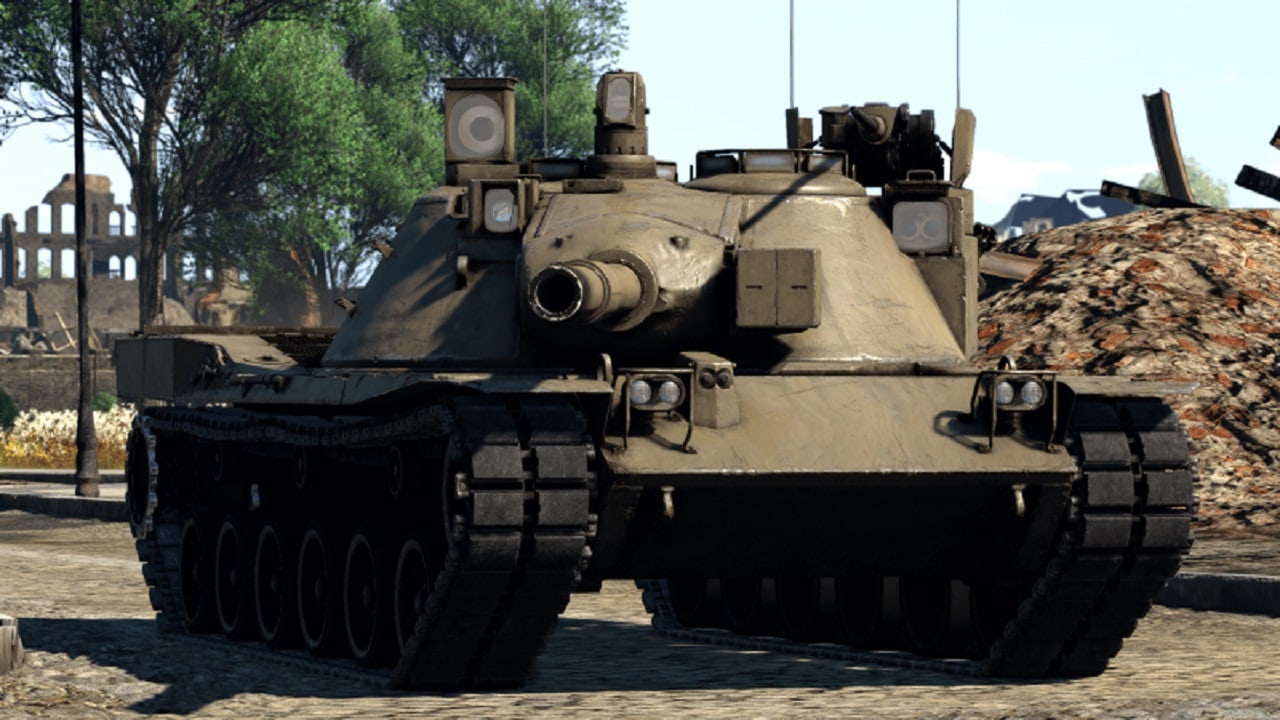
Summary and Key Points: MBT-70 was an ambitious project between the United States and West Germany to develop a new Main Battle Tank for the ground forces of both nations.
-It was designed not only to counter newer Soviet tanks but also to achieve some measure of standardization between the U.S. and other NATO countries.

MBT-70. Image Credit: Creative Commons.
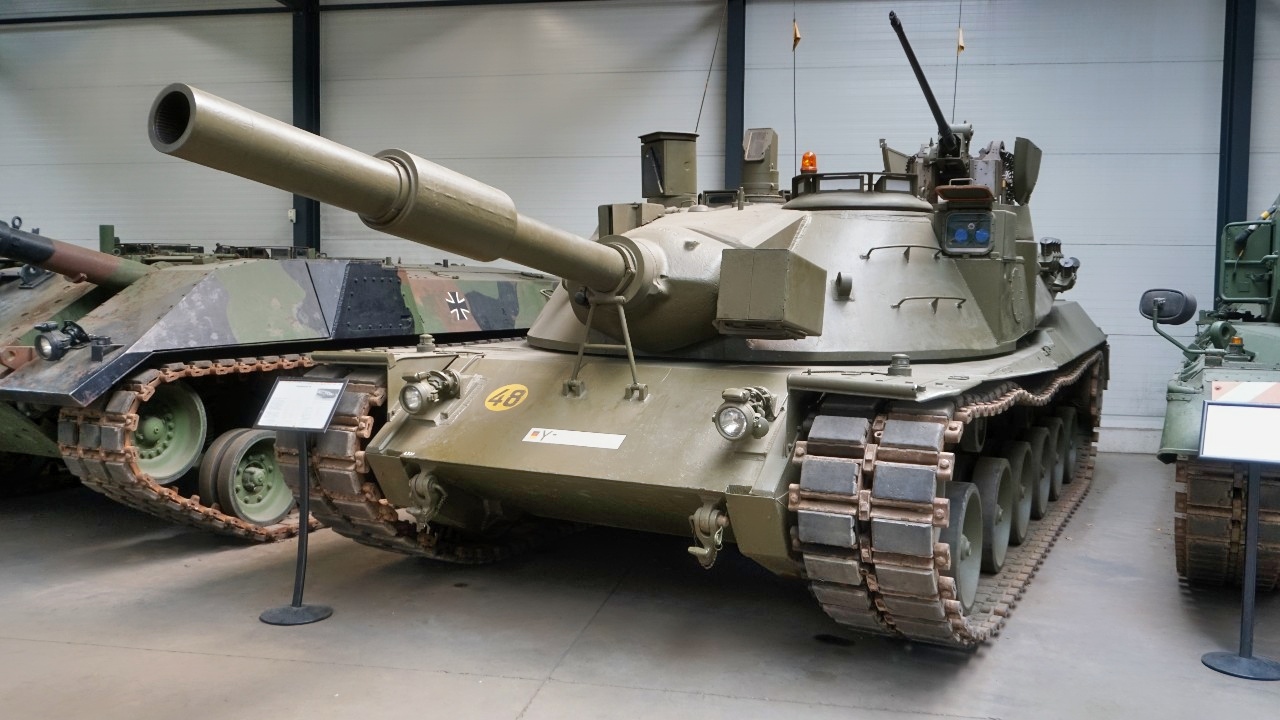
MBT-70 Tank. Image Credit: Creative Commons.
-Despite its ambitious goals, the project ultimately failed due to miscommunication and divergent strategic priorities between the Americans and the Germans.
-Although the project may have failed, the expertise gained from the MBT-70 program benefited both countries’ indigenous programs.
Development and Rationale Behind MBT-70
The idea for a joint German–American project originated with then-Secretary of Defense Robert McNamara. McNamara developed an interest in German engineering through his experience at Ford Motor Company.
As Secretary of Defense, one of his goals was to enhance interoperability among NATO allies. At the time, NATO’s ground systems were highly heterogeneous and used different fuels, ammunition, and components, a factor that could hinder allied cooperation in the event of a Soviet invasion.
Initially, the Germans were hesitant about the prospects of a joint tank program. In 1961, Germany was preparing to enter production of its indigenous Leopard 1 tank and insisted that the U.S. purchase Leopard 1 tanks rather than pursue a new project.
However, the U.S. insisted that a new MBT was urgently needed for NATO’s ground forces. Germany was chosen as the partner due to its excellent economic position.
In August 1963, the two nations signed a memorandum of understanding establishing a joint engineering agency and a joint design team. At the time, it was thought that these measures would foster cooperation
From the outset, the MBT-70 program was envisioned as a revolutionary leap in armored technology. While NATO armor was sufficient to engage Soviet T-54/55 series tanks, the Soviets were developing new tanks, such as the T-62, which had better armor and significantly greater firepower than NATO tanks at the time. Additionally, the T-64, which was undergoing development at the same time as MBT-70, provided even greater firepower and greater protection, thus further necessitating the need for an advanced response from NATO.
MBT-70 was therefore designed not only to challenge current Soviet tanks but also to counter those that followed.
Firepower
To this end, MBT-70 had to be ambitious with its firepower. The American version of the tank was built around a 152mm XM150 gun/launcher, capable of firing conventional rounds as well as the MGM-51 Shillelagh anti-tank missile. This dual-capability system was designed to provide the tank with both superior close-range lethality and long-range precision.
Yet even during design debates, Germany expressed dissatisfaction with the choice, preferring instead a high-velocity 120mm gun more compatible with its doctrine (a foreshadowing of the gun that would eventually appear on the Leopard 2). The disagreement would become one of many unresolved doctrinal rifts that undermined the project.
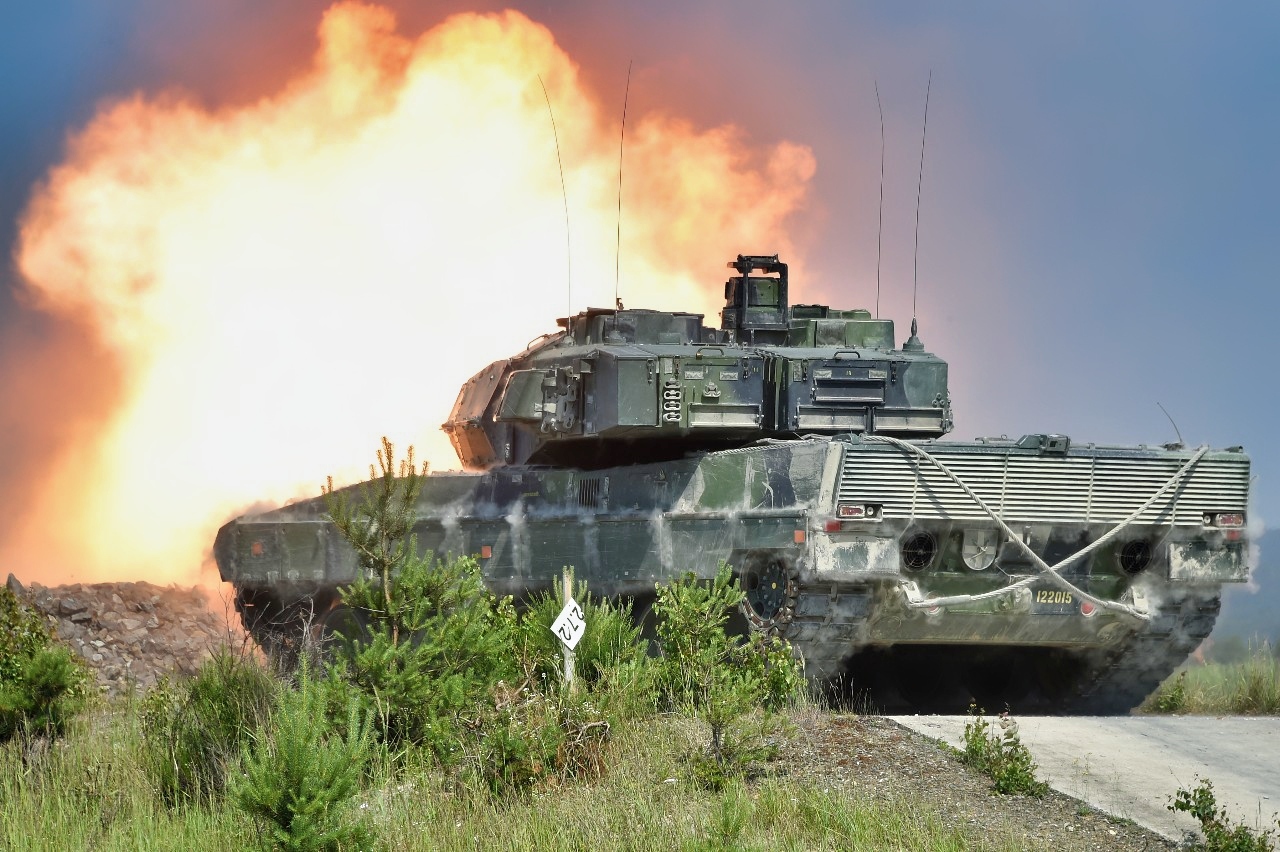
Swedish soldiers with the Wartofta Tank Company, Skaraborg Regiment in a Stridsvagn 122 main battle tank conduct the defensive operations lane during the Strong Europe Tank Challenge, June 7, 2018. U.S. Army Europe and the German Army co-host the third Strong Europe Tank Challenge at Grafenwoehr Training Area, June 3 – 8, 2018. The Strong Europe Tank Challenge is an annual training event designed to give participating nations a dynamic, productive and fun environment in which to foster military partnerships, form Soldier-level relationships, and share tactics, techniques and procedures. (U.S. Army photo by Gertrud Zach)
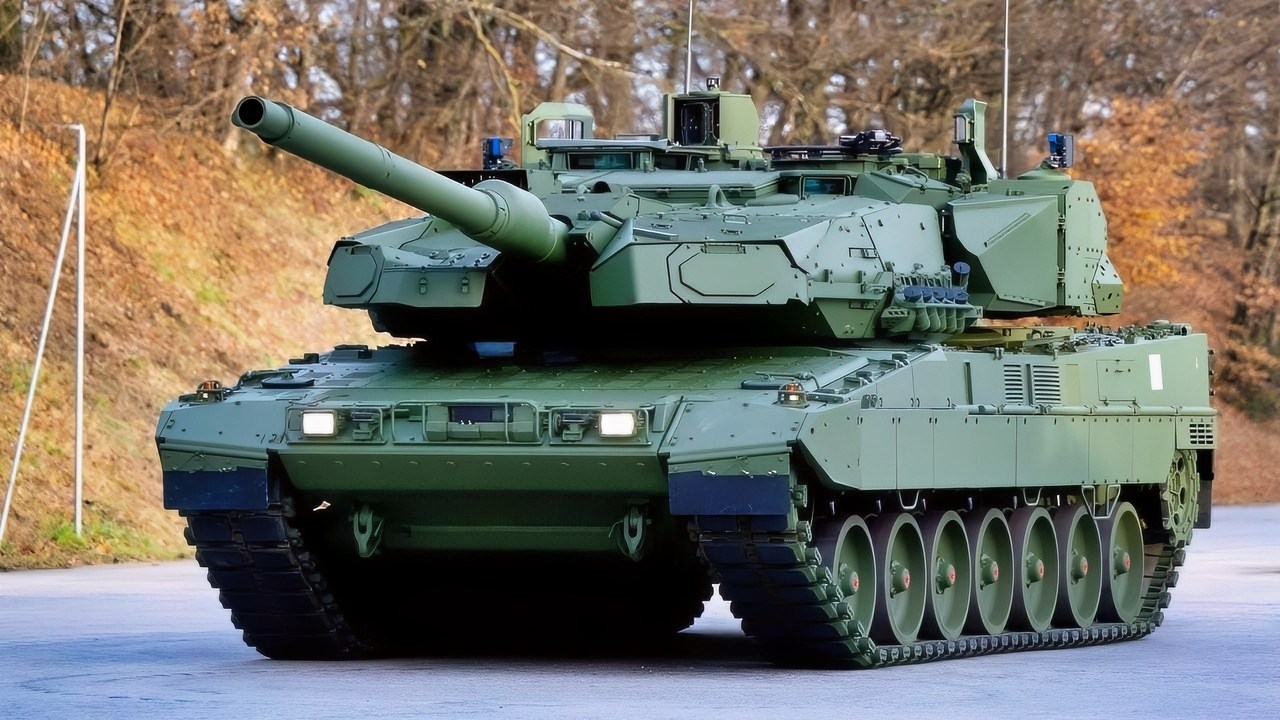
Leopard 2A8 Tank New. Image Credit: Creative Commons.

Soldiers with the Hellenic Army fire a 120mm round from a Leopard A2 tank while scanning their sector during offensive operations for the Hellenic Tank Challenge 2021 at Petrochori Range, Triantafyllides Camp, Greece, Nov. 2, 2021. The Hellenic Tank Challenge 2021 is a competition that allows partnership building between Greece and the United States of America while enhancing unit readiness through competition. (U.S. Army photo by Staff Sgt. Jennifer Reynolds/RELEASED)
The MBT-70 also incorporated a remotely operated 20mm autocannon to provide additional anti-infantry and limited anti-air capability. Although conceptually pioneering, the weapon consistently malfunctioned during testing and failed to meet specifications.
Despite its unreliability, the remote weapons system (RWS) on the MBT-70 was among the many features that were ahead of its time.
At the time, the technology was not yet available, but today RWS is a common feature on newer MBTs.
MBT-70’s Unusual Design
To complement this firepower, the designers pursued a suite of futuristic technologies that had rarely, if ever, been attempted in armored vehicles of the time. One of the most radical of these was the hydropneumatic suspension, which allowed the vehicle to raise or lower its hull as needed. This so-called “kneeling” suspension dramatically reduced the tank’s silhouette in defensive positions, while also improving cross-country mobility. Such a system required highly complex engineering and maintenance, but the concept reflected the designers’ belief that a next-generation tank required unprecedented adaptability.
The crew layout also reflected the team’s desire for radical innovation. In a break from conventional tank design, all three crew members, the commander, gunner, and driver, were housed in the turret rather than being distributed between the hull and turret. This arrangement was intended to improve survivability by placing the occupants in a well-protected, self-contained capsule.
However, it required the creation of a rotating driver’s station synchronized with the turret’s motion. Engineers struggled to produce a reliable system that could keep the driver oriented correctly as the turret turned, and these difficulties persisted throughout development.
Mobility and Protection
Armor protection was another arena in which the MBT-70 sought to break new ground. The tank employed spaced-armor arrangements designed to counter both kinetic-energy penetrators and chemical-energy warheads. Compared to the composite armor on today’s tanks, this was a relatively simplistic measure. However, at the time, spaced armor was believed to provide significantly greater protection than thick steel.
Additionally, the MBT-70 facilitated the development of Western composite armor, even though its own armor was inferior.
Mobility was perhaps the area that performed the most effectively. Powered by a 1,470-horsepower Continental AVCR-1100 diesel engine (the German variant used a Daimler-Benz/MTU MB 873 Ka-500 four-stroke diesel engine), the MBT-70 demonstrated exceptional speed and acceleration for its weight class. Test crews from both nations praised this aspect of performance as one of the few consistently successful components of the entire effort.
What Went Wrong?
Yet despite its visionary character, the MBT-70 project was plagued from the outset by deep structural problems that steadily compounded over time. One of the most damaging issues was the divergence in American and West German requirements and armored warfare philosophies. The United States prioritized long-range missile capability and advanced electronics, whereas Germany emphasized a conventional high-velocity cannon and simpler design principles. These conflicting priorities were never satisfactorily resolved, resulting in ongoing pressure to modify or redesign major subsystems.
Communication and coordination challenges further burdened the project. Engineers on both sides struggled to share technical information effectively, and Germany maintained strict protection over certain industrial technologies, restricting the flow of crucial data.
Compounding this, each nation’s manufacturing base used different measurement systems: the Germans employed the metric system, while the Americans used imperial units. This mismatch resulted in incompatible components, frequent reengineering, and significant delays. Simple dimensional conversions, when applied across thousands of parts, became a persistent source of error and expense.
Beyond these organizational issues, the project suffered from what modern engineers refer to as “feature creep.” As new ideas, technologies, or perceived battlefield needs emerged, they were integrated into the design without sufficient evaluation of their impact on cost, schedule, or system complexity.
What began as a bold but manageable concept gradually spiraled into an unwieldy technological experiment, pushing the limits of the era’s engineering capabilities.
Over budget and Overly Ambitious: Why MBT-70 failed
Financial strain became the final blow. The original cost estimate for the MBT-70 program hovered around $80 million, but as requirements multiplied and schedules slipped, the cost swelled to more than $303 million.
West Germany, increasingly concerned about the ballooning budget and dissatisfied with several American design choices, withdrew from the program in 1969. The United States attempted to salvage the effort by continuing development of a modified variant, the XM803, but congressional patience waned. By 1971, the U.S. canceled the project outright.
In hindsight, the MBT-70 failed for a combination of interrelated reasons. The technological ambition exceeded what 1960s engineering could reliably achieve, resulting in persistent subsystem failures.
Doctrinal disagreements between the U.S. and Germany created incompatible requirements, while communication barriers and the metric-imperial divide introduced engineering inefficiencies at every level. The lack of disciplined project management allowed scope and costs to spiral beyond political tolerances.
Ultimately, the tank became too expensive, too complex, and too fraught with technical difficulty to bring to production.
About the Author: Isaac Seitz
Isaac Seitz, a Defense Columnist, graduated from Patrick Henry College’s Strategic Intelligence and National Security program. He has also studied Russian at Middlebury Language Schools and has worked as an intelligence Analyst in the private sector.


