


A peanut allergy will now disqualify you from joining the U.S. Military. So will diabetes, sickle cell disease, an active cancer, a pacemaker, or 23 other medical conditions on a new prescreening list that took effect May 4. The U.S. Military Entrance Processing Command rolled out the change to spare applicants “false hope” before they reach the physical exam stage.
The U.S. Military Has Some New Things That Could Get You Disqualified from Joining

U.S. Marine Corps Lance Cpl. Dylan Butler, left, a machine gunner, and Cpl. Gevorg Hovasafyan, a section leader, both with 3rd Battalion, 7th Marine Regiment, 1st Marine Division, carry an M2 .50-caliber heavy machine gun during Range 400 at Marine Corps Air-Ground Combat Center Twentynine Palms, California, Oct. 25, 2025. Range 400 is a dynamic live-fire range that allows companies to rehearse tactics and procedures for attacking fortified areas. (U.S. Marine Corps photo by Sgt. Juan Torres)

A U.S. Marine with Combat Logistics Battalion 2, Combat Logistics Regiment 2, 2nd Marine Logistics Group, posts security at the Infantry Immersion Trainer at Marine Corps Base Camp Lejeune, North Carolina, Nov. 21, 2025. The IIT is a facility which provides an urban training environment for Marines and Sailors, aiding in increasing combat efficiency by training in realistic conditions. (U.S. Marine Corps photo by Lance Cpl. Isabella Ramos)
According to recent news reports, the U.S. Armed Forces is changing how it prescreens potential recruits.
The new standard set forth by the U.S. Military Entrance Processing Command (MEPCOM) now includes 28 medical conditions that are considered disqualifying for service.
The new prescreening process is intended to preemptively disqualify candidates from the armed services who would likely have been discharged later for health issues. The new prequalification standards are part of a broader effort to increase the overall health and readiness of the U.S. Military.
Implementing New U.S. Health Standards
MEPCOM announced new changes on Monday, May 4, stating that the U.S. Armed Services were implementing a new prescreening process that disqualifies applicants much earlier in the process.
Applicants who have one of the 28 medical conditions listed in the new guidelines will no longer be required to undergo a physical exam with a doctor to join the military. “It is a process change that stops processing for applicants with one or more specific disqualifying conditions that have been identified by service waiver authorities as unlikely to be waived,” Marshall Smith, a spokesperson for MEPCOM, told the news outlet Task and Purpose.

U.S. Marine Corps Cpl. Ethan Benedict, a chemical, biological, radiological, and nuclear specialist with Combat Logistics Battalion 6, Combat Logistics Regiment 2, 2nd Marine Logistics Group, poses for a photo after a simulated CBRN response as part of Exercise Freezing Winds 2025 in Gylto, Finland, Nov. 30, 2025. CBRN response Marines are trained to conduct precise detection, identification, and sampling of hazardous agents to protect personnel, preserve life, and support the attribution of weapons of mass destruction incidents. Freezing Winds is conducted to increase interoperability between Marines, Finland, and NATO Allies by executing combined amphibious operations in and around the Baltic Sea littorals, and is part of a regularly occurring series of exercises in northern Europe that demonstrates the capability to deploy and train Marines and Sailors in support of the NATO Alliance. Benedict is a native of Florida. (U.S. Marine Corps photo by Sgt. Alfonso Livrieri)
The list of disqualifying medical conditions includes sickle cell disease, peanut allergies, and both types of diabetes.
All three of these conditions, as some have noted, are quite common across the American populace, with peanut allergies being among the most common food allergies in the U.S., and diabetes becoming more common among the younger generation.
Other conditions that the new guidelines deem as “unlikely to be waived” include active cancers, Crohn’s disease, ligament ruptures in the last year, pacemakers, eczema, and many more. Also included in the list are mental disorders that require antipsychotic medications, or a diagnosis of Bipolar disorder.
Sifting Out Unqualified Recruits Earlier in the Process
Some have worried that these new guidelines may shrink the pool of potential recruits; however, this policy actually sifts out unfit candidates earlier in the recruitment process.
As Kate Kuzminski, from the Center for New American Security, explained, the policy “doesn’t actually narrow the candidate pool, since anyone with the listed conditions would be disqualified from military service in the end.” She then went on to explain that the new guidelines are intended to filter those “who ultimately couldn’t serve regardless,” thereby making it “fairer to the candidates themselves, sparing them the false hope.”
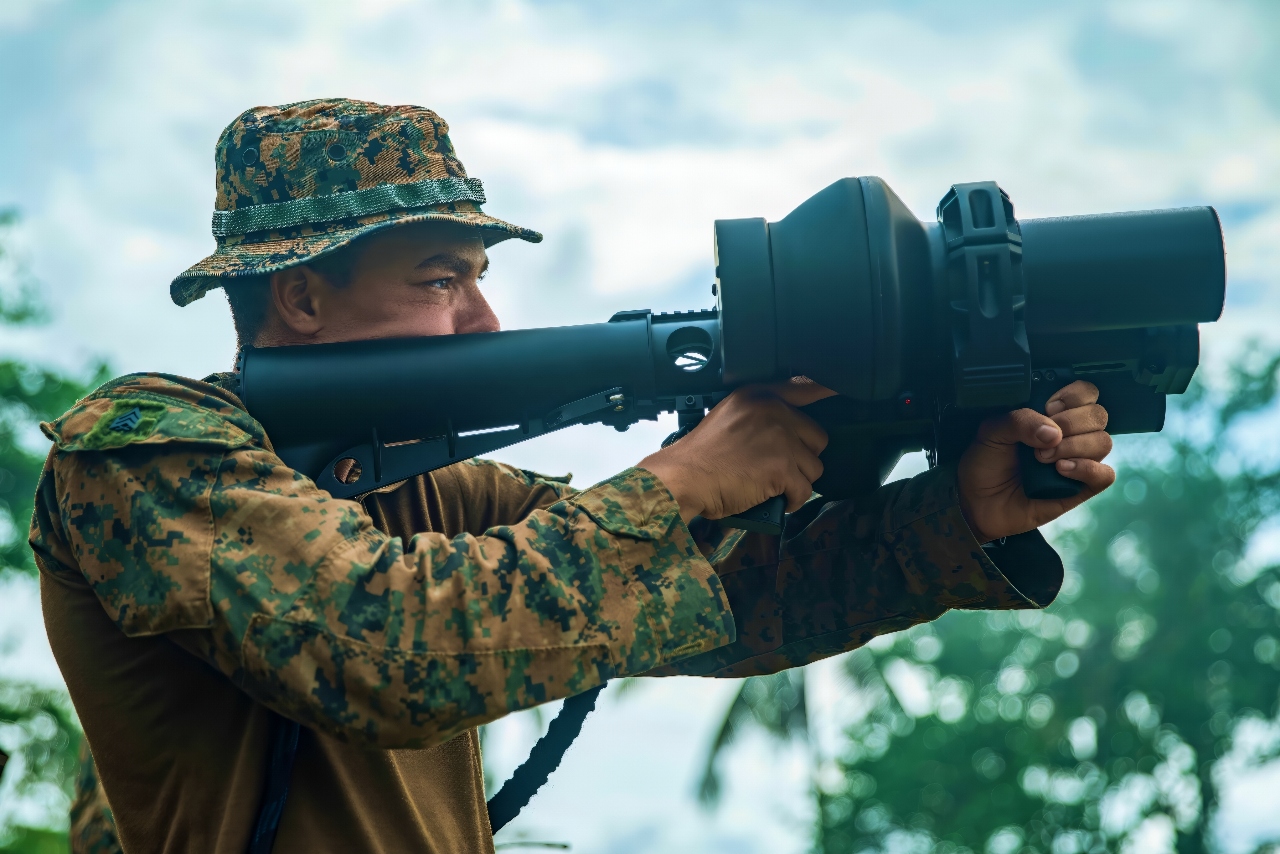
U.S. Marine Corps Sgt. Colin Clark, a mortarman assigned to Bravo Company, Battalion Landing Team 1/5, 15th Marine Expeditionary Unit, and a native of Texas, engages a target with a NightFighter S counter-unmanned aerial vehicle system during a demonstration for Philippine Marines assigned to Intelligence Company, 3rd Marine Brigade, as part of exercise KAMANDAG 8 at Tarumpitao Point, Palawan Province, Philippines, Oct. 17, 2024. KAMANDAG is an annual Philippine Marine Corps and U.S. Marine Corps-led exercise aimed at enhancing the Armed Forces of the Philippines’ defense and humanitarian capabilities by providing valuable training in combined operations with foreign militaries in the advancement of a Free and Open Indo-Pacific. This year marks the eighth iteration of this exercise and includes participants from the French Armed Forces, Royal Thai Marine Corps, and Indonesian Marine Corps; including continued participation from the Australian Defense Force, British Armed Forces, Japan Ground Self-Defense Force, and Republic of Korea Marine Corps. (U.S. Marine Corps photo by Sgt. Amelia Kang)
According to MEPCOM, the new policy also helps reduce unnecessary medical evaluations, enabling the service to focus its resources on applicants more likely to qualify for the military. “Instead of doing complete processing and then handing it to the waiver authority, we’ve created a trigger on the front end for these specific conditions that requires additional service sign-off, because all services agreed that they are unlikely to be waived on the back end,” Army Col. Megan McKinnon, the USMEPCOM command surgeon, said in the MEPCOM release. In other words, these measures not only save time and resources but also ensure that only qualified candidates are recruited.
Why the Armed Forces Need High Health Standards
The U.S. Armed Forces have always been particular about which conditions they can and cannot tolerate. Certain physical and mental conditions can have significant ramifications on the battlefield and, at worst, degrade a unit’s overall readiness. “The list of conditions isn’t surprising; the services always have to weigh the risks associated with either the presence of a condition or the lack of the ability to treat a condition on the battlefield when considering waivers, and they also have to weigh the potential costs associated with any given medical condition,” Kuzminski said.
The new policy, MEPCOM claims, is in line with a broader effort to increase the physical health of the U.S. Armed Services. For example, in July 2025, Secretary of Defense Pete Hegseth released a memo identifying 13 health conditions that automatically disqualify from military service, and another 13 that require special waivers from military officials.
Some of the waiverable conditions include ostomy, a history of kidney disease requiring dialysis, chronic liver failure, or a history of mood disorders like schizophrenia, delusions, or unspecified psychoses.
These measures are intended not only to ensure the mission readiness of the armed forces but also to ensure the health and safety of the soldiers on the battlefield.
The new guidelines imposed by MEPCOM do not match Hegseth’s memo one-for-one, but they do address similar issues, like heart conditions or a prior history of suicide attempts.
In the past, recruits who showed one of the 28 medical conditions would undergo medical and physical checks before being inevitably discharged. With the new policy in place, medically unfit candidates will now be disqualified much earlier in the process, thus saving time and resources.
The policy also comes as MEPCOM implements new AI prescreening tools to screen the health and physical records of new recruits.
About the Author: Isaac Seitz
Isaac Seitz, a Defense Columnist, graduated from Patrick Henry College’s Strategic Intelligence and National Security program. He has also studied Russian at Middlebury Language Schools and has worked as an intelligence Analyst in the private sector.


