

The U.S. Army and Philippine forces carried out a live-fire Tomahawk cruise missile strike from a ground-based Typhon launcher in the Philippines early on May 5, 2026. The missile was launched at approximately 12:20 a.m. local time from near Tacloban in the central Philippines and struck a target roughly 600 kilometers away at Fort Magsaysay in Nueva Ecija about an hour later, according to Philippine military officials.
The launch, conducted by the U.S. Army Pacific’s 1st Multi-Domain Task Force alongside the Philippine Army Artillery Regiment, was part of the annual Balikatan exercises involving around 17,000 troops from multiple allied nations. The strike was designed to support a simulated ground maneuver operation as long-range precision weapons become increasingly critical for regional defense planning.
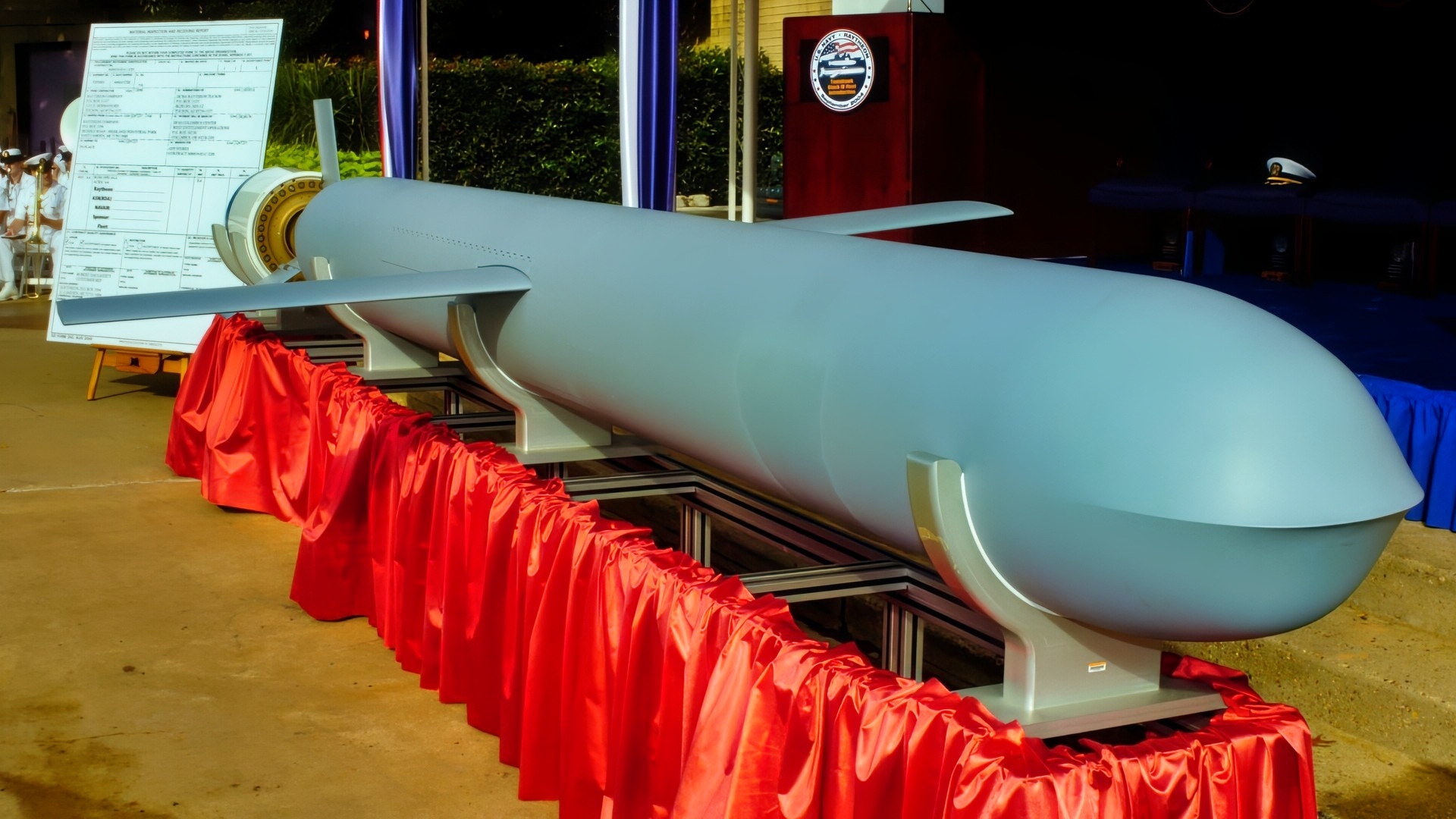
Tomahawk Block IV Missile. Image Credit: Creative Commons.
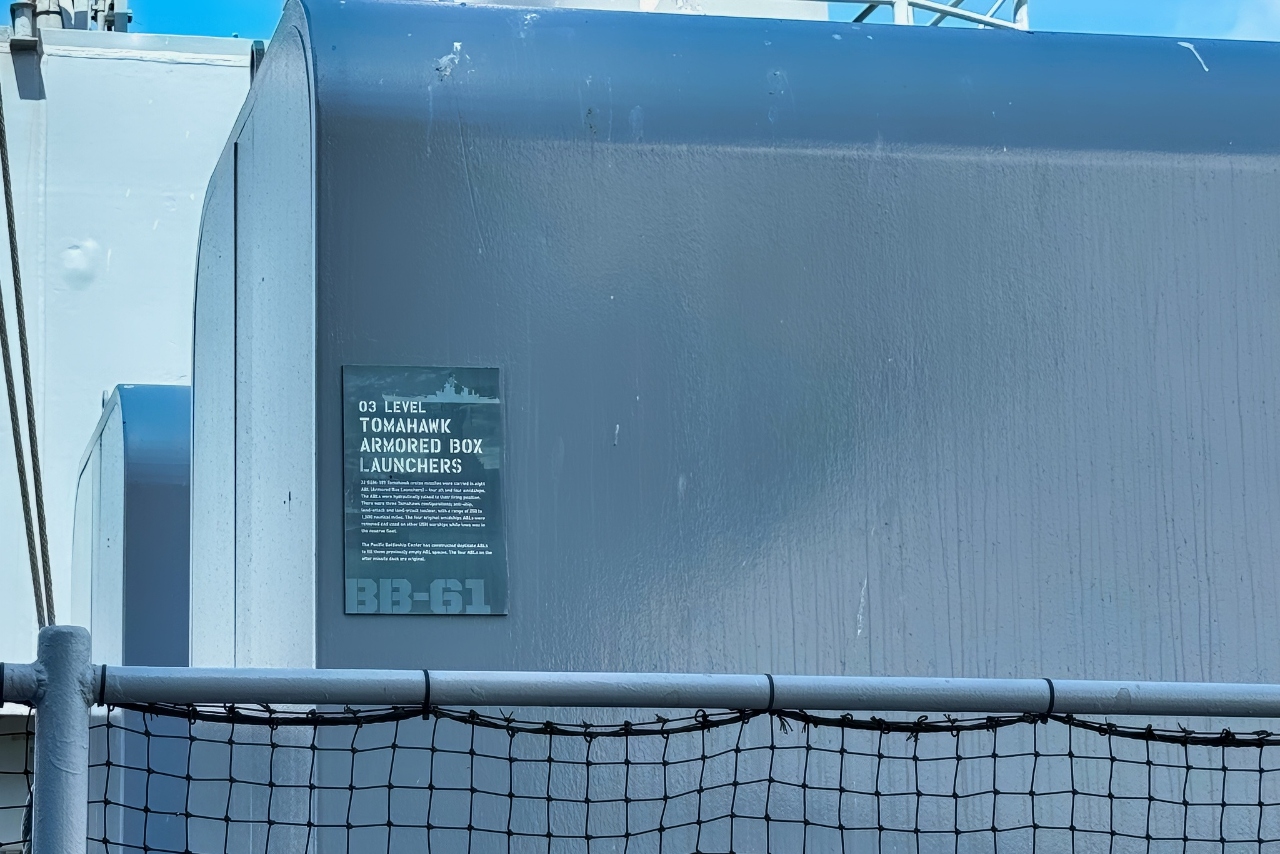
USS Iowa Tomahawk Box. National Security Journal Photo.
Tomahawk Firing: What Happened During the Launch
The strike itself was executed as part of a live operational scenario rather than a pre-scripted demonstration, meaning the launch was contingent on evolving conditions within the exercise and authorized only when commanders determined it was operationally necessary to support the simulated maneuvers.
Philippine Marine Col. Dennis Hernandez told reporters that the Tomahawk missile had traveled from Tacloban to Fort Magsaysay and struck with great accuracy. The missile reportedly took about an hour to reach its target.
“The missile was very precise. Let’s say if you want to hit a window from a far distance, it lands directly into that window,” Hernandez explained. “This skimming missile traveled all the way from Tacloban to the target in Laur.”
The launch was not guaranteed to take place, with the strike being designed by exercise planners to include a scenario-based decision-making process. Hernandez said the missile was ultimately fired to support ground troops participating in a night maneuver exercise led by the U.S. Army’s 25th Infantry Division.
The event was also preceded by public safety notices issued by the Philippine Coast Guard warning of missile-related activity in waters off Eastern Visayas from May 5 to May 7.
The launch was part of the annual Balikatan exercise, a longstanding U.S.-Philippines joint drill. Balikatan, which means “shoulder-to-shoulder” in Tagalog, began in 1991 and initially focused on small-scale infantry and cooperation and disaster relief.
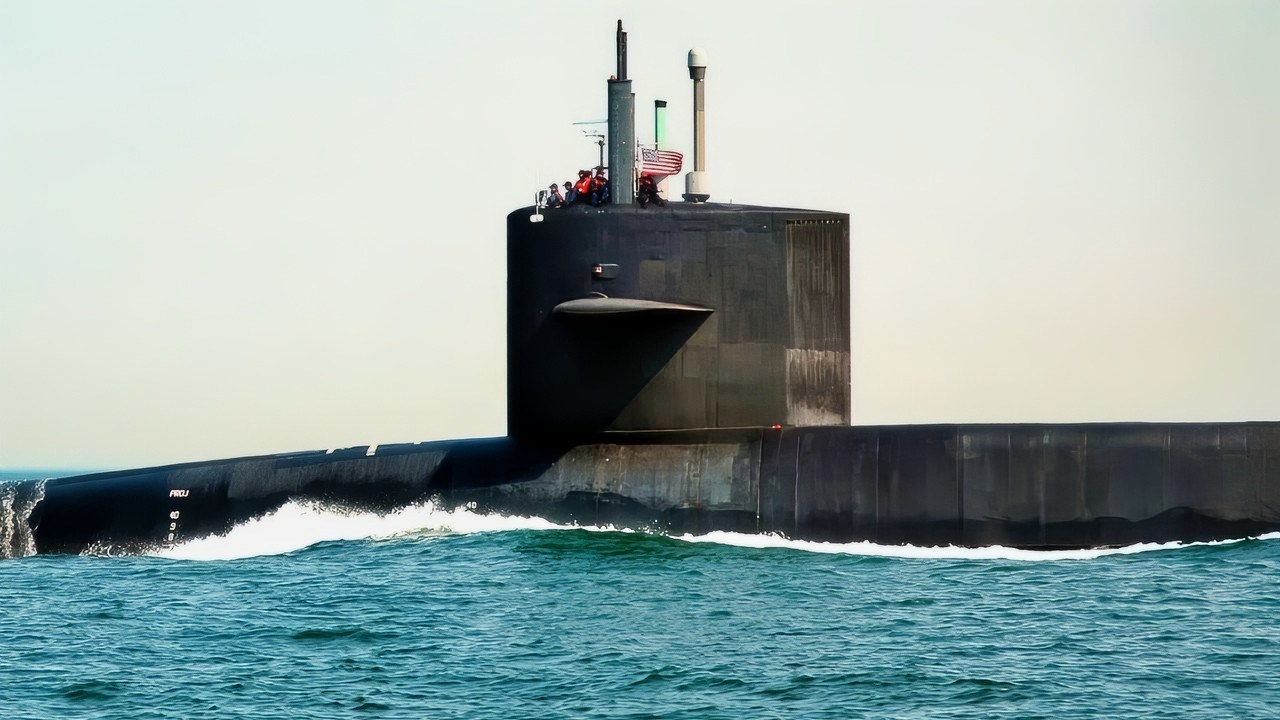
(March 31, 2006) – The guided missile submarine USS Florida (SSGN 728) conducts sea trials off the coast of Virginia. Florida will be delivered to the Fleet in April, and a Return To Service ceremony is scheduled for May 25 in Mayport, Fla. As the second of four SSBN submarines to be converted to SSGN, this nuclear-powered submarine will have the capability to: launch up to 154 Tomahawk cruise missiles; conduct sustained special warfare operations with up to 102 Special Operations Forces (SOF) personnel for short durations or 66 SOF personnel for sustained operations; and provide approximately 70 percent operational availability forward deployed in support of combatant mission requirements. U.S. Navy photo by Chief Journalist (SW/AW) Dave Fliesen.
Over time, it has evolved into a multi-domain exercise, incorporating air, sea, and land operations, as well as cyberattacks. In recent years, the scope has also broadened to include allies such as Japan and Australia and has increasingly featured advanced weapon systems such as the Typhon launcher.
Expanding Allied Integration Through Balikatan
Balikatan is the annual flagship military exercise between the United States and the Philippines, first established in 1991 under the framework of the two countries’ Mutual Defense Treaty.
The exercise was originally intended to be a bilateral training event focused on infantry coordination, disaster response, and basic interoperability. The drills were scaled back following the closure of major U.S. bases in the Philippines in the early 1990s, but resumed and expanded in the early 2000s as part of renewed joint counterterrorism operations.
In recent years, Balikatan has grown significantly in both size and scope, evolving into a large-scale, multi-domain exercise designed to simulate high-end conflict scenarios in the Indo-Pacific.
The 2026 iteration involves around 17,000 troops and includes participation from Japan, Australia, France, Canada, and New Zealand. The exercises now routinely incorporate live-fire missile operations, amphibious landings, air and maritime defense drills, and increasingly complex joint command structures, aligning more closely with how U.S. and allied forces expect to operate in a potential conflict in the region.
How Will China React?
Beijing has repeatedly described the U.S. Army’s Typhon system as a “strategic offensive weapon” and urged Manila to remove it, warning that its presence risks triggering an arms race in Southeast Asia. In 2025, China urged the Philippines to take action and accused the country of breaking its “promises” by hosting the missile system.
China’s concern stems from the weapon’s range and positioning. From northern Luzon, Typhoon batteries armed with Tomahawk missiles can strike targets across the South China Sea and potentially into mainland China, while its SM-6 interceptors can engage air or maritime targets at distances of more than 200 kilometers.
That effectively places large portions of China’s southern military infrastructure within reach of a mobile, land-based U.S. system for the first time since the end of the Cold War-era missile restrictions.
China has already responded to the Balikatan 2026 drills with its own military activity.
The People’s Liberation Army conducted naval and air “combat readiness patrols” near the disputed Scarborough Shoal during the exercise, describing its action as necessary to safeguard its own territorial claims.
About the Author: Jack Buckby
Jack Buckby is a British researcher and analyst specializing in defense and national security, based in New York. His work focuses on military capability, procurement, and strategic competition, producing and editing analysis for policy and defense audiences. He brings extensive editorial experience, with a career output spanning over 1,000 articles at 19FortyFive and National Security Journal, and has previously authored books and papers on extremism and deradicalization.


