
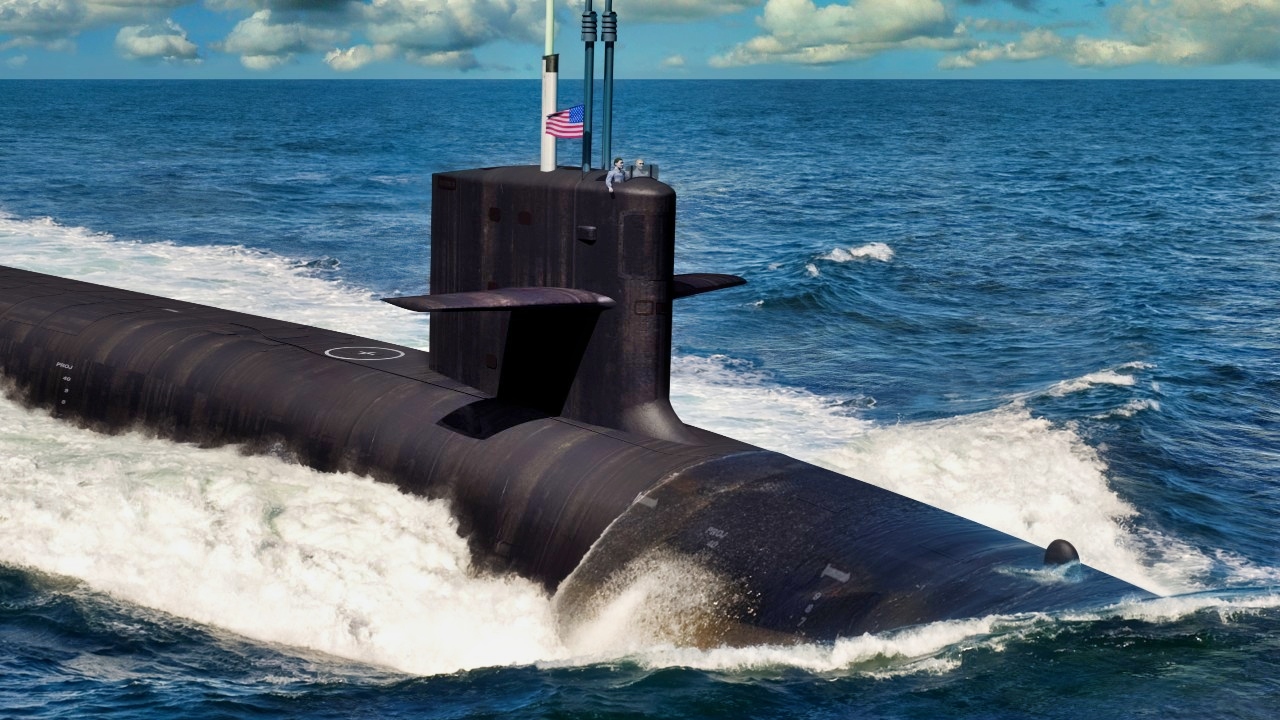
Summary and Key Points: The U.S. Navy’s Columbia-class ballistic missile submarines are designed to replace the aging Ohio-class and sustain America’s most survivable nuclear deterrent for decades.
-Twelve boats are planned, each carrying 16 Trident II missiles and powered by a life-of-ship reactor meant to avoid midlife refueling overhauls.
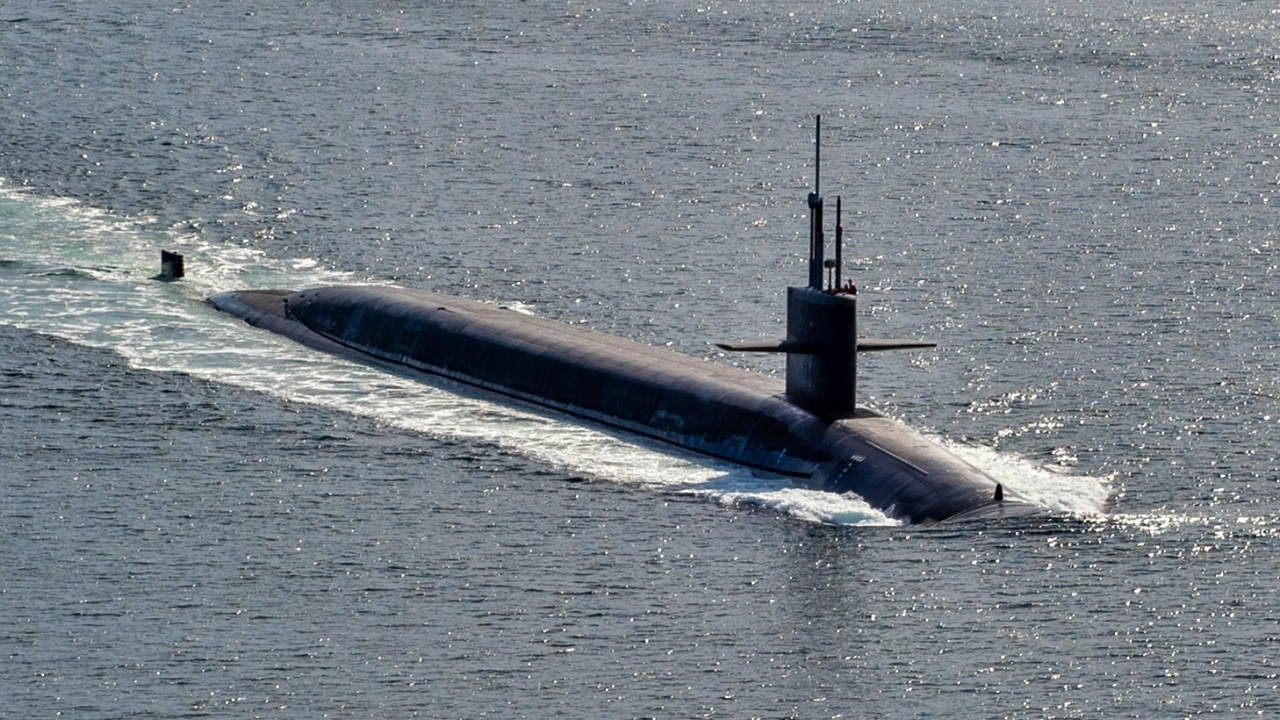
The Ohio-class ballistic-missile submarine USS Maine (SSBN 741) transits the Puget Sound during routine operations, March 18, 2025. Commander, Submarine Group (SUBGRU) 9, exercises administrative control authority for assigned submarine commands and units in the Pacific Northwest providing oversight for shipboard training, personnel, supply and material readiness of SSBNs and their crews. SUBGRU-9 is also responsible for nuclear submarines undergoing conversion or overhaul at Puget Sound Naval Shipyard in Bremerton. (U.S. Navy photo by Mass Communication Specialist 1st Class Ryan Riley)
-But the program is already under strain as construction complexity, workforce limits, and modular-build challenges push schedules to the right.
-With the lead boat now expected later than planned and Ohio retirements looming, the transition window is tightening—raising concerns about sustaining continuous at-sea deterrence.
Columbia-Class: The Navy’s Most Important Submarine Program Has a Schedule Problem
The United States Navy’s Columbia-class ballistic missile submarine program is central to maintaining the country’s nuclear deterrent, but it is experiencing problems: from construction challenges to strategic issues, the Columbia-class is under pressure even before it is fielded as a full fleet.
Designed to replace the aging Ohio-class ballistic missile submarines (SSBNs), the Columbia class is intended to ensure the credibility of America’s sea-based nuclear deterrent well into the mid-21st century. The first of the class, USS District of Columbia (SSBN-826), is under construction with delivery now expected well after the original schedule, while follow-on boats are still in construction across multiple shipyards.
What’s more, ensuring the submarine force transitions smoothly from Ohio to Columbia without a gap will be critical for maintaining continuous at-sea deterrence at a time when global nuclear competition is intensifying – and especially amid tensions with Russia and China and the coming expiration of major arms control treaties like New START.
Meet the Columbia-Class
The Columbia-class is a new generation of U.S. Navy nuclear-powered ballistic missile submarines, intended to form the next sea-based leg of the U.S. nuclear triad. Twelve Columbia-class boats are planned, replacing 14 Ohio-class submarines that began entering service in the early 1980s.
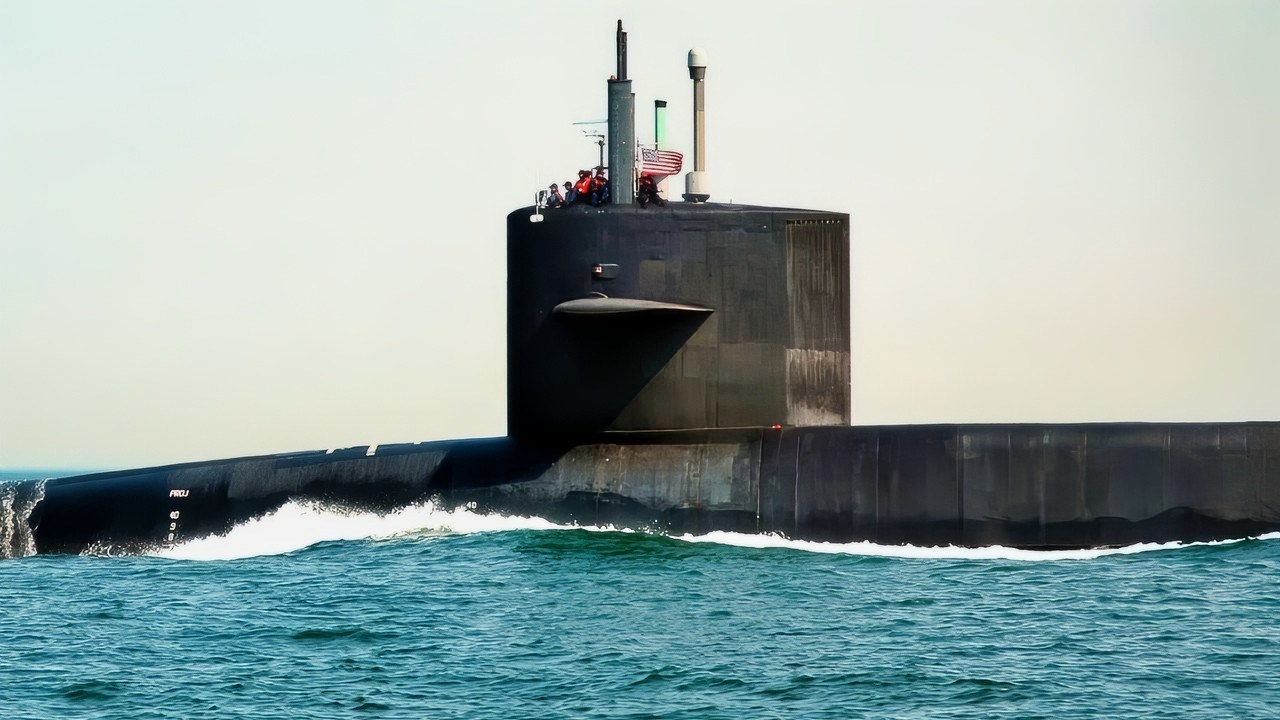
(March 31, 2006) – The guided missile submarine USS Florida (SSGN 728) conducts sea trials off the coast of Virginia. Florida will be delivered to the Fleet in April, and a Return To Service ceremony is scheduled for May 25 in Mayport, Fla. As the second of four SSBN submarines to be converted to SSGN, this nuclear-powered submarine will have the capability to: launch up to 154 Tomahawk cruise missiles; conduct sustained special warfare operations with up to 102 Special Operations Forces (SOF) personnel for short durations or 66 SOF personnel for sustained operations; and provide approximately 70 percent operational availability forward deployed in support of combatant mission requirements. U.S. Navy photo by Chief Journalist (SW/AW) Dave Fliesen.
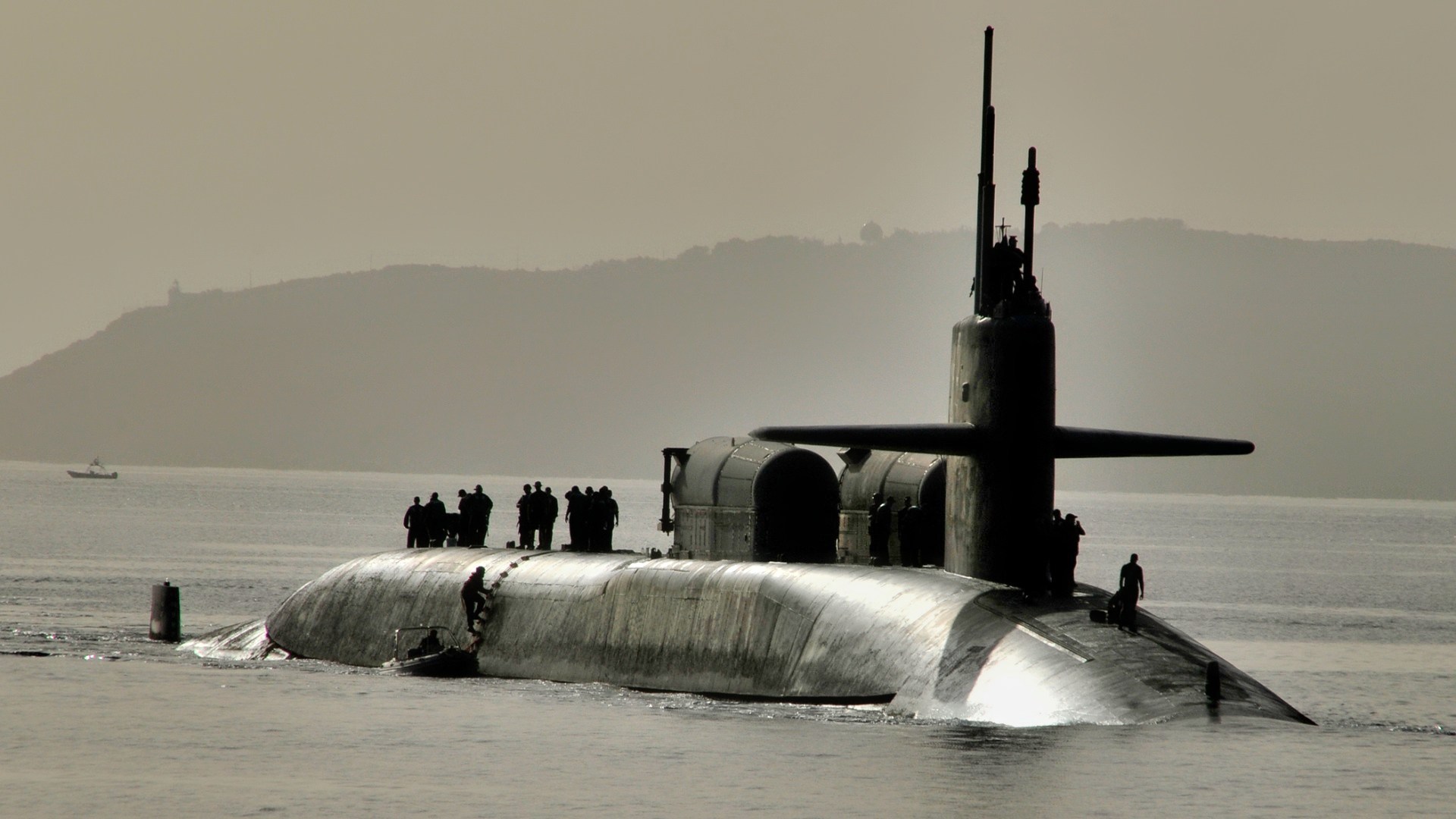
The guided missile submarine USS Florida (SSGN 728) arrives in Souda Bay, Greece, May 21, 2013, for a scheduled port visit. The Florida was underway in the U.S. 6th Fleet area of responsibility conducting maritime security operations and theater security cooperation efforts. (U.S. Navy photo by Paul Farley/Released)
Unlike the Ohio-class design, which requires a midlife nuclear refueling overhaul, Columbia-class submarines feature a “life-of-ship” nuclear reactor core that will function without refueling for the entirety of the vessel’s roughly 40-year planned service life.
Each of the new submarines will be approximately 560 feet long with a submerged displacement of more than 20,000 tons, making it the largest submarine class ever built for the U.S. Navy.
What an SSBN Is, and Why It Matters
Ballistic missile submarines are designated SSBNs because they combine nuclear propulsion (S) with ballistic missile capability (B) and are designed for strategic nuclear deterrence (N). An SSBN’s primary role is to conduct extended deterrent patrols, staying hidden at sea and ready to launch submarine-launched ballistic missiles (SLBMs) if necessary, thereby assuring a secure second-strike capability.

The Ohio-class ballistic-missile submarine USS Maine (SSBN 741) begins a dive into the Strait of Juan de Fuca off the Washington Coast, March 18, 2025, during routine operations. Special units within the Coast Guard are tasked with the protection of U.S. Naval submarines while surfaced and transiting U.S. territorial waters to and from their patrol stations. (U.S. Coast Guard photo by Petty Officer 1st Class Steve Strohmaier)
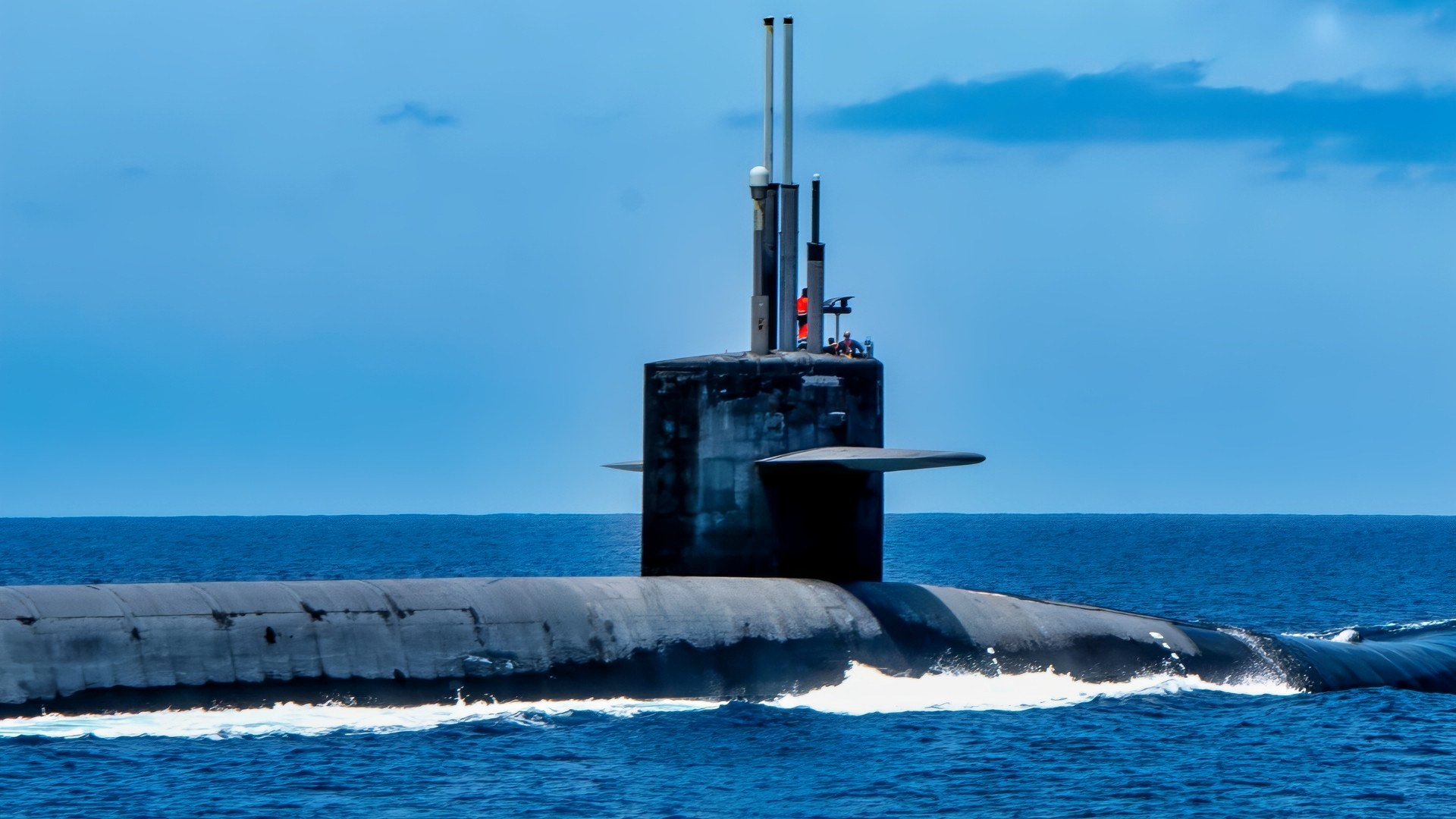
(July 29, 2025) – A U.S. Air Force A10C Thunderbolt II flies over the Ohio-class ballistic missile submarine USS Kentucky (SSBN 737) in the Pacific Ocean, July 29, 2025. The armed airborne escort exercise is designed to increase and demonstrate the Joint Force’s capability to protect strategic assets like Kentucky. Submarine Group (SUBGRU) 9, exercises administrative and operational control authority for assigned submarine commands and units in the Pacific Northwest providing oversight for shipboard training, personnel, supply and material readiness of submarines and their crews. SUBGRU-9 is also responsible for nuclear submarines undergoing conversion or overhaul at Puget Sound Naval Shipyard in Bremerton, Washington. (U.S. Navy Photo by Lt. Zachary Anderson)
The U.S. Navy’s SSBNs are a core component of the U.S. nuclear triad, working alongside land-based intercontinental ballistic missile systems and strategic bombers. SSBNs are considered the most survivable leg of the deterrent force.
Once they’re at sea, the Columbia-class SSBNs will carry 16 Trident II (UGM-133) submarine-launched ballistic missiles, each capable of delivering multiple warheads with global reach. These missiles are both stealthy and unpredictable, meaning adversaries cannot easily locate or target them.
Why the Columbia Class Matters
The Columbia class exists because the service life of the Ohio-class submarines is almost up. The Columbia class was officially designated in 2016 and has since proceeded through design and early construction phases, with General Dynamics Electric Boat serving as the prime contractor and Newport News Shipbuilding as a major subcontractor.
The class’s design is built on lessons learned from earlier programs. It retains a proven ballistic missile system – the Trident II SLBM – while integrating modern stealth features, improved acoustic performance, state-of-the-art sensors, and a more advanced propulsion plant.
The elimination of midlife reactor refueling is a major advantage, reducing lifecycle maintenance risks (where things can easily go wrong) and allowing for a smaller, more streamlined force of 12 submarines. Columbia-class boats will also carry defensive torpedoes and new electronic systems designed to improve survivability against evolving undersea threats.
Where the Program Stands
Construction of the first Columbia-class submarine, USS District of Columbia, began in 2021. Recent shipyard progress reports indicate that District of Columbia is now more than 60 percent complete, with major structural modules beginning to be joined as part of final assembly at General Dynamics Electric Boat facilities.
Nonetheless, the program’s schedule has shifted: delivery of the lead boat is now projected for 2029, roughly 17 months later than previously planned, with initial deterrent patrols expected by 2031.
The second and third submarines, USS Wisconsin (SSBN-827) and USS Groton (SSBN-828), are under construction or soon to begin construction, with delivery dates planned in the early 2030s. Congress has continued to prioritize funding for the program, including multi-billion-dollar appropriations to support advance procurement.
Despite progress, oversight bodies are warning that the program is at risk of failing to deliver on its promises.
The Government Accountability Office (GAO) has already raised concerns about cost growth and schedule slippage, tying the problems to America’s increasingly problematic industrial base, ranging from workforce constraints to delays in complex modular construction. Without better schedule discipline – which is not necessarily controllable – further slippage could pose additional risks as Ohio-class boats prepare to be retired, the first of which is expected in 2027.
The U.S. Navy plans for the Columbia-class ballistic missile submarine fleet to reach full operational capacity in the early 2040s, assuming the schedule doesn’t slip further.
About the Author:
Jack Buckby is a British researcher and analyst specialising in defence and national security, based in New York. His work focuses on military capability, procurement, and strategic competition, producing and editing analysis for policy and defence audiences. He brings extensive editorial experience, with a career output spanning over 1,000 articles at 19FortyFive and National Security Journal, and has previously authored books and papers on extremism and deradicalisation.


