


Key Points and Summary – The U.S. Navy’s Arleigh Burke-class destroyers are evolving again, this time in the electromagnetic spectrum.
-The new AN/SLQ-32(V)7 SEWIP Block III suite gives Flight III and upgraded Flight IIA ships 360-degree AESA-based electronic attack, letting them detect and “soft-kill” incoming threats without expending missiles.
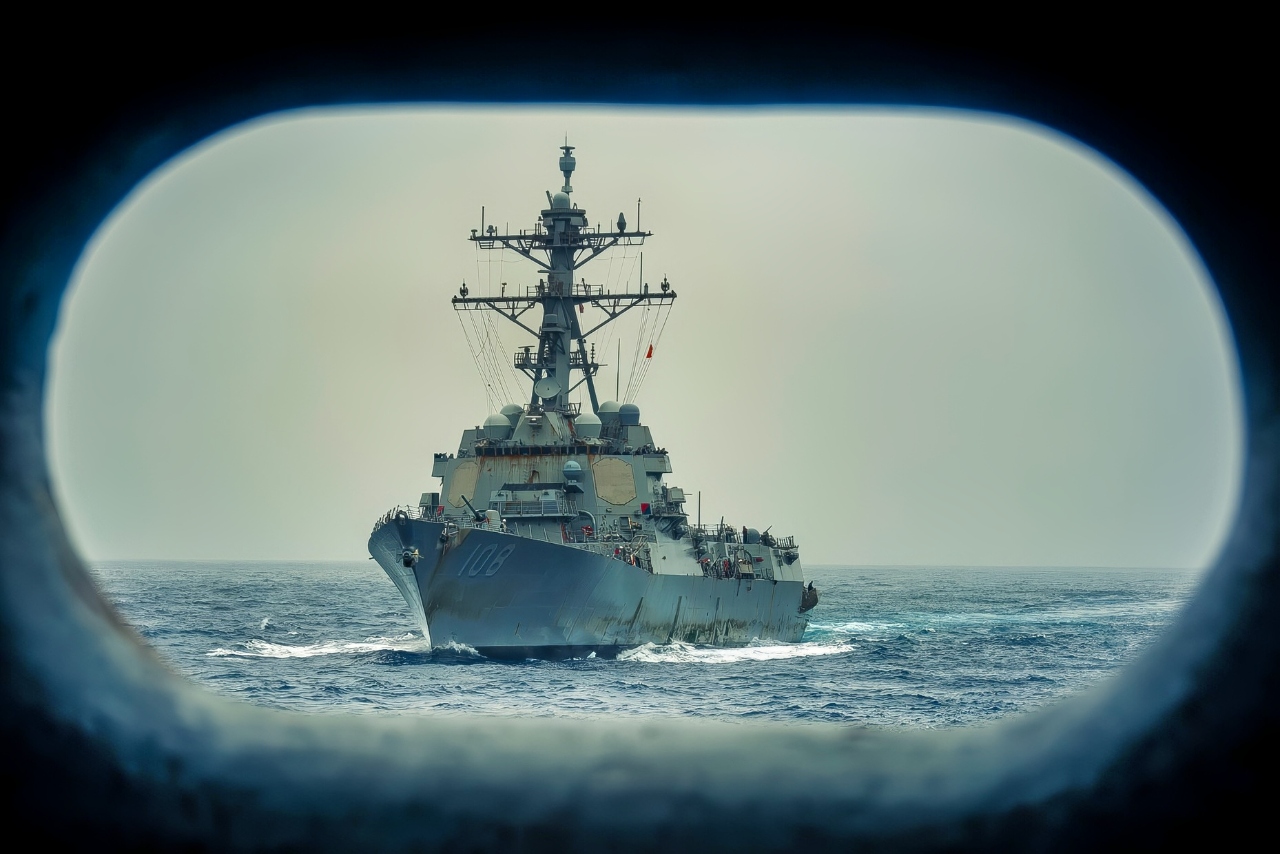
(August 1, 2025) The Arleigh Burke-class guided-missile destroyer USS Wayne E. Meyer (DDG 108) approaches the Nimitz-class aircraft carrier USS Nimitz (CVN 68) for a replenishment-at-sea in the U.S. Central Command area of responsibility. (Official U.S. Navy photo)
-Integrated with SPY-6, Nulka, Aegis and other defenses, SEWIP Block III acts as an adaptable, software-defined shield against modern anti-ship weapons.
-Paired with other upgrades—from RAM launchers and directed-energy weapons to future hypersonic missiles—the Flight III Burke becomes less a 1990s destroyer and more a modular, networked combat node built for the next era of naval warfare.
Arleigh Burke-class Destroyers in 4 Words: Backbone of U.S. Navy
The Arleigh Burke-class destroyers have formed the backbone of the U.S. surface fleet since the 1990s.
Equipped with 90 vertical launch systems (depending on the variant) and equipped with a wide array of other weapons, the Arleigh Burke can serve in both offensive and defensive roles as part of a larger carrier strike group.
The latest variants of the ship are now receiving a significant improvement.
The newest Flight III Arleigh Burke Destroyers are receiving new electronic systems that massively improve their electronic warfare capabilities via the AN/SLQ-32(V)7 Surface Electronic Warfare Improvement Program Block III, or SEWIP Block III.
The Arleigh Burke’s Newest Upgrades
The SEWIP program was conceived to enhance the survivability and electronic warfare capabilities of the Arleigh Burke-class destroyers against threats such as anti-ship missiles.
The program is delivered in three blocks: Block I focuses on displays and processing upgrades to increase user interface and usability. Block II introduces several surveillance systems to enhance the crew’s situational awareness and identify potential threats to the ship.
Block III introduces a soft-kill protection system as a non-kinetic defense against missiles or other hostile radio frequencies targeting the ship.
The AN/SLQ-32 is the centerpiece of the SEWIP Block III upgrade. The Block III uses multiple AESA radars (about 16 per ship) to provide full 360-degree coverage around the vessel and detect incoming radar signals from missiles or other threats.

The Arleigh Burke-class guided-missile destroyer USS Delbert D. Black (DDG 119) participates in a photo exercise alongside the U.S. Coast Guard and the Royal Canadian Navy during Operation NANOOK (OP NANOOK), Aug. 18, 2024. OP NANOOK is the Canadian Armed Forces’ annual series of Arctic exercises designed to enhance defense capabilities, ensure the security of northern regions, and improve interoperability with Allied forces. Black participated in the operation alongside the U.S. Coast Guard and Canadian and Danish Allies to bolster Arctic readiness and fulfill each nation’s defense commitments. (U.S. Navy Photo by Mass Communication Specialist 3rd Class Rylin Paul)
The system then “fires” a frequency which disrupts the hostile target.
The system can neutralize incoming missiles without requiring a kinetic interceptor, giving the Navy a weapon with unlimited ammo against incoming threats.
Countering the Threats of Today and Tomorrow
According to Northrop Grumman, the designer of the SEWIP Block III, the system is fully integrated with Arleigh Burke’s numerous other defense systems as part of a comprehensive soft-kill coordinator.
This grants the ship’s captain the flexibility to use whatever protection system is most appropriate for the situation.
Current Arleigh Burke destroyers are equipped with several defense systems like the SPY-6 radar, Nulka decoys, and other defensive measures which are integrated into the broader Aegis Ballistic Missile Defense System.
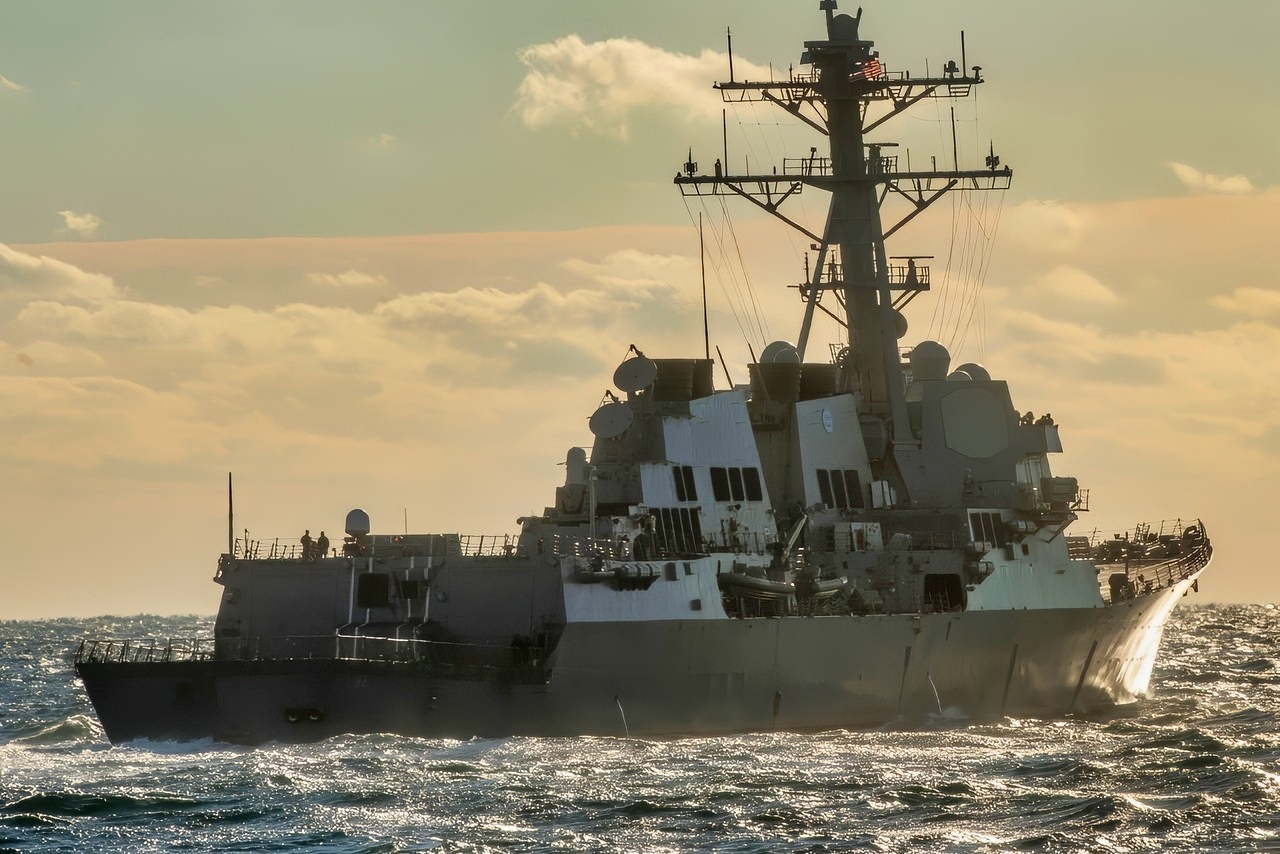
The Arleigh Burke-class guided-missile destroyer USS Lassen (DDG 82) moves into position for an underway exercise with the British Royal Navy aircraft carrier HMS Queen Elizabeth (R08) and Pre-Commissioning Unit (PCU) Michael Monsoor (DDG 1001). The future USS Michael Monsoor is the second ship in the Zumwalt-class of guided-missile destroyers. (Photo by Mass Communication Specialist 1st Class John Philip Wagner, Jr./Released)
The SEWIP Block III was reportedly designed to counter the threats of today and tomorrow.
The system was built with open architecture in mind, enabling continuous upgrades in the future.
In an interview with The War Zone, Mike Meaney, Northrop Grumman’s Vice President in charge of the SEWIP Block III program commented on the adaptability of the system to meet future needs down the line. “We applied an open architecture to allow the system to be upgraded and to support technology insertions in the future. We also went with a software-defined, hardware-enabled type architecture. That allows us to rapidly respond as new threats come over the horizon in the next couple of decades, and we can address them by simply upgrading the software in our system.”
Other Proposed Upgrades
The SEWIP Block III was first successfully integrated on an Arleigh Burke-class destroyer in November of 2023. It was installed on the USS Pinckney (DDG 91), a Flight IIA variant of the destroyer.
The ship was spotted leaving San Diego, the new installations adding a visibly larger structure on the sides of the vessel. It is planned that about 20 Flight IIA destroyers undergo modernization to add the SEWIP Block III electronic attack subsystem.
The SEWIP Block III is just one of many upgrades planned for the Arleigh Burke-class. Other upgrades include replacing the old Phalanx CIWS with RIM-116 Rolling Airframe Missiles to improve short-range air defense capabilities.
Directed Energy Weapons have also been integrated on six destroyers, and other guns have been added to increase protection against unmanned surface threats (USVs).
In the future, the destroyers are expected to field the Common Hypersonic Glide Body (C-HGB) missile, which would require new VLSs to accommodate the larger missile.
Arleigh Burke Flight III
Canceled initially back in the 90s, the Flight III is the newest variant of the Arleigh Burke-class destroyer.
The original design of the Block III back in 1988 was intended to include the AN/SQQ-89I Block III anti-submarine warfare system.
Still, it was added to other variants after it was cancelled. The new variant was approved after the CG(X), originally intended as the replacement for the Arleigh Burke, was cancelled.
The Flight III features the AN/SPY-6(V)1 Air and Missile Defense Radar (AMDR) and the Aegis Baseline 10 Combat System. The ship also includes upgrades to electrical power and cooling capacity, improving its energy efficiency and longevity.
The first Block III took to the waves in 2022 and finished its sea trials in December of that year. Currently, three ships have been launched and are undergoing various trials. The Navy has an order for 24 ships of this class, but it is expected that an additional 42 Flight IIIs will be procured as part of a broader procurement of 117 additional Arleigh Burke-class ships.
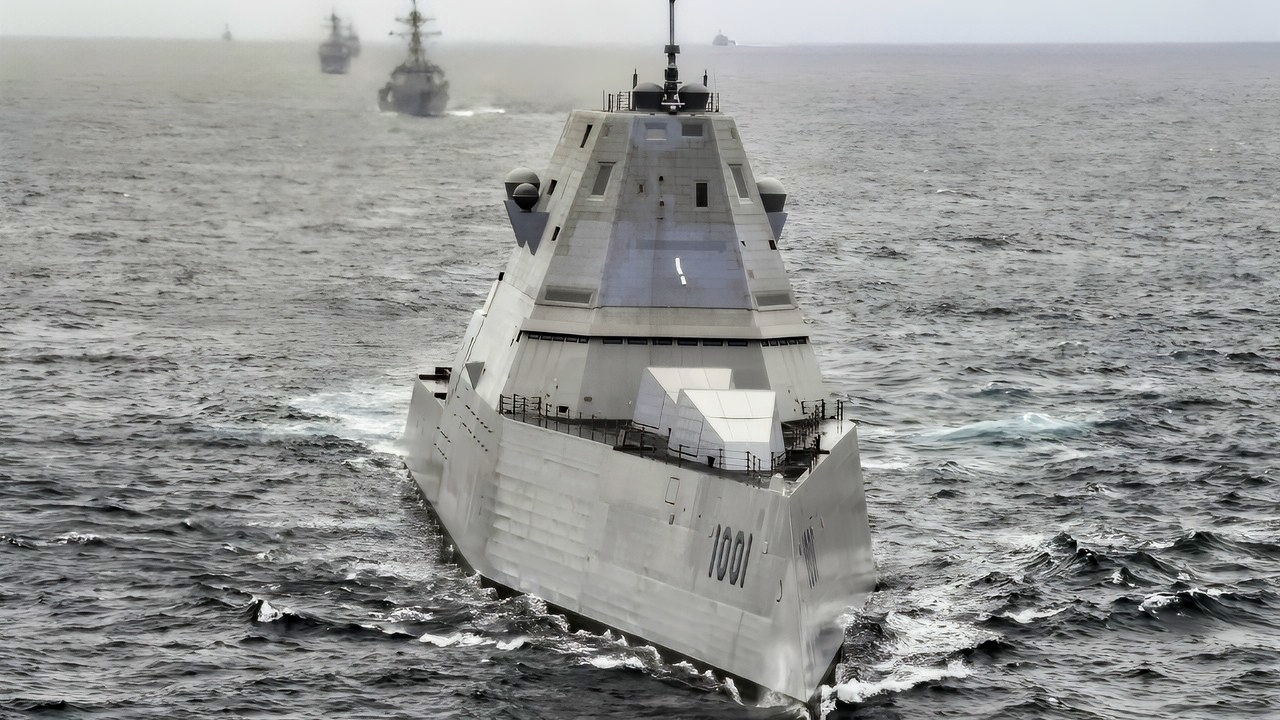
(April 21, 2021) The Zumwalt-class guided-missile destroyer USS Michael Monsoor (DDG 1001) leads a formation including the Arleigh Burke-class guided missile destroyers USS Fitzgerald (DDG 62), USS Spruance (DDG 111), USS Pinckney (91), and USS Kidd (DDG 100), and the Independence-variant littoral combat ship USS Coronado (LCS 4) during U.S. Pacific Fleet’s Unmanned Systems Integrated Battle Problem (UxS IBP) 21, April 21. UxS IBP 21 integrates manned and unmanned capabilities into challenging operational scenarios to generate warfighting advantages. (U.S. Navy photo by Chief Mass Communication Specialist Shannon Renfroe)
The Arleigh Burke-class was supposed to be replaced by the Zumwalt-class, but the project was cancelled due to cost overruns.
Now the DD(X) is the next attempt to replace the long-serving destroyers.
About the Author: Isaac Seitz
Isaac Seitz, a Defense Columnist, graduated from Patrick Henry College’s Strategic Intelligence and National Security program. He has also studied Russian at Middlebury Language Schools and has worked as an intelligence Analyst in the private sector.
More Military
The U.S. Navy’s Constellation-Class Frigate Crisis Keeps Getting Worse
China’s New H-20 Stealth Bomber Might Have a 10,000 km Range
Even Mach 3 Speeds Could Not Save the Titanium SR-71 Blackbird
The U.S. Navy’s New DDG(X) Destroyer Is Sailing Into Stormy Waters


