
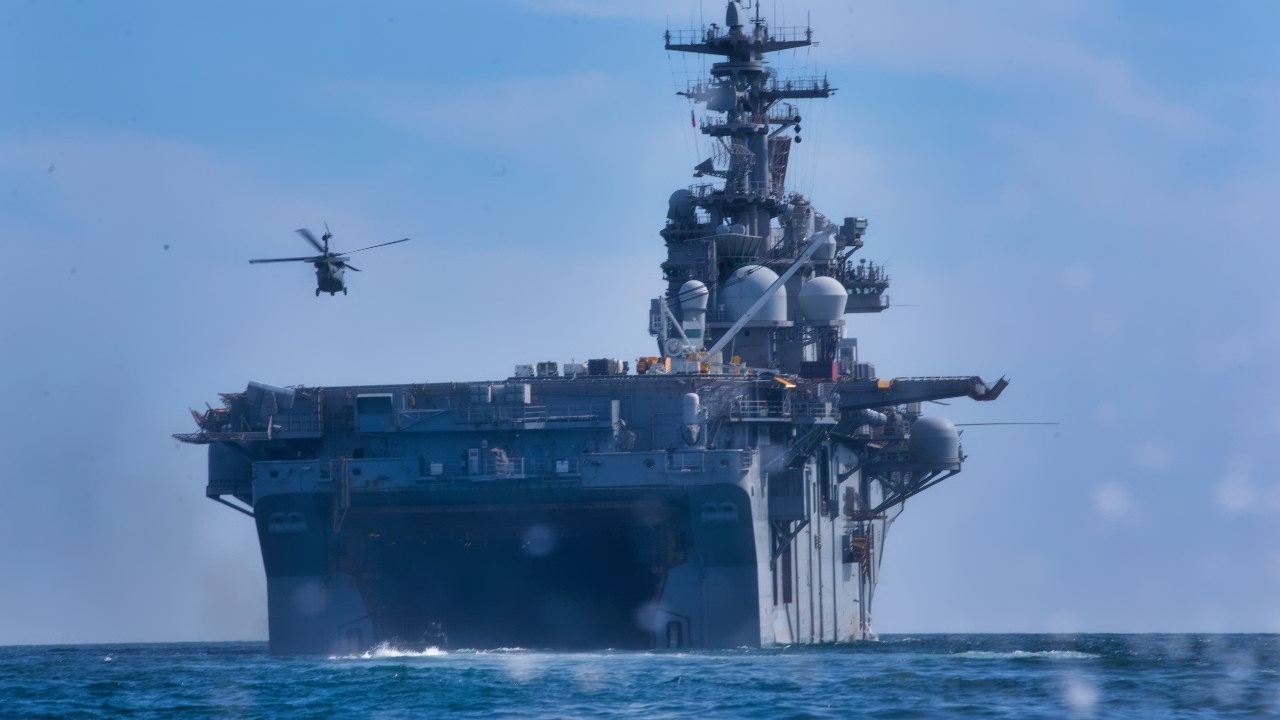
Key Points and Summary – The 2020 fire that destroyed USS Bonhomme Richard exposed a chain of preventable failures: disabled suppression systems, missing hoses, poor housekeeping, and weak command oversight.
-In fact, the Navy’s greatest enemy indeed might be fire. But how does one stop such an incident from happening again?

USS Ford Aircraft Carrier U.S. Navy Photo
-The blaze gutted the $2 billion ship, injured dozens, and triggered reprimands up and down the chain of command.
-In response, the Navy rolled out stricter roving watches, tougher accountability, and more fire-safety drills—even using Bonhomme Richard as a case study at the Naval Academy.
-Yet GAO reviews show uneven compliance and no standardized way to share lessons learned, underscoring a sobering reality: even in peacetime, U.S. warships remain vulnerable pierside.
Did the Navy Learn Its Lesson from Bonhomme Richard?
On March 11, 2025, midshipmen in the U.S. Naval Academy woke to the sound of an alarm for a simulated fire in Bancroft Hall’s dormitory wing.
The exercise was designed to reflect what happened during the 2020 blaze that destroyed the amphibious assault ship USS Bonhomme Richard. Some five years after the ship was lost to the blaze, the Naval Academy treated the incident as a textbook case of failure of fire readiness and safety protocols.
That recent drill was just one of several efforts in recent years to encourage reforms designed to address mistakes that have caused billions of dollars of damage to American warships and military hardware – and the story itself is a fascinating look at how things can really go wrong.
What Happened to the Bonhomme Richard?
On July 12, 2020, the Bonhomme Richard – a Wasp-class amphibious assault ship – was moored at Naval Base San Diego and undergoing maintenance when a fire broke out on its lower vehicle deck.
Over the next five days, the flames continued to spread through 11 of the ship’s 14 decks, and the results were disastrous.
The fire warped steel on the flight deck, caused the forward mast to collapse, and rendered the vessel completely beyond repair.
At least 63 sailors and civilians were injured, too, and sent to the hospital for everything from smoke inhalation to heat exhaustion.
In the investigations that followed, the Navy discovered a series of failures that all contributed to the disaster.

USS Ronald Reagan (CVN 76), USS Kitty Hawk (CV 63), and USS Abraham Lincoln (CVN 72) cruise side-by-side in the Philippine Sea June 18, 2006, during exercise Valiant Shield 2006. The joint exercise consists of 28 naval vessels, more than 300 aircraft, and approximately 20,000 service members from the Navy, Army, Air Force, Marine Corps and Coast Guard. (U.S. Navy photo by Chief Photographer’s Mate Spike Call) (Released)
Among them were missing fire hoses, disabled suppression systems, and combustible items that had been poorly stored – including cardboard, wooden crates, and lithium batteries.
Investigators determined that the fire started in what’s known as the “lower v” of the ship, which typically stored Marine Corps tanks and vehicles.
But during the maintenance period, this part of the ship was being used to store virtually anything that needed to be moved out of the way.
The investigation concluded that the fire was likely to have been caused by a junior sailor – potentially arson – but that the real failure was systemic.
Yes, it wouldn’t have happened had it not been started, but better maintenance and adherence to protocols might have prevented the fire from spreading so quickly and causing so much damage.
By 2022, more than two dozen officers and sailors – including the former commanding officer of the ship, its executive officer, and a top enlisted sailor – received reprimands or punitive letters.
Has the Navy Learned Its Lessons?
The Navy responded to the disaster by launching an investigation swiftly.
That’s one thing, but more importantly, the disaster led to a renewed focus on fire safety compliance across the entire fleet. So while the fire was costly, it did have a positive effect.
In 2021, the Navy reportedly implemented multiple adjustments to its practices on surface ships and at shipyards in the wake of the fire. Senior Chief Petty Officer David Hafoka told reporters at the time that the Navy had “started beefing up a lot of the requirements.”
“One of the big things that I know they’ve changed to is the requirements for roves, which is basically roving the ship and basically making sure everything is good to go. Before, it was kind of left up to the engineering duty officer and the fire marshal.”
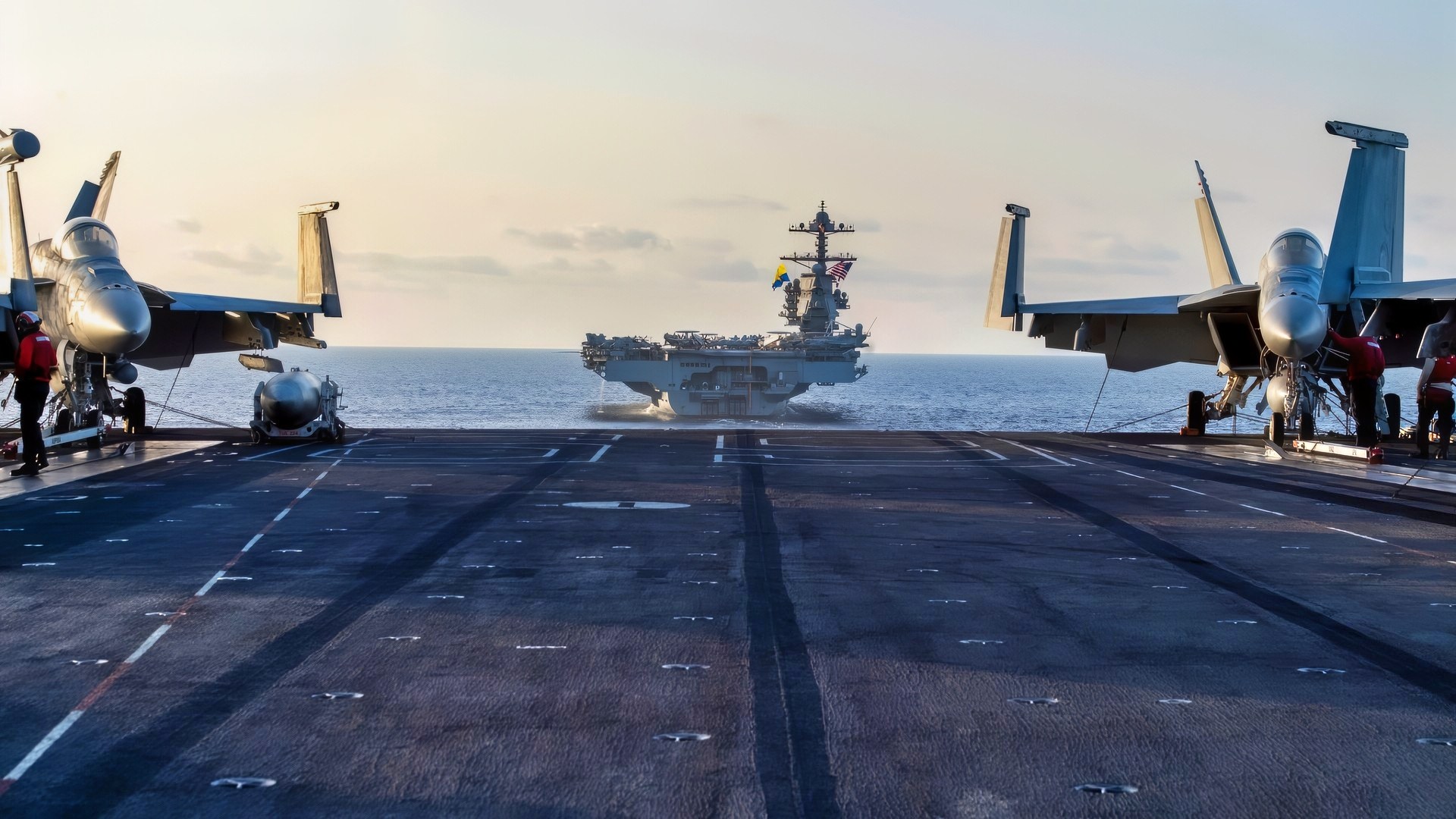
USS Eisenhower Aircraft Carrier. Image Credit: U.S. Navy.
Hofaka described how the engineering duty officer now assumed responsibility, along with the fire marshal, the command duty officer, and the section leader.
It was one of a number of major changes that protected the safety of every member of the team, as well as the Navy’s most valuable assets.
But, as with everything, there are detractors. Some skeptics believe that the announced reforms have not been applied consistently, and the 2021 investigation laid the groundwork for that view. For example, investigators found that even as some commands updated procedures, compliance across maintenance yards and vessels remained uneven.
Those concerns are not unfounded. According to a 2023 review by the Government Accountability Office, the Navy still lacks a standardized mechanism to communicate lessons learned from shipboard fires across the fleet. What happened to Bonhomme Richard – though tragic and of course costly – is not unique. Between 2009 and 2022, fires aboard ships undergoing maintenance caused more than $4 billion in damage.
“The Navy has worked to improve fire safety, but we found that lessons learned from fires aren’t being shared consistently across the service. And while there are fire safety trainings and drills for ship crews, there isn’t a Navy-wide standard for evaluating how effective these trainings are,” the GAO report confirms.
For the Navy Academy’s midshipmen who took part in the Bonhomme Richard drill after the fact, this is precisely why the incident still matters: it’s a reminder that even in peacetime, the fleet can still be vulnerable.
About the Author:
Jack Buckby is a British author, counter-extremism researcher, and journalist based in New York who writes frequently for National Security Journal. Reporting on the U.K., Europe, and the U.S., he analyzes and understands left-wing and right-wing radicalization and reports on Western governments’ approaches to the pressing issues of today. His books and research papers explore these themes and propose pragmatic solutions to our increasingly polarized society. His latest book is The Truth Teller: RFK Jr. and the Case for a Post-Partisan Presidency.
More Military


