

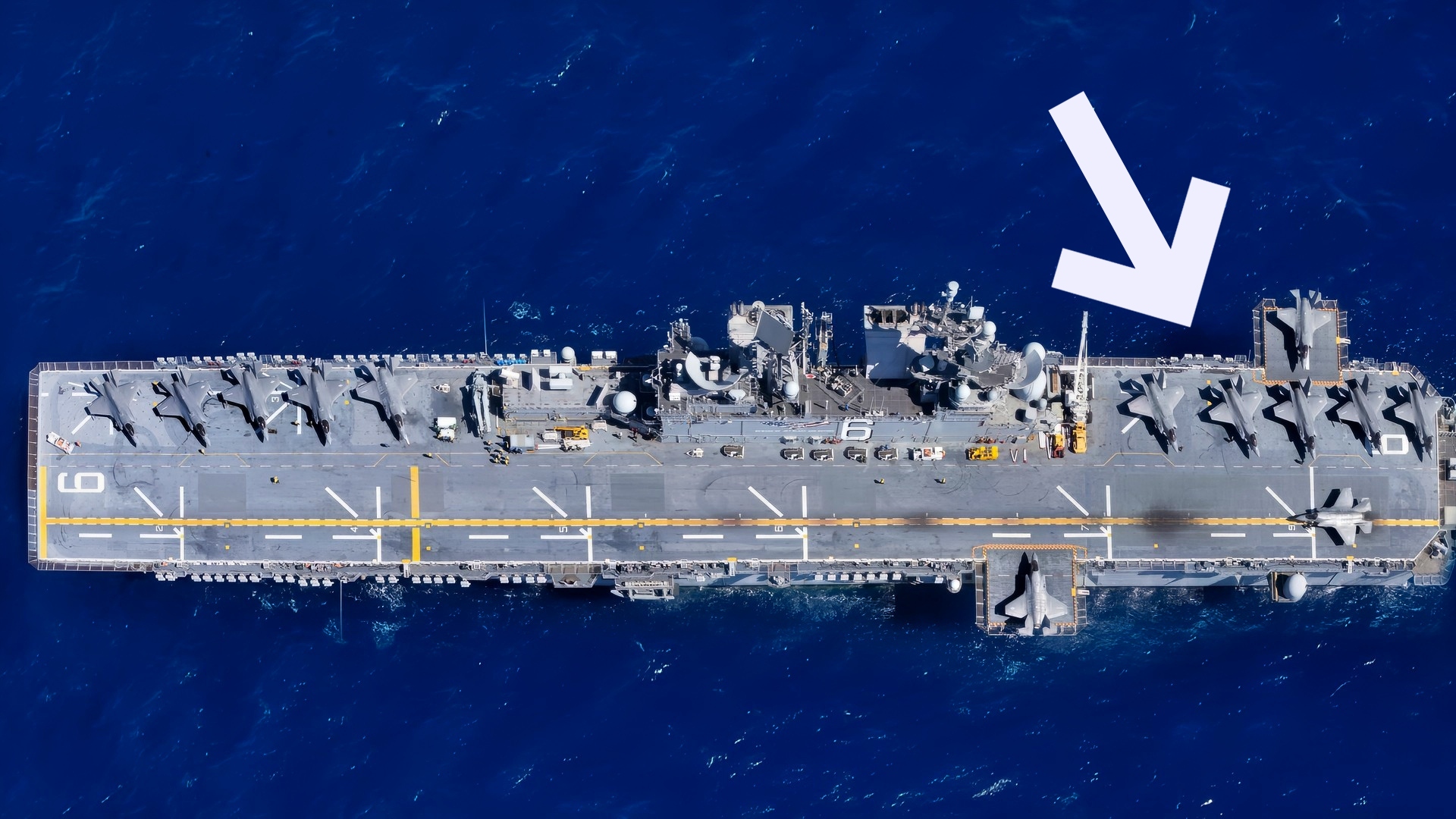
Key Points and Summary: The America-class Landing Helicopter Assault (LHA) ships are transforming the U.S. Marine Corps from a ground-heavy force into a lethal, sea-based strike arm for the Indo-Pacific.
The Shift: Under Force Design 2030, the Marines have divested tanks to focus on island-hopping campaigns using ships like the USS America (LHA-6) and USS Tripoli (LHA-7).
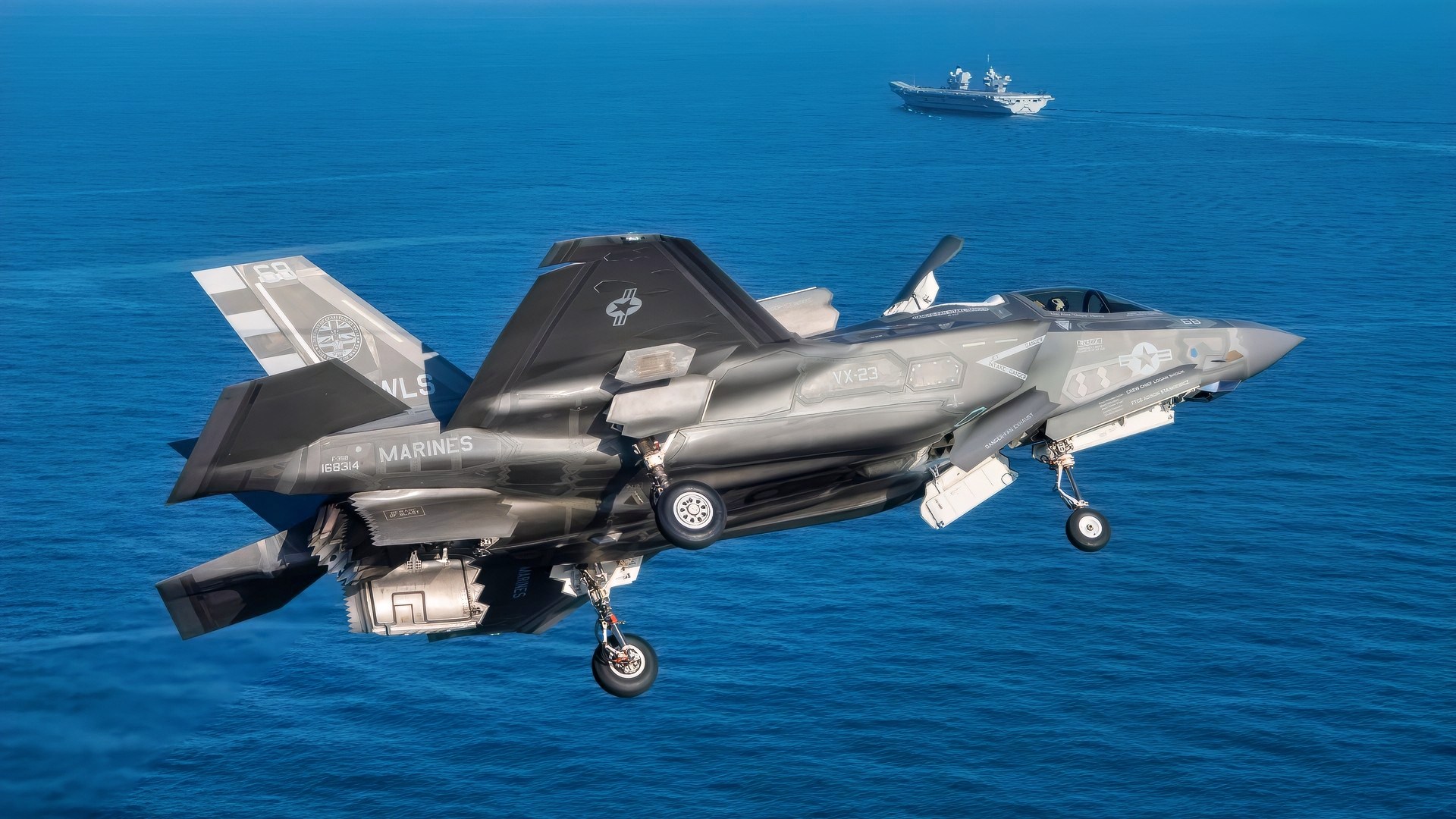
F-35 test pilot Marine Maj. Paul Gucwa from Air Test and Evaluation Squadron Two Three (VX-23), Naval Air Warfare Center Aircraft Division (NAWCAD), flies an F-35B Lightning II fighter aircraft to the U.K. HMS Prince of Wales aircraft carrier in the Western Atlantic Oct. 11, 2023. Gucwa will embark with a detachment from the Patuxent River F-35 Integrated Test Force (ITF) to conduct developmental test phase 3 (DT-3) sea trials with the specially instrumented, short takeoff vertical landing variant of the stealth jet aboard Britain’s largest warship.
The U.K. Queen Elizabeth-class (QEC) aircraft carrier HMS Prince of Wales (R09)’s participation in WESTLANT 23 encompasses a range of U.K. and U.S. naval aircraft trials in the Western Atlantic throughout the autumn of 2023.The HMS Prince of Wales continues to push the boundaries of naval aviation capabilities and operations from QEC aircraft carriers, including increasing the range and lethality of F-35 operations. The U.K. is the only Tier I partner in the F-35 Joint Strike Fighter (JSF) Program. U.K. and U.S. interactions during this deployment are characterized by cooperation and reinforce international relationships, as well as enhance interoperability between the U.S. Navy and Royal Navy.
The F-35 Joint Program Office is the U.S. Department of Defense’s focal point for the 5th-generation strike aircraft for the Navy, Air Force, Marines, and our allies. The F-35 is the premier multi-mission, 5th-generation weapon system. Its ability to collect, analyze and share data is a force multiplier that enhances all assets in the battle space: with stealth technology, advanced sensors, weapons capacity, and range. The F-35 has been operational since July 2015 and is the most lethal, survivable, and interoperable fighter aircraft ever built.
(US Navy photo by Dane Wiedmann)
The Power: Displacing 46,000 tons, these ships essentially function as “Lightning Carriers,” capable of deploying 20–25 F-35B stealth fighters or MV-22B Ospreys without a traditional well deck.
The Mission: Optimized for “Operational Maneuver From the Sea,” they are designed to seize advanced bases in the South China Sea and project power where land bases are vulnerable.
Watch Out of the Marines On Board the America-class Amphibious Assault Ships
The U.S. Marine Corps has faced some well documented challenges recently. It has divested itself of M1 Abrams tanks and is shifting its focus to the kinetic missile fight.
The Marines served as a shock counterinsurgency force during the War on Terror, which meant fighting land battles on uneven terrain in Afghanistan and carrying out counterterror operations and urban combat in Iraq.
Thankfully the Leathernecks have a new strategy for the coming years. Force Design 2030 is a doctrine that will make the Marines more resilient and lethal in the future. Part of the strategic objective is to transform the way the Marines fight, harkening back to the basics of amphibious warfare to answer China in East Asia.
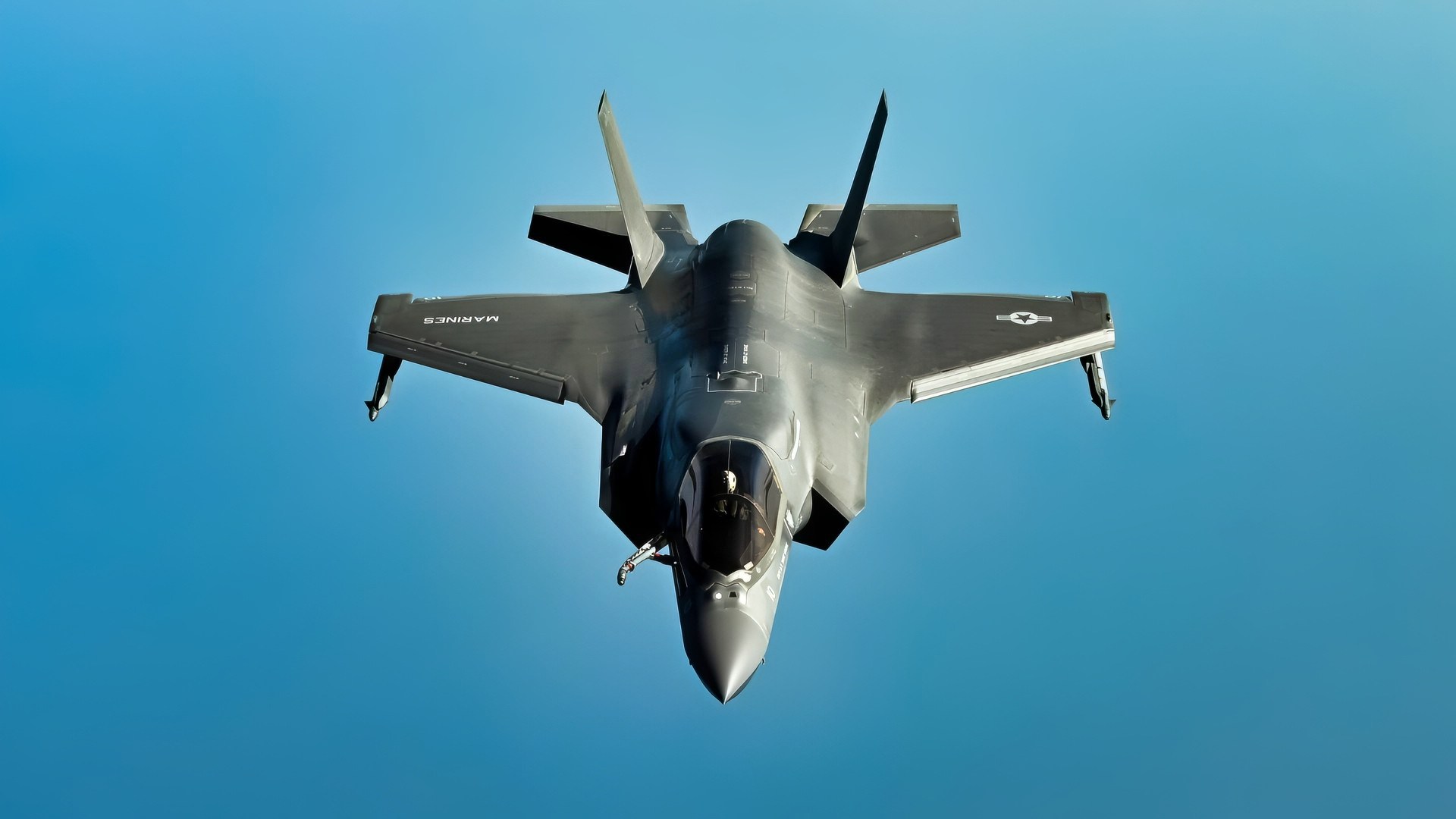
A U.S. Marine Corps F-35B Lightning II resumes a combat air patrol after aerial refueling with a U.S. Air Force KC-135 Stratotanker over the U.S. Central Command area of responsibility, Sept. 19, 2025. More than a fighter jet, the F-35’s ability to collect, analyze and share data, is a powerful force multiplier that enhances all airborne, surface and ground-based assets in the battlespace. (U.S. Air Force photo by Senior Airman Keegan Putman)
Chock Full of Modern Fighter Jets
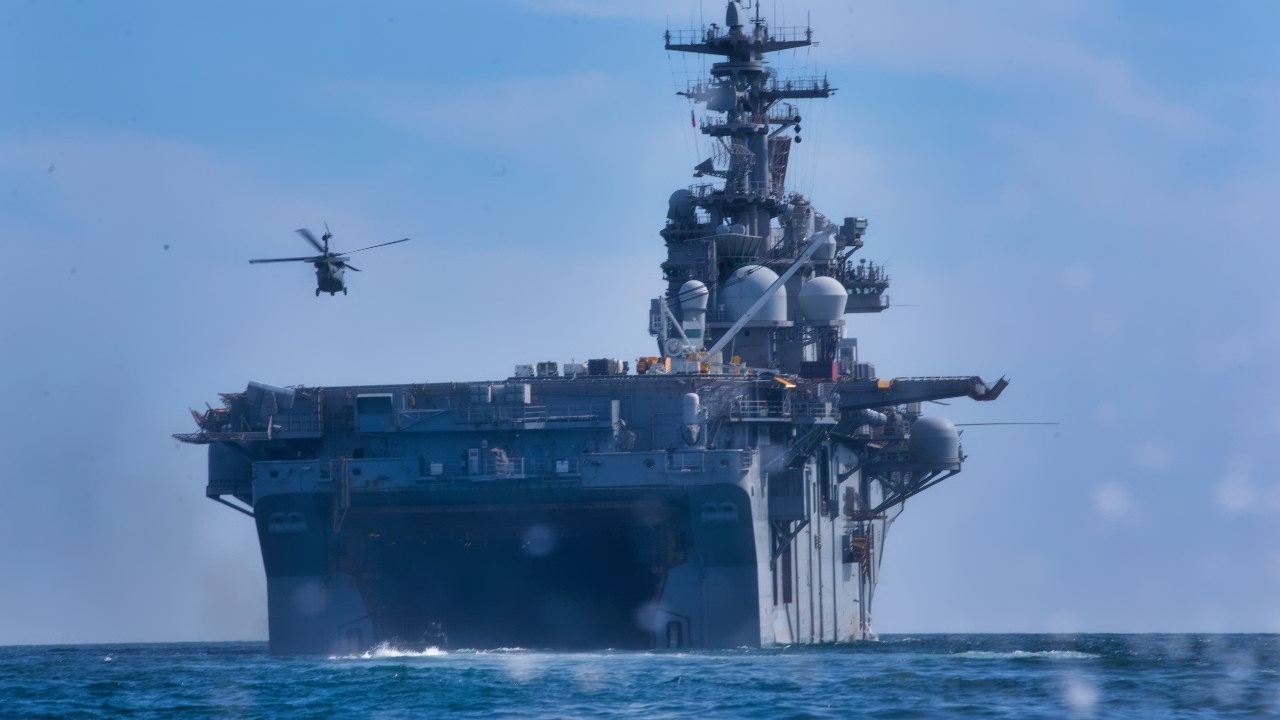
One important asset during this transformation is the U.S. Navy’s America-class amphibious assault ship. Specifically, the America-class is a Landing Helicopter Assault (LHA) vessel. It comes with a hardy contingent of MV-22B Osprey tilt-rotor aircraft, AV-8B Harrier II jump jets, or F-35B Lightning II Vertical/Short Takeoff and Landing fighters. The F-35Bs give Marine aviators a stealth option when conducting an amphibious attack.
“Large deck amphibious assault ships launch forces from air and sea, utilizing interior well decks and flight decks to conduct missions across the spectrum of operations that range from humanitarian assistance and disaster relief to full combat force,” according to HII.
America-class ships have to be large to handle all those aircraft, and indeed their displacement of 46,000 tons makes them as big as the aircraft carriers from France and India. The LHAs can carry 20 to 25 AV-8Bs, F-35Bs, or a combination of both.
Further explaining the size of the America-class is its need to carry plenty of JP-5 fuel for the jets onboard.
What Kind of Warfare Are We Talking About?
The Marines have technical descriptions for warfare conducted from the America-class: Operational Maneuver From the Sea (OMFTS) and Ship to Objective Maneuver (STOM). This is fancy talk for violence of action from an amphibious force that will shock an enemy before it can react with shore defenses.
The aircraft onboard can provide air support for the landing zone, and Marines can direct deadly fire to clear room for the fighters. Helicopters provide transportation to and from the beachhead.
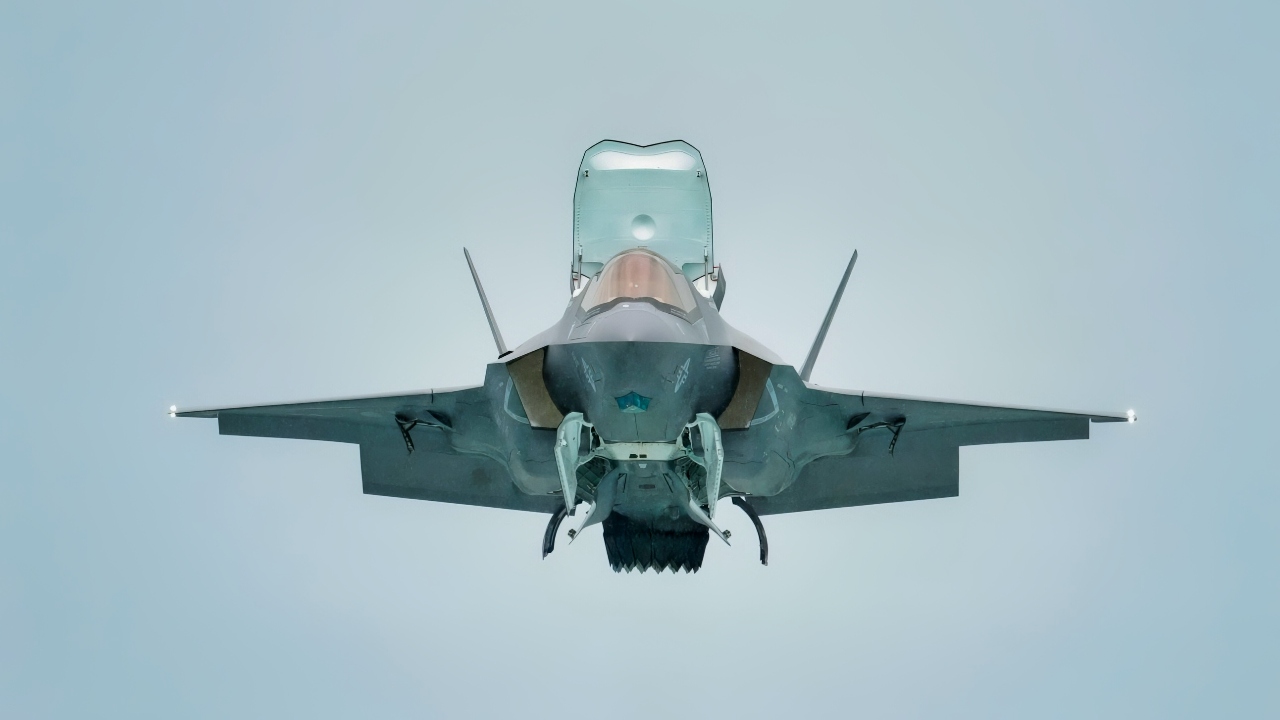
A U.S. Marine Corps F-35B Lightning II assigned to the Marine Fighter Attack Squadron 242, Marine Aircraft Group (MAG) 12, Marine Corps Air Station, Iwakuni, conducts an aerial demonstration during the Singapore Airshow 2022 at Changi Exhibition Center, Republic of Singapore, Feb. 16, 2021. Through participation in regional events like the Singapore Airshow, the U.S. demonstrates its commitment to the security of the Indo-Pacific, promotes interoperability, displays the flexible combat capabilities of the U.S. Military, creates lasting relationships with international audiences, and strengthens partnerships throughout the Indo-Pacific region. (U.S. Air Force photo by Master Sgt. Richard P. Ebensberger).
Used During the Second Gulf War
Soon after the war in Iraq started in 2003, the Marines used LHAs to ferry Marines and their equipment to the Middle East for the Second Gulf War. The ships did not go in hot, but they provided a fair share of the strategic lift capabilities needed by the Marines and Navy.
Quick Specs on the America-class
The America-class features “an enlarged hangar deck, enhanced aviation maintenance facilities, increased aviation fuel capacity, additional aviation storerooms, removal of the well deck, and an electronically reconfigurable C4ISR suite,” according to a U.S. Navy profile.
The USS America (LHA-6) and USS Tripoli (LHA-7) were commissioned in 2014 and 2020, and three LHAs are still in production. The America was first deployed in 2017. The ship is propelled by two maritime gas turbines and two shafts that enable 70,000 horsepower with a top speed of more than 20 knots. Its length of 855 feet makes it nearly as long as an aircraft carrier, and it has a beam of 106 feet.
The America-class carries a crew of 1,204 enlisted sailors and 102 officers. It can deploy 1,687 Marines. The class is armed with two Rolling Airframe Missile launchers, as well as two NATO Sea Sparrow launchers that can deliver the Evolved Sea Sparrow Missile. A pair of Phalanx close-in weapon systems are also onboard.
What Will the Future Bring?
It will be interesting to see how much the Marine Corps trains with the America-class. There hasn’t been a hot landing zone during an amphibious attack in many years, but the America-class would be perfect for invading one of China’s militarized islands in the South China Sea to establish a U.S. airbase and create havoc for the enemy.
The Marines are trying to return to their roots, and the America-class LHA is perfect for the service’s latest doctrine. The America-class therefore has a bright future ahead. The aircraft onboard are powerful, and the Marines are plentiful and spoiling for a fight. Don’t forget potential operations in the Western Hemisphere.
U.S. Marines with Bravo Company, 2d Assault Amphibious Battalion, 2d Marine Division approach the USS Wasp (LHD 1) in assault amphibious vehicles off of Onslow Beach during a three-day ship-to-shore exercise on Camp Lejeune, N.C., June 27, 2020. During the exercise, the Marines conducted amphibious maneuvers and dynamic ship-to-shore operations with the USS Wasp (LHD 1). (U.S. Marine Corps photo by Lance Cpl. Jacqueline Parsons)
The United States currently has a carrier strike group near Venezuela led by the USS Gerald R. Ford (CVN-78). A landing on Venezuelan shores is unlikely, but who could have predicted that the United States would invade Grenada in 1983?
The Marines must be ready with their amphibious warfare capabilities. They can strike from the “Halls of Montezuma to the shores of Tripoli.” The Devil Dogs take their jobs seriously, and the America-class LHAs are the chariots that will deliver them to battle when the nation calls for it.
About the Author: Brent M. Eastwood
Author of now over 3,000 articles on defense issues, Brent M. Eastwood, PhD is the author of Don’t Turn Your Back On the World: a Conservative Foreign Policy and Humans, Machines, and Data: Future Trends in Warfare plus two other books. Brent was the founder and CEO of a tech firm that predicted world events using artificial intelligence. He served as a legislative fellow for US Senator Tim Scott and advised the senator on defense and foreign policy issues. He has taught at American University, George Washington University, and George Mason University. Brent is a former US Army Infantry officer. He can be followed on X @BMEastwood.


