

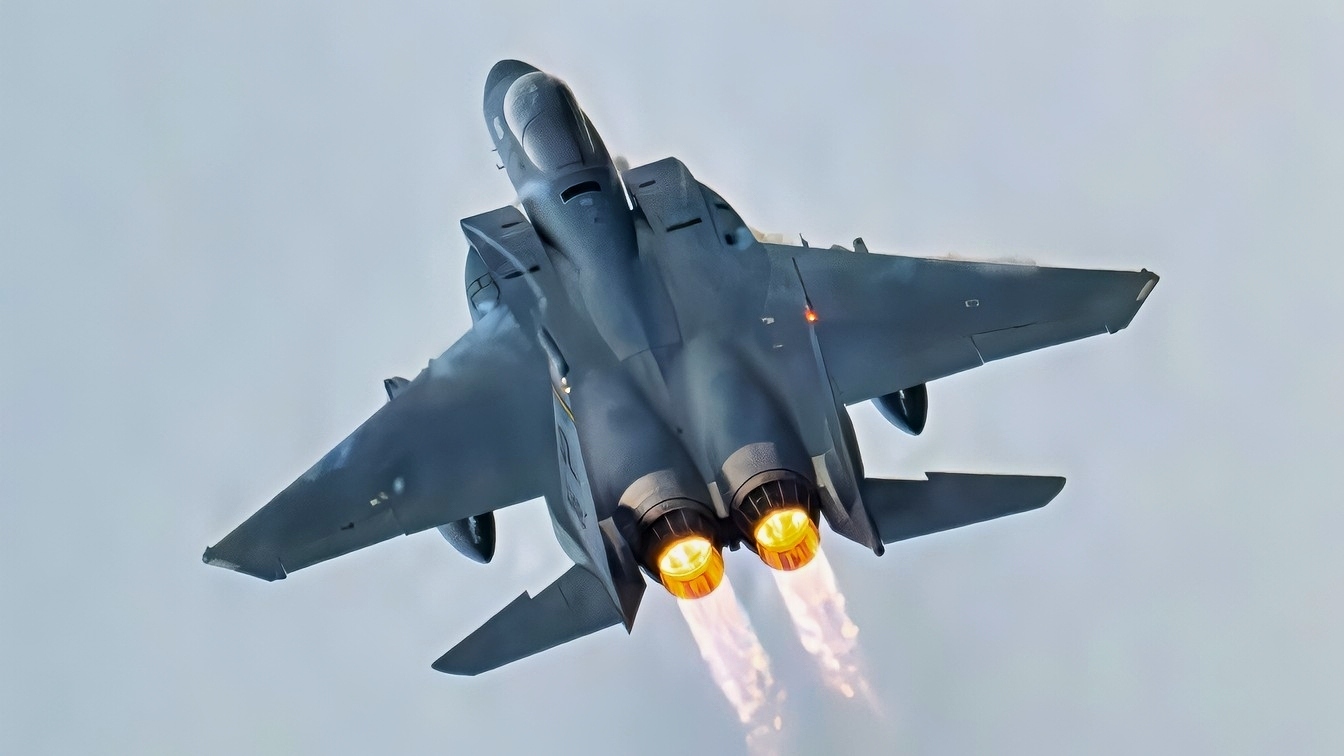
The US Air National Guard is retiring 50 to 60 of its F-15C/D air superiority fighters. This is a fighter we know well here at National Security Journal, and we have taken some pretty amazing photos of it over the years, as we do our best to bring you original defense reporting and images. You can see some of our best images of this fighter below.
The U.S. Air Force’s fiscal 2027 budget request seeks to retire the 20 oldest F-15E Strike Eagles, the ones still flying with Pratt & Whitney F100-PW-220 engines.
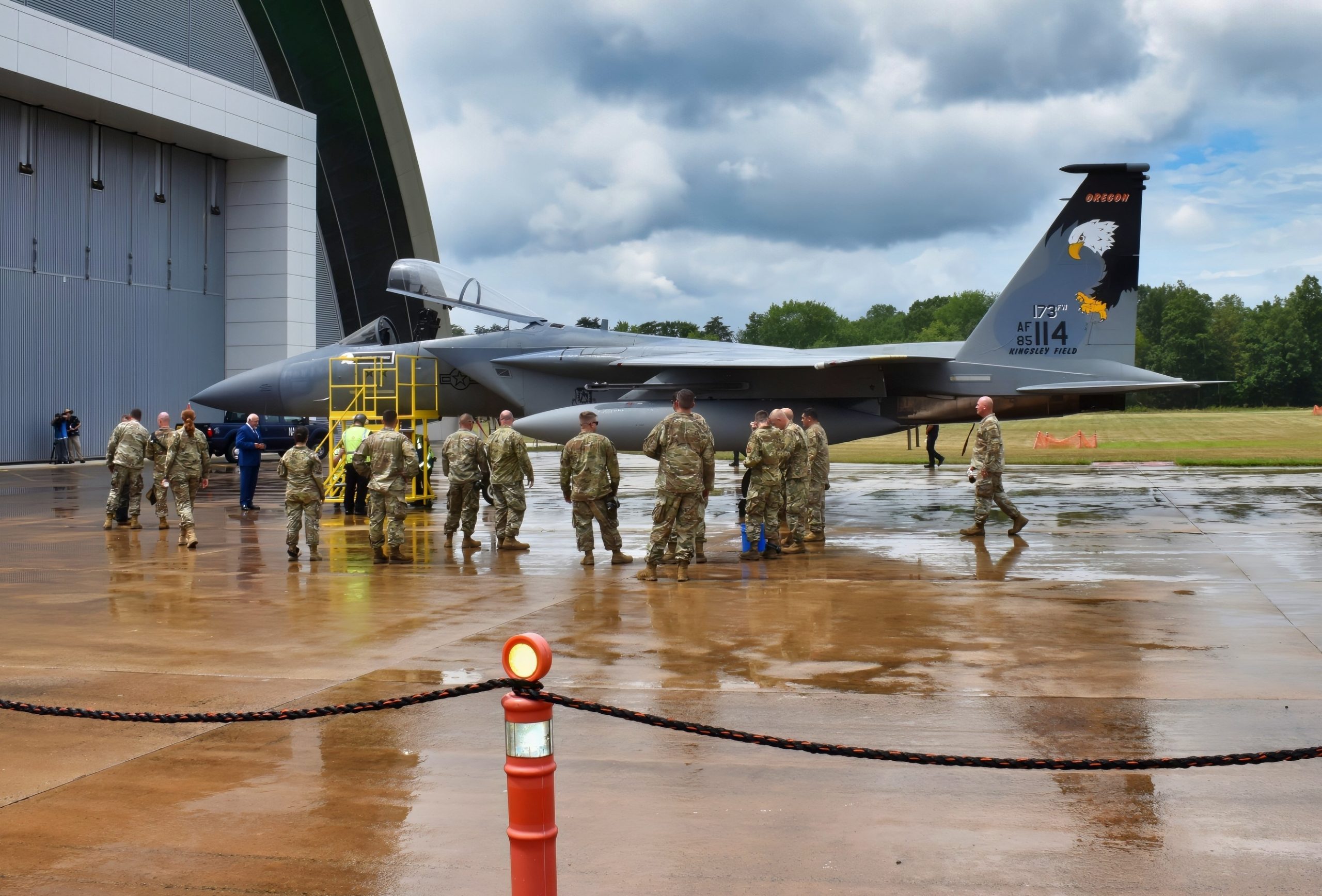
F-15C Fighter Coming in From Last Flight. Image Credit: National Security Journal.
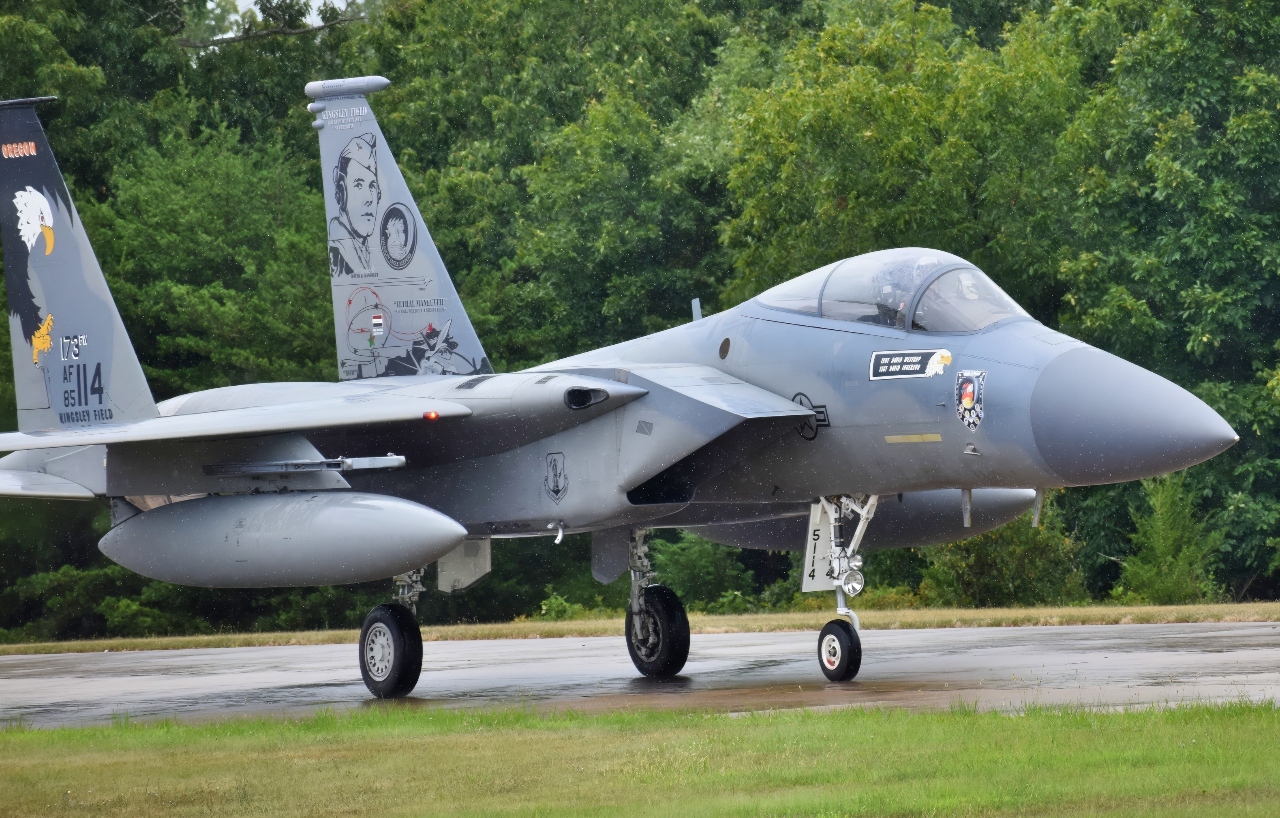
F-15C Fighter on the Tarmac. Image Credit: National Security Journal. Taken on August 13, 2025.
The Air Force flies 216 Strike Eagles and had planned to keep only 99 of them long term. At the same time, a group of “Platinum” F-15C/D Eagles is being held for homeland defense through 2030, when the last of them will also be retired.
Many argue that those should be transferred to Ukraine, which faces a nightly barrage of Russian cruise missiles and drones.
Ukraine Is Fielding Older F-16s But Needs More
Ukraine’s defenses are stretched thin, and it has some American F-16s, but not enough.
Ukraine currently fields 40 to 50 F-16s; five have been confirmed lost to crashes or shootdowns, and it currently suffers a shortage of air-to-air missiles and a maintenance bottleneck that TWZ described as a readiness crisis.
I wrote about the fourth of those losses back in July. Kyiv has been asking for F-15s since the opening months of the 2022 invasion, and the question comes back around every time a budget drops.
Belgium has promised to deliver 10 F-16s and 2 Mirage fighters to Kyiv by the end of the year.
Should the retired F-15C/D aircraft be sent to Ukraine?
The Case For Sending F-15s To Ukraine
The F-15 is a big jet with a big radar, long range, and room for many missiles.
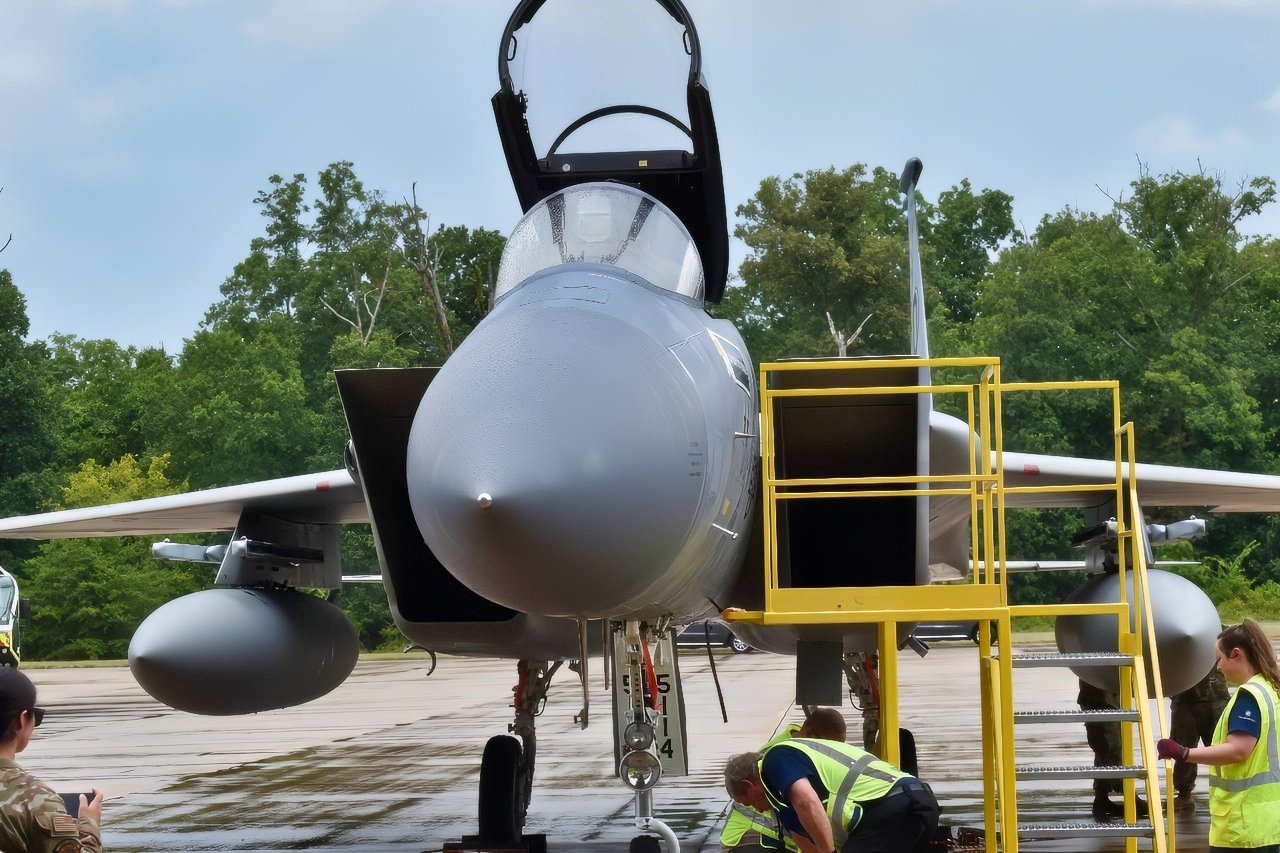
Rain on F-15C Fighter at Smithsonian National Security Journal Photo.
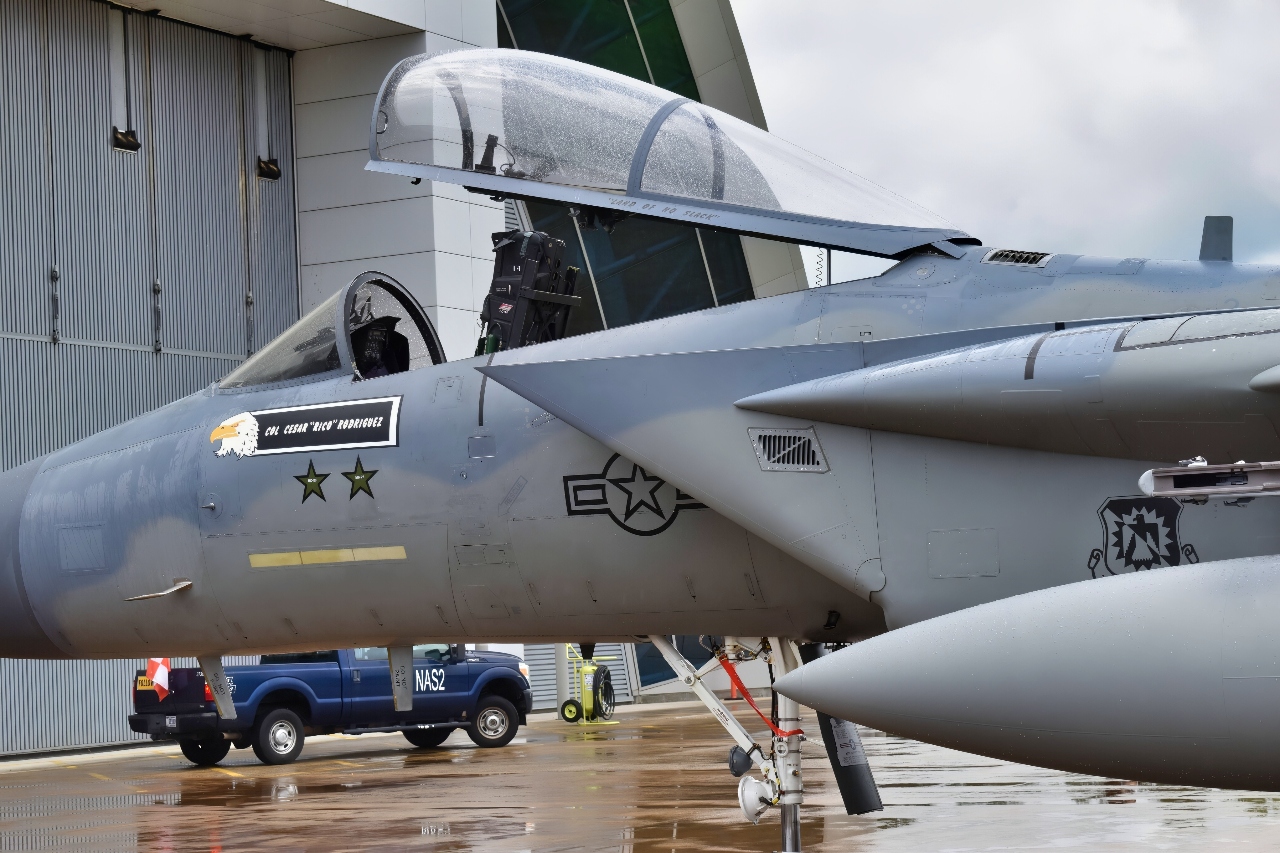
F-15C Fighter at Smithsonian August 13 2025. Image Credit: National Security Journal.
That matters in a war where much of the fighter mission is chasing cruise missiles and Shahed drones across a large country at night.
The F-16 trades fuel and loiter time for agility. The Eagle doesn’t have to.
The F-15 carries the same M61A1 Vulcan, six-barrel 20 mm cannon as the F-16, but it carries 940 cannon rounds versus the F-16’s 511 rounds, which matters when targeting drones.
There’s also a natural fit. Back in 2022, the Atlantic Council proposed replacing Ukraine’s Su-27 Flankers with F-15Cs and its MiG-29s with F-16s.
Ukrainian Flanker pilots already think in terms of a heavy, twin-engine fighter. Their Su-24 crews already fly as a pilot-and-navigator team, which is how the Strike Eagle is built to fight.
Many of the current F-15Cs received the APG-63(V)3 active electronically scanned array (AESA) radar, giving pilots much better detection range, tracking, and reliability than the radars on the F-16s.
The F-15’s stellar combat record would make it a natural fit for Ukraine.
The Case Against Sending The F-15s To Ukraine
Sweden is donating 16 older Saab Gripen JAS-39C/D models, set to arrive in early 2027. Ukraine is set to purchase the newer Gripen E models, but those won’t arrive until 2029 or 2030.
The Gripen is a better fit for Ukraine’s needs currently.

F-15C Fighter at Smithsonian National Security Journal Photo
It was designed to fly from austere airfields and roads, while being rearmed and supplied quickly and easily by conscripts.
The F-15s require long runways and large dedicated maintenance hangars. Russia has hammered Ukraine’s airfields, and the Eagles would become an inviting target.
In 2022, analysts warned that any donated F-15 or F-16 would require parts, maintenance crews, and runway preparation in addition to pilot training.
That’s still true, and Ukraine has learned it the hard way with the F-16.
Adding the F-15 would hand the Ukrainian Air Force another Western type with its own supply chain, tooling, and training pipeline, all while it is still building out F-16 support and preparing for Gripen.
The Strike Eagle also needs a weapons systems officer in the back seat.
That doubles the aircrew training bill for every jet.
The Air Force May Need Them Itself
The Air Force lost at least four F-15Es during Operation Epic Fury over Iran. Congress has repeatedly blocked F-15E retirements, and the service now wants to more than double its F-15EX buy to 267 aircraft to replace the Strike Eagle.
Until those Eagle IIs show up, every flyable F-15 has a job stateside. Lawmakers who refused to let the Air Force retire these jets aren’t likely to wave them off to Kyiv.
The U.S. Air Force faces shrinking spare parts and rising airframe cannibalization as it keeps a small core of aging F-15C/D Eagles flying through 2030 while transitioning to the F-15EX Eagle II and F-35.
More than 75 percent of F-15C/Ds face speed or G-load limits due to structural fatigue, increasing cannibalization as older spare parts become scarce.
About the Author: Steve Balestrieri
Steve Balestrieri is a National Security Columnist. He served as a US Army Special Forces NCO and Warrant Officer. In addition to writing on defense, he covers the NFL for PatsFans.com and is a member of the Pro Football Writers of America (PFWA). His work was regularly featured in many military publications.


