


Having first paid for and overseen its development, the Indian Air Force’s (IAF) Su-30MKI is soon to undergo a major upgrade to almost all of its onboard systems. The difference now is that the Su-30MKI introduced in the latter half of the 1990s was equipped with either new Russian innovations, such as the NIIP N011M Passive Electronic Scanning Array (PESA) radar, or third-party subsystems from French and Israeli defense firms.
But this new, three-decades-later version of the aircraft, called the Super Sukhoi, will feature new, Indian-developed systems or locally produced versions of new-generation Russian hardware. This upgrade to the Su-30MKI fleet, according to Indian industry and military officials, is turning the aircraft into what they are calling a “4.7-generation fighter.”
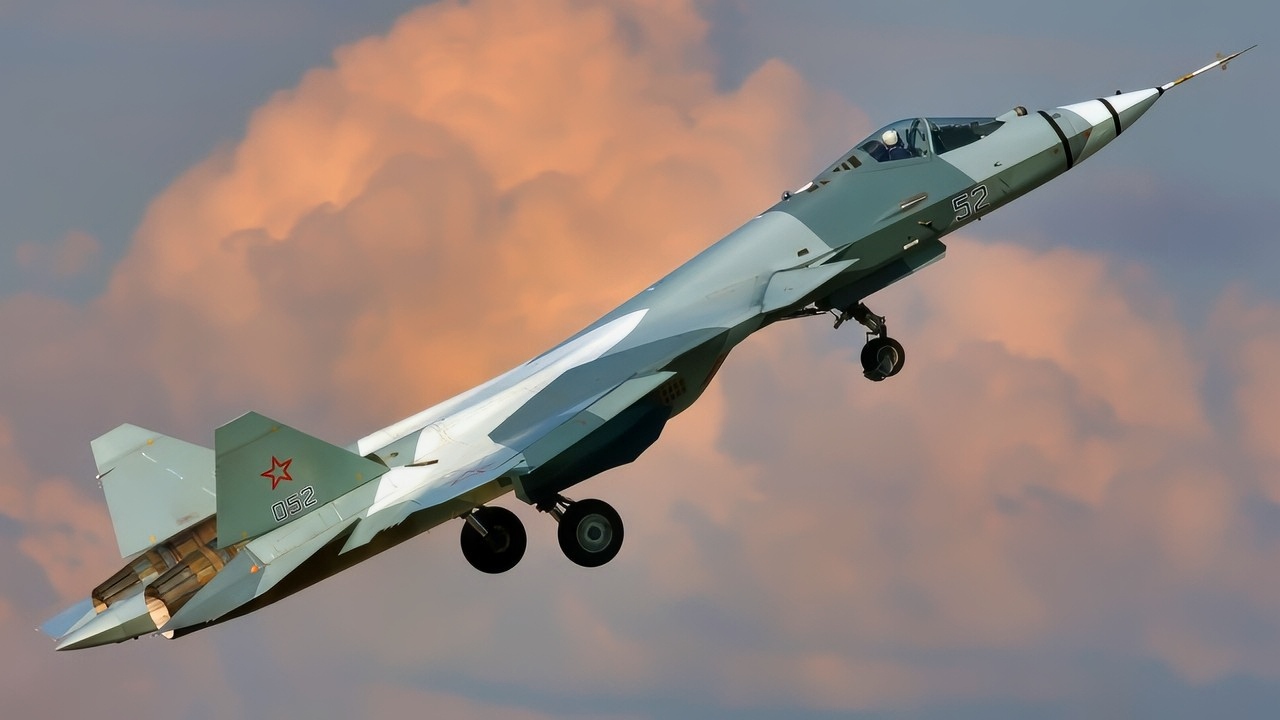
Su-57 Felon Stealth Fighter in the Sky. Image Credit: Creative Commons.

Su-57 Felon Fighter Stealth. Image Credit: Creative Commons.
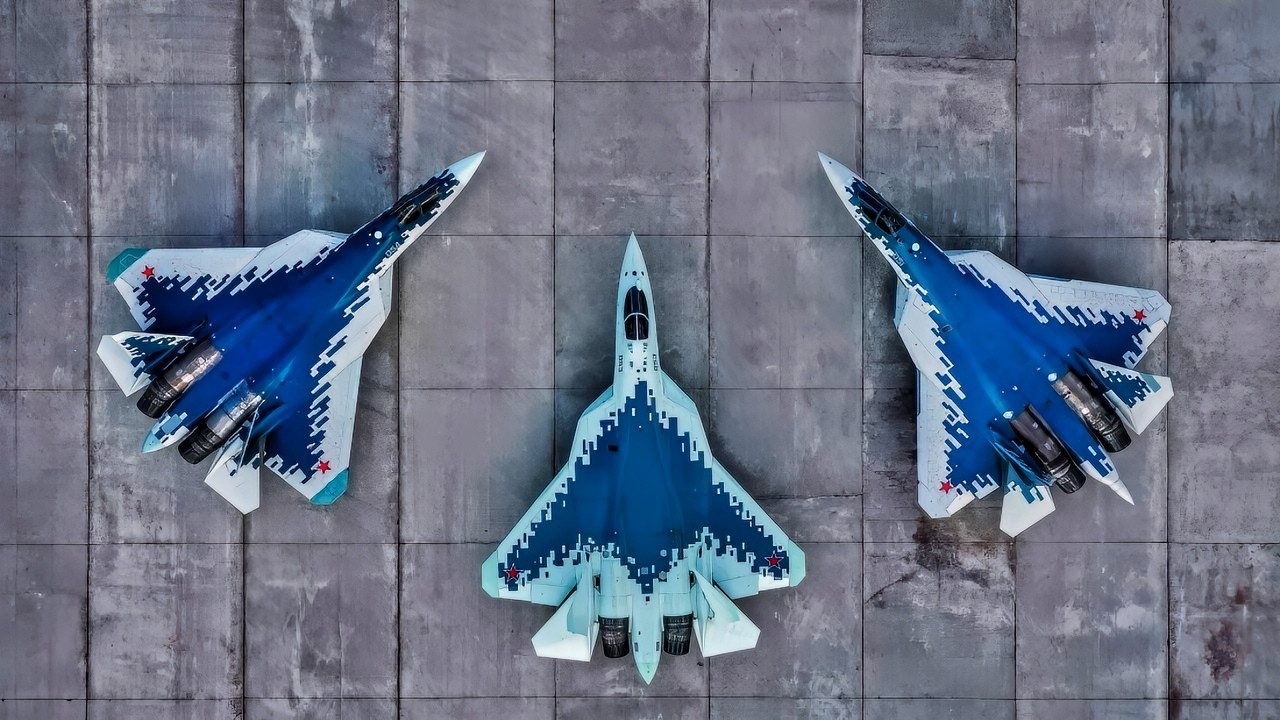
Su-57 Felon Screengrab from Russia. Image Credit: X Screengrab.

Su-57 Felon Stealth Fighter Taking Off. Image Credit: Creative Commons.
This upgrade program will be led by state-run Hindustan Aeronautics Ltd (HAL), and the program plan calls for an initial batch of 84 to be upgraded.
There will then be successive tranches of up to 200 aircraft processed through the upgrade’s remanufacturing process.
All of these aircraft are supposed to have completed the upgrade by the early 2030s.
These first 84 upgraded aircraft are expected to be delivered between 2028 and 2030.
Following validation testing, these initial versions should be declared fully operational by 2030.
Major Program Updates
The major features of the program are:
-A new indigenously-developed Virupaksha Active Electronic Scanning Array (AESA) radar. The Indian-developed radar set from DRDO will feature an unprecedented 2400 transit-receive modules (TRMs) in the array. These will all be powered by Gallium Nitride (GaN)-based technology.
-This radar is advertised as capable of detecting stealth aircraft, or at least those the People’s Liberation Army Air Force (PLAAF) is currently deploying, at ranges of 130 miles. Its overall range for non-low-RCS targets is twice that distance.
The radar will feature improved search performance and – in an unusual development – is supposed to weigh around 650 pounds, which is lower than the Russian N011M it will replace.
-AESA radars utilized in the upgrades of other aircraft, like the Dassault Rafale’s RBE2 AA, have been heavier than the PESA models that preceded them. In the case of the Rafale, the extra weight is due to the design of the TRMs, the extra cooling required, and the use of the previous radar’s mechanical couplings for the array.
-Beyond the radar, the aircraft will receive a new suite of what are being described as AI-driven avionics. These will replace most older-generation systems and, in many cases, early digital-technology systems.
Details on the avionics are generally not known, but they are thought to mirror many of the improvements made to Russian Aerospace Forces (VKS) Su-30SM aircraft to bring them up to the Su-30SM2 standard. Supposedly, 78 percent of the on-board systems for the Super Sukhoi will be produced in India, in line with the AtmaNirbhar Bharat initiative.
-Two other major points of the upgrade are a 30-year structural life extension rebuild and a new engine. This engine is also under discussion, but it is likely to be the same AL-41F-1S (similar to the 117S used in the Su-35).
A Bridge to the Su-57 Felon Stealth Fighter
As with other Indian programs involving Russia, the Super Sukhoi effort is envisioned as a way to use this large-scale upgrade as a bridge to the purchase of a next-generation aircraft, in this case, the Su-57.
The contracts for the technology transfers involved for the new and improved Su-30MKI are expected to be part of an overall set of agreements that permit the license-production of the Su-57 in India.
In February 2025, it was confirmed that license production of the Su-57 in India was under consideration.
By January 2026, the Indian Defence Ministry in January 2026 confirmed that these discussions had reached an advanced technical stage.
In June 2025, the Russian Defense Ministry was reported to have made a previously unheard-of offer to provide the Indians with full access to the Su-57’s source code as part of any license production agreement.
As an added incentive, the Russian side of the deal is also considering permitting India to install its own Virupaksha radar in the locally assembled Su-57s in place of the Russian N036 Belka AESA radar set.
About the Author: Reuben F. Johnson
Reuben F. Johnson has thirty-six years of experience analyzing and reporting on foreign weapons systems, defense technologies, and international arms export policy. Johnson is the Director of Research at the Casimir Pulaski Foundation. He is also a survivor of the Russian invasion of Ukraine in February 2022. He worked for years in the American defense industry as a foreign technology analyst and later as a consultant for the U.S. Department of Defense, the Departments of the Navy and Air Force, and the governments of the United Kingdom and Australia. In 2022-2023, he won two consecutive awards for his defense reporting. He holds a bachelor’s degree from DePauw University and a master’s degree from Miami University in Ohio, specializing in Soviet and Russian studies. He lives in Warsaw.


Charles Bowen
May 15, 2026 at 1:44 pm
To dismiss the F16 and F15 is short sighted. Its the weapons system that matters. With new long range missiles. The SU 30 is going to have a hard time.