
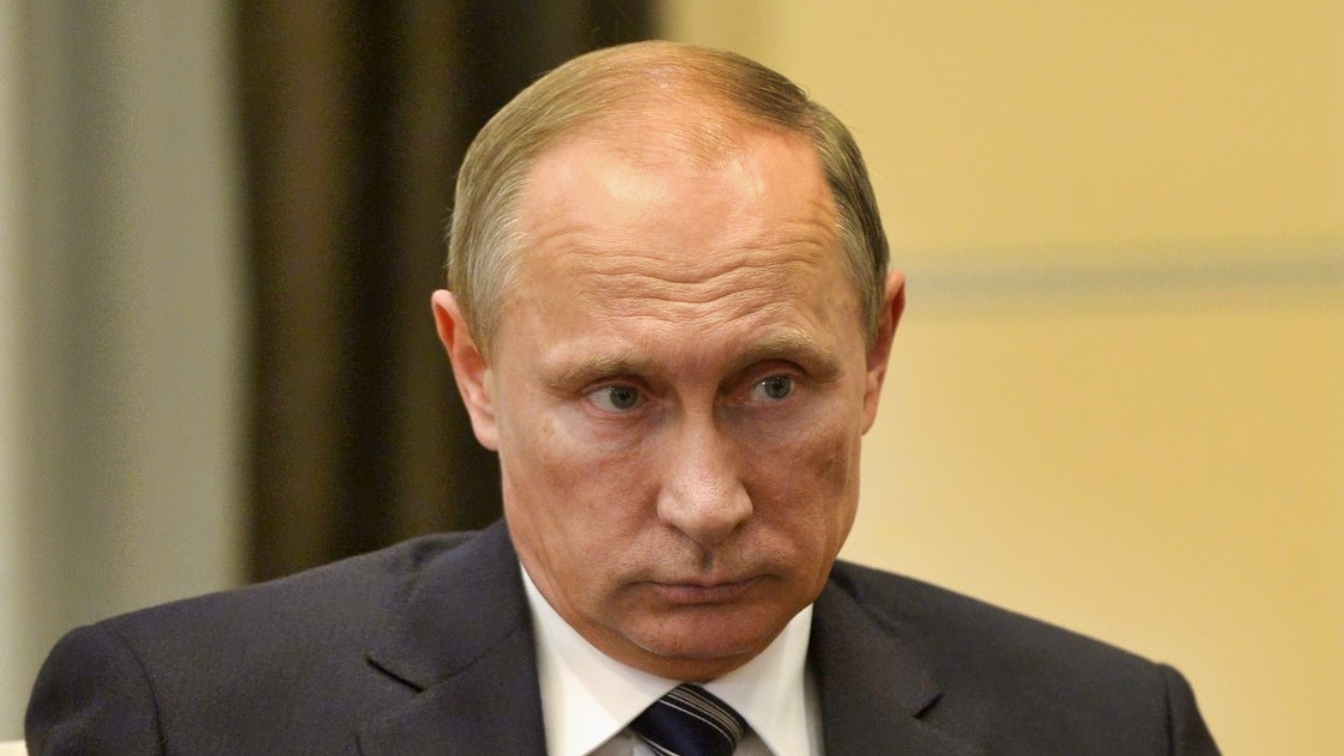
For more than four years now, the Kremlin has attempted to carefully maintain the image of a Russia united behind President Vladimir Putin and his “special military operation” in Ukraine.
Public criticism from the country’s wealthiest businessman has been relatively rare, while those with close ties to the government have generally avoided discussing the conflict.
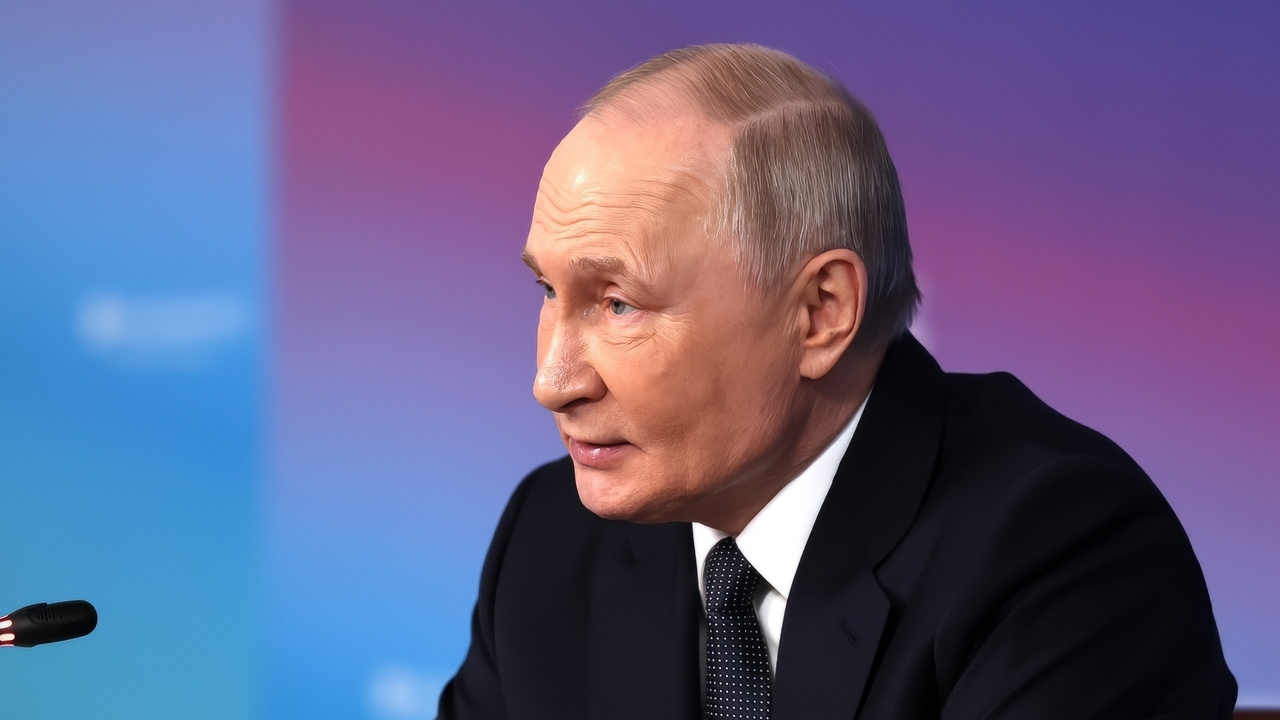
Vladimir Putin in Murmansk (2025-03-27). Image Credit: Creative Commons.

President Donald Trump and Russian president Vladimir Putin walk on the tarmac at Joint Base Elmendorf Richardson in Anchorage, Alaska, Friday, August 15, 2025. (Official White House Photo by Daniel Torok)
For those reasons, comments published this week by billionaire industrialist Andrey Melnichenko have attracted considerable attention.
In a piece for The Economist, the founder of fertilizer giant EuroChem and coal producer SUEK argued that a Russian defeat in Ukraine would destabilize not only Moscow but also the West.
He warned of political instability and even risks surrounding Russia’s nuclear arsenal, as well as a possibility of increased Chinese influence over Russia.
The comments were not a Russian businessman calling out the president, but rather a clear attempt to shift the narrative in the West and to give members of Congress, political influencers, and potentially Washington a new way of looking at the conflict.
The words could also be interpreted as a tacit admission from Russia’s elite that the war could still be won by Ukraine.
Why Melnichenko’s Intervention Matters
Melnichenko is not an opposition figure. He was sanctioned by Europe following the Russian invasion of Ukraine and is still one of Russia’s best-known industrialists.
His decision to publish his thoughts in The Economist – one of the most influential business publications in the world – represents a significant political intervention. He was not, after all, speaking to a domestic Russian audience – he was attempting to win over minds here in the West.
The way Melnichenko’s words were framed by The Economist was interesting, too.
Introducing Melnichenko’s essay and a series of interviews conducted over nearly 60 hours, the magazine described his words as “the most stunning” sign yet of growing fatigue within the Russian establishment over the war.
It noted that Melnichenko is “hardly a member of the anti-Putin opposition” and reminded readers that his factories have supported his country’s wartime economy.
But that being said, the publication argued that he is speaking out because he and his fellow tycoons can “no longer afford to ignore the rot in a country they watched descend into tyranny.”
Rather than arguing that Russia was on the path to victory, Melnichenko focused on the long-term consequences of continuing the conflict, warning that Russia could ultimately descend into chaos and subsequently become economically dependent on China.
He said the country could even evolve into a “fortress under siege,” resembling North Korea.
And while he stopped short of calling for the removal of President Vladimir Putin, the magazine concluded that the changes he advocates would effectively mean the end to “one-man rule” in the country.
Russia’s Business Elite Speaks More Freely
Melnichenko’s intervention comes as other influential Russian business leaders begin to speak their minds more publicly – even if most of them stop short of criticizing Putin himself.
During this year’s St. Petersburg International Economic Forum – which was interrupted by Ukrainian long-range strikes – Sberbank chief executive German Gref warned that persistently high interest rates were slowing investment and impacting economic growth.
Steel magnate Alexei Mordashov also argued that borrowing costs were making it hard for Russian businesses looking to expand.
Businessman Roman Trotsenko also raised concerns about weakening investment and industrial activity as Russia’s wartime economy doubles down on supporting the conflict and faces a labor shortage with no immediately obvious solutions.
A New Generation Is Appearing
The longer-term picture for Russia is interesting. Business leaders worry that a defeat could destabilize both Russia and the West, while young Russians look to the rest of the world.
Recent research by the Chicago Council on Global Affairs and Russia’s independent Levada Center found that younger Russians are consuming news on social media and other online platforms rather than on state television, creating a significant gap between how younger and older Russians view the conflict and the country.
Those young people were found to be more skeptical of official narratives and more exposed to international sources of information – more than any previous generation, in fact.
That doesn’t mean younger Russians have completely turned against Putin, but it does suggest that the tightly controlled information environment that benefits Putin may not exist for much longer.
Demographic change happens, and Putin can’t control that – and as younger, more globally connected Russians gradually replace older generations as the country’s workforce, business leaders, and even political class, Russia’s political culture is likely to evolve too.
A loss in Ukraine could, in theory, reinforce this – but if a collapse happens in the shorter term, it could also economically restrict those younger Russians from fully engaging with the rest of the world even as they begin to take over the institutions.
Figures inside Russia are beginning to think beyond the war in Ukraine just as Putin faces mounting economic pressure to bring it to an end, because the country is likely to emerge on the other side of the war with a very different political and cultural landscape regardless of who ultimately prevails.
About the Author: Jack Buckby
Jack Buckby is a British researcher and analyst specializing in defense and national security, based in New York. His work focuses on military capability, procurement, and strategic competition, producing and editing analysis for policy and defense audiences. He brings extensive editorial experience, with a career output spanning over 1,000 articles at 19FortyFive and National Security Journal, and has previously authored books and papers on extremism and deradicalization.


