

One of the biggest stories from the war in Iran was the global energy markets’ unusually muted response.
Though oil and gas prices spiked, they were nowhere near previous global highs, such as oil reaching $128 per barrel in 2022 following Russia’s full-scale invasion of Ukraine, or the record $146 per barrel set during the 2008 Great Recession.

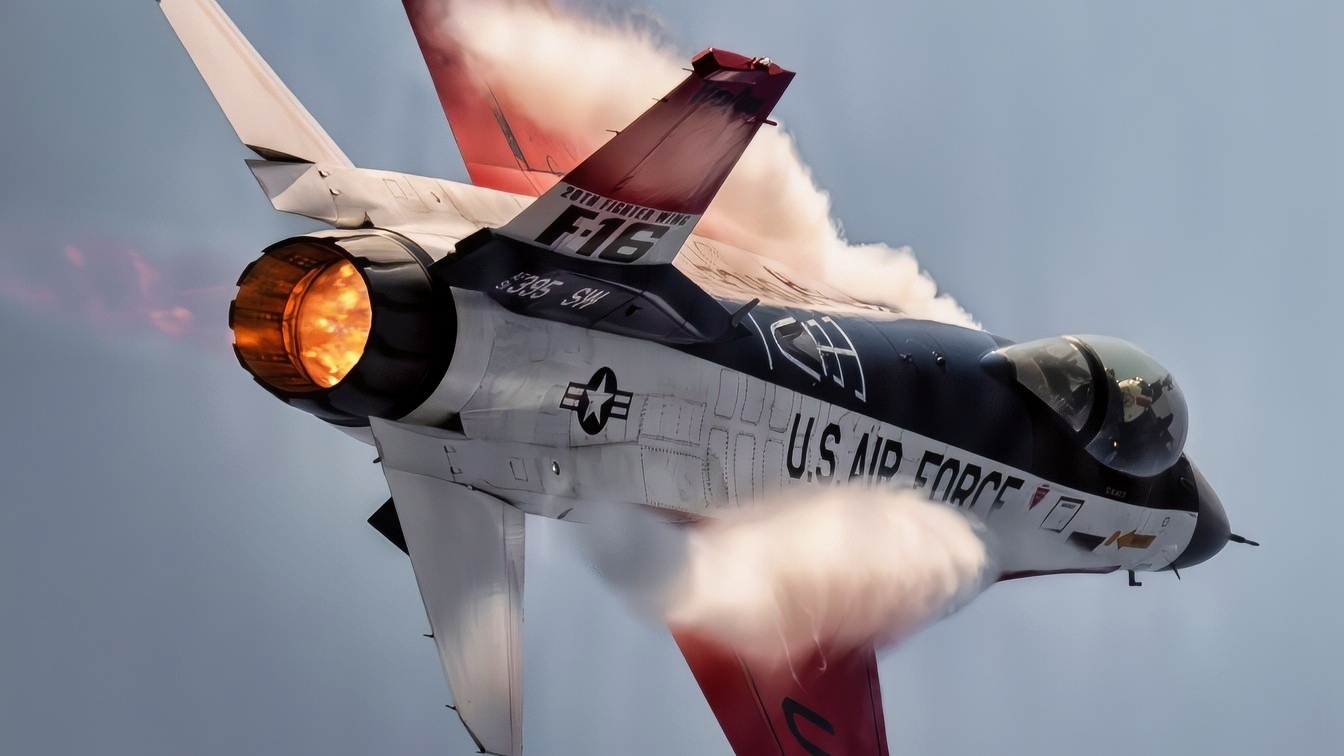
F-16A on USS Intrepid NSJ Image. Taken by Jack Buckby on 9/18/2025.

F-16 Logo on F-16A in NYC. Image Credit: National Security Journal.
Although multiple factors contributed to the lower-than-anticipated price of oil, one factor has been far and away the most responsible for the more modest global price increases: China.
China is the world’s number two economy.
And while the country has a robust renewable energy sector and substantial coal-fired power generation capacity, its oil production is insufficient to meet domestic demand, making it the world’s leading oil importer.
Long known as a conservative purchaser of oil and sensitive to price hikes, China’s strategic oil reserves are substantial—a stockpile of liquid gold that Beijing can tap when prices are unfavorable for the country’s enormous manufacturing sector and keep the country’s lifeblood flowing.
Following the eruption of hostilities between Iran and the United States and Israel, China stepped back from the global oil stage, preferring to reduce crude oil imports in favor of domestically held oil reserves.
The ripple effect of Beijing’s decision to curb imports came at an ideal time for the global economy and greatly aided the relatively depressed oil price trend.
The move has certainly benefited China — but the knock-on effect has been a boon for the rest of the world as well.
“China’s crude imports are now the market’s key price-sensitive variable,” Liao Na, the founder of China-based GL Consulting, explained to Bloomberg. “While the country’s crude demand is recovering, the pace remains relatively modest, constrained by slowing economic growth and government policies aimed at accelerating electrification and reducing reliance on oil.”
Just before the war with Iran, China imported an estimated 12.5 million barrels of oil per day, a figure that has since fallen by over 5 million barrels per day.
Although China cannot measure the United States’ ability to shape global events through military power alone, Beijing’s growing economic clout has led some countries to hope that this leverage will be used to nudge Iran into making concessions and ending the war.
Chinese Leverage
Beijing is both Iran’s largest trading partner and one of the world’s leading oil importers, giving the country an outsized amount of potential leverage it could exert on Iran.
Several Gulf sources explained to Reuters they hoped China would manage to prod the Iranians toward an agreement.
But they also acknowledged that the difficulties Washington has experienced in bringing Tehran to the table in a meaningful way play toward China’s interests.
A Kind of Neutrality
China’s position in the Middle East stands in stark contrast to that of the United States.
Beijing has no security commitments in the region, nor does it have the military clout necessary to pry open the Strait of Hormuz.
It does not seem to have the appetite for either, preferring instead to forge a path through the Middle East based primarily on its own economic interests.
But brief glimpses of China’s other aims, such as an impossibly intractable situation for the United States, have been glimpsed at times, albeit briefly.
Weapon Shipments Reported
Against the backdrop of potential Chinese involvement in bringing the ongoing war in Iran to a conclusion is China’s deepening material support for Iran’s embattled Islamist hardliners.
Iran is reportedly set to receive up to 400 Chinese shoulder-fired air defense missile launchers, commonly called MANPADS. The deal is worth an estimated $60-70 million.
Though the launchers would be unlikely to turn the tide of the war decisively in Iran’s favor — they are believed to be most effective against drones, low-flying aircraft and helicopters rather than the cutting-edge stealth fighters flown by American and Israeli pilots — they would nonetheless plug massive holes in Iranian skies through which American warplanes fly with near-impunity.
Chinese QW-12 and FN-16 missiles would be supplied in tandem with the missile launchers.
China has negotiated at times with the Houthis, managing to secure safe passage for Chinese ships and helping them avoid coming under the kind of fire that ships flagged by other countries have at times come under while underway.
But those talks were very transitional in nature, and are not necessarily a reflection of how far Beijing could push Tehran to the negotiating table — if at all.
In the meantime, analysts are looking to an expected increase in Chinese oil imports, in part to refill tapped stockpiles, with purchases expected to pick up speed later in the year if relatively low purchase prices can be secured — a move that would benefit China’s refiners most.
About the Author: Caleb Larson
Caleb Larson is an American multiformat journalist based in Berlin, Germany. His work covers the intersection of conflict and society, focusing on American foreign policy and European security. He has reported from Germany, Russia, and the United States. Most recently, he covered the war in Ukraine, reporting extensively on the war’s shifting battle lines in the Donbas and writing on its civilian and humanitarian toll. Previously, he worked as a Defense Reporter for POLITICO Europe. You can follow his latest work on X.


Hujjathullah M.H.B. Sahib
July 31, 2026 at 5:00 am
With U.S.-Israeli top-tier fighter planes having established upper air dominance over Iran and the U.S. weak to undertake a ground invasion and Iran on its part increasingly well-burrowed at home turf and relatively feeble in the nearer atmosphere, the Chinese supplied MANPADS would definitely help plug the gap in between. But all these are still not serving to secure what matters most : achieving the stability of Persian gulf and free or managed smooth navigation through the Strait of Hormuz and helping the global economy !