

The YF-23, known as the Black Widow II, remains one of the most intriguing “what ifs” in US aviation history and continues to fascinate aviation enthusiasts and analysts alike.
It was a prototype stealth fighter developed by Northrop and McDonnell Douglas for the U.S. Air Force’s Advanced Tactical Fighter (ATF) program in the late 1980s and early 1990s.

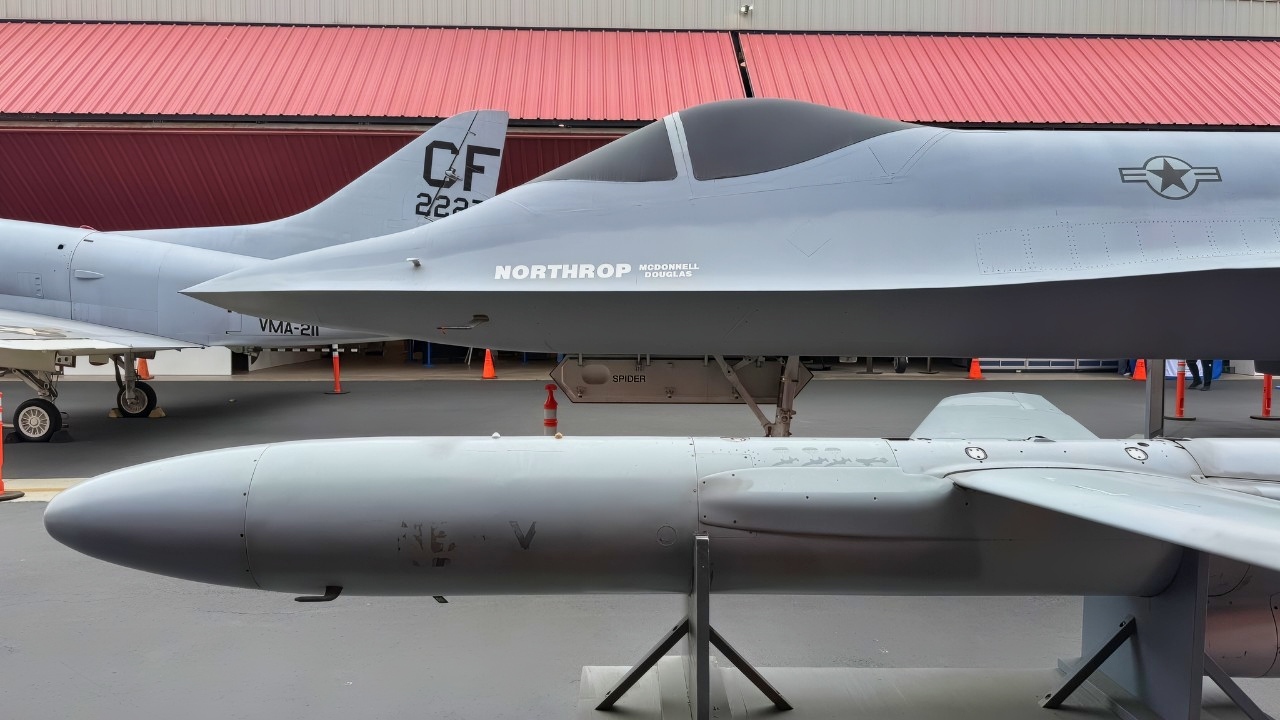
YF-23A Side View Western Museum of Flight. Image by National Security Journal.

YF-23A Black Widow Outside. Taken by Harry J. Kazianis for National Security Journal on August 16, 2025.
Although it lost the competition to the YF-22 (which became the F-22 Raptor), the YF-23 was notable for its advanced stealth technology and unique design, featuring a blended wing-body configuration and canted vertical tails.
Northrop and McDonnell Douglas’ YF-23 was an outstanding aircraft and, in fact, outperformed the Raptor in several aspects of the fighter competition. However, it lacked a presentation to the program’s decision-makers.
Otherwise, history may have turned out quite differently. Considering how good an aircraft the Raptor is, that is saying something. But many believe the Navy’s newest sixth-generation fighter, the F/A-XX, borrows heavily from the YF-23.
YF-23 vs. F/A-XX: There Are Several Similarities In The Concept Art
When Northrop’s 2025 F/A XX stealth fighter concept art was unveiled months back, there was near-universal agreement that it closely resembles the YF-23. Alex Hollings from Airpower posted side-by-side pictures of the two aircraft, which appear very similar.

F/A-XX Handout Photo from Northrop Grumman.
Many in aviation circles would have loved to see the naval version of the YF-23, the “Sea Widow,” as a Navy stealth fighter. The YF-23 definitely has its share of fans, and there is a lot to like about it.
But in reality, how much of the 1990s-designed YF-23 can be incorporated into the new, sixth-generation F/A-XX?
But first, let’s take a fresh look at the YF-23.
Meet the YF-23 Stealth Fighter
The Northrop YF-23 had a sleek, stealthy design and innovative features; the Black Widow incorporated technologies such as advanced radar-absorbing materials, a revolutionary diamond-shaped wing, and an emphasis on reducing infrared signatures.
It used a blended wing-body and S-duct engine intakes to reduce its radar cross-section.
The aircraft was powered by two Pratt & Whitney YF119 or General Electric YF120 engines, enabling supercruise. Having the supercruise capability meant it could maintain supersonic speeds without using fuel-guzzling afterburners, offering advantages in range and fuel efficiency.

YF-23 Black Widow II Fighter Gray Ghost. Image Credit: National Security Journal.
The YF-23 could reach speeds of up to Mach 2.2 at high altitudes, flying over distances of 2,424 nautical miles (2,789 miles), according to Aerotime Hub. Its combination of speed, agility, and stealth made it a fierce competitor.
While Lockheed’s YF-22 had a visually impressive design, the YF-23 truly stood out with its extraordinary appearance. It featured diamond-shaped wings that reduced radar visibility, and its slim side profile reminded one of the SR-71 Navy Blackbird spy plane.
Would the Navy Have Adopted the YF-23 “Sea Widow”? The Navy’s carrier-capable variant of the Black Widow was unofficially dubbed the NATF-23.
What Does The Latest Rendering Show?
Published on Northrop Grumman’s Naval Aviation section of the website, a new video rendering offers a visual overview of the proposed exterior design of the plane, with a focus on its nose, cockpit, and forward fuselage. We have a screenshot below for your reference.
As with any artist’s rendering, the final design will probably look quite different. And, just like the F-47 rendering, it doesn’t show much of a view at all. Some question why the renderings don’t show much detail and why they’re usually different from the finished product.
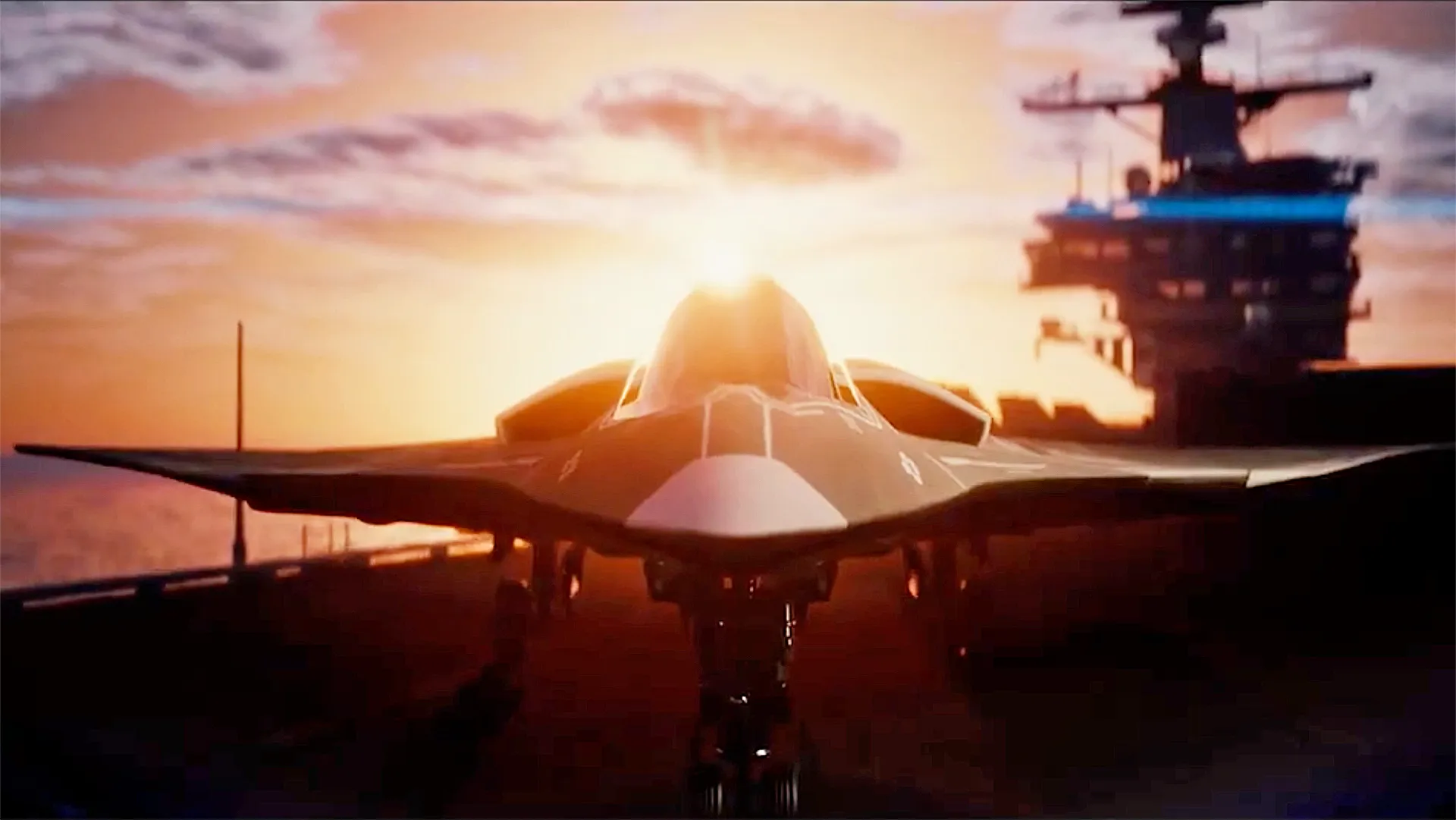
FA-XX. Northrop video screenshot.
Part of the reason is that the Navy and contractors want to keep some engineers in Asia guessing, since those same engineers are well-known for stealing US aircraft plans and building their own stealth planes from US designs.
But aviation experts have pored over the rendering, identifying some features. And some features do stand out.
The frame is well-blended and rounded in areas, suggesting next-generation stealth design.
The large bubble canopy, an almost carbon copy of the YF-23, is a sign that it is a single-pilot aircraft. The prevailing view was that it would have a crew of two, given all the advanced long-range missions planned for it.

YF-23 Image Taken at U.S. Air Force Museum. Image Credit: National Security Journal.
TWZ said in their article that a large, rounded belly suggests “considerable internal volume for fuel and weapons.” The aircraft also has heavy-duty landing gear, a given for any aircraft making hard carrier landings.
The nose is large, suggesting a large aperture for a radar to fit.
But the rendering of the intakes, seen in a couple of Northrop’s aircraft ads, is an intriguing aspect. The top-mounted intakes have a slightly curved, broadly rectangular profile with a vertical shelf on their outboard sides.
The intake, as shown in the rendering, also appears too small for the actual requirements. Again, it is probably purposely misdrawn to confuse enemies.
“F/A-XX is the strike fighter component of the NGAD FoS that will be the ‘Quarterback’ of the MUM-T (Manned, Unmanned Teaming) concept, directing multiple tactical platforms at the leading edge of the battlespace,” Navy officials have said.
The F/A-XX Would Be Far More Advanced Than The YF-23
While the F/A-XX can borrow some of the foundational design philosophies from the 1990 YF-23—specifically its superior stealth shaping, dorsal intakes, and long-range, high-speed performance- the 6th-gen jet will feature entirely new, advanced materials, avionics, and engines.
The YF-23 serves as a “spiritual ancestor,” and it should be emphasized that Northrop designed and built the YF-23 and is developing an F/A-XX prototype, so it can serve as an aerodynamic starting point rather than a direct technical blueprint.
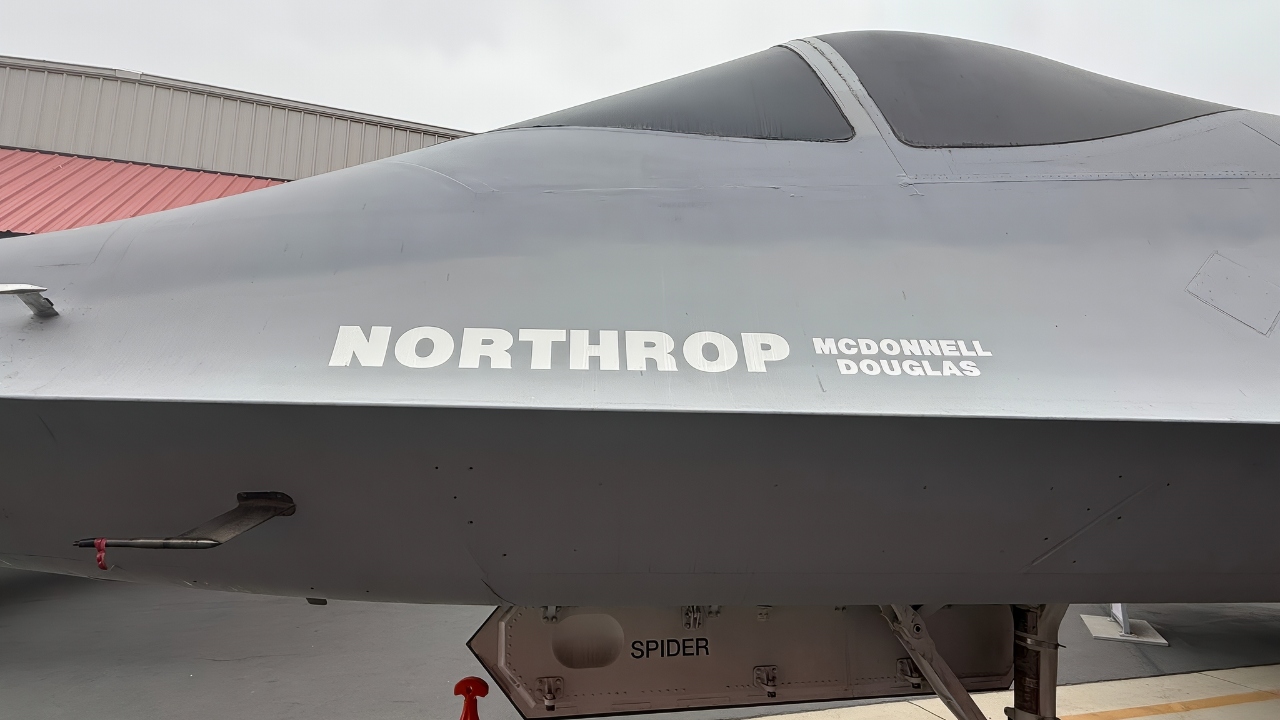
Sideview of YF-23A Black Widow II. Image Credit: Harry J. Kazianis/National Security Journal.
The F/A-XX may have no tail fins, rather than the YF-23. Kris Osborn, in a piece in Warrior Maven, correctly points out that the manufacturer has already produced the stealthy B-2 bomber and is currently in limited production with its replacement, the B-21 Raider.
We may see the NATF-23 after all, or at least an updated form of it in the Navy’s F/A XX program. But the F/A-XX would have to be, and no doubt will be, a much more advanced aircraft than the original.
That would provide a fitting end to an aircraft that was every bit the equal to the one that defeated it in the competition so long ago.
About the Author: Steve Balestrieri
Steve Balestrieri is a National Security Columnist. He served as a US Army Special Forces NCO and Warrant Officer. In addition to writing on defense, he covers the NFL for PatsFans.com and is a member of the Pro Football Writers of America (PFWA). His work was regularly featured in many military publications.


