

The Pentagon publicly revealed the location of an Ohio-class ballistic missile submarine (SSBN) at Gibraltar on May 11 — only hours after President Donald Trump rejected Iran’s latest ceasefire proposal and Russia’s Ukraine war continued. The U.S. Sixth Fleet announced the SSBN’s arrival in Gibraltar. The U.S. Navy did not identify the submarine by name. The U.S. Navy operates 14 Ohio-class ballistic missile submarines as part of America’s nuclear triad. Each Ohio-class SSBN carries Trident II D5 submarine-launched ballistic missiles with ranges exceeding 4,000 miles.
The Ohio-Class Submarine Surfaces: Russia and Iran Surely Take Notice
The Pentagon has publicly revealed the location of one of America’s nuclear-armed ballistic missile submarines in an unusually rare move that comes as tensions with Iran continue rising following the collapse of new ceasefire negotiations.

SILVERDALE, Wash. (Oct. 27, 2025) Ohio-class ballistic missile submarine USS Pennsylvania (SSBN 735) arrives at Naval Base Kitsap-Bangor following routine operations at sea, Oct. 27, 2025. Pennsylvania is assigned to Commander, Submarine Group (SUBGRU) 9, which exercises operational and administrative control authority for assigned submarine commands and units in the Pacific Northwest providing oversight for shipboard training, personnel, supply and material readiness of SSBNs and their crews. SUBGRU-9 is also responsible for nuclear submarines undergoing conversion or overhaul at Puget Sound Naval Shipyard in Bremerton. (U.S. Navy photo by Mass Communication Specialist 1st Class Ryan Riley).

SOUDA BAY, Greece (March 27, 2022) The Ohio-class ballistic-missile submarine USS Georgia (SSGN 729) near Souda Bay, Greece, during training with U.S. Marines from Task Force 61/2 (TF-61/2), conducting launch and recovery training with their combat rubber raiding craft, March 27, 2022. TF-61/2 will temporarily provide command and control support to the commander of U.S. 6th Fleet, to synchronize Navy and Marine Corps units and capabilities already in theater, in support of regional Allies and Partners and U.S. national security interests. (U.S. Marine Corps photo by Sgt. Dylan Chagnon)
The U.S. Sixth Fleet announced on May 11 that an Ohio-class ballistic missile submarine had arrived in Gibraltar the previous day, placing one of the U.S. military’s most secretive strategic assets at the entrance to the Mediterranean Sea during an increasingly unstable period in the Middle East, and Russia’s Ukraine war rages on.
The Navy did not identify the submarine by name, consistent with longstanding operational security procedures governing America’s nuclear deterrent fleet.
Ohio-class ballistic missile submarines, known as SSBNs, are designed to remain submerged for months at a time while carrying Trident II nuclear ballistic missiles capable of striking targets thousands of miles away.
Their survivability depends heavily on secrecy, which is precisely why public disclosures involving their locations attract immediate international attention.
The disclosure also came only hours after President Donald Trump rejected Iran’s latest ceasefire proposal, describing the existing truce as being on “life support” after Tehran demanded sanctions relief, compensation for war damage, and recognition of Iranian sovereignty over the Strait of Hormuz.
Ohio-Class Submarines Almost Never Publicly Reveal Their Positions
The public acknowledgment of an Ohio-class submarine’s location is significant precisely because these vessels are normally among the most secretive military assets on Earth.
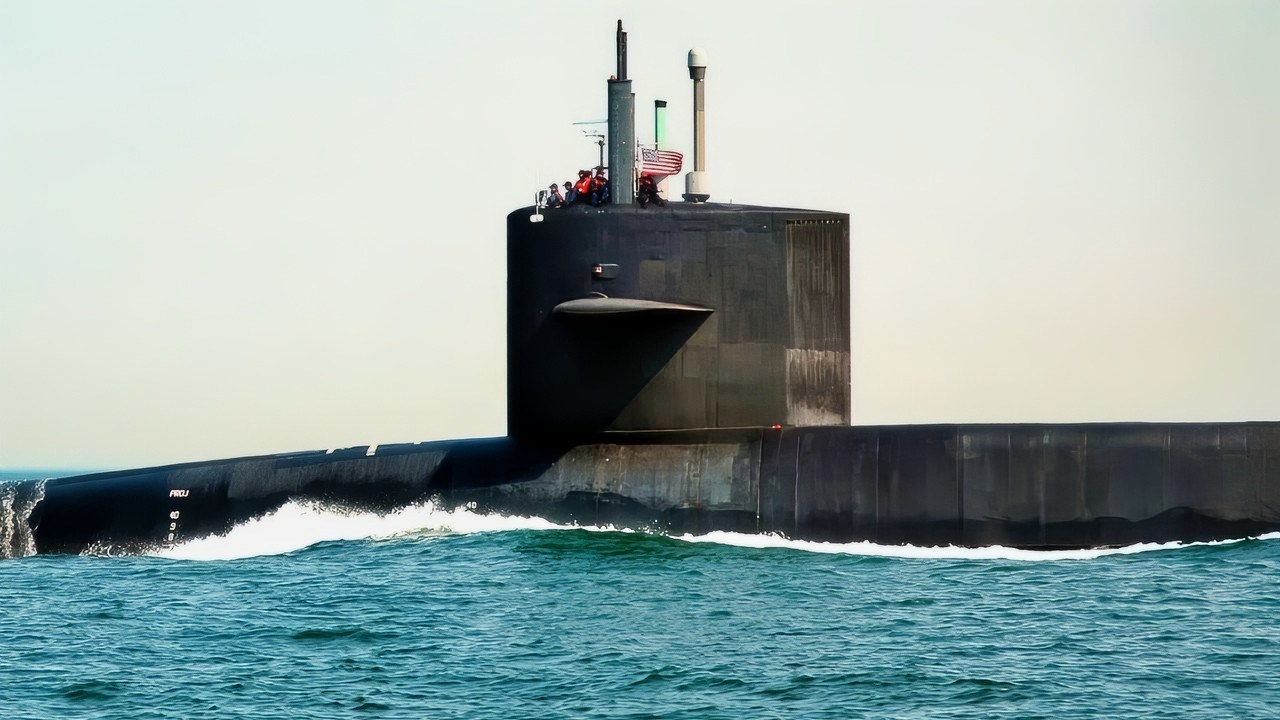
(March 31, 2006) – The guided missile submarine USS Florida (SSGN 728) conducts sea trials off the coast of Virginia. Florida will be delivered to the Fleet in April, and a Return To Service ceremony is scheduled for May 25 in Mayport, Fla. As the second of four SSBN submarines to be converted to SSGN, this nuclear-powered submarine will have the capability to: launch up to 154 Tomahawk cruise missiles; conduct sustained special warfare operations with up to 102 Special Operations Forces (SOF) personnel for short durations or 66 SOF personnel for sustained operations; and provide approximately 70 percent operational availability forward deployed in support of combatant mission requirements. U.S. Navy photo by Chief Journalist (SW/AW) Dave Fliesen.
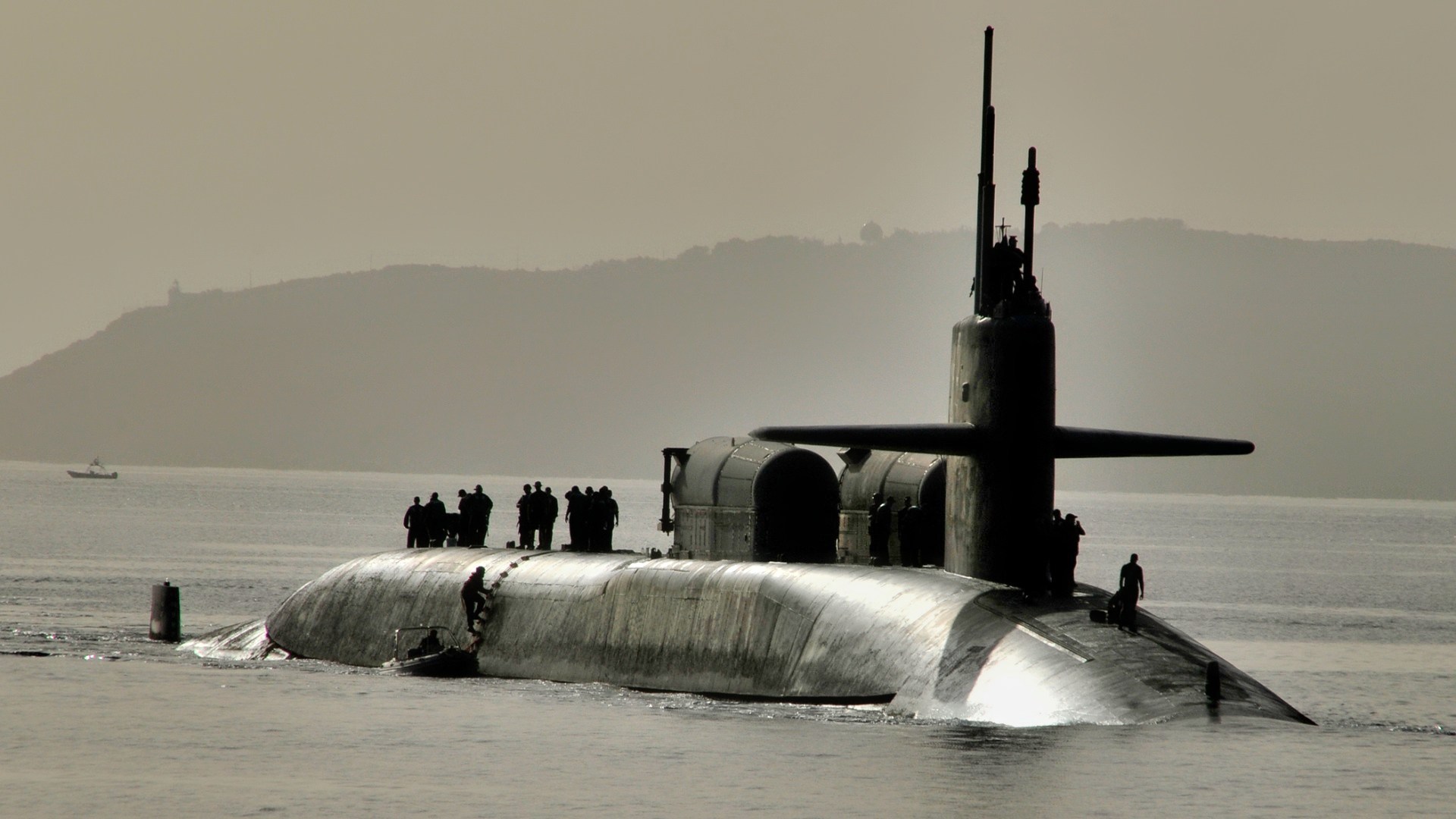
The guided missile submarine USS Florida (SSGN 728) arrives in Souda Bay, Greece, May 21, 2013, for a scheduled port visit. The Florida was underway in the U.S. 6th Fleet area of responsibility conducting maritime security operations and theater security cooperation efforts. (U.S. Navy photo by Paul Farley/Released)

The Ohio-class ballistic-missile submarine USS Maine (SSBN 741) begins a dive into the Strait of Juan de Fuca off the Washington Coast, March 18, 2025, during routine operations. Special units within the Coast Guard are tasked with the protection of U.S. Naval submarines while surfaced and transiting U.S. territorial waters to and from their patrol stations. (U.S. Coast Guard photo by Petty Officer 1st Class Steve Strohmaier)
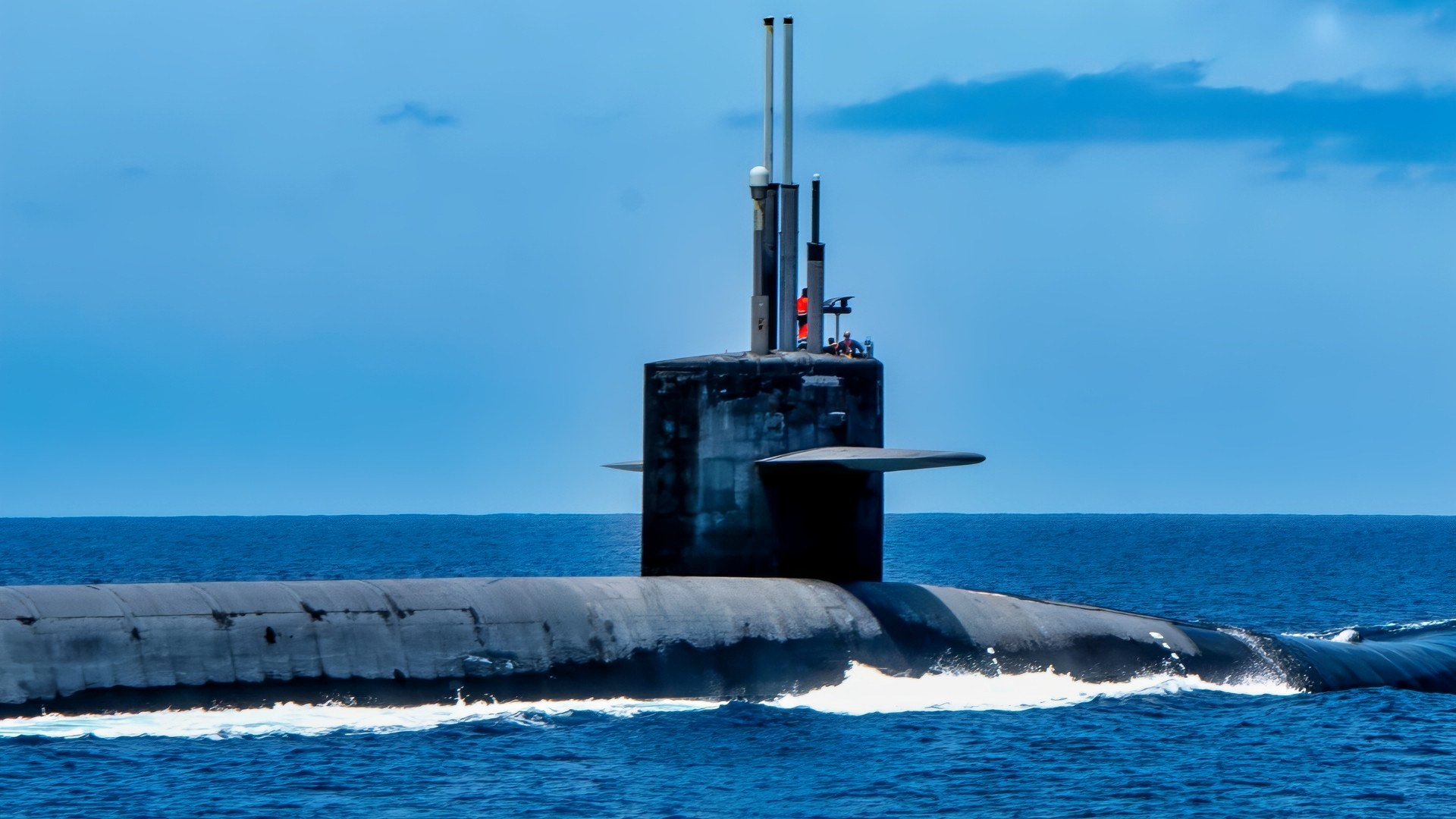
(July 29, 2025) – A U.S. Air Force A10C Thunderbolt II flies over the Ohio-class ballistic missile submarine USS Kentucky (SSBN 737) in the Pacific Ocean, July 29, 2025. The armed airborne escort exercise is designed to increase and demonstrate the Joint Force’s capability to protect strategic assets like Kentucky. Submarine Group (SUBGRU) 9, exercises administrative and operational control authority for assigned submarine commands and units in the Pacific Northwest providing oversight for shipboard training, personnel, supply and material readiness of submarines and their crews. SUBGRU-9 is also responsible for nuclear submarines undergoing conversion or overhaul at Puget Sound Naval Shipyard in Bremerton, Washington. (U.S. Navy Photo by Lt. Zachary Anderson)
The U.S. Navy operates 14 Ohio-class ballistic missile submarines as part of America’s nuclear triad alongside land-based intercontinental ballistic missiles and strategic bombers. The submarines are widely considered the most survivable part of that triad because adversaries generally cannot locate them.
Each Ohio-class SSBN is capable of carrying Trident II D5 submarine-launched ballistic missiles with ranges exceeding 4,000 miles.
The submarines are built to conduct extended deterrence patrols while remaining submerged for months, surfacing only rarely for logistics, maintenance, and crew transfers.
That’s why even routine port visits by ballistic missile submarines often become geopolitical signals; during periods of heightened tensions, the Pentagon has occasionally allowed carefully controlled disclosures involving SSBNs or guided-missile submarines to send deterrence messages to adversaries without issuing direct threats.
We saw similar signaling in 2022 when USS West Virginia surfaced in the Arabian Sea amid tensions with Iran, and again in 2023 when the guided missile submarine USS Florida entered the Middle East during the Israel-Hamas conflict.
In its announcement, the Navy also acknowledged the strategic role of the Ohio-class as “undetectable launch platforms” that provide the “most survivable leg of the nuclear triad.”
Even just the act of surfacing carries strategic implications.
Once a ballistic missile submarine enters port, nearby intelligence services and military observers can begin monitoring movements, timing, logistics activity, and support vessels.
It means that, from the date of the disclosure, people can theoretically track the submarine for a period of time – and that’s one reason why SSBN port visits are comparatively rare and tightly controlled compared to other naval deployments.
Why Gibraltar?
The submarine’s arrival in Gibraltar is especially significant because of the territory’s location at the entrance to the Mediterranean Sea.
Gibraltar sits beside one of the world’s most important maritime chokepoints, controlling access between the Atlantic Ocean and the Mediterranean.
For decades, Gibraltar has served as a critical logistics and naval operating hub for NATO and Western maritime operations.
The area provides access not only to the Mediterranean but also to routes leading toward the Middle East, North Africa, and the Black Sea.
The Sixth Fleet described the port visit as a demonstration of “U.S. capability, flexibility, and continuing commitment to its NATO allies.”
That specific messaging is notable because President Trump has repeatedly criticized NATO allies in recent years, and increasingly throughout the Iran conflict, arguing that European governments have not adequately supported U.S. operations.
At the same time, tensions continue surrounding the Strait of Hormuz, through which roughly one-fifth of global oil and liquefied natural gas normally passes.
Iran has repeatedly used the waterway as leverage during negotiations and has partially disrupted shipping during the current conflict.
The appearance of a nuclear ballistic missile submarine in the Mediterranean, therefore, serves multiple strategic purposes: it reassures allies, signals continued U.S. strategic reach, and serves as a reminder to adversaries that American nuclear deterrence remains active despite regional instability.
The Ohio-Class Is Already Nearing Retirement
The arrival in Gibraltar is also interesting because it took place during a transitional period for America’s sea-based nuclear deterrent.
The Ohio-class ballistic missile submarines first entered service during the 1980s, and the Navy is now preparing to gradually replace them with the next-generation Columbia-class SSBN fleet beginning later this decade.
The Columbia program could ultimately cost more than $130 billion, making it one of the most expensive military procurement efforts in modern U.S. history.
Delays to submarine industrial production have already become a growing concern for Pentagon planners as tensions rise simultaneously with China, Russia, and Iran.
America’s aging nuclear deterrent fleet is still central to global strategic stability – and despite its age, it remains hugely effective.
About the Author: Jack Buckby
Jack Buckby is a British researcher and analyst specializing in defense and national security, based in New York. His work focuses on military capability, procurement, and strategic competition, producing and editing analysis for policy and defense audiences. He brings extensive editorial experience, with a career output spanning over 1,000 articles at 19FortyFive and National Security Journal, and has previously authored books and papers on extremism and deradicalization.


