

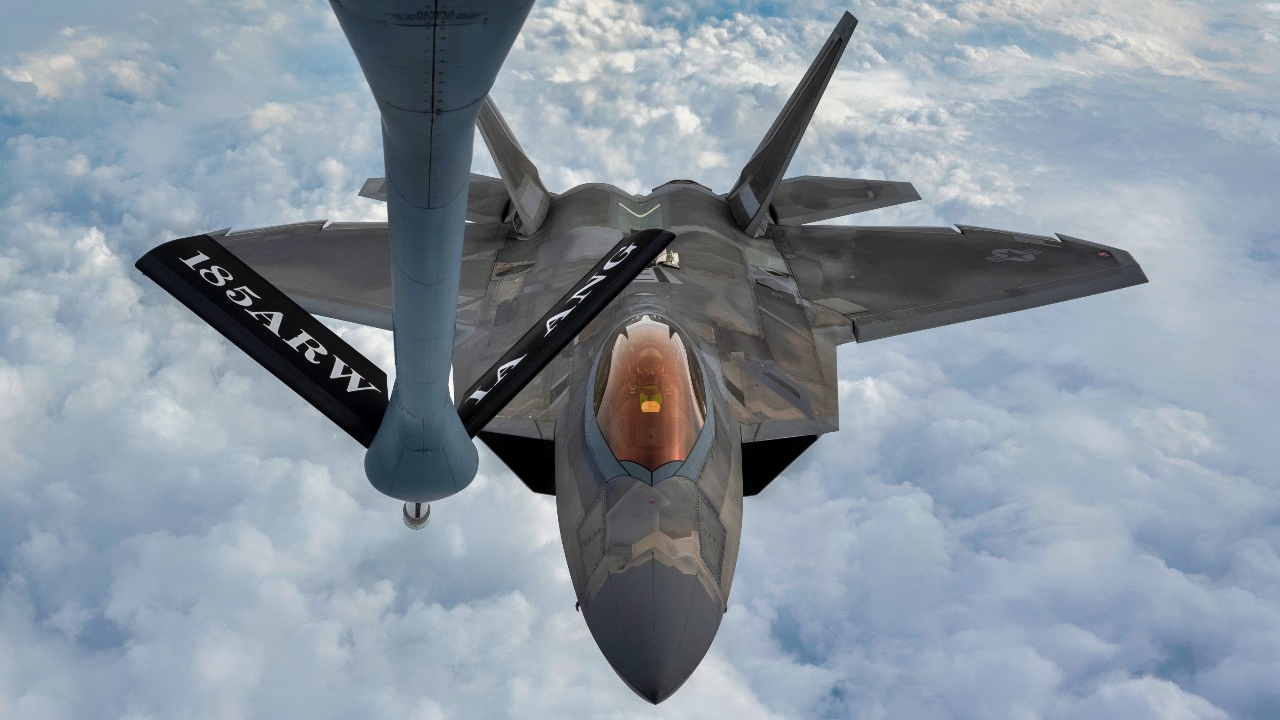
Chinese President Xi Jinping warned that mishandling Taiwan could lead to “collision or conflict” between China and the United States during the Trump-Xi summit in Beijing. Xi called Taiwan “the most important issue” in U.S.-China relations. What happens next?
The U.S.-China Summit Is Over: What Were the Results?
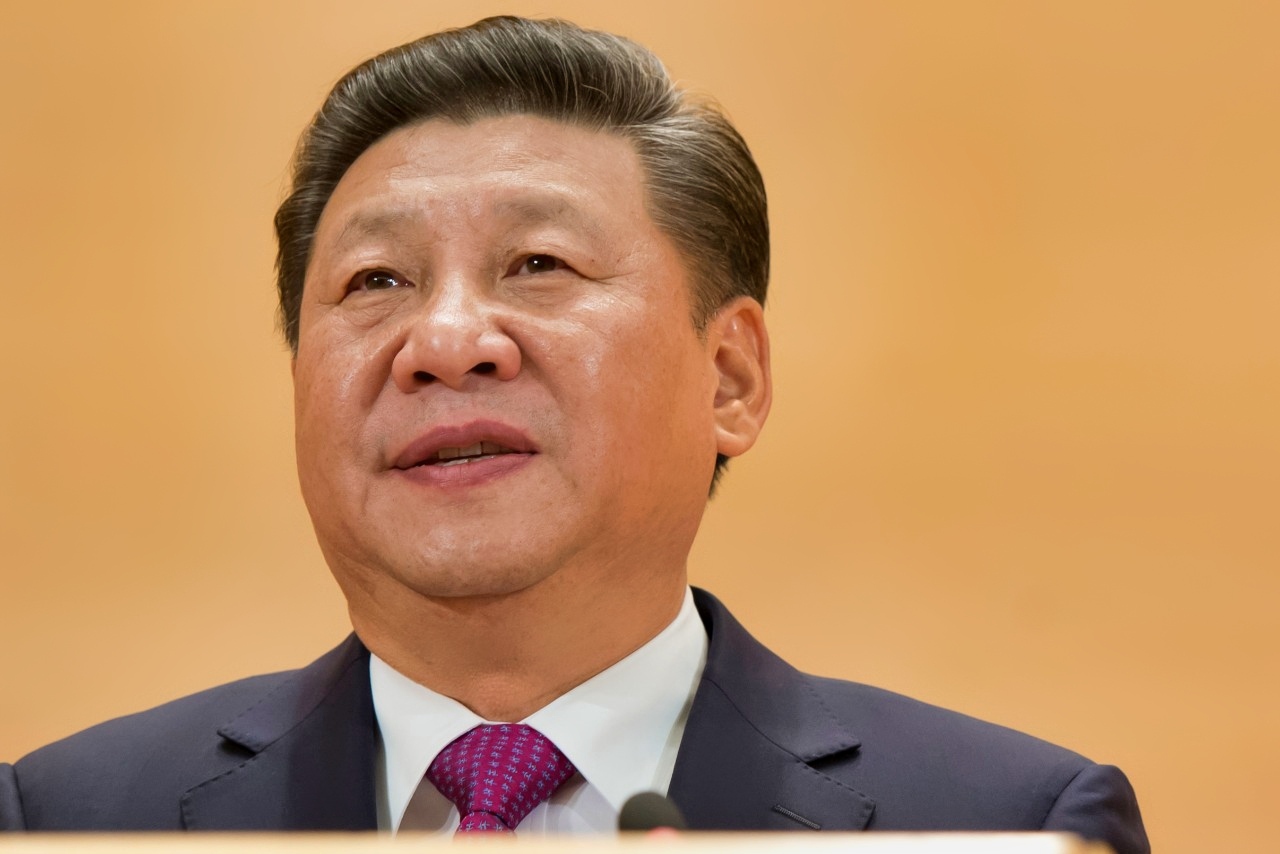
Xi Jinping, President of the People’s Republic of China, speaks at the United Nations Office at Geneva. 18 January 2017.
Xi Jinping chose his words carefully in Beijing on Thursday. Sitting across from Donald Trump at the Great Hall of the People, China’s president called Taiwan “the most important issue” in U.S.-China relations and then delivered this: “Handle it well, the relationship holds; handle it badly, the two countries risk collision or conflict.”
Heads of state don’t say that in front of cameras without meaning it. Xi said it on his own soil, as host, with no apparent hesitation — and he said it to a president who has sometimes treated alliances as negotiating chips.
Read it again: collision or conflict. Not the language of a leader playing to domestic audiences. A calculated signal, delivered from a position of growing confidence, to a country Xi believes he has correctly sized up.
Whether he’s right is the question nobody in the summit coverage seems to be asking.
The Military Challenge
Three days before Air Force One touched down in Beijing, CSIS published a brief by Seth G. Jones that deserved far more attention than it got. The U.S. military, Jones assessed, would struggle seriously in a protracted war against China. Stockpiles of SM-6, JASSM, and Tomahawk missiles are insufficient for a sustained Indo-Pacific campaign — rebuilding them takes three to four years per system, and air defense interceptors aren’t in much better shape.
The unmanned systems inventory needed to execute the Pentagon’s own Hellscape concept of operations — flooding the Taiwan Strait with autonomous platforms in the opening hours of any conflict — does not yet exist at scale. Indo-Pacific basing remains exposed.
China’s military planners have read this assessment. So has Xi.
The summit’s dominant press frame has been stability. Two leaders agreeing to a “constructive, strategic, and stable” relationship — Beijing’s phrase, worth noting — with business leaders in tow and state banquets at Zhongnanhai. Secretary Rubio confirmed afterward that U.S. policy on Taiwan is “unchanged.” He’s correct on that. But a policy position and a deterrent capability are not the same thing, and conflating them is how serious people make serious errors.
There is a surface reading of this summit that holds up fine. Trump and Xi agreed that Iran cannot have nuclear weapons. Both sides want the Strait of Hormuz open. AI dialogue is getting a framework. A dozen American CEOs got face time with Chinese counterparts.
Fine. But none of those conversations carries the weight of the Taiwan exchange — the one in which Beijing issued an explicit warning, and Washington issued a reassurance. Strategically, those aren’t equivalent statements.

China J-36 Fighter Takeoff. Image Credit: X Screenshot.
Xi’s willingness to be that direct is the tell. In 2017, when Trump last set foot in China, Beijing was still projecting cautious optimism. Nine years later, CSIS’s China analysts observe that Beijing enters this summit “remarkably more confident.”
The PLAN has added more warships over the past decade than most navies field in total. The PLA Rocket Force’s DF-21D anti-ship ballistic missiles — built specifically to hold U.S. carrier strike groups at risk beyond the first island chain — have multiplied steadily throughout that period. By CSIS estimates, China is acquiring high-end weapons systems at a rate 5 to 6 times that of the United States.
The 1996 Taiwan Strait playbook — carrier groups as the answer — belongs to a different era of military thinking.
That’s not a message anyone in the Eisenhower Building is eager to receive. Receive it they will, one way or another.
Leader-level summits between major powers serve a purpose, and this one was no exception. But grading them on atmospherics rather than strategic outcomes is a habit that gets countries into trouble.
Xi left Beijing with his preferred framework enshrined, his Taiwan warning on the record, and his confidence — by all appearances — intact. Trump left saying “a lot of different problems” had been settled, without naming one.
That asymmetry should be keeping INDOPACOM planners up at night.
Congress and the Pentagon know what the list looks like. Multiyear procurement contracts to rebuild SM-6 and JASSM stockpiles. Hardened basing that can absorb a DF-21D first salvo.
An unmanned systems inventory that makes Hellscape operational rather than theoretical. Alliance architecture deep enough that Taiwan’s defense is a collective calculation — not a bilateral negotiation between Washington and Beijing conducted over a state banquet.

DF-31 Map Chinese ICBM Missiles. Image Credit: Creative Commons.
Xi told the room exactly what he thinks is at stake. He called Taiwan the issue where mishandling leads to collision or conflict. He said it in his own capital, in front of cameras, to an American president. That is a strategic communication, not a diplomatic pleasantry.
The question isn’t whether Xi is bluffing. The question is whether America is ready enough that Xi has reason to wonder the same thing about us. Based on the open-source military assessments published the same week as the summit, the honest answer is: not yet.
Beijing heard that answer before Trump’s plane left the tarmac.
About the Author: Dr. Andrew Latham
Andrew Latham is a professor of international relations and political theory at Macalester College in Saint Paul, MN. You can follow him on X: @aakatham.


chuanpu
May 15, 2026 at 4:53 pm
The US will one day enter the. record books as the instigator or stoker and/or initiator (banker) of ww3.
How.
By deliberately supplying military weapons to three brewing hotspots around the world.
In europe, US could end up sparking ww3 there by its continuing supply of weapons to hardcore resurgent nazis.
In the middle east, continuing supply of weapons to Israel is today the most natural method to ignite ww3 in the volatile region.
In east asia, continuing supply of weapons will spark ww3 in the area.
Right now, east asia is the only area seeing no clashes, unlike the other ones, but japan, not taiwan, right now, today, poses the greatest danger or most heightened risk to china.
So, xi jinping better stop his ongoing endless internal purges, and start doing something about the hundreds of thousands of jap citizens currently staying in china.
What are they doing in china, are they secretly spying, or carrying out clandestine activities, or laying the ground work for coming war or outlining potential sabotage.
That was exactly the case in south-east asia (and also in hawaii), just before the outbreak of ww2.