

In the last few days, there hasn’t been much news to suggest hope for a deal between the U.S. and Iran to end their war. Talks between Iran and Oman over the status of the Strait of Hormuz have been reported as close to a deal for nearly a week, without any announcement of a final one, while at the same time Iranian officials have been clear that an Iran/Oman deal would not count as a “reopening” of the waterway.
Meanwhile, Iranian officials and Trump have both been making public demands, including for war reparations, while the president said in an interview that they were “low-keying it” and only “semi-negotiating” with Iran. There have been conflicting reports about the extent of the U.S.’s direct involvement in the talks between Oman and Iran.
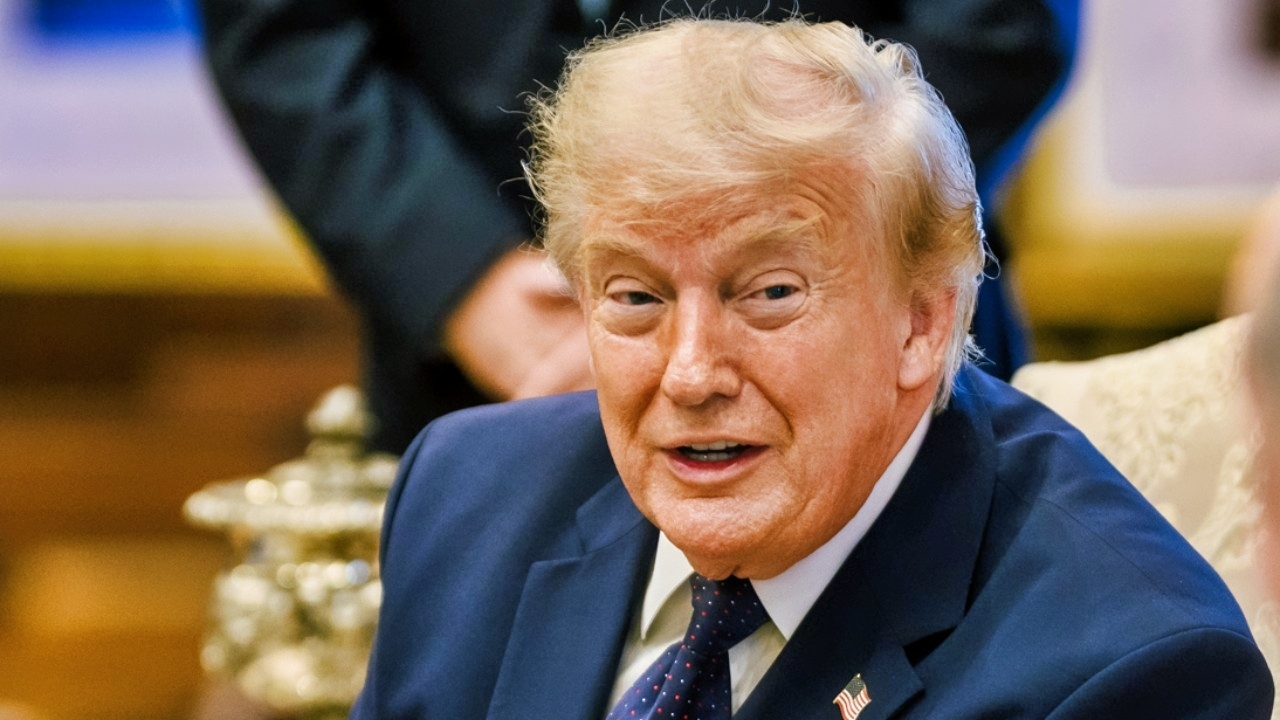
President Donald J. Trump participates in a restricted bilateral meeting with President Recep Tayyip Erdogan of Turkey, Tuesday, July 7, 2026, at the Bestepe Presidential Compound in Ankara, Turkey. (Official White House Photo by Daniel Torok)
Trump, Bloomberg News reported, has “hardened his stance” on Iran.
“I am likewise demanding compensation from Iran, for all of the people that they have killed and gravely wounded with their roadside bombs and many conflicts,” Trump said in a Monday Truth Social post. He also called for “reparations” for the people Iran killed in domestic protests before the war began, as well as Americans killed by Iran and its proxies in past conflicts.
This followed multiple public statements from Iranian officials, including one that made a series of six demands in exchange for opening the Strait of Hormuz. These included a pullback of U.S. personnel in the region, war reparations, a cessation of attacks by Iranian allies, the release of foreign assets, and the lifting of sanctions on Iran.
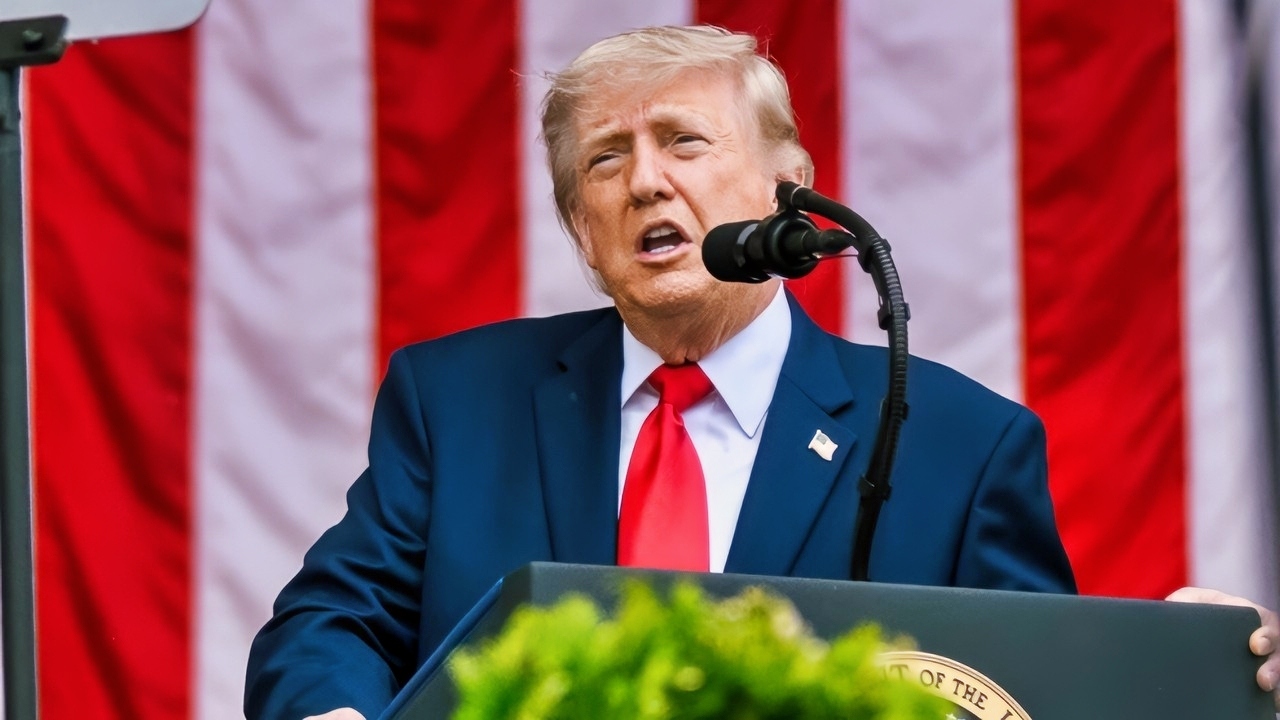
President Donald J. Trump delivers remarks during a Memorial Day ceremony at Arlington National Cemetery Amphitheater, Monday, May 25, 2026, in Arlington, Virginia. (Official White House Photo by Daniel Torok)
“Until America corrects its behavior, the Strait of Hormuz will not be reopened,” Mohammad Bagher Zolghadr, the outgoing secretary of the Supreme National Security Council, said this week.
However, a new report on Tuesday showed optimism about a potential deal.
“Some Sort of Arrangement”
CNBC reported Tuesday that a senior Pakistani minister, Defense Minister Khawaja Asif, had said the United States and Iran were approaching “some sort of arrangement” over the status of the State of Hormuz, even as the two countries’ leaders sniped at each other publicly. That report referenced “U.S. and Iran,” not “Oman and Iran,” although it’s the latter pair that has been in talks in recent days.
“Things are shaping up again in favor of a peace arrangement or a deal,” Asif told Bloomberg News on Tuesday. “The signals in the last two to three days are that we are close to some sort of an arrangement.”
There were no indications of exactly what had been agreed to, or whether the widely reported contours of the deal as of last week — Iran controls incoming shipping traffic, while Oman controls outgoing, with each having its own lane — remain the framework now. Some reports have stated that Iran would collect tolls under that arrangement, while others have called it a no-go.
A Qatari Foreign Ministry spokesperson had told Al Jazeera that the talks had reached a “critical juncture.” That outlet also reported that Pakistan’s Interior Minister Mohsin Naqvi had arrived in Tehran for talks with Iranian officials.
What Happens Next?
If a deal between Iran and Oman on the Strait of Hormuz is reached, what are the next steps? It would presumably be followed by additional talks, whether directly or through intermediaries, between the U.S. and Iran over a more permanent solution to the conflict, including the status of the State of Hormuz and Iran’s nuclear program.
Per a CNBC report on Monday, Trump has indicated that the U.S. strategy has shifted and will now focus on applying economic pressure on Iran, as opposed to threatening new military strikes.
Meanwhile, a senior Iranian official said this week, per that report, that the U.S. must meet the conditions agreed to in the mid-June “memorandum of understanding,” the agreement that collapsed after it became clear that the sides had significant disagreements about exactly what it meant.
Iranian Foreign Minister Abbas Araghchi, according to Tasnim News Agency, said on August 9 that there was “no possibility of restarting negotiations” as long as the U.S. was in breach of the June memorandum. However, the foreign minister added that “Intermediaries are still making efforts to find ways to resume negotiations.”
About the Author: Stephen Silver
Stephen Silver is an award-winning journalist, essayist, and film critic, and contributor to the Philadelphia Inquirer, the Jewish Telegraphic Agency, Broad Street Review, and Splice Today. The co-founder of the Philadelphia Film Critics Circle, Stephen lives in suburban Philadelphia with his wife and two sons. For over a decade, Stephen has authored thousands of articles that focus on politics, national security, technology, and the economy. Follow him on X (formerly Twitter) at @StephenSilver, and subscribe to his Substack newsletter.


