

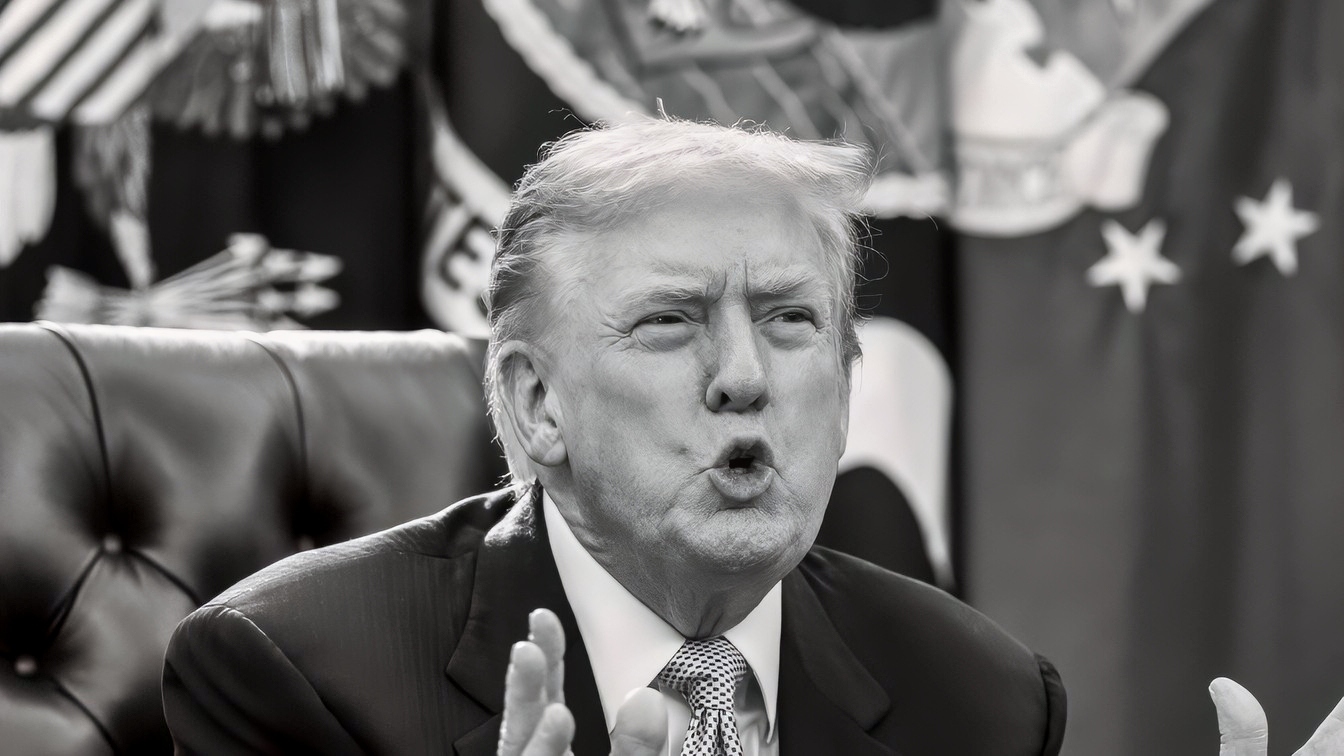
Trump says he is not rushing to decide on a new large-scale strike on Iran, despite renewed fighting between the two countries.
On Tuesday, the U.S. attacked an Iranian missile launch site after Iran targeted an American radar station in Bahrain.
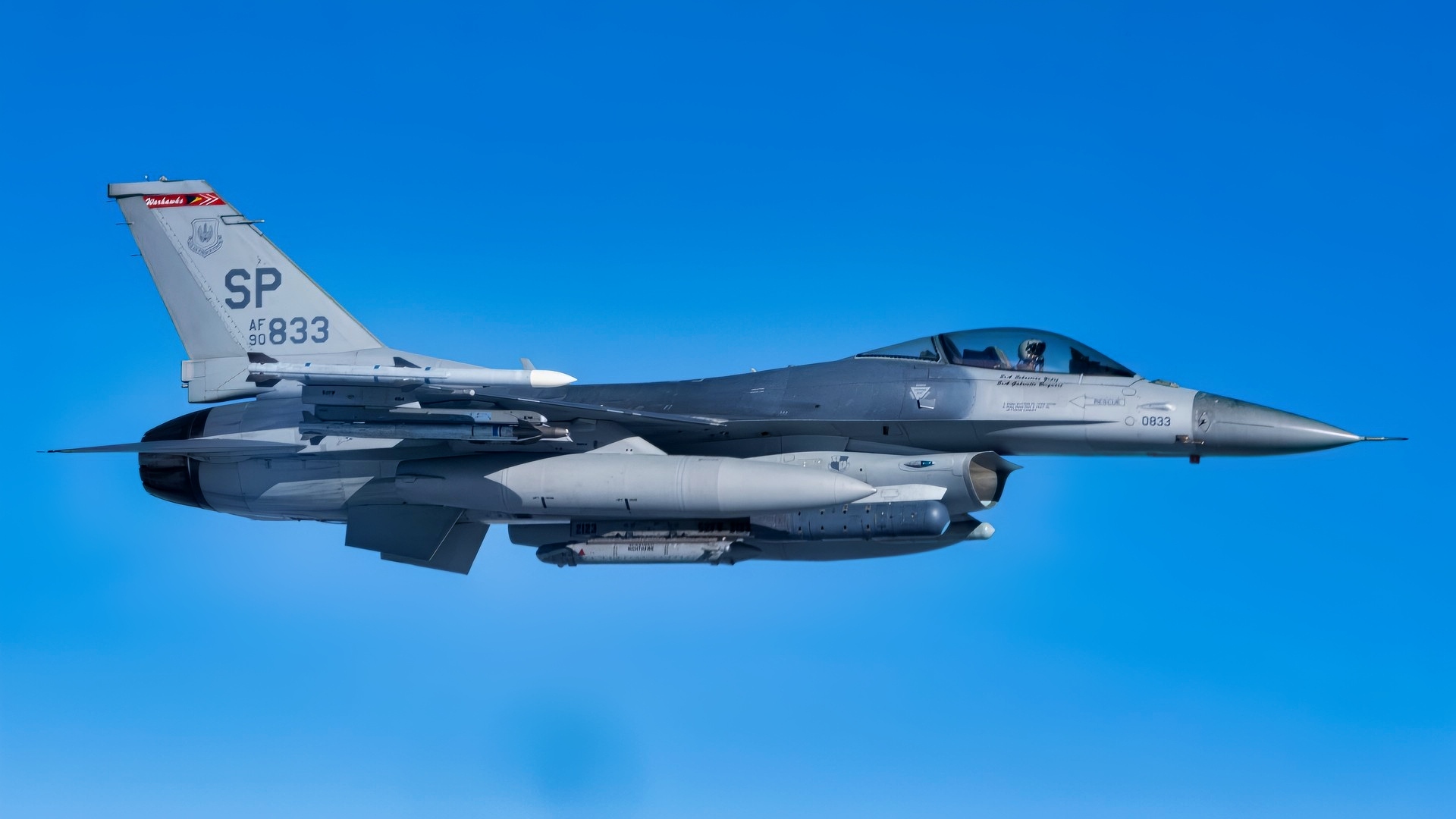
A U.S. Air Force F-16 Fighting Falcon from the 52nd Fighter Wing, Spangdahlem Air Base, Germany, flies during an Agile Combat Employment movement over Poland, Feb. 29, 2024. ACE is a military concept aimed to deny adversaries the advantage of predictability, while concurrently enhancing U.S. Air Forces in Europe’s capacity to respond swiftly to emerging threats. (U.S. Air Force photo by Airman 1st Class Christopher Campbell)
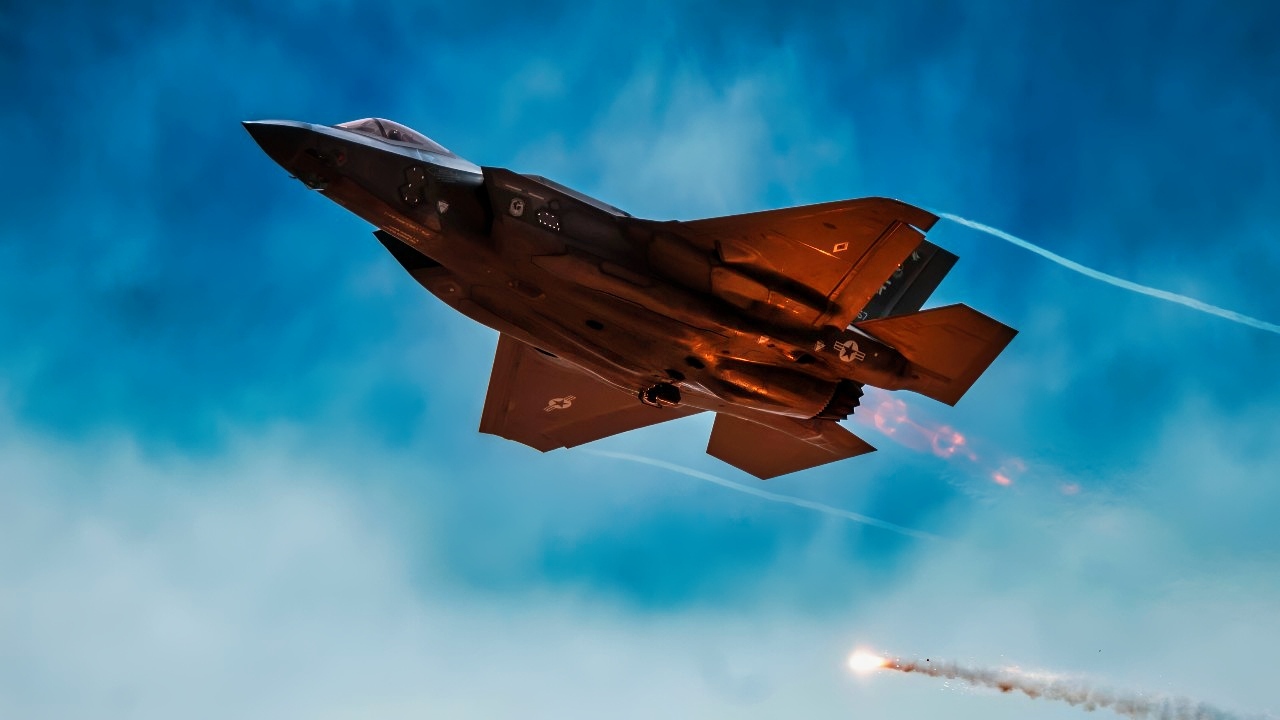
A U.S. Air Force F-35A Lightning II assigned to the 56th Fighter Wing, Luke Air Force Base, Arizona, performs a strafing run during Haboob Havoc, April 24, 2024, over Barry M. Goldwater Range, Arizona. Haboob Havoc is a total force exercise that provides a way for pilots from various bases to demonstrate their skills across a diverse range of aircraft, including F-35 Lightning IIs, F-16 Fighting Falcons, and A-10 Thunderbolt IIs, while also testing their abilities in different mission sets such as dogfighting and gun runs. (U.S. Air Force photo by Airman 1st Class Mason Hargrove)
The following day, Iran launched attacks on a military facility hosting U.S. forces in Kuwait.
The exchange broke a roughly two-month lull in fighting as Washington stepped up its naval blockade, Reuters reported.
Iran Escalates Attacks in Bahrain
Iran launched another drone attack on a U.S. radar installation in Bahrain on Tuesday, November 17, the third such attack in recent days. Bahrain’s military said its air defenses had intercepted Iranian drones, condemning what it described as “treacherous Iranian aerial attacks.” The island state is home to the U.S. Navy’s 5th Fleet.
No U.S. personnel were injured, and U.S. equipment was not damaged.
Hours later, a U.S. fighter jet struck an Islamic Revolutionary Guard Corps (IRGC) missile launch site on Iran’s Qeshm Island using “precision munitions,” a U.S. official told the Associated Press on condition of anonymity.
Iran claimed that it carried out the attacks in retaliation for U.S. drone surveillance and strikes on Iranian communications towers.
Iran targeted Ali Al Salem Air Base in Kuwait on Wednesday.
Kuwait said it had shot down drones.
It did not immediately comment on any damage from the attacks. Kuwait’s Foreign Ministry condemned the November 18 drone attacks as “criminal” in a statement issued after the country reported intercepting multiple drones.
Qatar, which has been acting as a mediator between Washington and Tehran, said in a statement on Wednesday that the fresh attacks were a “dangerous escalation.”
Trump Delays Decision
“I am not rushing into any decision,” Trump told Axios in a phone interview aboard Air Force One as he returned from China on Thursday.
When asked separately by Reuters if new attacks were likely, Trump said: “Well, I’ll talk to you about it after the beginning of the year.” Meanwhile, Axios reports that Israeli Prime Minister Benjamin Netanyahu has been urging Trump to carry out a new bombing campaign.

F-16 Fighting Falcons assigned to the 114th Fighter Wing sit ready on the ramp while conducting an elephant walk at Joe Foss Field, South Dakota, July 2, 2025. The 114th Fighter Wing conducted an elephant walk to demonstrate its ability to project fighter airpower. (U.S. Air National Guard photo by Master Sgt. Luke Olson)
Qatar’s efforts to encourage negotiations between the two countries are complicated. According to Reuters’ November 9 reporting, an Iranian proposal envisaged Tehran lifting its restrictions on shipping through the Strait of Hormuz in exchange for an end to the U.S. naval blockade, sanctions relief and a halt to bombing.
Negotiations over Iran’s nuclear program would then follow.
On Thursday, the Republican-controlled Senate voted 51-48 against a House-passed resolution that would have required Trump to end U.S. hostilities with Iran unless Congress authorized them.
U.S. Intensifies Blockade
On Wednesday, the Joint Maritime Information Center (JMIC) issued an advisory stating that any ship loading Iranian cargo from blocked vessels may be considered to be evading the blockade if the cargo originated at an Iranian port or coastline.
Such ships may be intercepted, boarded, diverted, seized, or required to return to a port of origin. The blockade of Iranian ports and coastal waters has been in force since July 14.
On Tuesday evening, one ADNOC tanker was attacked in Hormuz. On Wednesday, the company said one crew member “remains unaccounted for” and 11 people were injured.
On Thursday, a further JMIC advisory was issued, noting further attacks on vessels on November 17 and 18 and another attack on a vessel which had previously been disabled.
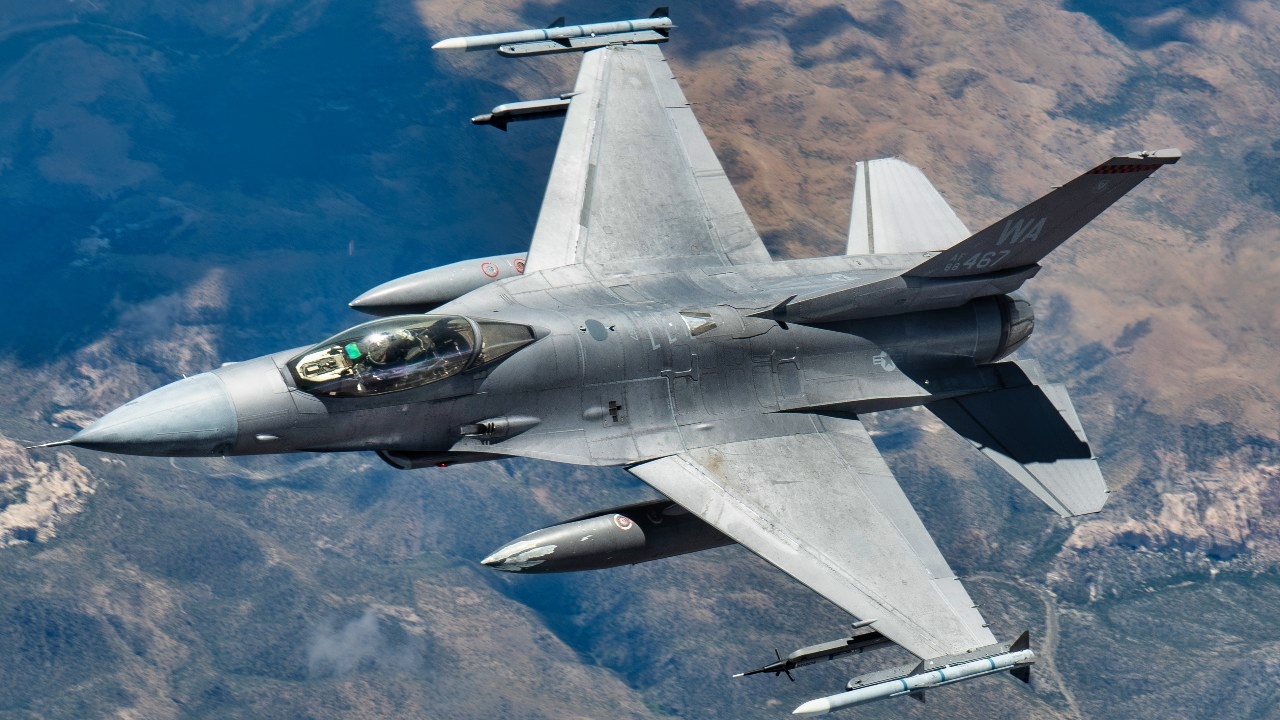
A U.S. Air Force F-16 Fighting Falcon assigned to the 16th Weapons Squadron flies over the Nevada Test and Training Range during a Weapons School Integration (WSINT) mission, June 9, 2025. WSINT is a graduate-level training event that combines multi-domain assets in large-force scenarios, enabling U.S. Air Force and joint service members to hone tactical expertise and integrate advanced capabilities in a dynamic threat environment. (U.S. Air Force photo by Staff Sgt. Jose Miguel T. Tamondong)
War Exposes U.S. Munitions Gaps
During a confirmation hearing in the Senate Armed Services Committee, acting Secretary of the Navy Hung Cao said missiles previously deemed “expired” had been used during the conflict. “A lot of the munitions we used in Epic Fury, we were able to recode those,” Cao told members of the committee.
The munitions had been classified under condition codes Echo and Foxtrot, which refer to equipment requiring restoration or repair.
In a report released November 19, the Government Accountability Office warned that the Iran conflict had “heightened the importance of addressing munitions stockpile and industrial base challenges.” The report noted that the Pentagon still lacks an overall strategy for aligning spending and production with military needs.
The agency did not include specific information on what shortages have occurred or how they have affected U.S. war planning in its public report.
About the Author: Georgia Gilholy
Georgia Gilholy is a journalist based in the United Kingdom who has been published in Newsweek, The Times of Israel, and the Spectator. Gilholy writes about international politics, culture, and education.


