
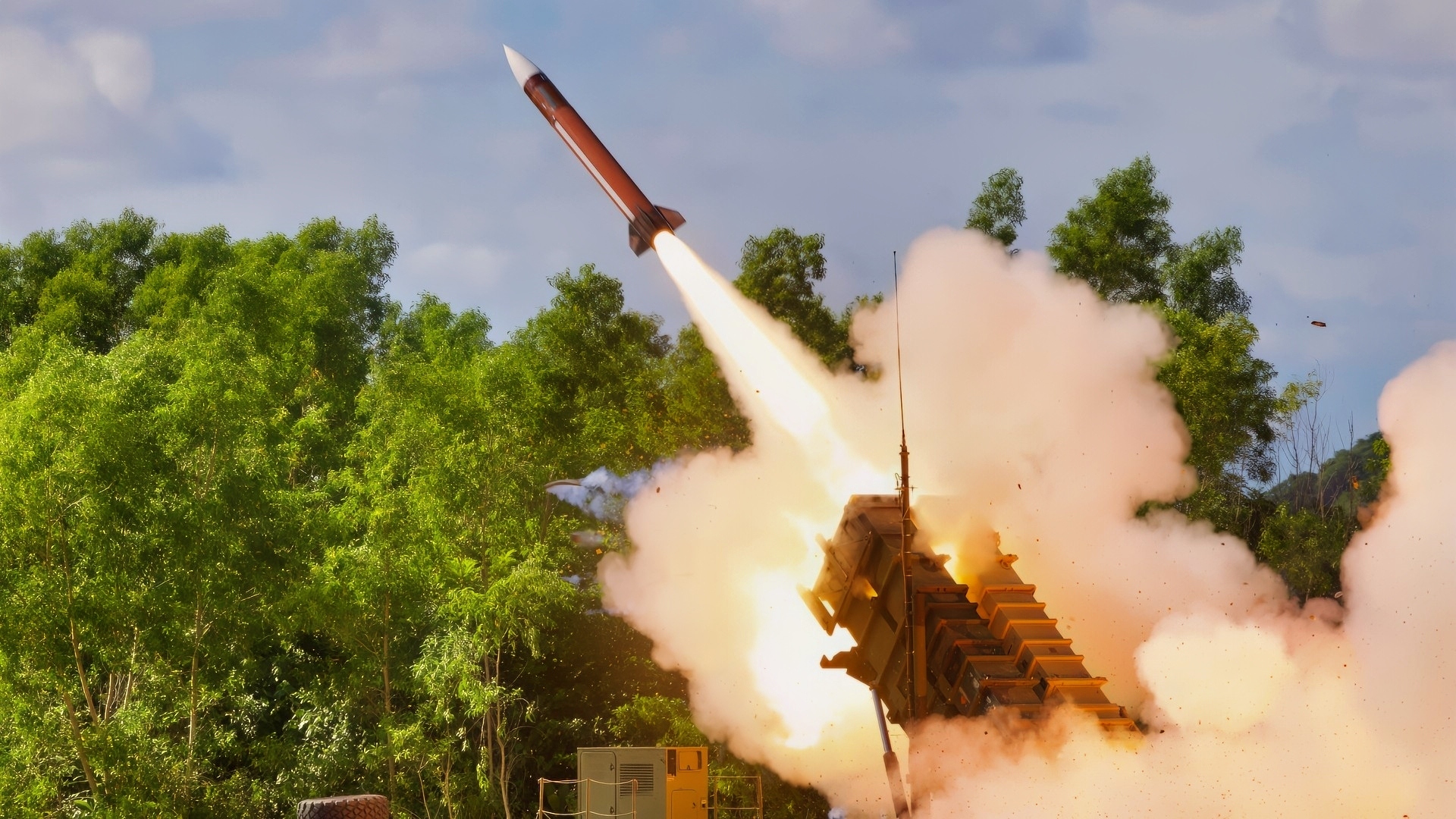
When U.S. President Donald Trump said over the weekend that the United States had stepped back from the brink of another major military escalation in Iran, claiming he had canceled a massive planned strike after receiving assurances that diplomacy would resume, he said talks were due to begin again on Monday.
Speaking to reporters aboard Air Force One on Sunday, August 2, Trump said that U.S. and Iranian representatives would start new discussions the following week, and that there would be a deal made on Iran’s nuclear program as well as the Strait of Hormuz.
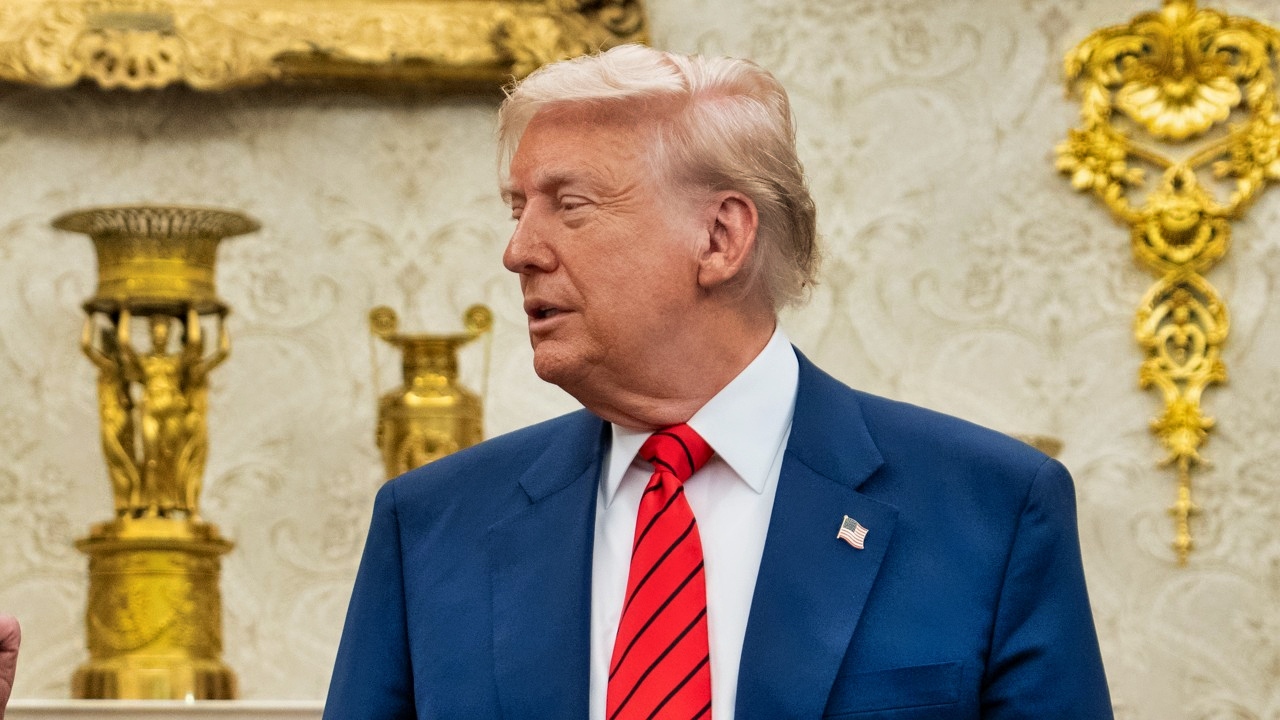
President Donald Trump meets with Canadian Prime Minister Mark Carney, Tuesday, May 6, 2025, in the Oval Office. Vice President JD Vance attends. (Official White House Photo by Emily J. Higgins)

Donald Trump at Ceremony. Image Credit: The White House.
While he did not set a deadline for the two sides to reach an agreement, he did say that diplomacy would need to move quickly to prevent further action.
The comments came after weeks of military strikes against Iran and threats of heightened military action if Iran refuses to negotiate – and only days earlier, the president had warned that Washington was prepared for “strong military action” if negotiations failed, telling Axios that there was “not much time” for diplomacy and that it either “goes fast or not at all.”
Trump Cancels Planned Attack
President Trump announced on Sunday, August 2, that he had called off a major new strike against Iran in a lengthy post on Truth Social.
The president said that the United States was “locked and loaded and ready to go against the Islamic Republic of Iran, at levels of Military Terror, Strength, and Power not seen since World War II.”
The president claimed that he was asked by Iran and other Middle Eastern countries to hold off on the attack “in that the perimeters of a deal have been agreed to.”
Talks Due to Resume On Monday
Speaking to reporters aboard Air Force One on Sunday, the president said that talks with Iran would begin on Monday.
“Now what we’re doing is we’re talking to them in the form of a negotiation. It begins tomorrow afternoon,” Trump said.
The president also indicated that the talks would likely move quickly following his decision to suspend military action – although it’s a claim he has made before.
By Monday, however, there was little evidence that meaningful negotiations had begun – and Iranian officials even rejected the premise that talks were taking place at all, or that Tehran was in a rush to make a deal.
Tehran Says Otherwise
Iran wasted little time publicly contradicting the president’s account. During his weekly press briefing in Tehran on Monday, Aug. 3, Foreign Ministry spokesman Esmail Baghaei flatly rejected the president’s claim that negotiations with the United States were due to begin that afternoon, saying no such talks had been arranged.
Baghaei told reporters that there are no negotiations with the United States at present and confirmed there were no plans to receive any delegation or travel to any country for negotiations with the United States in the coming days.
The words directly contradicted Trump’s assertion that Tehran had requested a meeting and scheduled it for the following week.
Instead, Baghaei said that the only diplomatic channel currently open involved Oman, having spent more than a week mediating technical discussions over commercial navigation through the Strait of Hormuz.
Those talks, Baghaei said, only involve regional partners and should not be considered part of any renewed U.S.-Iran negotiations.
Baghaei said that Iran and Oman are working to reach an agreement on a “temporary” route through the Strait of Hormuz.
The Talks Haven’t Materialized
By early Monday afternoon, there was still no indication that the negotiations Trump promised had actually begun, with neither the White House nor Tehran announcing the start of talks, and no venue or negotiating teams identified.
Writing on Truth Social, President Trump blamed Iran for the lack of progress, describing the regime’s leadership as “unbelievably duplicitous” and even accusing Tehran of lying.
In the post, Trump said Iranian officials had reached out to arrange a meeting with the U.S. before publicly claiming that the only ongoing discussions were with Oman.
“They ask for a meeting, some would say ‘beg,’ talks begin, with more scheduled in the immediate future, and they say, openly and proudly, that they’re not having any discussions, that nothing is being talked about, and they’re only dealing with ‘Oman,’” Trump said.
The president also criticized the regime’s claims that it controls the Strait of Hormuz – a claim that has been consistently made since the outbreak of the war.
Trump said that the waterway is open to commercial traffic and currently under U.S. control, following the reimposition of the naval blockade against Iran-linked ships.
“They … give their usual blather in saying, the Strait of Hormuz will be operated powerfully by them, when it is already completely controlled by the United States Navy and our ‘Blockade’ or, as some say, ‘The United States Wall of Steel!’ Trump also said, adding that Iran has a choice between a “deal” or “total surrender.”
About the Author: Jack Buckby
Jack Buckby is a British researcher and analyst specializing in defense and national security, based in New York. His work focuses on military capability, procurement, and strategic competition, producing and editing analysis for policy and defense audiences. He brings extensive editorial experience, with a career output spanning over 1,000 articles at 19FortyFive and National Security Journal, and has previously authored books and papers on extremism and deradicalization.


