

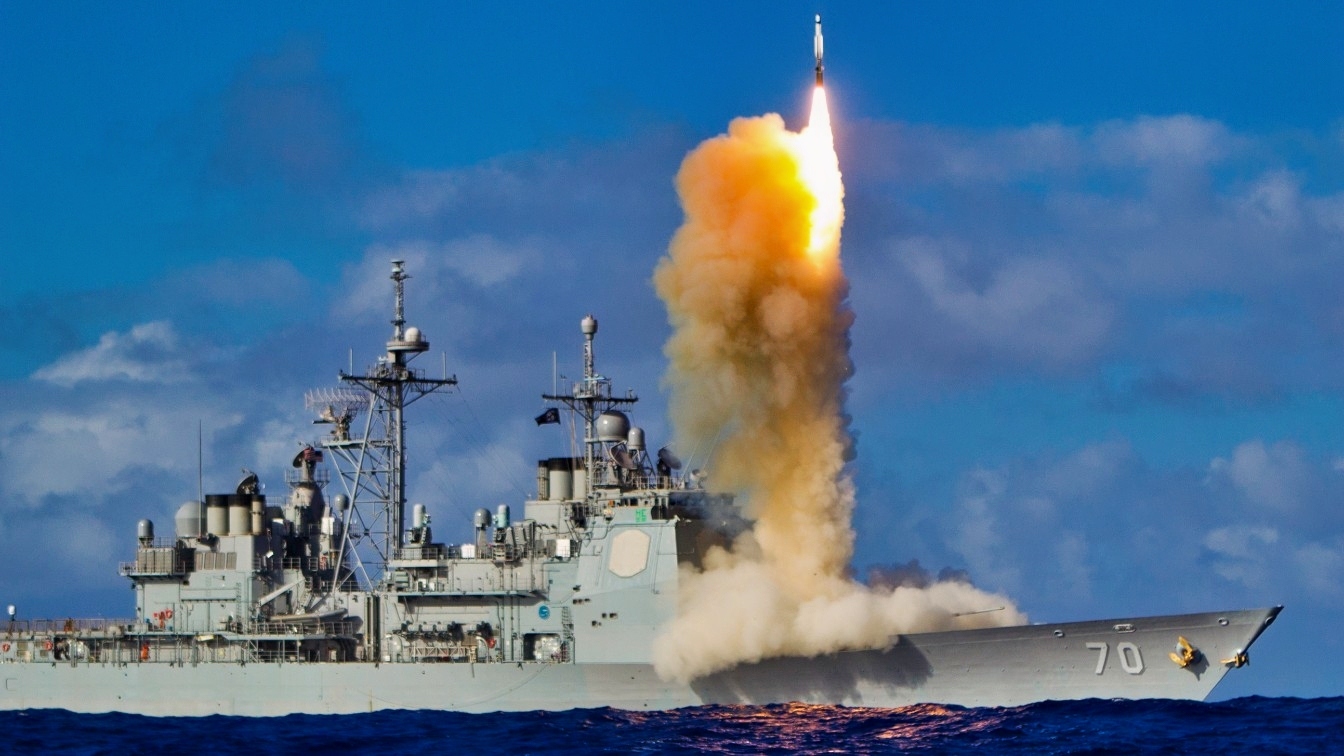
The Iranians rejected a proposal to divide control of the Strait of Hormuz evenly, jeopardizing hopes that Tehran and Washington would quickly resume negotiations to end the conflict.
Oman, which sits opposite Iran across the southern side of the strait, suggested a temporary plan to establish even lanes of control, but Tehran demanded Tuesday that it take the lion’s share of the waterway critical to the flow of the world’s oil supply, one of its top diplomats said.
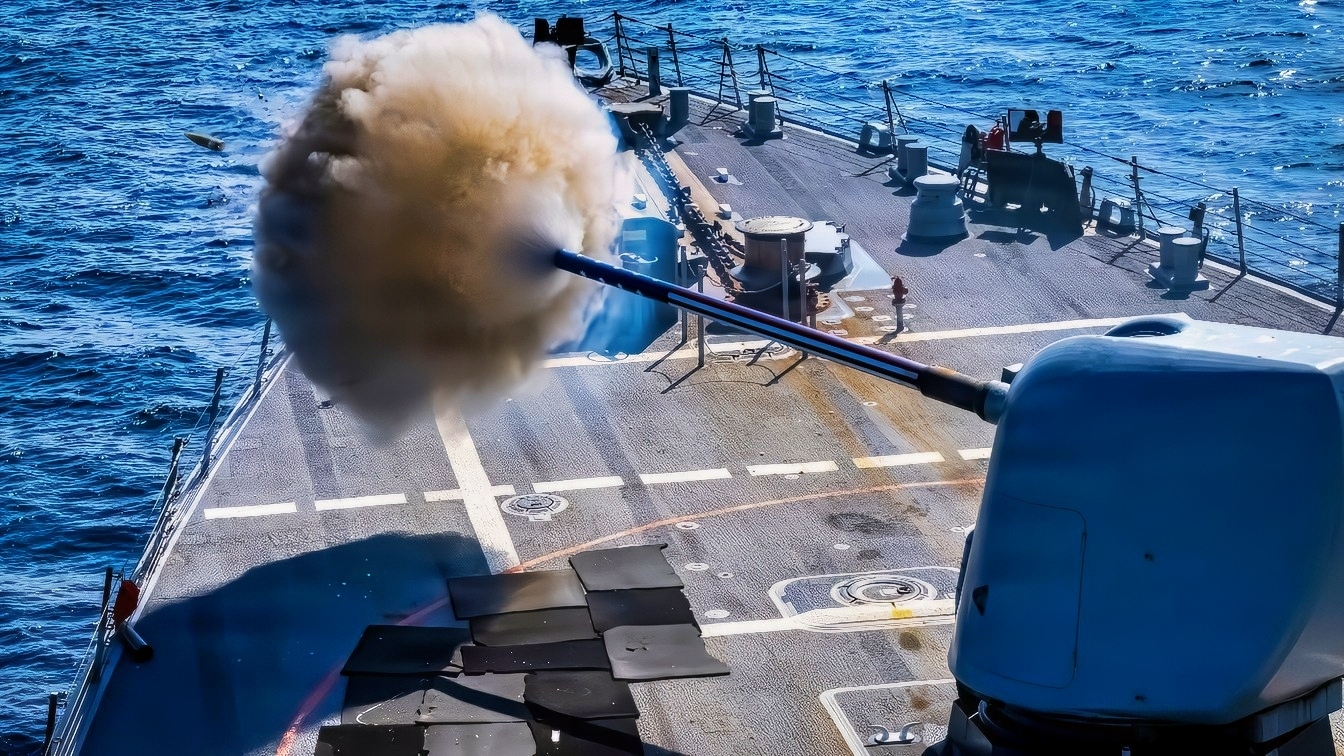
PACIFIC OCEAN (April 27, 2026) U.S. Navy Arleigh Burke-Class guided-missile destroyer USS John Paul Jones (DDG) 53, fires its Mk.45 5-inch deck cannon during a live fire exercise, April 27, 2026. John Paul Jones, part of the Theodore Roosevelt Carrier Strike Group, is underway in the U.S. 3rd Fleet area of operation conducting advanced training to bolster strike group readiness and capability. (U.S. Navy photo by Mass Communications Specialist 2nd Class Ryan Holloway)
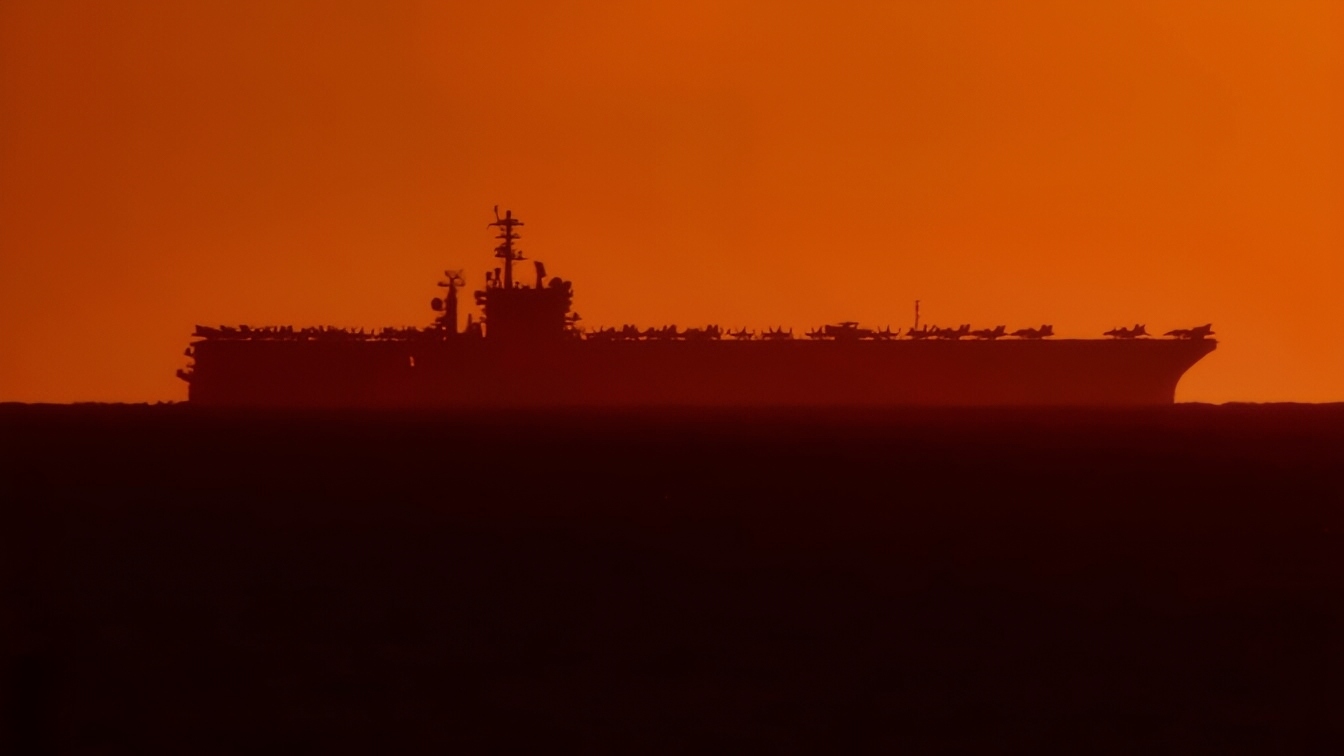
Indian Ocean (January 6th, 2021)
The aircraft carrier USS Nimitz (CVN 68) steams in the Indian Ocean, Jan. 6. Nimitz is the flagship of the Nimitz Carrier Strike Group and is deployed to the U.S. 5th Fleet area of operations to ensure maritime stability and security in the Central Region, connecting the Mediterranean and Pacific through the Western Indian Ocean and three critical chokepoints to the free flow of global commerce. (U.S. Navy photo by Mass Communication Specialist Seaman Drace Wilson)
Iran’s Deputy Foreign Minister Kazem Gharibabadi said in a state broadcast on Tuesday that Oman’s proposal had not sufficiently addressed Tehran’s concerns about control of the strait.
Iran’s “Temporary” Proposal Gives It Complete Control Of The Strait
Gharibabadi added that Iran has never recognized the southern shipping route along Oman’s coast as a permanent transit route.
Tehran has instead proposed “a temporary arrangement” that would place one entire transit lane and part of the opposite lane within Iranian territorial waters.
This, of course, would give Tehran complete control of the strait, which was its goal, and the temporary arrangement would be quickly forgotten, just like the Memorandum of Understanding (MoU).
“The inbound shipping lane must be entirely under Iran’s control, while part of the outbound lane may remain under Oman’s control,” Gharibabadi said. “If they accept this proposal, we will move on to the next stage.”
Iran Never Had Any Plans On Following The MoU
Prior to the beginning of the conflict, about 20 percent of the world’s oil and liquefied natural gas (LNG) supplies were shipped from Gulf producers via the Strait.
Traffic came to a virtual halt during the fighting, with few tankers making the passage, most of which did so with their transponders turned off, while transiting through the southern (Omani) side of the Strait.
After Tehran and Washington signed the MoU back in mid-June, the Iranians agreed to allow shipping to pass through the Strait of Hormuz.
They immediately insisted that all shipping be coordinated through their newly established Persian Gulf Strait Authority (PGSA), where they made clear their intention to charge tolls/fees for ships transiting the strait.
And they started attacking ships that passed on the southern side of the Strait.
Oman Wants Voluntary Fees, Which Is Why Iran Rejected It
Oman had initially stated that it didn’t want to enforce tolls on the Strait, but said it was proposing that shipping firms pay voluntary fees.
“Oman proposed to us the creation of a route in the Strait of Hormuz, with 50 percent of it located in our territorial waters and 50 percent in Omani territorial waters.
The route for ships to pass through the Strait of Hormuz could involve entering through our waters and exiting through Omani territorial waters,” Gharibabadi said on Iranian-state television.
He also said Iran would not allow any third country to conduct demining operations in the Strait of Hormuz, even if Oman requested such assistance.
Yet Iran has denied placing any mines in the Strait.
The Omani proposal is based on the Strait of Malacca, which connects the Indian and Pacific Oceans and is jointly managed by the states bordering it: Indonesia, Malaysia, and Singapore.
There, shipping firms make voluntary contributions for the upkeep of navigational safety aids, including buoys and lighthouses.
Iran rejected the proposal, unwilling to share control of the Strait of Hormuz with Oman, with an Iranian official telling Reuters that the U.S. and Saudi Arabia are seeking to pressure Oman into proposing these “unrealistic plans” for control of the waterway.
Tehran wants all inbound traffic in the Strait into the Persian Gulf to be under Iranian control, as well as part of the outbound lanes, according to the Iranian official who spoke to Reuters.
The US Sanctions IRGC-Linked Insurance Companies
In a State Department press release, “the United States designated the Persian Gulf Marine Insurance Company and Hormuz Safe Marine Services Authority, two Iranian entities backed by the Islamic Revolutionary Guard Corps (IRGC), for running coercive “insurance” schemes that extort international shipping transiting the Strait of Hormuz.
“These entities manufacture risk—including the threat of vessel seizures—and then charge commercial vessels for coverage against dangers created by the regime itself, generating revenue that sustains IRGC operations and Iran’s broader campaign of regional destabilization.”
“The United States also designated eight companies operating vessels that have transported illicit Iranian crude oil and petrochemical products to China and the United Arab Emirates.
These vessels form part of Iran’s “shadow fleet,” which the regime relies on to evade sanctions.”
About the Author: Steve Balestrieri
Steve Balestrieri is a National Security Columnist. He served as a US Army Special Forces NCO and Warrant Officer. In addition to writing on defense, he covers the NFL for PatsFans.com and is a member of the Pro Football Writers of America (PFWA). His work was regularly featured in many military publications.


