

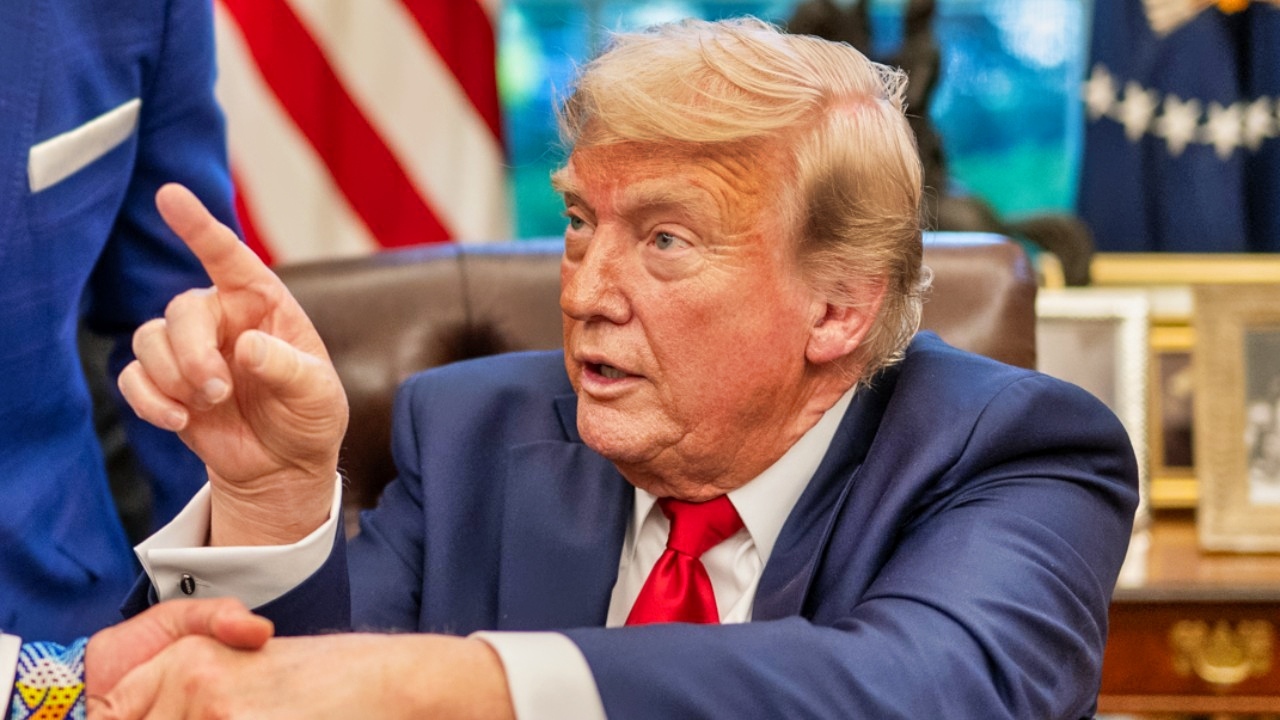
For some of the most controversial of its deportations, the Trump Administration has relied on a novel legal theory involving the Alien Enemies Act, a rarely-used law that dates back to the 18th century.
The Alien Enemies Act has mostly only been invoked in wartime, and in a March statement, the Trump White House issued a “proclamation” that, due to the “invasion” by the Venezuelan criminal organization Tren de Aragua (TdA), people associated with that organization are subject to immediate apprehension, detention, and removal, and further that they shall not be permitted residence in the United States.”
In early April, the Supreme Court allowed the Administration to use the Alien Enemies Act to deport individuals whom it believes are gang members, but those people must be given the right to fight deportation orders.
However, another court ruling this week went against the president’s position.
“The President Cannot Summarily Declare…”
The latest ruling came from U.S. District Judge Fernando Rodriguez of the Southern District of Texas, who is a Trump appointee.
The judge ruled that Trump cannot use the Alien Enemies Act to speed up deportations within that district. However, that district in Texas is a central one to the issue, as it is near the border and has numerous ICE detention facilities.
Per Judge Rodriguez, the president does “not possess the lawful authority under the AEA, and based on the Proclamation, to detain Venezuelan aliens, transfer them within the United States, or remove them from the country.”
The ruling, CNN noted, is “the first to conclude that the president exceeded his authority by relying on a law that was intended to be used during times when the US is at war.” Other rulings by other judges had issued temporary rulings that blocked deportations, but the Rodriguez order goes further.
“The President cannot summarily declare that a foreign nation or government has threatened or perpetrated an invasion or predatory incursion of the United States, followed by the identification of the alien enemies subject to detention or removal,” the judge continued.
Judge Rodriguez was nominated and confirmed to the bench in 2018, under Trump’s first term.
The Trump Administration, CNN said, will likely appeal to the 5th US Circuit Court of Appeals, with the question likely eventually to go before the U.S. Supreme Court.
How It Happened in Court
The New York Times reported on how the arguments happened in court, with the judge, described as “a bespectacled, soft-spoken 56-year-old nominated by President Trump,” had asked a Justice Department lawyer whether the administration could define what counts as an invasion, leading the judge to ask whether the powers to deport are “effectively limitless.”
The Times added that another case this week, also in Texas, resulted in the release of a Venezuelan couple, with Judge David Briones of the Western District of Texas, also rejecting government claims about the couple being members of a gang.
Reactions to the Ruling
Per CNN, ACLU attorney Lee Gelernt said that “the importance of this ruling cannot be overstated… this is the first court to squarely rule on the fundamental question of whether a wartime authority can be used during peacetime and properly concluded it can not.”
Andrew McCarthy, in National Review, gave a conservative analysis of the ruling.
“Although the AEA is [a] provision that has only been invoked three times in periods of declared war (the War of 1812 and World Wars I and II), Rodriguez agreed with the Trump Justice Department that a state of actual war is not required,” McCarthy wrote.
“Nevertheless, he held that, to trigger the AEA, an ‘invasion’ or ‘predatory incursion’ must involve ‘an organized, armed force entering the United States to engage in conduct destructive of property and human life in a specific geographical area.’
He went on to predict that the Administration will lose both in the appeals court and the Supreme Court.
About the Author: Stephen Silver
Stephen Silver is an award-winning journalist, essayist and film critic, and contributor to the Philadelphia Inquirer, the Jewish Telegraphic Agency, Broad Street Review and Splice Today. The co-founder of the Philadelphia Film Critics Circle, Stephen lives in suburban Philadelphia with his wife and two sons. For over a decade, Stephen has authored thousands of articles that focus on politics, technology, and the economy. Follow him on X (formerly Twitter) at @StephenSilver, and subscribe to his Substack newsletter.
Could Trump Be Impeached? Go Deeper…


