

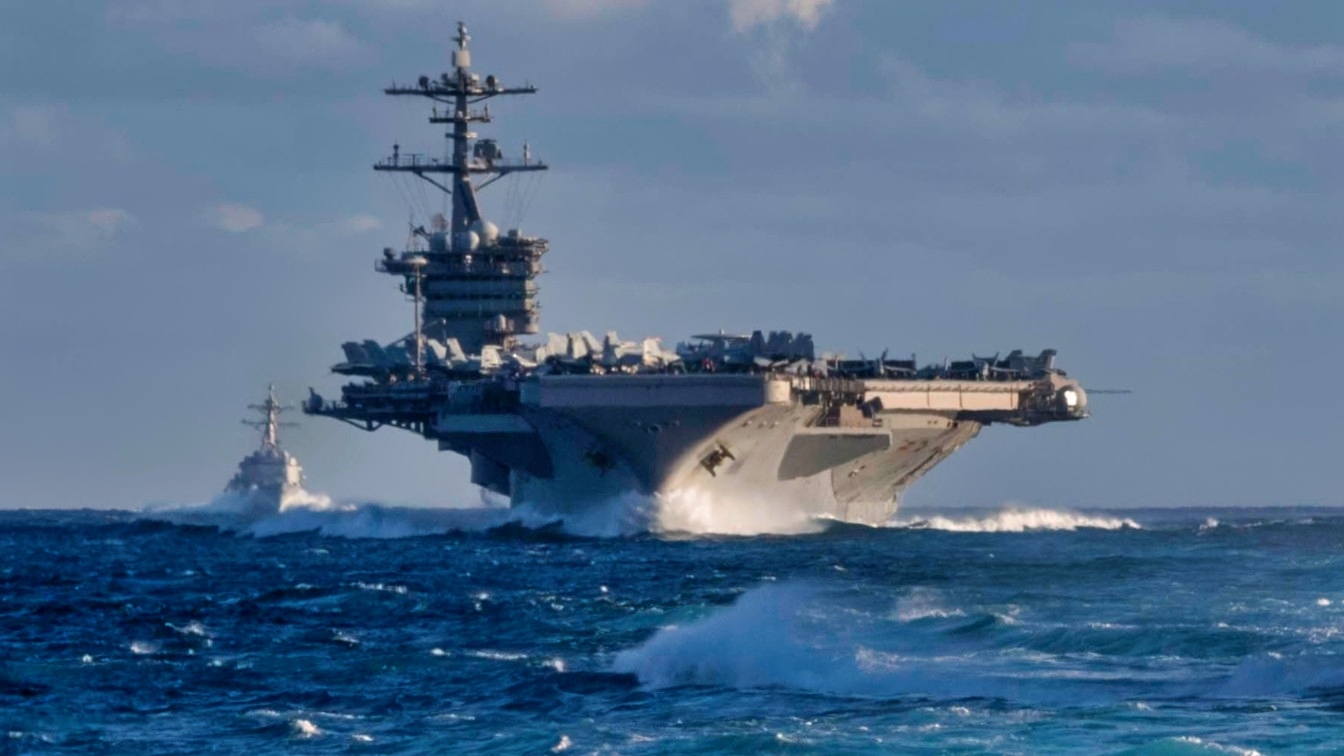
The USS Theodore Roosevelt aircraft carrier is headed to the Middle East. So is the amphibious landing ship USS Makin Island.
These large warships will arreks in the CENTCOM Area of Responsibility ( within the next few weeksAOR). Many speculate this will raise the president’s optionality on whether he wants to escalate.
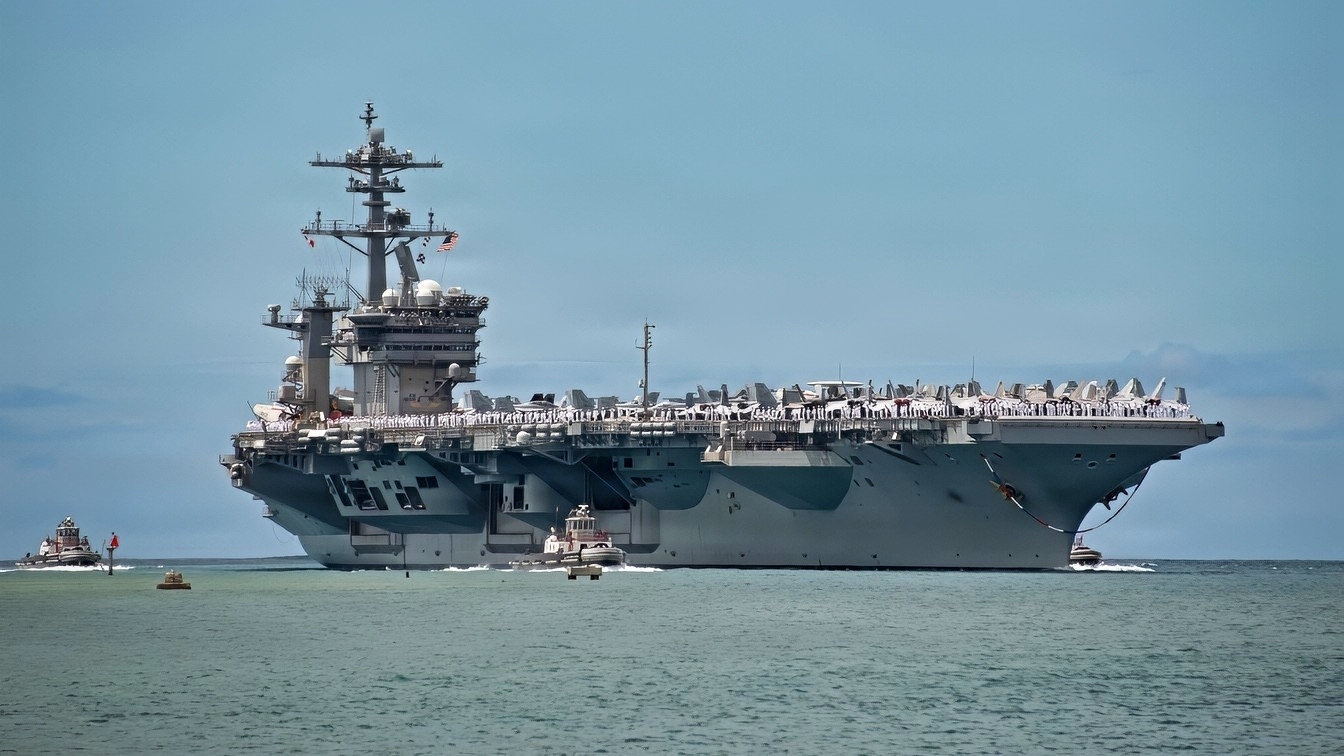
Nimitz-class aircraft carrier USS Theodore Roosevelt (CVN 71) arrives at Joint Base Pearl Harbor-Hickam, Hawaii, to participate in Exercise Rim of the Pacific 2026, June 23, 2026. Thirty-one nations, more than 36 surface ships, 5 submarines, 15 national land forces, more than 206 aircraft and 25,000 personnel are participating in RIMPAC in and around the Hawaiian Islands, June 24 to July 31. The world’s largest international maritime exercise, RIMPAC provides a unique training opportunity while fostering and sustaining cooperative relationships among participants critical to ensuring the safety of sea lanes and security on the world’s oceans. RIMPAC 2026 is the 30th exercise in the series that began in 1971. (U.S. Navy photo by Mass Communication Specialist 1st Class Erik Melgar)
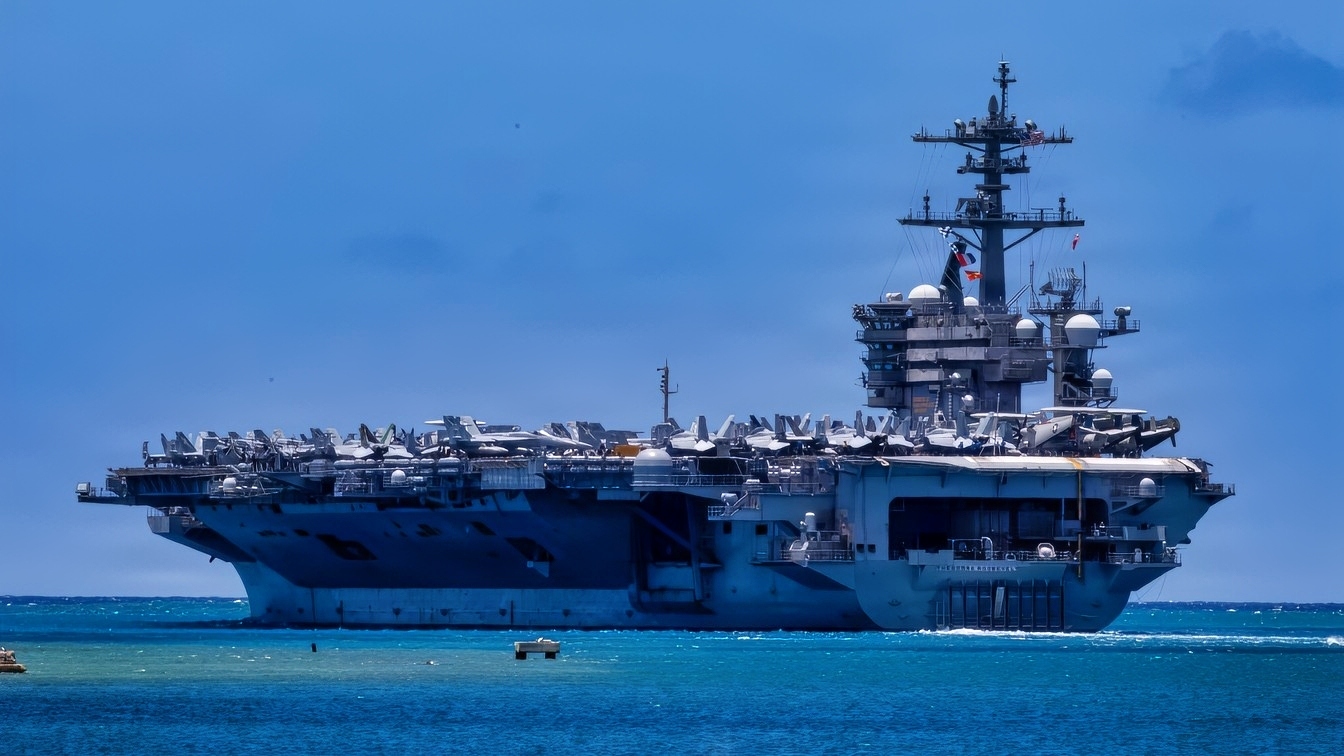
U.S. Navy Nimitz-class aircraft carrier USS Theodore Roosevelt (CVN 71) departs Joint Base Pearl Harbor-Hickam, Hawaii, to begin the sea phase of Exercise Rim of the Pacific 2026, July 7, 2026. Thirty nations, over 30 surface ships, five submarines, 15 national land forces, more than 206 aircraft and 30,000 personnel are participating in RIMPAC in and around the Hawaiian Islands, June 24 to July 31. The world’s largest international maritime exercise, RIMPAC provides a unique training opportunity while fostering and sustaining cooperative relationships among participants critical to ensuring the safety of sea lanes and security on the world’s oceans. RIMPAC 2026 is the 30th exercise in the series that began in 1971. (U.S. Navy photo by Mass Communication Specialist 1st Class Kyle Carlstrom)
After all, two aircraft carriers are already operating there, along with multiple support warships and the USS Boxer, another amphibious lander.
The arrival of the USS Theodore Roosevelt and USS Makin Island will significantly raise combat capabilities and give President Donald Trump a realistic option to escalate.
Both President Trump and his Israeli counterpart, Prime Minister Benjamin Netanyahu, have already used extreme escalatory rhetoric.
Indeed, the forty-seventh American president recently took to the United Nations General Assembly stage to give a speech that was downright unhinged, in which he ruminated over the prospects of annihilating the Iranian people (again).
Many now see the arrival of additional warships in the region as a sign that Trump intends to escalate.
Context Matters
An escalation might be in the offing. But it’s important to put what’s happening in CENTCOM’s AOR into context. The USS George Washington was never meant to be operating there.
It was originally deployed to the Indo-Pacific, where the Nimitz-class nuclear-powered aircraft carrier participated in a major joint military exercise with the Japanese.
The carrier then interdicted clashes between the Chinese Coast Guard and the Philippine Coast Guard in the South China Sea. The Pentagon ordered it to the Middle East.
The carrier was ordered to the CENTCOM AOR only after public backlash over the extended deployment of the USS Abraham Lincoln became too much for Americans to bear.
Having been forced to pull out the USS Abraham Lincoln, the Navy needed additional support elements in the CENTCOM AOR to maintain the blockade that the Trump administration imposed upon the Islamic Republic of Iran.
But the White House is now sensitive to public backlash over prolonged carrier deployments in CENTCOM’s AOR.
Plus, President Trump is concerned (as he should be) about the Republican Party’s prospects of maintaining its majority in next month’s midterm election.
Doing everything he can to avoid any destabilizing actions between now and next month’s Election Day.
To avoid destabilizing the tense situation in the Middle East, Trump must maintain a military footprint in the region. The Iranians are keenly aware of the political timetable Trump and Benjamin Netanyahu, who is also up for reelection at the end of this month, are on.
Iran is likelier to seek escalation and, therefore, destabilize the situation in the Middle East now rather than wait until after the elections in Israel and the United States are decided.
Ground Incursion Not Likely
That brings us back to all the American military power being brought to bear in the Middle East.
Is it possible the Americans intend to escalate by the month’s end or early next month? To be fair, it is possible.
Trump himself has alluded to restarting the bombing campaign against the Iranians after the Midterm elections.
Plus, the president has made reopening the Strait of Hormuz (SoH) according to the way it was before the Iran War began a key priority.
Iran is not going to let that prewar situation in the SoH return without a serious fight.
At the same time, the US military now faces a severe limit on what it could achieve through escalation. Its airframes are strained.
The US Navy’s warship readiness is deteriorating. The key bases throughout the region needed to support any kind of ground incursion into Iran (or even its outlying islands) simply aren’t there.
What’s more, the number of Marines in the region for an amphibious landing—even if both the Boxer and Makin Island remain on station—will be insufficient to take, hold, and conduct sea-control missions effectively.
So, while not impossible, it is militarily unfeasible for the Americans to attempt such an escalation in Iran.
The Boxer and George Washington Need Relief
Besides, the USS George Washington and USS Boxer have been on station for too long.
What is likely happening is that the Americans are swapping out the Boxer for the USS Makin Island and the USS George Washington for the USS Theodore Roosevelt.
That way, the Americans maintain combat effectiveness and can keep conducting blockade-and-escort operations in the area.
Trump could escalate into an air war. The Israelis could do that, too. Both the Americans and Israelis might go beyond that with a tactical nuclear strike. Landing ground troops in Iran or on one of those islands in the SoH will be harder.
And the George Washington needs maintenance, and the Boxer has been on station far longer than the Marine Corps prefers.
This lends credence to the idea that the Trump administration is likely swapping the amphibious lander and carrier for better-prepared systems and better-rested crews.
The idea is to deter Iran from escalating in the run-up to either the Israeli or American elections. That’s why the Pentagon is slotting in the George Washington and Makin Island.
About the Author: Brandon J. Weichert
Brandon J. Weichert is the Senior National Security Editor. He also manages The Weichert Brief on Substack. Weichert also hosts “National Security Talk” on Rumble. He is the author of four bestselling national security books, most recently A Disaster of Our Own Making: How the West Lost Ukraine (Encounter Books). Follow him via Twitter/X @WeTheBrandon.


