

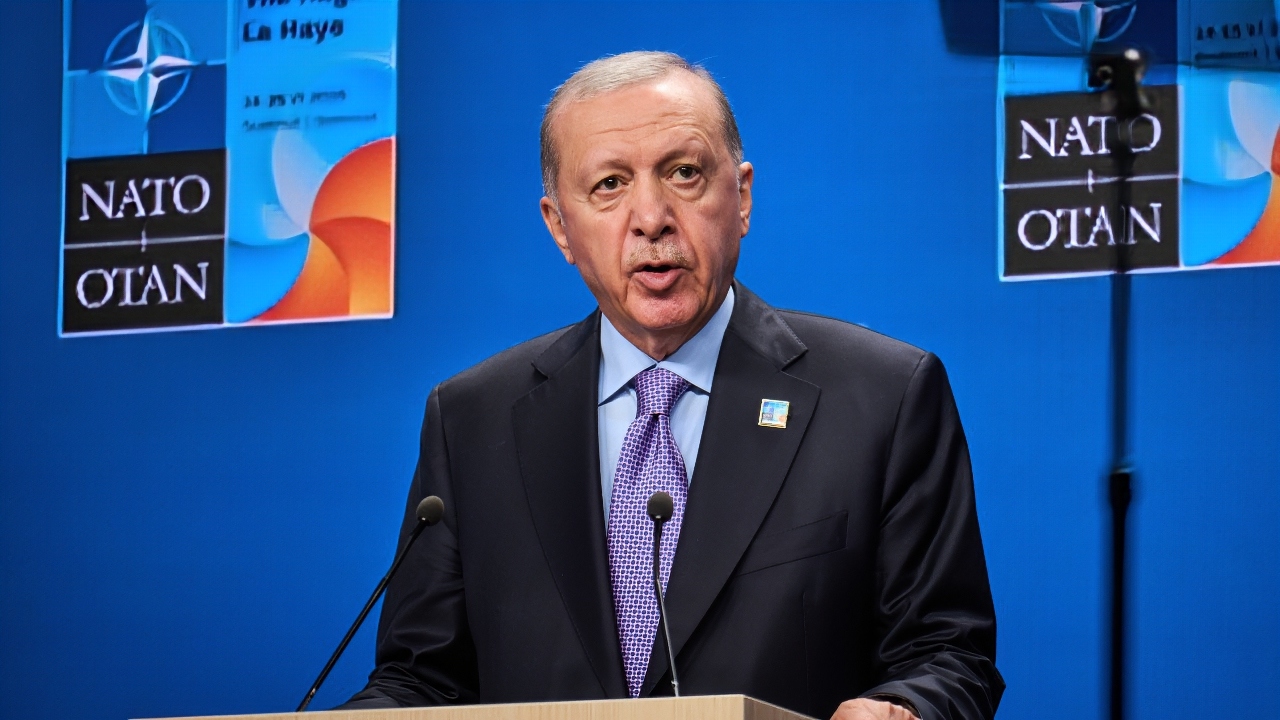
Turkey’s Kurdish political movement is unexpectedly emerging as a crucial partner in President Recep Tayyip Erdoğan’s ongoing drive to consolidate power and entrench autocratic rule. On June 12, Erdoğan announced that the pro-Kurdish Peoples’ Equality and Democracy Party (DEM) had agreed to “walk together” with his ruling Justice and Development Party (AKP) and its far-right coalition partner, the Nationalist Movement Party (MHP).
While the specific terms of the alliance have yet to be made public, the partnership is widely believed to center around DEM’s support for constitutional amendments that would expand Erdoğan’s already formidable presidential powers—changes that the AKP-MHP bloc cannot unilaterally enact due to insufficient parliamentary seats.
This development has sent shockwaves through Turkey’s opposition ranks, which are already reeling from Erdoğan’s systematic dismantling of democratic institutions. Since surviving a failed coup attempt in 2016, Erdoğan has used the ensuing state of emergency as a pretext to purge the judiciary, eviscerate media freedom, and erode the rule of law.
Erdoğan Exercising His Powers
Today, most state institutions operate as extensions of his personal authority. Independent media outlets have been sold off to pro-government entities, turning the press into a propaganda machine. What remains of Turkey’s democratic architecture is increasingly hollow.
Among those most affected by Erdoğan’s authoritarian turn are the country’s Kurds, who constitute roughly a quarter of the population. For decades, Kurdish citizens have faced systemic discrimination, including bans on political parties, the imprisonment of elected officials, and restrictions on using their mother tongue. The notion that the Kurdish political movement could now play a key role in furthering Erdoğan’s authoritarian ambitions is not just ironic—it is deeply troubling.
The repression of Kurdish political expression is long-standing, but it has intensified dramatically since 2015. In recent years, 58 democratically elected Kurdish mayors have been removed from office and replaced with government-appointed trustees under the pretext of alleged ties to the Kurdistan Workers’ Party (PKK), which Turkey and its Western allies classify as a terrorist organization. Prominent Kurdish politicians have been arrested on dubious charges, including Selahattin Demirtaş, a former co-chair of the DEM’s predecessor party. Demirtaş was convicted in May 2024 and sentenced to more than 40 years in prison. In July, he received an additional two-and-a-half-year sentence.
Kurdish Resolve, or Consiliation?
Given this recent history of state persecution, DEM’s willingness to collaborate with Erdoğan appears baffling. What, precisely, is Erdoğan offering the Kurdish movement that would justify such a radical shift in allegiance? The answer likely lies in a mixture of political self-interest and transactional bargaining. According to reports, negotiations between DEM and the Erdogan-Bahçeli alliance began quietly in late 2024. For DEM, key objectives likely include the release of high-profile political prisoners, such as Demirtaş and even PKK leader Abdullah Öcalan, as well as the constitutional recognition of Kurdish cultural and linguistic rights. They may also be seeking a general amnesty for individuals affiliated with the PKK and broader Kurdish political networks.
In return, Erdoğan is seeking the DEM’s parliamentary support to pass constitutional amendments that would grant him a fourth term—currently prohibited under the existing charter—and further broaden executive authority. The alliance is thus one of expediency: DEM sees a chance to achieve long-elusive political goals, while Erdoğan gains the votes he needs to codify autocracy.
But this Faustian bargain risks far more than it might deliver. By enabling Erdoğan’s constitutional ambitions, DEM could become complicit in the final destruction of Turkey’s democratic opposition. Erdoğan has already begun neutralizing his most formidable political adversaries following a stinging defeat in the March 2024 local elections, where the opposition Republican People’s Party (CHP) captured a majority of municipalities. Erdoğan interpreted the results not as a mandate for reform, but as a threat to his political survival in the 2028 presidential election—and he is acting accordingly.
On March 19, Istanbul’s CHP mayor Ekrem Imamoğlu, widely considered Erdoğan’s most dangerous rival, was arrested on dubious corruption charges. A popular and charismatic figure, İmamoğlu has long been seen as the politician most capable of unseating Erdoğan. His imprisonment sent a chilling signal: the regime will preemptively sideline potential challengers through politically motivated prosecutions.
The crackdown did not stop there. In early July, CHP mayors from Adana, Adıyaman, and Antalya were also arrested on unsubstantiated allegations of corruption. On June 7, the AKP filed a petition in parliament to lift the immunity of 61 out of 135 CHP members, potentially exposing them to arrest and prosecution. These tactics are all too familiar to DEM, whose members have long faced similar methods of judicial harassment and political marginalization. The irony is that the same Kurdish party once targeted by Erdoğan’s authoritarian machinery now risks enabling its continued operation—against others.
Erdoğan’s strategy is clear: dismantle all political opposition and refashion the Turkish state in his image. By coaxing DEM into an alliance, he is not just undermining the most significant opposition bloc in the country but also co-opting the very minority group that has endured some of the harshest treatment under his rule.
If DEM proceeds with this alliance, it will mark a tragic turning point. Turkey, long teetering between authoritarianism and democracy, would move decisively toward autocracy—with the help of the very community that has historically stood on the frontlines of democratic resistance. Whatever short-term gains DEM hopes to achieve will come at the cost of legitimizing a system in which democratic dissent is criminalized, and power is consolidated in the hands of one man.
Turkey stands at a dangerous crossroads. This is not a moment for narrow political calculations or opportunistic deals. It is a time for all democratic actors—especially those who have endured the brunt of repression—to unite in defense of what remains of Turkey’s democratic institutions. The future of the republic depends on it.
About the Author: Sinan Ciddi
Sinan Ciddi is a senior fellow at the Foundation for Defense of Democracies (FDD), where he directs FDD’s Turkey Program within the Center on Military and Political Power (CMPP). Follow Sinan on X: @SinanCiddi.


pagar
July 24, 2025 at 3:05 pm
Turkey and erdogan are the love child of communal EU and US copulation in fp (foreign policy).
Recently, the UK agreed to sell euro typhoon fighter jets to ankara after the fascist german govt under merz signaled it has no objections.
It’s crystal clear why daily, people get slaughtered in gaza, for trying to obtain food and water.
They (the devil people in EU-NATO) are a bunch of faustian politicians and this is the exact reason why much of the world today is engulfed in murder, havoc, chaos and unrests.
And ww3’s coming. Coming.
One-World-Order
July 24, 2025 at 10:42 pm
Today, world war three (ww3), or armageddon in europe, is just around the corner.
The reason is the west, especially or particularly germany, is hellbent on reversing the established post-war reality brought about by the defeat of the nazis in 1945.
Today, in 2025, with great towering people like erdogan and zelenskyy and netanyahu around, the west or EU-NATO evil nexus hopes to reverse the now-undesirable post-war reality.
During 1944, soviet forces hammered the nazis and fascists left and right, especially in operation bagration where the german army group center was shattered in belarus.
In ukraine, the red army snashed the ukro nazi unit, the 14th SS division and sent them later fleeing to britain, canada and US.
But now, the west wants to exact revenge and also to reverse the accepted reality that came about as a result of the sacrifices of the soviet peoples during ww2.
Thus with highly useful people like erdogan and zelenskyy around to help, the west intends to ignite or kickstart ww3 in europe. Today.
Beware of the devils.