


Key Points and Summary – Australia has delivered the majority of 49 pledged M1A1 Abrams tanks to Ukraine, fulfilling a promise made in October 2024.
-The transfer, part of a $1.5 billion aid package, was delayed for nine months due to logistical hurdles and initial U.S. skepticism under the Trump administration, which warned the tanks were too complex and vulnerable to drones.
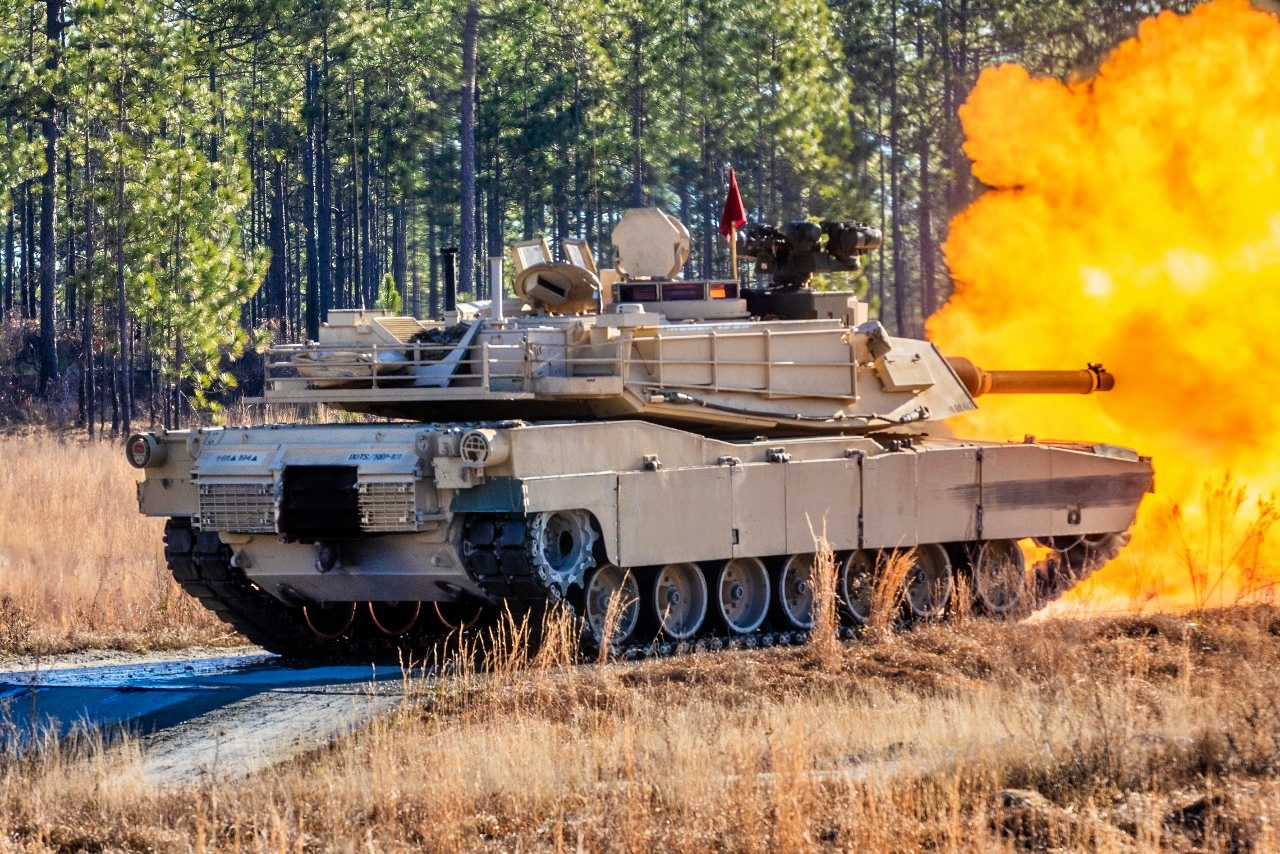
Soldiers from Echo Company, 1st Battalion, 81st Armor Regiment, 194th Armored Brigade, conduct gunnery training with the M1 Abrams tank, Jan. 14, 2025, at Brooks Range, on Fort Benning, Georgia. (U.S. Army photo by Joey Rhodes II)
-Despite these concerns, Ukraine welcomed the surplus Australian tanks as “a lifeline” to replenish its armored fleet and is already modifying them with additional armor and anti-drone cages to improve battlefield survivability.
Australia Just Sent 49 Abrams Tanks to Ukraine
In October 2024, the Australian government announced it would hand over 49 M1A1 tanks to Ukraine. The announcement came after a coalition of Western countries had already agreed to hand over several tanks, including Leopard 2s, Challenger 2s, and Abrams tanks. While the Biden administration praised the decision, the incoming Trump administration was skeptical and questioned whether the tanks would be of much use to Ukraine.
Australia Pledges Abrams Tanks to Ukraine
The tanks were initially pledged in October 2024 at the request of the Ukrainian government. At the time, Australia was upgrading its armored capabilities, transitioning from the M1A1 Abrams to the more advanced M1A2 SEPv3 variant.
The older M1A1s, though no longer cutting-edge, remained competent platforms.
They were equipped with a 120mm M256 smoothbore cannon, advanced thermal sights, and composite armor, making them formidable assets in both offensive and defensive operations.
Naturally, the delivery of these tanks took some time.

U.S. Marine Corps M1A1 Abrams tank provides suppressive fire against simulated insurgents during day 18 of the Integrated Training Exercise 13-1 at Twentynine Palms Marine Corps Base, Calif., Jan 22, 2013. The ITX is the training exercise that Marines come to prior to deploying. (U.S. Air Force photo by Staff Sgt. Stephany Richards)
It took nine months for the first batch to arrive in Ukraine, a delay attributed to logistical challenges and the need for approval from the United States, which initially manufactured the tanks.
Under the Foreign Military Sales (FMS) program, any third-party transfer of U.S.-made military equipment requires Washington’s consent.
This bureaucratic hurdle, combined with the complexities of transporting heavy armor across the globe, contributed to the extended timeline.
More Tanks for Ukraine
In May 2025, the tanks were loaded onto a commercial cargo ship in Geelong, Australia, and shipped to Europe, likely arriving in Poland before being transferred to Ukraine.
Australian Army personnel accompanied the shipment to assist with logistics and ensure a smooth handover. By July 2025, the majority of the tanks had reached Ukraine, with the final deliveries expected in the following months.
The tanks were modified before shipment to meet Ukrainian operational requirements.
These modifications likely included updates to communications systems, armor configurations, and compatibility with NATO-standard equipment. Minister for Defense Industry Pat Conroy emphasized that these changes would enhance the tanks’ firepower and mobility, making them more suitable for Ukraine’s battlefield conditions.
The total value of the tank transfer was approximately AU$245 million (about $160 million USD), forming part of the AU$1.5 billion in assistance that Australia has committed to Ukraine since the start of the conflict in 2022.
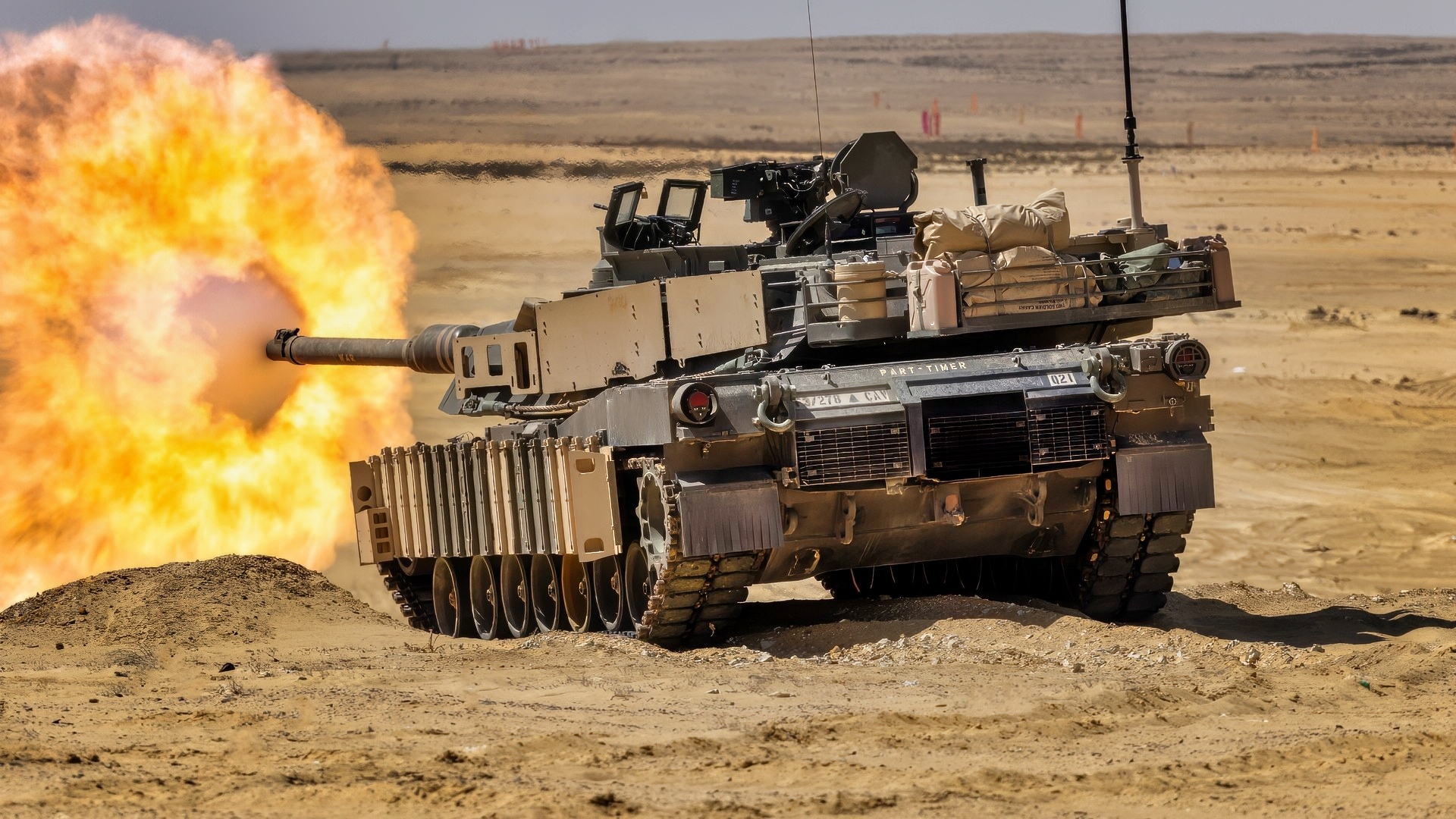
U.S. Army soldiers assigned to 3-278 Armored Cavalry Regiment, Task Force Reaper, fire the 120mm cannon on an M1A2 SEPv3 Abrams tank during live fire training for exercise BRIGHT STAR 25 at Mohamed Naguib Military Base (MNMB), Egypt, Sep. 2, 2025. BRIGHT STAR 25 showcases our unified resolve and ability to respond to evolving challenges together. Strong defense partnerships like BRIGHT STAR build lasting capacity, improve interoperability, and send a clear message of deterrence to those who threaten (our partners) and regional peace and stability. (U.S. Army Photo by Joseph Kumzak)
This broader support package also includes the deployment of a Royal Australian Air Force E-7A Wedgetail aircraft to Europe to help secure international aid corridors, and continued participation in Operation Kudu (a multinational effort to train Ukrainian military personnel).
The Abrams and Ukraine: Trump Interjects
After Trump assumed office in 2025, the U.S. criticized Australia’s decision to send Abrams tanks to Ukraine. After the Abrams’ lackluster performance in the war so far, the U.S. expressed concerns that the Abrams was too heavy and posed an excessive logistical burden for the Ukrainians.
Despite being more advanced than its Russian counterparts, the war in Ukraine has exposed many flaws with the Abrams and Western tanks in general. Not only are the tanks expensive to field and maintain, but they are exceedingly vulnerable to drones, which the Russian Army uses in abundance.
It is also important to note that at the time, the U.S. was negotiating with Moscow. The U.S. feared at the time that American-made tanks might undercut peace talks.
The Australian Army itself expressed hesitation, looking for other ways to support Ukraine that might be more practical. “We are starting to doubt if the Ukrainians actually want these vehicles, an anonymous defense official said, “The tank roof is the weakest point of the Abrams, and this is a drone war.” Despite concerns, the Australian government preceded with the transfer and most of the tanks have reportedly been delivered.
Replenishing Lost Stocks
The reception of the tanks in Ukraine was overwhelmingly positive. Ukrainian President Volodymyr Zelenskyy and Ambassador to Australia Vasyl Myroshnychenko publicly welcomed the donation.
Myroshnychenko described the tanks as “a lifeline,” underscoring the urgency and importance of such aid. He also noted that every day without these tanks on the battlefield meant more lives lost, underscoring the critical need for timely support.
Nonetheless, Ukraine had already received 31 M1A1 SA Abrams tanks from the United States in 2023 (almost all of which have been destroyed at this point).
This earlier delivery allowed Ukrainian crews to undergo intensive training, familiarize themselves with the platform’s maintenance protocols, and begin adapting their armored tactics to Western standards.
The Australian tanks, based on a similar configuration, benefit from this foundation, ensuring interoperability and reducing the operational gap.
For Australia, transferring old Abrams tanks to Ukraine was an easy way to get rid of old stocks while providing support to the struggling Ukrainians. By retiring the M1A1 fleet and transitioning to the M1A2 SEPv3, Australia is modernizing its armored capabilities while simultaneously supporting allies.
This dual-track approach demonstrates strategic foresight and a commitment to international security.
The newer M1A2 SEPv3 tanks are already being integrated into the Australian Army and have been featured in joint exercises with U.S. forces, showcasing interoperability and readiness.
About the Author: Isaac Seitz
Isaac Seitz, a Defense Columnist, graduated from Patrick Henry College’s Strategic Intelligence and National Security program. He has also studied Russian at Middlebury Language Schools and has worked as an intelligence Analyst in the private sector.
More Military
The Los Angeles-Class Submarine Has a Message for the U.S. Navy
‘Never See It Coming’: A First Look at the NGAD F-47’s Bomber-Like Stealth
The Real Reason U.S. Military Recruiting Numbers Are Surging
The Midway-Class Aircraft Carrier Has a Message for Every Navy on Earth
The YF-23 Black Widow II Stealth Fighter Still Haunts the U.S. Air Force


